


More news on this day
Travelers heading to the Gulf and wider Middle East face a new wave of disruption in 2026 as the United States joins Australia, Canada and the United Kingdom in sharpening travel advisories, following security alerts linked to the United Arab Emirates (UAE), Kuwait, Bahrain and Jordan and renewed concerns about airspace safety in a region still unsettled by the Iran conflict.
Get the latest news straight to your inbox!
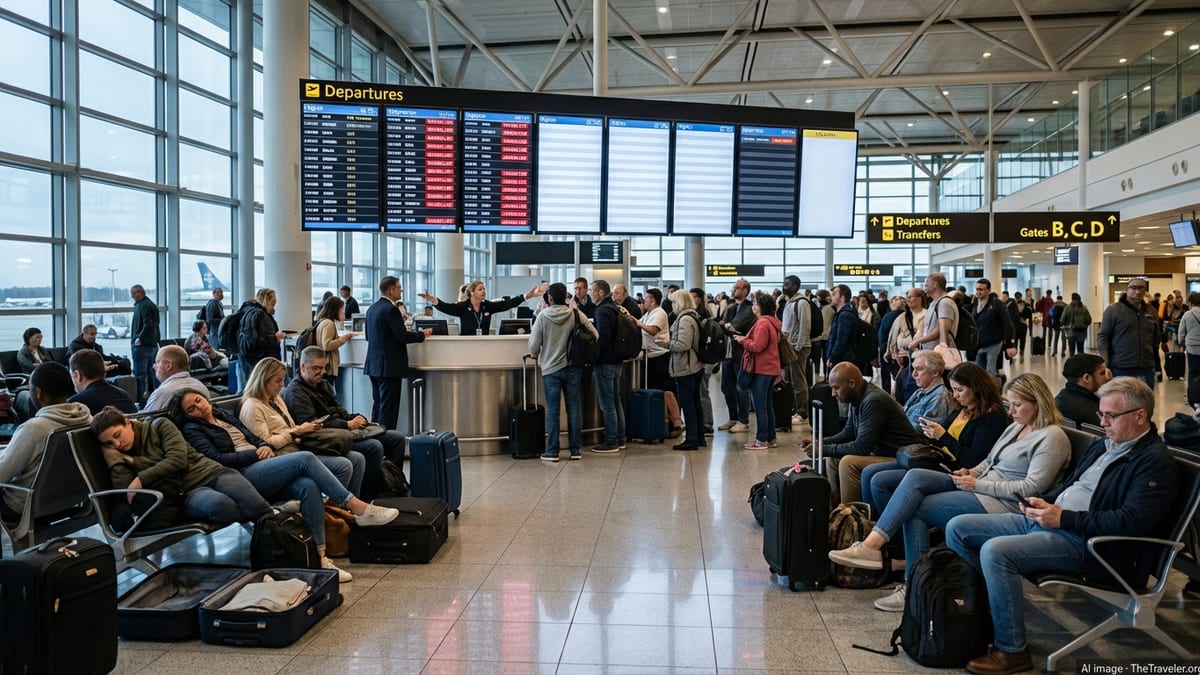
Coordinated Western Warnings Focus on Gulf and Jordan
Publicly available advisory updates from multiple governments show that the United States, Australia, Canada and the United Kingdom are aligning more closely on Middle East risk assessments, with the Gulf states and Jordan now central to a complex patchwork of alerts. The US State Department continues to apply Level 3 “Reconsider Travel” advisories across key partners such as Bahrain, Kuwait, Saudi Arabia, Jordan and the UAE, reflecting persistent security and infrastructure vulnerabilities following Iranian missile and drone strikes earlier in the year.
In parallel, Australian Smartraveller updates in June 2026 reduced earlier “Do Not Travel” guidance for Bahrain, Kuwait, Qatar, Israel and the UAE to “Reconsider your need to travel,” but the language still highlights elevated risk, particularly around possible further regional escalation and disruptions to aviation routes. Canadian federal advisories similarly maintain strict cautions on several Middle Eastern destinations, with recent updates urging travelers to avoid non-essential trips to countries affected by the Iran conflict and its spillover.
United Kingdom foreign travel advice and supplementary air passenger notices continue to emphasize that conditions can change at short notice, with travelers urged to scrutinize official guidance before departure and to remain prepared for rapid shifts in flight schedules, transit options and consular support. As a result, a de facto Western consensus is emerging that travel to the Gulf and neighboring states in 2026 is possible but carries a considerably higher level of operational and security risk than before the Iran war.
For travelers, this alignment means that insurance coverage, employer travel approvals and airline operations are increasingly being benchmarked not against any single country’s advice but against a broadly shared Western risk picture for the region, especially where war, missile activity and airspace constraints intersect.
Security Alerts in UAE, Kuwait, Bahrain and Jordan Drive Risk Reassessment
The most recent wave of concern stems from renewed security alerts and incident reports involving the UAE, Kuwait, Bahrain and Jordan, which together form a critical arc of US and allied military basing and commercial aviation across the Gulf. Open-source chronologies of the 2026 Iran conflict indicate that all four have experienced missile or drone threats in recent months, with Bahrain’s role as host to the US Fifth Fleet, Kuwait’s Ali Al Salem Air Base, the UAE’s Al Dhafra Air Base and Jordan’s airfields placing them close to potential targets.
US travel-advisory updates earlier in 2026 ordered the departure of non-emergency government staff from some Gulf posts, including Bahrain and Saudi Arabia, and urged private citizens to reconsider their presence in countries where military facilities and critical infrastructure were struck or threatened. Jordan, though often described in regional analysis as relatively stable on the ground, has featured repeatedly in security reporting due to its geographic proximity to conflict zones and its role as a staging point for humanitarian and military logistics.
Diplomatic statements from Gulf capitals underscore the sense of shared vulnerability. In mid-July, the UAE publicly condemned renewed Iranian hostile activity against Bahrain, Kuwait and Jordan, signaling that the four states see their security as closely linked and that further incidents could trigger additional national-level precautions, including tighter border controls or temporary restrictions on large public events and sensitive locations.
These alerts are feeding into Western risk modeling and are a key reason why the United States and its partners have stopped short of fully normalizing their travel posture for the Gulf, even as some commercial activity resumes. Travelers now face a landscape where a relatively calm day-to-day environment can coexist with elevated threat levels that could prompt rapid changes to advice and transport connectivity.
Airspace Warnings and Flight Disruptions Across the Gulf
Aviation and airspace risk has become a defining feature of the 2026 travel environment in the Gulf. Guidance published by the European Union Aviation Safety Agency in July advises carriers to avoid parts of Gulf airspace until at least late July, citing the combination of prior missile activity, military operations and uncertain deconfliction mechanisms between state and non-state actors in the region.
Industry and port advisories from March 2026 describe a period in which airspace across several Gulf states was effectively closed or heavily restricted, leading to widespread cancellations and diversions. National carriers and regional airlines temporarily suspended flights to and from hubs such as Dubai, Abu Dhabi, Doha, Kuwait City, Manama and Amman, while international airlines rerouted services to skirt high-risk air corridors over the Persian Gulf and Gulf of Oman.
According to open aviation chronicles, the Iran conflict led to thousands of canceled flights, damage to facilities at major airports and an abrupt halt to normal hub operations for several days. While many of those services have since been restored, reports of renewed interruptions in 2026, including cancellations affecting Kuwait and Bahrain, show how quickly connectivity can be disrupted when the regional security situation deteriorates or when new alerts are issued.
The United States Federal Aviation Administration has kept in place a series of special regulations and advisories covering the Tehran Flight Information Region and parts of the Persian Gulf and Gulf of Oman, warning US operators of continuing hazards from military activity and misidentification risks. Together with allied guidance, these notices mean that even when tickets are on sale, airlines may still decide at short notice to reroute or cancel services if conditions deteriorate along planned flight paths.
How Travelers Are Being Asked to Respond
Across the United States, Australia, Canada and the United Kingdom, publicly available information shows a common message to travelers: reassess the necessity of any non-essential trips to the Gulf and surrounding Middle East, and build in significant flexibility where travel is unavoidable. Advisories urge passengers to monitor official updates, maintain direct contact channels with airlines and tour operators, and prepare for potential delays, diversions or sudden border and airport measures.
Travel and insurance industry bulletins reviewed in recent weeks highlight the financial implications of the new risk picture. Many standard policies exclude claims linked to war, terrorism, civil unrest or travel taken contrary to government advisories, leaving travelers exposed if they enter or transit areas subject to high-level warnings. Insurers are encouraging customers bound for the Gulf to scrutinize policy wording and consider specialist cover that explicitly addresses conflict and evacuation scenarios.
Airlines operating to and through the region are also revisiting contingency planning. Some have introduced more generous change-fee waivers and flexible rebooking windows for itineraries touching high-risk hubs, while others have issued standing guidance that passengers should avoid traveling to the airport until their flight status is confirmed on the day of departure. Industry assessments point to a likely pattern of rolling, localized disruptions rather than a single, uniform shutdown, which makes real-time monitoring essential.
For corporate travel planners and tour operators, the coordinated stance by Western governments is translating into stricter internal approval processes for assignments, conferences and group travel in the Gulf, with many organizations now requiring senior sign-off, enhanced duty-of-care provisions and pre-identified evacuation options before sending staff into affected countries.
Outlook for Gulf and Middle East Travel in Late 2026
Looking ahead to the second half of 2026, analysts following official advisories and aviation data see little prospect of an immediate return to pre-conflict normality for Gulf and Middle East travel. While the intensity of active hostilities has decreased from the peaks earlier in the year, the underlying strategic tensions that led to missile and drone strikes on Gulf and Jordanian targets remain unresolved.
As a result, the United States and partners such as Australia, Canada and the United Kingdom appear set to maintain a cautious baseline, in which “Reconsider Travel” level guidance and detailed airspace warnings serve as the default rather than the exception. Any significant relaxation is likely to depend not only on an absence of major incidents but also on clearer, internationally recognized mechanisms for protecting civilian aviation across contested airspace.
For now, travel to the UAE, Kuwait, Bahrain, Jordan and neighboring states is still possible but demands far more planning and resilience than in previous years. Travelers are being advised to view itineraries as contingent rather than guaranteed, to have backup routes and accommodation options, and to budget extra time and resources for sudden changes in schedules.
In this fluid environment, the convergence of US, Australian, Canadian and UK travel advisories is creating a new baseline for global mobility in and around the Gulf, setting expectations that journeys through one of the world’s most important aviation crossroads will remain complicated, conditional and closely watched through the rest of 2026.