


More news on this day
Flight operations across the United States faced fresh disruption on July 20, as a combination of severe weather and operational strains led to hundreds of cancellations and thousands of delays, heavily affecting major hubs in Texas, Florida, Georgia and New York and impacting carriers including Delta Air Lines, JetBlue and Endeavor Air.
Get the latest news straight to your inbox!
Weather Systems Hit Southern and Eastern Hubs
Publicly available data from flight-tracking services on July 20 indicated that more than 380 flights were cancelled nationwide, with over 4,200 delayed as thunderstorms and unsettled conditions swept across large parts of the country. Major airports in Texas, Florida, Georgia and New York were among the hardest hit, creating ripple effects throughout the national network.
Storms in the Southeast and along the Eastern Seaboard have repeatedly triggered ground stops and flow-control measures this summer, limiting the number of arrivals and departures that can move through already congested airspace. The latest round of storms again focused attention on how quickly weather issues in a handful of hubs can cascade into nationwide disruption.
Information on the Federal Aviation Administration’s national airspace status site on July 20 showed a patchwork of departure and arrival delays at some of the country’s busiest fields, underscoring how even localized convective weather patterns can spread delays from one region to another as aircraft and crews fall out of place.
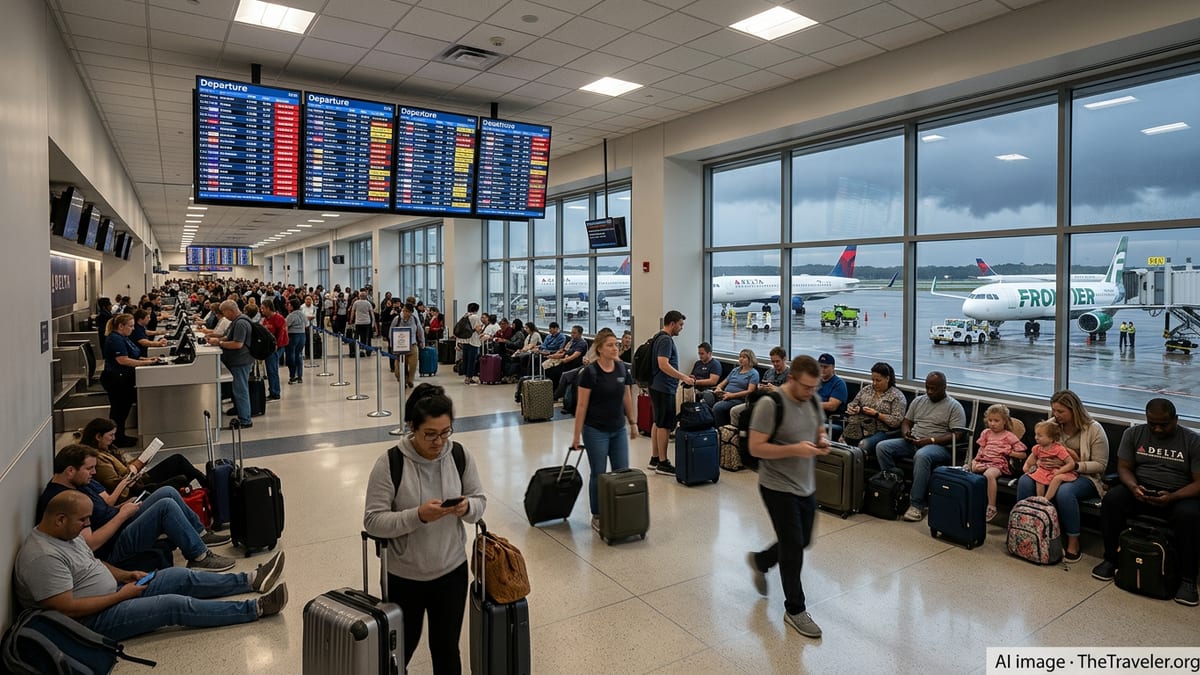
For travelers, the result was long lines at customer-service counters and crowded gate areas as airlines worked to rebook passengers on later flights, often into already full schedules at the height of the summer travel season.
Delta, JetBlue and Regional Partners Bear the Brunt
Carriers with large footprints in the affected states saw a substantial portion of the disruption. Delta Air Lines, with its dominant hub in Atlanta and strong presence at New York’s LaGuardia and John F. Kennedy airports, experienced a wave of cancellations and late departures that compounded as the day progressed. Endeavor Air, a key Delta Connection regional operator, also reported numerous schedule disruptions.
JetBlue, which relies heavily on operations in New York and Boston and runs significant service into Florida, faced its own operational challenges layered on top of the weather. A statement from the Air Line Pilots Association on July 20 pointed to what it described as system-wide scheduling difficulties at JetBlue over the weekend that contributed to additional cancellations and stranded crews.
The combination of weather and operational stress at these carriers illustrates how exposed airline schedules remain to even short bursts of disruption. With aircraft flying tight rotations and crew schedules built close to regulatory limits, a single thunderstorm line or staffing pinch can quickly turn into widespread delays.
Regional partners such as Endeavor Air play a critical role in feeding passengers into large hubs, so disruptions to their flying often amplify the impact on mainline operations, particularly when recovery options are limited by airport congestion or curfews.
Travel Waivers and Exception Policies Activated
In response to the evolving conditions, airlines issued and updated travel waivers aimed at giving passengers more flexibility to adjust their plans. Delta’s advisory pages on July 19 and July 20 highlighted weather-related exception policies for the Northeast and Midwest, allowing eligible travelers to change itineraries without standard change fees when certain conditions were met.
These waivers typically apply to customers flying into or out of designated airports within specific travel windows and require that rebooked travel occur within a set timeframe. Fare differences can sometimes be waived when passengers move to flights in the same cabin of service, though restrictions vary by bulletin and route.
For passengers in heavily affected states such as Texas, Florida, Georgia and New York, such policies offered one of the few tools to proactively avoid the worst of the disruptions by moving trips away from peak storm periods or saturated time slots. However, with summer loads already high, securing alternative seats remained difficult in many markets.
Industry observers note that these exception policies have become a regular feature of peak travel seasons, reflecting both the increasing volatility of weather patterns and the limited slack in airline networks to absorb shocks without resorting to broad schedule changes.
Strain on an Already Busy Summer Travel Season
The latest wave of cancellations and delays comes during what has been one of the busiest summer travel periods since the pandemic, with Transportation Department statistics showing elevated passenger volumes and rising delay rates through the first half of 2026. Earlier federal reports documented longer tarmac delays and higher cancellation percentages compared with prior years, particularly during storm-prone months.
Analysts say that strong demand, tight capacity and continued staffing and equipment constraints have left carriers with little room for error. When weather or operational problems arise, the knock-on effects can be more intense and longer lasting than in periods when airlines maintained larger schedule buffers or spare aircraft.
Passengers stranded at major hubs on July 20 reported extended waits for rebooking as downstream flights into smaller cities were also impacted, reducing options for same-day or next-day travel. In some cases, travelers resorted to ground transportation or multi-stop routings through alternative hubs in an effort to reach their destinations.
The concentration of problems in states with major connecting hubs, including Georgia’s Atlanta, Texas’ Dallas and Houston, Florida’s Orlando and South Florida airports, and New York’s LaGuardia and JFK, made it difficult for airlines to isolate the disruption to a single region.
What Travelers Can Expect Next
With additional weather advisories already posted for parts of the Northeast for July 21 and July 22, forecasters and aviation planners anticipate continued operational challenges, particularly during late afternoon and evening peak periods when thunderstorms are most likely. Airlines are expected to keep adjusting schedules, preemptively trimming some flights to preserve overall reliability.
Public information from airline advisory pages emphasizes that passengers should monitor their flight status closely, as schedules can change repeatedly throughout the day. Same-day notifications through airline apps and email alerts have become essential tools for navigating a fluid operational environment.
Industry data also suggests that travelers connecting through large hubs in storm-prone regions face a higher risk of disruption on peak summer days. Some consumer advocates recommend booking earlier departures, leaving longer connection times and considering non-stop options where available to reduce exposure to cascading delays.
As the summer season continues, the July 20 disruptions highlight how quickly a mix of severe weather and operational strain can ground hundreds of flights and delay thousands more, affecting carriers of all sizes and leaving passengers across the United States bracing for further turbulence in the weeks ahead.