


More news on this day
Weeks of airspace closures and mass cancellations linked to escalating conflict in the Middle East have prompted the European Commission to issue fresh guidance on how existing EU passenger rights apply when flights are disrupted by security crises far from home.
Get the latest news straight to your inbox!
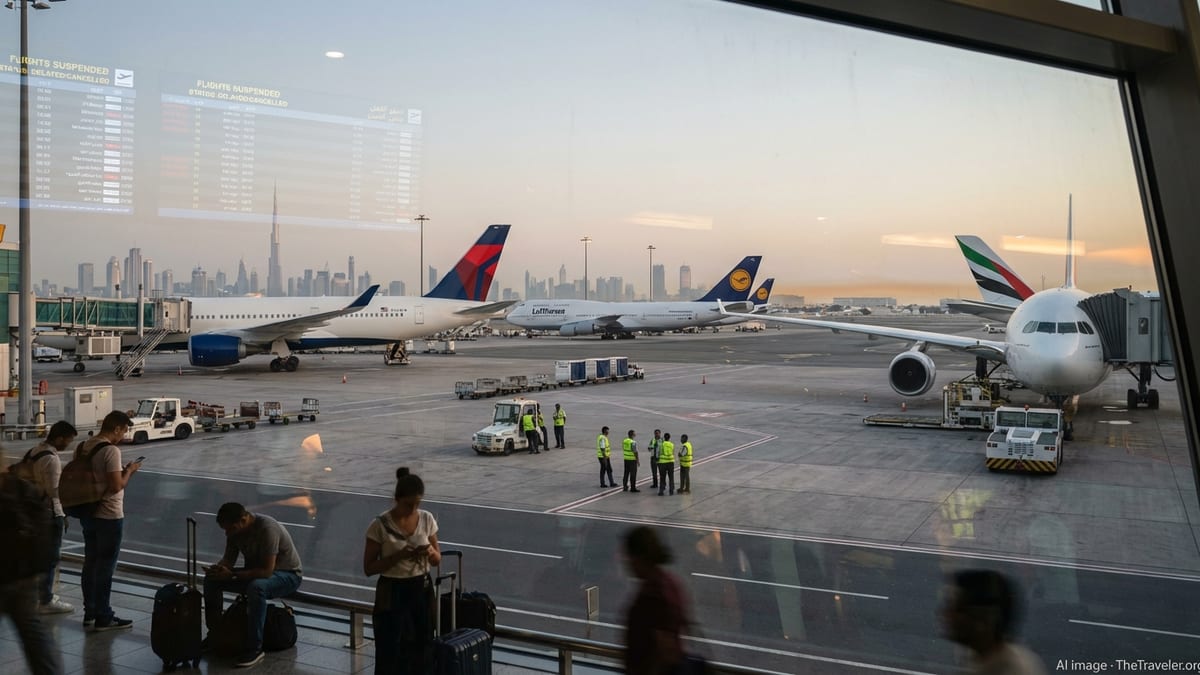
New Guidance Targets Confusion After Mass Disruptions
The latest communication from the European Commission, published in early May 2026, is aimed at transport and tourism operators struggling to interpret long standing rules in the face of rapidly changing conditions over Iran, Israel and neighboring states. The document clarifies how core provisions of Regulation 261/2004 on air passenger rights should be applied when flights are cancelled or rerouted because of conflict, missile activity or temporary airspace shutdowns across the Middle East.
Reports indicate that the move follows repeated waves of cancellations and diversions affecting European carriers and non European airlines departing from or transiting through EU airports. Sudden airspace restrictions around the Persian Gulf and eastern Mediterranean have caused some long haul routes to be axed outright and others to be re drawn along longer, more fuel intensive paths.
According to publicly available information from the Commission, the guidance seeks to provide a common reference point for airlines, airports, travel intermediaries and consumer bodies. Officials are keen to avoid the patchwork of interpretations that emerged during the pandemic, when some passengers were left uncertain about their entitlement to care, re routing or refunds during large scale disruption.
The initiative sits alongside work at the Council of the EU on revising the underlying legislation on air passenger rights, including updated thresholds for delay compensation and clearer rules when airlines do not arrange timely re routing. While that broader reform will take time, the new crisis focused guidance is designed for immediate use during the current Middle East turbulence.
What Stays the Same for Passengers Under EU Law
The Commission stresses that the fundamental protections under EU air passenger rules remain fully in force despite the extraordinary nature of the current crisis. Travelers whose flights are cancelled from an EU airport, or whose journeys into the EU are operated by an EU carrier, continue to benefit from the established menu of options, including reimbursement, re routing at the earliest opportunity or rebooking at a later date under comparable conditions.
Publicly available summaries of the guidance underline that basic assistance obligations also still apply. In practice this means that when passengers are stranded by a cancellation or long delay, airlines must provide meals and refreshments in proportion to the waiting time, access to communication such as telephone calls or emails, and hotel accommodation plus transport between the airport and place of stay where an overnight is required.
The guidance reiterates that airlines cannot unilaterally offer only vouchers when a flight is cancelled. Passengers retain the right to insist on a cash refund of the unused ticket if they no longer wish to travel, even when the cancellation is linked to security events or airspace closures in another region. Travel intermediaries selling package trips must in turn respect the refund and assistance obligations embedded in EU consumer and package travel rules.
Consumer centers in several member states have echoed these points in their own advisories concerning Middle East bound flights. Their notices emphasize that travelers should keep boarding passes, booking confirmations and any written communication from airlines, as such documentation remains essential when seeking reimbursement or challenging disputed decisions on care and re routing.
Extraordinary Circumstances Limit Cash Compensation
Where the new guidance breaks important ground is in setting out how security crises and airspace closures are treated in relation to financial compensation for last minute cancellations and long delays. Under Regulation 261, passengers are normally entitled to a fixed sum, scaled by distance, when they arrive many hours late or when flights are called off at short notice. However, airlines can avoid paying this compensation if they can prove that the disruption was caused by extraordinary circumstances that could not have been avoided even if all reasonable measures had been taken.
According to Commission material and associated question and answer documents on Middle East disruptions, armed conflict, missile activity, sudden state flight bans and related airspace safety measures typically fall within the category of extraordinary circumstances. In such cases, passengers can still expect a choice between rerouting and refund, and they remain entitled to assistance at the airport, but they are unlikely to receive the additional lump sum compensation that applies in more routine operational disruptions.
The guidance also addresses complex scenarios in which an airspace closure forces wholesale schedule changes over several days. Even when the root cause qualifies as extraordinary, airlines are encouraged to demonstrate that they took proactive steps to mitigate the impact, such as deploying alternative routings where safe, arranging seats on other carriers and providing clear, timely information to affected travelers.
Consumer advocates note that disagreements are still possible over whether specific cancellations were genuinely unavoidable or whether other operational decisions played a role. The guidance therefore points passengers toward national enforcement bodies and the pan European Your Europe advice platform for support in challenging airline interpretations that they consider overly restrictive.
Safety Bulletins and Operational Flexibility for Airlines
In parallel to the passenger focused guidance, aviation regulators have been updating technical instructions for airlines operating near conflict zones. The European Union Aviation Safety Agency has issued a series of Safety Information Bulletins covering airspace in the Middle East and Persian Gulf, urging operators to closely monitor risk assessments, follow notices to air missions and adapt routings and altitudes in line with evolving security assessments.
Recent Commission material highlights practical adjustments designed to keep some long haul connections viable while minimizing risk. These include the possibility for airlines to request temporary exemptions from certain fuel uplift requirements under the ReFuelEU Aviation rules, which might otherwise make lengthy detours around closed airspace commercially or technically challenging.
Industry observers point out that these moves are intended to preserve connectivity between Europe and key markets in Asia and Africa, even as direct overflights of some Middle Eastern territories remain restricted. Extended routings can lengthen flight times and complicate crew scheduling, but regulators consider them preferable to blanket cancellations where safe corridors exist.
Despite such efforts, some itineraries that relied heavily on Gulf hub connections have been heavily disrupted, with passengers facing missed onward links and rebookings spread over several days. The Commission’s new guidance does not guarantee that every traveler will reach their destination on time, but it aims to ensure that carriers apply existing rights consistently when rerouting or caring for those affected.
National Authorities and Consumer Groups Step In
Across the EU, national consumer protection bodies and European Consumer Centres have begun tailoring the Brussels level guidance to local travelers. For example, agencies in Spain and Latvia have recently circulated plain language explanations of how EU rules apply when flights to or via the Middle East are cancelled, stressing that passengers should distinguish between their rights to care and rerouting on one hand and the more limited prospects for financial compensation on the other.
These organizations report a surge in queries from travelers with complex itineraries involving both EU and non EU carriers, or journeys that begin or end outside the bloc but include a European connection. Public information campaigns have therefore highlighted that EU air passenger rules typically apply when a trip departs from an EU airport regardless of the airline’s nationality, and when flights into the EU are operated by EU carriers.
Advisories also warn that EU protections do not extend to every leg of a multi segment trip, particularly where passengers hold separate tickets issued by different airlines. In such cases, travelers may need to rely on the contract terms of non EU carriers or on travel insurance policies for parts of their journey that fall outside the geographical and legal scope of European rules.
With the security outlook in the Middle East still uncertain, regulators and consumer bodies are expected to keep updating their guidance in the months ahead. For now, the Commission’s latest intervention signals that while war and airspace closures can limit the right to monetary compensation, they do not erase core entitlements to care, information and a real choice between rerouting and refund for passengers caught up in the turmoil.