


More news on this day
Hundreds of travelers were left stranded across the Middle East and Europe this week as aviation data showed at least 173 flights delayed and 25 cancelled across Kuwait, Bahrain, the United Arab Emirates, Saudi Arabia and neighboring states, disrupting operations for carriers including EgyptAir, Flydubai, Emirates and Royal Jordanian on routes touching Dubai, Istanbul, Jeddah, Berlin and other major hubs.
Get the latest news straight to your inbox!
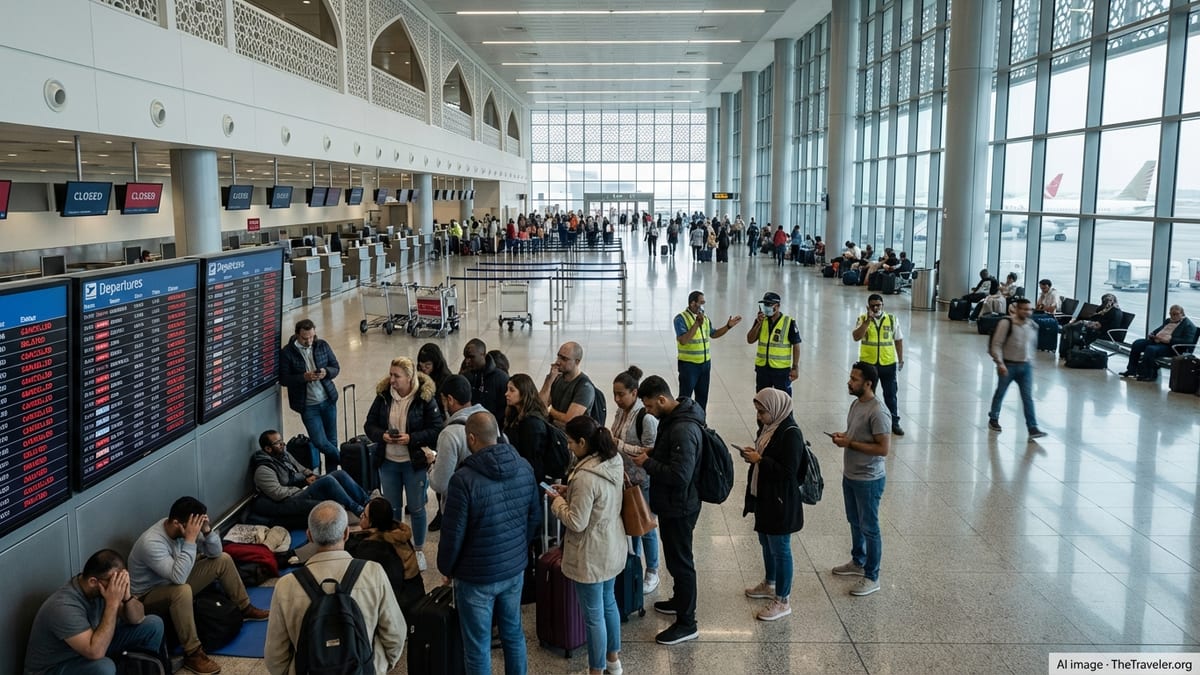
Delays and Cancellations Ripple Across Regional Gateways
Airline schedule trackers and travel advisories indicate that airports in Kuwait, Bahrain, the United Arab Emirates and Saudi Arabia are experiencing rolling disruptions, with departure and arrival boards dominated by late departures and aircraft held on the ground. Dozens of regional and international services have been delayed by more than an hour, while at least 25 flights have been scrubbed entirely as carriers attempt to reposition crews and aircraft.
Dubai International and Jeddah’s King Abdulaziz International, two of the busiest connecting hubs between Europe, Asia and Africa, remain operational but are subject to ongoing schedule adjustments. Publicly available travel risk bulletins describe both airports as open yet affected by wider regional aviation disruption, citing unstable airspace conditions and intermittent restrictions that require rerouting or temporary suspensions.
Similar patterns are being reported in Kuwait City and Bahrain, where some Gulf carriers have reduced frequencies or shifted operations to alternate airports on selected days. Operational notices circulated in recent weeks show temporary use of Saudi airports to maintain limited connectivity, underlining how tightly coupled the region’s aviation networks have become.
Although precise tallies vary by day and data provider, aggregated figures from flight tracking platforms for the latest 24 hour period point to at least 173 delayed departures and arrivals and 25 outright cancellations on routes touching the affected states, creating a patchwork of disruption reaching as far as Istanbul and Berlin.
Flag Carriers Struggle to Maintain Skeleton Schedules
Flag carriers in the region and beyond are attempting to preserve core routes while trimming or consolidating flights where demand or routing flexibility allows. EgyptAir, which recently expanded its long haul fleet, continues to publish real time status updates that show a mix of on time services, rolling delays and select cancellations as Cairo bound and transit passengers navigate a volatile operating environment.
Gulf carrier Emirates, traditionally a bellwether for connectivity through Dubai, is running a reduced schedule after earlier suspensions and large scale rerouting around sensitive airspace. Airline specific disruption summaries for March and April highlighted waves of cancelled and diverted services, and while more flights have reappeared in booking systems, recent customer reports and schedule changes point to continued last minute adjustments, including delayed departures from Dubai to major European and Asian cities.
Flydubai, which complements Emirates on regional and secondary routes, has seen particular strain on its Dubai to Istanbul operations. Real time status feeds for flights such as FZ753 from Dubai to Istanbul Sabiha Gökçen on 13 May show cancellations, adding to a string of irregular operations on this busy corridor and complicating travel plans for passengers attempting to connect onward into Europe.
Royal Jordanian and other network carriers using Amman and Jeddah as stepping stones between the Gulf, the Levant and Europe are also operating under tight constraints. Operational updates circulated to the trade in late April and early May outline trimmed frequencies, retimed departures and in some cases temporary use of alternative airports to maintain at least minimal service on key routes while avoiding congested or restricted sectors of airspace.
Europe and Asia Feel the Knock On Effects
The latest wave of delays and cancellations across the Gulf comes against the backdrop of a months long reshaping of air traffic flows between Europe and Asia following regional security tensions and airspace closures earlier in 2026. Aviation analytics cited by specialist travel outlets show that thousands of flights have been cancelled or rerouted since late February, particularly on services that would normally cross Iranian and Iraqi airspace or rely heavily on Gulf megahubs for transfers.
European carriers including British Airways and Lufthansa Group airlines have already extended suspensions or deep cuts on routes to Dubai, Tel Aviv and several Gulf cities through at least late May, sharply reducing the number of one stop options between European capitals and destinations in Asia and Australasia. Industry focused coverage notes that some routes have been effectively withdrawn for the remainder of the year, forcing travelers onto alternative hubs.
In response, airlines in Europe and Asia have shifted capacity to more northerly or southerly routes. Travel industry analyses describe Istanbul, Doha and select Southeast Asian hubs as primary alternatives for long haul connections, although these airports are now absorbing additional demand and face their own schedule pressures. Berlin and other European cities are seeing knock on delays as late arriving aircraft from the Middle East and Turkey cascade through daily rotations.
For travelers, the cumulative effect is a more fragile network in which a schedule change in Kuwait, Bahrain or Dubai can quickly translate into missed connections in Istanbul or delayed departures from Berlin, Paris or Frankfurt. With some carriers still operating only skeleton schedules to key Gulf destinations, rebooking options are often limited and involve lengthy detours.
Stranded Passengers Face Long Waits and Limited Options
As the latest set of disruptions spread across the region, first hand accounts shared on traveler forums describe passengers stuck for hours in Dubai, Jeddah and other hubs while waiting for rebooked flights or aircraft to be reassigned. Several reports from the past week mention overnight delays, with travelers housed in airport hotels or lounge areas as airlines work through backlogs created by earlier cancellations.
Travel advisories issued in March and updated in April caution that even where airports are technically open, travelers should expect sudden gate changes, rolling delays and the possibility of last minute cancellations as airlines respond to evolving airspace assessments. These notices consistently advise building additional connection time into itineraries touching the Middle East and checking flight status repeatedly in the hours before departure.
Data from aviation consultancies and booking platforms show that some passengers are opting to avoid Gulf connections altogether, choosing routings via Istanbul, Singapore or other hubs despite longer total travel times and higher fares. Analysts note that Europe to Asia ticket prices on routes avoiding the Middle East have risen sharply since the start of the disruptions, reflecting both reduced capacity and strong demand from travelers seeking more predictable journeys.
For those already in transit, however, options remain constrained by limited spare seats on alternative routes and by visa requirements that can complicate last minute rebookings through third countries. As airlines continue to adjust schedules day by day, travelers stranded in Dubai, Istanbul, Jeddah, Berlin and other affected cities are being urged by travel agents and advisory services to remain flexible and prepare for extended stays while the regional aviation picture stabilizes.