


More news on this day
London Heathrow has reported its sharpest passenger decline in more than a year as war in the Middle East, airspace closures and widespread flight disruptions reshape global travel patterns from Europe to the Gulf and North America.
Get the latest news straight to your inbox!
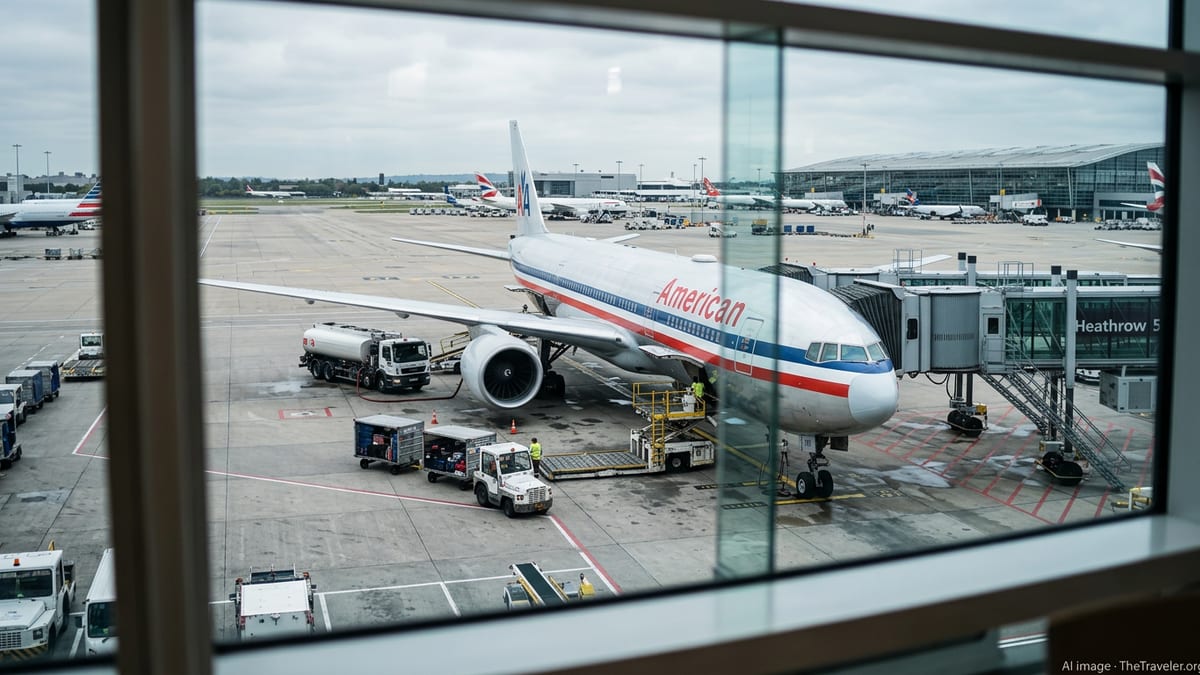
Heathrow Traffic Falls as Middle East Routes Collapse
New figures from Heathrow for April 2026 show a year on year fall of about 5 percent to roughly 6.7 million passengers, the steepest monthly decline since March 2025. Publicly available data and coverage attribute the drop largely to the Iran war and the resulting closure or restriction of key Middle East airspace, which has forced airlines to cancel or reroute flights and has weakened demand on affected routes.
Heathrow’s own traffic updates indicate that passenger volumes to and from the Middle East have plunged by more than half compared with a year earlier, even as overall demand for long haul travel remains comparatively resilient. Transfer traffic through the London hub actually rose by around 10 percent in April, as some travelers shifted itineraries away from the Gulf and other directly affected hubs and instead used Heathrow as a connecting point to reach Asia and Oceania.
Airport disclosures indicate that management plans to review its 2026 passenger forecast in June in light of the conflict, acknowledging that the current figures no longer match assumptions made before the escalation. At the same time, public statements emphasize that underlying demand outside the Middle East remains strong, with North Atlantic and short haul European markets continuing to anchor volumes.
For travelers, the numbers underline a split reality at Heathrow. On many transatlantic and European routes, flights remain busy and fares elevated, while journeys touching the Middle East face added uncertainty, longer routings and limited seat availability as airlines adjust schedules day by day.
Paris and Dubai Feel the Shock of Airspace Closures
Heathrow is not alone in grappling with the fallout. Traffic updates from the Paris Aéroport network show that while overall passenger numbers were still edging higher earlier in 2026, management has warned that from March onward, schedules and demand on Middle East routes are being hit by geopolitical instability. Forecasts for the rest of the year are being revised as airlines cut frequencies or suspend links to certain Gulf and Levant destinations.
In the Gulf itself, Dubai International Airport, traditionally one of the world’s busiest international hubs, has faced both direct security concerns and regional airspace restrictions. Public timelines compiled by international organizations and news outlets show that Dubai’s airspace has been temporarily closed more than once since late February following missile and drone incidents linked to the Iran war, forcing diversions, delays and brief shutdowns of passenger operations.
Despite those interruptions, Dubai Airports has been projecting record annual traffic for 2026, underscoring how strong underlying demand remains even as conflict periodically forces closures and rerouting. However, industry analyses indicate that East West connecting capacity through Gulf hubs fell sharply in March after multiple states limited civilian overflights, removing a significant share of global connecting capacity within hours of the first major strikes.
The result for passengers transiting Paris or Dubai is a more fragile network. Flights that once relied on precise timing of connections across multiple banks are now exposed to sudden airspace changes, military activity and fuel cost spikes. Travelers planning to cross the Middle East by air are being advised by airlines and travel agents to allow longer connection times, monitor bookings closely and be prepared for last minute rebooking.
New York’s Global Gateways Face Indirect Pressure
New York’s major international airports, particularly John F. Kennedy International, have not experienced the same level of direct conflict related closures as hubs closer to the Middle East. However, publicly available data on construction and capacity constraints at JFK shows that the airport is already operating under tight slot controls and undergoing multi year runway and terminal works, limiting its flexibility to absorb sudden surges or reroutes from disrupted regions.
Industry commentary suggests that as airlines redirect some long haul flows away from the Gulf and towards transatlantic routings, New York’s airports could see more pressure on premium and connecting traffic, especially between North America and South Asia or Southeast Asia via Europe. Any further disruption in European airspace or additional geopolitical flashpoints could amplify that strain.
Passengers traveling through New York are not facing widespread conflict driven cancellations, but many are encountering longer travel times, higher fares and tighter connection windows on routes that depend on complex global networks. Carriers have limited room to add extra flights into slot constrained airports, making schedule changes and aircraft swaps more common than large capacity increases.
For U.S. based travelers, the interplay between overseas conflicts and domestic infrastructure limits means that they may feel the impact of Middle East tensions even when flying primarily between North America and Europe, especially during peak summer months.
Global Data Shows a System Under Strain
Airport and airline associations tracking the fallout from the conflict describe an event of systemic importance for international aviation. Recent analyses estimate that restrictions on Gulf airspace alone removed nearly one fifth of all East West connecting capacity from the global network shortly after hostilities intensified, an abrupt shock rarely seen outside the early stages of the pandemic.
Across a sample of major airports in the region, one industry body has calculated that roughly 27 million passengers did not travel as planned in March and April 2026, representing a year on year drop of more than half in those locations. The gap is feeding directly into revenue shortfalls for airports and airlines at a time when jet fuel prices remain elevated and inflation is still pressuring operating costs.
At the same time, some hubs such as Heathrow are reporting increases in transfer traffic as itineraries are rebooked around closed skies, highlighting how disruptions can quickly reshape competitive dynamics. Airports not directly in the conflict zone but linked to key long haul flows are seeing a mix of lost point to point demand and opportunistic gains in connecting volumes.
Analysts note that regulatory charges on airports remain largely unchanged, meaning that higher fares on many routes are being driven instead by fuel costs, longer routings, capacity constraints and risk premiums associated with operating near conflict zones. For travelers, that translates into fewer bargains and more volatility in pricing on routes that cross or bypass the Middle East.
What Travelers Should Watch in the Weeks Ahead
For anyone planning international trips in the coming months, the evolving situation around Heathrow, Paris, Dubai and New York offers several practical takeaways. Public advisories and airline communications consistently emphasize the importance of checking flight status frequently, especially for itineraries involving the Middle East or nearby regions where airspace restrictions can change with little notice.
Travel experts and consumer groups recommend allowing extra time for connections on multi leg journeys, avoiding tight layovers through hubs that have recently experienced closures, and considering flexible or refundable tickets on high risk routes. Many airlines are periodically updating waiver policies that permit free changes on affected services, but these offers often have strict date and route limits.
Passengers are also being encouraged to pay close attention to insurance coverage, as not all policies treat conflict related disruption in the same way. Some products exclude war related events, while others may cover certain categories of delay or cancellation; travelers are being advised to read terms carefully rather than assume automatic protection.
Ultimately, the recent passenger declines at Heathrow and the parallel pressures on Paris, Dubai and New York show how quickly geopolitical shocks can ripple through an interconnected aviation system. While underlying demand for global travel remains strong, the route a journey takes and the reliability of that itinerary are more dependent than ever on events unfolding far beyond any single airport’s perimeter fence.