


More news on this day
A rare overnight thunderstorm across Metro Vancouver triggered extensive disruption at Vancouver International Airport, where lightning forced a prolonged halt to ground operations and left passengers facing hours of delays and a wave of flight cancellations on Sunday.
Get the latest news straight to your inbox!
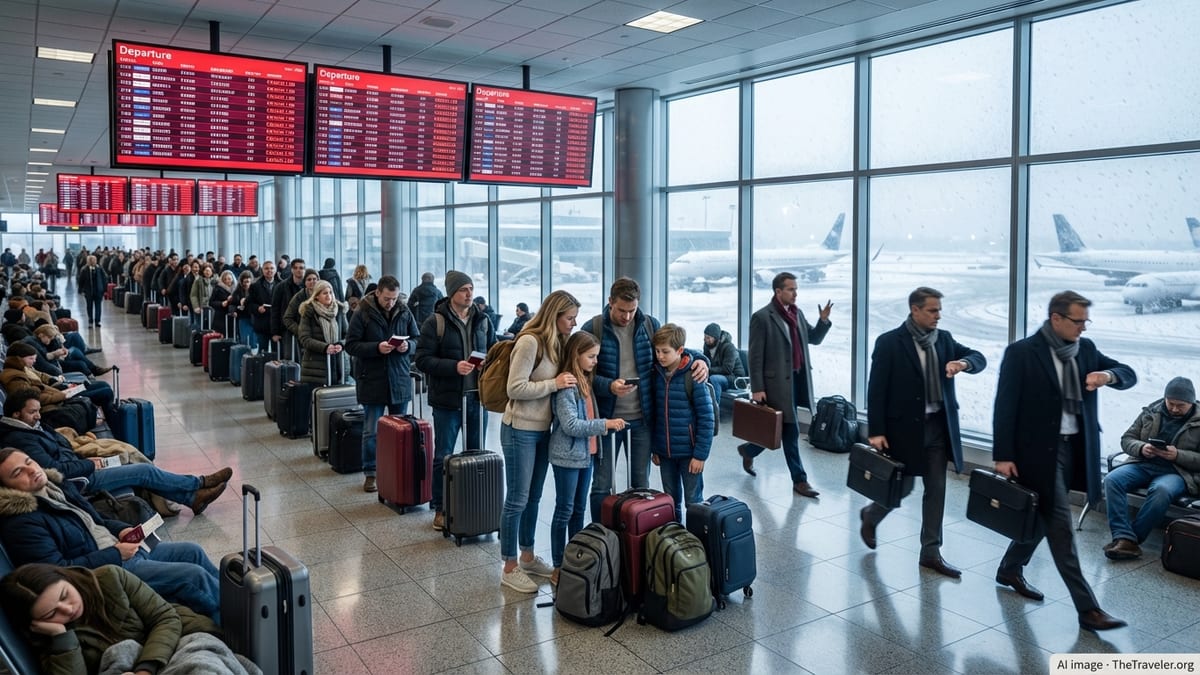
Lightning storm halts departures and traps arrivals on tarmac
Vancouver International Airport reported that thunderstorms moving through the region overnight from Saturday, August 22, to Sunday, August 23, led to a suspension of airfield operations for several hours. Publicly available information from the airport indicates that from roughly 9 p.m. to the early hours of 3 a.m., departing flights were unable to leave and many arriving aircraft could not taxi to gates because it was unsafe for ground crews to work while lightning was in the immediate vicinity.
The pause in operations created a backlog of aircraft on the taxiways, with flight-tracking imagery shared online showing clusters of planes holding on the airfield. Posts on aviation and local community forums described planes parked for more than 90 minutes with passengers kept on board while they waited for conditions to improve and gates to become available.
According to the airport’s arrivals information, multiple late-evening and early-morning services into Vancouver were either significantly delayed or cancelled as the storm cell lingered over the airport. Some flights arriving from short-haul destinations such as Seattle showed arrival times pushed into the early hours of Sunday, while others were marked as cancelled as airlines adjusted schedules in response to the ground stop.
Environment Canada had issued a severe thunderstorm watch for Metro Vancouver on Saturday evening, noting conditions favourable for intense lightning, heavy rain and strong winds. The storm that followed produced frequent lightning strikes over the city and the Fraser River delta, directly affecting the airport corridor.
Ongoing delays and cancellations ripple through Sunday schedule
By Sunday morning, the most intense part of the thunderstorm had passed, but information from Vancouver International Airport showed that flight operations were still recovering. The airport’s own advisory on “impact from overnight thunderstorms” noted that some flights continued to be affected as airlines worked to restore their schedules and reposition aircraft.
Arrivals and departures boards on the airport’s website displayed a mix of delayed, cancelled and on-time flights through the morning and midday periods. Several early-morning services, including regional connections, were listed as cancelled, while numerous others showed revised departure or arrival times as crews and aircraft were reassigned following the overnight disruption.
Reports shared by travellers on social platforms described long lines at check in and security on Sunday, as well as crowded gate areas while passengers waited to learn whether their flights would proceed. Some users indicated that flights were repeatedly pushed back in 30 to 60 minute increments before eventually operating or being cancelled outright, underscoring the level of uncertainty created by the weather event.
Advisories highlighted online by the airport urged passengers to confirm their flight status directly with airlines before heading to YVR, reflecting the continuing potential for last-minute schedule changes as operations normalized.
Unusual storm exposes vulnerability to extreme weather
Local media coverage described the thunderstorm as unusually strong for the South Coast, with vivid lightning displays over downtown Vancouver and surrounding communities into the late evening. Environment Canada’s alerts emphasized that the system was capable of producing frequent lightning and heavy downpours, conditions that are less common in the typically milder coastal climate at this time of year.
Social media posts from across Metro Vancouver characterized the storm as one of the most intense in decades, with residents remarking on the sustained thunder and lightning through the night. In addition to air travel impacts, the storm contributed to scattered power outages and localized flooding in parts of the region, adding to the sense of disruption.
Commentary from aviation observers online noted that lightning events pose a particular challenge for major hub airports such as YVR, where safety protocols require ramp workers to leave exposed areas when strikes are detected nearby. When a storm lingers directly above an airfield, this can quickly lead to congestion on taxiways, saturated gate capacity and knock-on delays that extend for many hours after the weather has improved.
The overnight events at YVR highlighted how a single severe storm can affect not only local departures and arrivals, but also onward connections across Canada, the United States and international routes, as delayed aircraft and crews cascade through airline networks.
Airport and airlines focus on recovery and passenger support
In its public advisory, Vancouver International Airport stated that it was increasing terminal staffing to assist travellers affected by the disruption. The notice indicated that the airport and its partners were working together to recover flight schedules as quickly as possible following the overnight ground stop.
Airlines operating at YVR began adjusting Sunday operations to accommodate displaced passengers, including rebooking travellers on later services and, in some cases, rerouting them through other hubs. Online accounts from passengers referenced being moved to alternative flights later in the day or the following morning as seats became available.
Travel information pages associated with the airport encouraged passengers to monitor airline apps, flight-notification services and the airport’s official channels for real-time updates. Guidance also stressed the importance of arriving with extra time, as weather-related disruptions tend to increase wait times at check in, baggage drop and security screening.
While the full extent of delays and cancellations across all airlines was still being tallied on Sunday, publicly available flight data and traveller reports indicated that hundreds of flights were affected in some way, from minor delays to outright cancellations and diversions.
Travellers urged to plan for continued knock-on effects
With aircraft and crews out of position after several hours of suspended ground operations, aviation analysts noted that passengers could face residual disruption for the remainder of Sunday and potentially into Monday, particularly on tightly scheduled short-haul routes. Missed connections, crew duty limits and aircraft maintenance windows can all compound the effects of a prolonged thunderstorm event.
For those due to travel through Vancouver in the coming hours, publicly available guidance suggests taking a proactive approach: checking flight status frequently, confirming rebooking options early if a cancellation appears likely, and allowing for additional time in airport itineraries while operations stabilize.
The storm also renewed discussion locally about how coastal airports can prepare for more frequent episodes of severe weather as climate patterns evolve. While lightning-related ground stops remain relatively rare at YVR compared with airports in more storm-prone regions, the scale of this weekend’s disruption demonstrated the operational and passenger impacts that can emerge when such events do occur.
As of Sunday afternoon, Vancouver International Airport continued to signal that operations were improving but not yet fully back to normal, with travellers advised to remain flexible and closely engaged with airline communication channels as the recovery effort continued.
https://news.yvr.ca/impact-from-overnight-thunderstorms/