


More news on this day
Air travel across key Middle East hubs faced a fresh bout of disruption this week, with real time monitoring platforms logging 910 flight delays and 36 cancellations across airports in the United Arab Emirates, Iraq and Saudi Arabia, highlighting how quickly operational strains and regional tensions can ripple through the region’s aviation network.
Get the latest news straight to your inbox!
Fresh Wave of Disruption Across Gulf and Iraqi Gateways
Published coverage of the latest disruption indicates that the 910 delays and 36 cancellations were recorded on September 4 at a cluster of major airports, including Dubai International in the UAE, Erbil International in Iraq’s Kurdistan Region and several Saudi hubs. The figures are drawn from aggregated statistics compiled by live tracking services such as FlightAware and industry news outlets that monitor day of operations performance across the region.
Reports describe Dubai as once again the single largest node in the disruption pattern, reflecting its role as one of the world’s busiest international hubs by passenger traffic. Even a relatively modest proportion of late departures or arrivals at Dubai can translate into very large absolute numbers of affected passengers, particularly when disruption coincides with peak bank periods for long haul connections.
In Erbil, publicly available information points to a smaller absolute volume of flights but a noticeable share of services impacted by delays, compounding several weeks of intermittent uncertainty linked to regional security dynamics and airspace advisories. Saudi airports, including Riyadh and Jeddah, are reported to have contributed a significant portion of the remaining delayed and cancelled services, underlining the extent to which the Gulf corridor as a whole is still operating with limited slack.
Travel and aviation industry sites that track rolling operational data frame the disruption as part of a broader pattern seen through mid 2026, in which Gulf and Levant gateways have remained open but subject to recurrent schedule volatility, longer routings around sensitive airspace and occasionally short notice flight suspensions on selected routes.
Operational Pressures Behind the 910 Delays
While the specific causes of each delay differ by carrier and route, several recurring factors emerge from regional aviation intelligence reports. Operationally, airlines have been managing aircraft and crew rotations under tighter constraints since early 2026, when renewed conflict involving Iran and neighboring states prompted airspace restrictions and periodic airport closures across parts of the Gulf and Iraq.
Industry analyses note that rerouted flight paths around higher risk corridors have lengthened block times on a range of long haul services, in some cases forcing carriers to adjust departure waves, build in additional schedule padding or operate with payload limitations. These measures help maintain safety margins but also reduce the flexibility airlines have to absorb unexpected congestion, weather issues or technical problems without triggering knock on delays.
Network level briefings from logistics and aviation consultancies describe Saudi Arabia’s airspace as a critical east west bypass when portions of Iranian or Iraqi airspace are constrained, which has increased traffic density through key Saudi hubs. As more flights funnel through the same corridors, even routine air traffic control flow measures can create congestion, extending taxi and holding times and contributing to the wider pool of delayed departures and arrivals captured in the latest figures.
Advisories issued to freight and express operators in recent months also highlight constrained transport capacity and limited spare aircraft across the broader Middle East region. With airlines cautious about adding too much incremental capacity amid volatile demand and higher operating costs, there are fewer standby options available when irregular operations arise, magnifying the network impact of each cancellation or severe delay.
Dubai and Erbil’s Central Role in Regional Connectivity
Dubai’s position at the heart of international travel between Europe, Asia, Africa and Oceania means that disruptions there have immediate global implications. Long haul itineraries commonly rely on tightly banked connections of 90 to 150 minutes at Dubai, and even moderate arrival delays can cause misconnects that cascade into missed onward flights, hotel rebookings and baggage backlogs. Aviation industry coverage notes that similar patterns were observed in earlier disruption episodes this year, when relatively short lived closures still produced multi day knock on effects for transit passengers.
In Erbil, the latest wave of delays carries different but still significant consequences. The airport serves as a primary international gateway for northern Iraq, connecting the Kurdistan Region with key cities in the Middle East, Europe and sometimes beyond via partner hubs. When flights into or out of Erbil run late, travelers often have fewer alternative same day options, especially on niche point to point routes, leading to longer wait times and more complex rebooking scenarios.
Saudi hubs add another layer of complexity. Major Saudi airports connect domestic cities with global long haul services operated by both local and foreign carriers, and are increasingly being positioned as alternative transit points for travelers seeking to avoid more exposed parts of the Gulf. As a result, they now function both as feeders into larger Gulf hubs and as end to end transit gateways in their own right, which means that delays in Saudi Arabia can reverberate into connecting banks at Dubai, Doha and elsewhere.
The combined effect is a tightly coupled regional network in which operational stress at one or two airports can quickly be reflected across multiple countries. The September 4 snapshot of 910 delays and 36 cancellations therefore offers more than a one day statistic. It illustrates the continued fragility of a system that plays an outsized role in stitching together air links between continents.
Impact on Travellers and Airline Responses
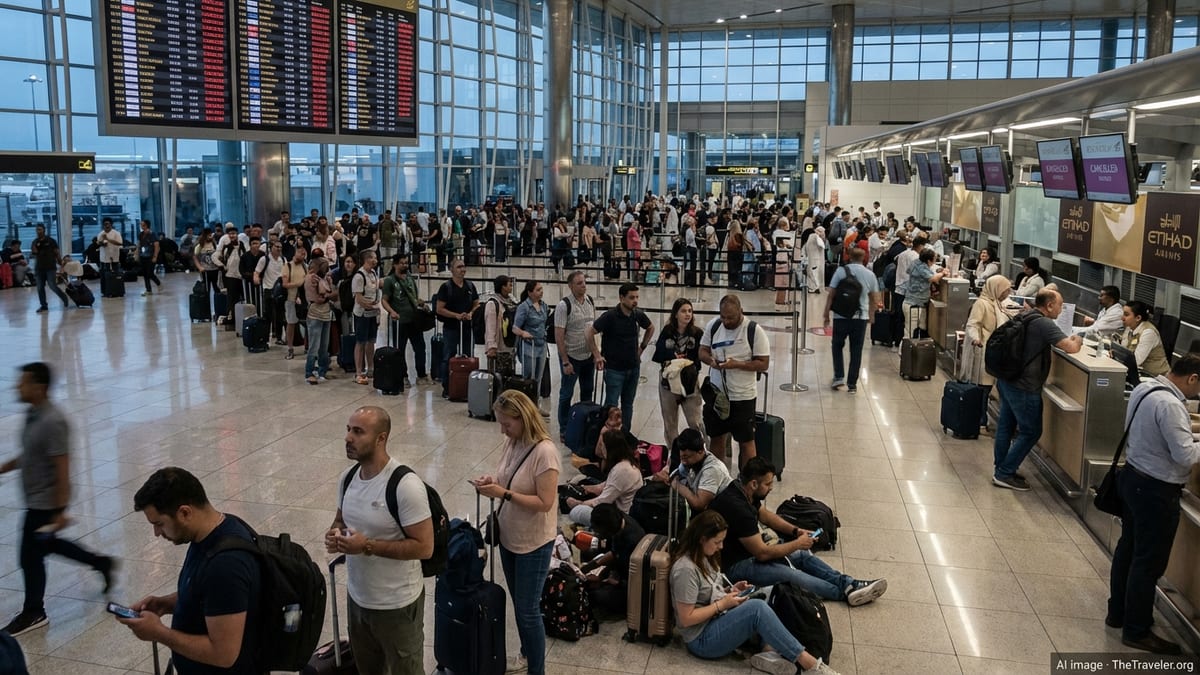
For travelers, the latest disruption has translated into crowded terminals, extended connection times and in some cases unexpected overnight stays. Travel media accounts from the affected day describe long queues at transfer desks in Dubai and busy customer service counters at several Saudi airports, as passengers sought rebookings or reassurance about onward connections. Social media posts compiled by aviation tracking sites likewise show screens of delayed departures at Erbil and Dubai, with rolling estimates of new departure times.
Airlines in the region have responded using a familiar toolkit developed over successive disruption episodes in 2026. Measures include flexible rebooking policies for tickets touching affected hubs, dynamic retiming of certain flights to de peak pressure periods and selective consolidation of services where demand allows. Some carriers have also continued seasonal or route specific suspensions into the autumn on itineraries that cross the most sensitive airspace corridors, a strategy outlined in recent travel advisories directed at passengers flying between Europe, the Gulf and South Asia.
Airport operators and ground handling partners are reported to be focusing on real time information delivery, using apps, websites and terminal displays to push status updates about departure gates, expected boarding times and potential re timings. Industry updates stress that while primary runways and terminals remain operational, the main challenge lies in managing variability in arrival and departure patterns throughout the day, which requires constant coordination between airlines, air traffic control and ground services.
For many passengers, the key practical lessons from this latest wave of disruption mirror guidance issued earlier in the summer. Travelers connecting through Dubai, Erbil or Saudi hubs are being encouraged by publicly available advisories to allow extra buffer time between flights where possible, monitor booking channels closely in the 24 to 48 hours before departure and remain prepared for short notice changes in routing or schedule.
What the Disruptions Signal for the Months Ahead
Analysts who compile regular Middle East aviation intelligence updates view the September 4 figures in the context of a year that has already seen multiple spikes in disruption. Data snapshots from July and August showed earlier waves of cancellations and delays across many of the same hubs, though with varying intensity and geographic focus depending on airspace advisories and the pace of regional tensions.
Industry commentary suggests that, barring a fundamental easing of the security environment, Middle East hubs are likely to experience a period of structurally higher schedule volatility compared with pre 2026 norms. Even when no outright airspace closures are in effect, corridors that airlines once used freely can be subject to additional routing constraints, altitude limits or short term avoidance requests, each of which can add minutes to block times and reduce the margin for on time operations.
Some airline planners have begun to adjust their winter schedules to reflect this new reality, building in longer connection windows at key hubs and moderating growth plans on the most exposed routes. At the same time, demand for travel through Gulf and Iraqi gateways remains resilient on many trunk markets, supported by diaspora traffic, business links and tourism flows. That combination of strong underlying demand and persistent operational complexity is likely to keep pressure on airlines and airports to refine how they manage irregular operations.
For travelers and the wider tourism sector that depends on seamless connectivity through Dubai, Erbil and Saudi hubs, the latest tally of 910 delays and 36 cancellations serves as a reminder that real time information, flexible planning and realistic expectations will remain essential tools for navigating Middle East aviation in the months ahead.
Middle East Aviation Network Hit by Delays and Cancellations
Middle East Airports Hit by 910 Delays and 36 Cancellations
Flight Disruptions Across Dubai, Erbil and Other Middle East Airports