


More news on this day
The Middle East’s tourism boom has been abruptly checked in 2026 by regional conflict, airspace closures and Red Sea disruption, yet new projections from the World Travel & Tourism Council (WTTC) and other forecasters still point to a powerful decade of growth led by the Gulf states.
Get the latest news straight to your inbox!
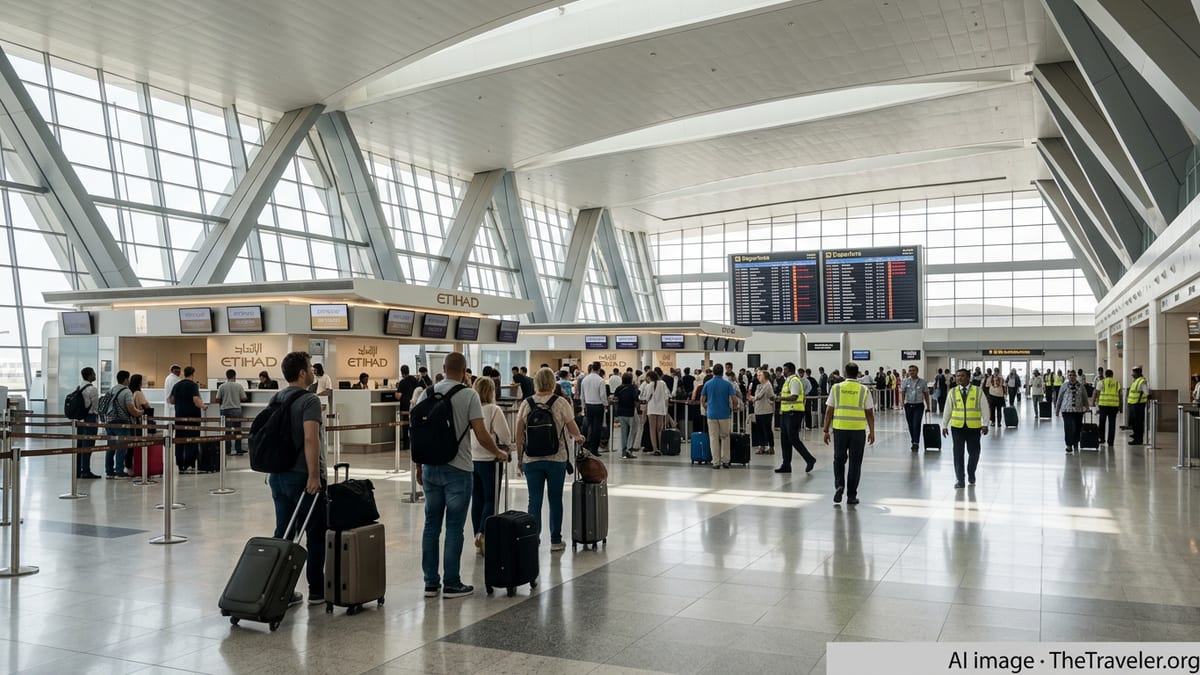
A Sudden Shock to a High-Flying Tourism Region
After several years as the fastest-recovering tourism region in the world, the Middle East entered 2026 with arrivals well above pre-pandemic levels. Industry analyses indicate that international arrivals in 2025 were roughly 40 percent higher than in 2019, underscoring how major investments in aviation, hospitality and destination marketing had turned the region into a global growth engine.
That momentum has been jolted by the Iran conflict and renewed instability around key maritime choke points. Airspace restrictions and widespread flight cancellations in early 2026 disrupted popular long-haul routes that rely on Gulf hubs for connections between Europe, Asia and Africa. Travel advisories and higher fuel costs have pushed some travelers to reroute through other regions or to postpone trips altogether.
Research from private forecasters such as Oxford Economics suggests that inbound arrivals to the broader Middle East could fall by between 11 and 27 percent in 2026 compared with the previous year, depending on how long the conflict and associated security concerns persist. That potential decline contrasts sharply with the double-digit growth rates many destinations in the region had expected only months earlier.
The impact is uneven. Countries heavily dependent on long-haul leisure tourism, such as Jordan and Lebanon, have reported sharp drops in bookings, while Gulf hubs with strong domestic markets and business travel activity appear better positioned to cushion the downturn, even as they lose significant transfer traffic.
Red Sea Routes, Regional Conflicts and a Connectivity Crunch
Beyond immediate concerns about safety, the region’s tourism setback is tightly linked to a broader connectivity crisis. Airline data and regional coverage show that more than 5,000 flights were canceled in the first days of the 2026 Iran war as carriers in Europe, Asia and the Gulf suspended or rerouted services. The closure or partial closure of key air corridors has lengthened flight times and raised costs across many Middle East routes.
At sea, recurring threats to commercial shipping in the Red Sea and near the Strait of Hormuz have unsettled cruise and maritime tourism. Cruise lines have reworked itineraries away from traditional Red Sea stops and Gulf ports, reducing shore-excursion revenues for destinations that had been building cruise tourism as a strategic niche.
These dislocations are feeding directly into prices. Industry gatherings, including a WTTC summit held around the Suez Canal, have highlighted what participants describe as a perfect storm for summer travel: reduced airline capacity, higher fuel prices and longer routings, all of which tend to push up airfares. Travel trade publications report that some tour operators are redirecting groups toward Mediterranean or Asian destinations that avoid Middle Eastern airspace altogether.
The knock-on effects reach well beyond typical holiday travel. Religious tourism to sites in Iraq, Iran and parts of the Levant has slowed as pilgrims confront logistical uncertainty, while regional business travel, a significant driver of premium air traffic, has also been curtailed by security concerns and the risk of sudden route closures.
WTTC and UN Tourism Still Predict a Powerful Decade
Despite the 2026 shock, medium-term projections from global tourism bodies remain positive. WTTC’s latest economic impact research for the Middle East, released earlier this year, reports that the region has been expanding at more than five percent annually, outpacing the global average and reinforcing its position as one of the world’s most dynamic travel markets. The organization’s scenarios anticipate that, once current hostilities ease, underlying demand for the region’s hubs and new destinations will reassert itself.
WTTC and other forecasters point to several supportive structural trends. The region has a comparatively young population, ambitious infrastructure pipelines and a heavy concentration of airline and airport investment, particularly in the Gulf. Massive projects in Saudi Arabia, the United Arab Emirates and Qatar are expected to add tens of thousands of hotel rooms and new leisure attractions over the remainder of the decade.
UN Tourism’s barometer for 2026 notes that the Middle East’s crisis and higher travel costs are among the main headwinds for global tourism this year, yet it also emphasizes that international travel overall continues to recover, with many travelers shifting rather than canceling trips. Analysts argue that once airspace normalizes and insurance premiums fall, the region’s hub role, especially for connections between Europe and Asia, will again become attractive.
As a result, sector projections still envisage the Middle East’s travel and tourism contribution to gross domestic product rising significantly by 2030, with the share of employment in tourism-related activities also increasing. The 2026 downturn is being framed by many observers as a painful but likely temporary interruption to a longer growth narrative.
Gulf Heavyweights Lean on Vision 2030 and Megaprojects
Within that narrative, Saudi Arabia remains central. Government documents and national tourism strategies describe plans to transform the kingdom from a primarily religious destination into a diversified global tourism powerhouse. The country has already surpassed its original Vision 2030 target of 100 million annual domestic and international visits ahead of schedule and has reset its ambition to 150 million visits by 2030, with travel and tourism expected to contribute around 10 percent of GDP.
Investment platforms such as Invest Saudi emphasize that the tourism drive covers luxury resorts on the Red Sea coast, cultural and heritage sites, nature-based tourism and major urban events. Large-scale projects like new giga-resorts, entertainment districts and cultural zones are intended to broaden the visitor base and lengthen stays. Budget documents for 2026 reaffirm continued capital spending on tourism infrastructure despite regional uncertainty, signaling that authorities view current disruptions as cyclical rather than structural.
The United Arab Emirates is pursuing a similar strategy of diversification and scale. Dubai continues to position itself as a global events and aviation hub, while Abu Dhabi invests in cultural institutions and niche segments ranging from eco-tourism to sports. Aviation expansion plans, including fleet growth and new airport capacity, have been temporarily complicated by reroutings around conflict zones but remain central to long-term tourism planning.
Qatar, which invested heavily in hospitality and transport ahead of the 2022 World Cup, is facing particular strain from war-related disruptions to energy exports and airspace constraints. Nonetheless, authorities there and in neighboring Gulf states are continuing with destination marketing campaigns and incentive programs, betting that sustained infrastructure spending and a dense events calendar will help them rebound once travel patterns stabilize.
Fragile Destinations Face Deeper Scars
Beyond the large Gulf economies, the tourism shock is hitting more fragile destinations especially hard. Reporting on Jordan describes how visitor numbers to emblematic sites such as Petra plunged as images of conflict dominated global media, with local businesses facing steep income losses after back-to-back seasons affected by the Gaza war and then the Iran conflict.
In parts of the eastern Mediterranean, including Turkey and coastal areas of Egypt, tour operators report higher cancellation rates from key European markets concerned about the proximity of hostilities. Industry commentary notes that travelers with limited time and flexible destination choices are opting for perceived safe havens in southern Europe or Southeast Asia, at least until regional headlines stabilize.
These shifts risk entrenching disparities within the Middle East. Countries with diversified economies and strong fiscal positions can continue investing through the downturn, while those more dependent on tourism revenues and lacking large financial buffers may struggle to maintain attractions, preserve jobs and fund marketing campaigns. Development experts warn that prolonged instability could slow efforts to use tourism as a vehicle for rural development and heritage conservation.
At the same time, there are signs that some travelers remain determined to visit, particularly in niche segments such as adventure tourism, cultural tourism and faith-based travel. Specialized operators are working to adjust itineraries and routing to avoid higher-risk areas while still offering access to historic sites, though capacity in these segments is not sufficient to offset broader declines.
Strategic Pivots: From Volume Growth to Resilience
The 2026 downturn is prompting a strategic rethink across the region’s tourism authorities and private operators. Consultancies advising Middle Eastern governments argue that resilience must now sit alongside growth as a core objective, with a focus on diversified source markets, stronger regional cooperation and more flexible air connectivity agreements.
Some policy papers advocate for shifting away from an almost exclusive emphasis on headline visitor numbers toward indicators that capture value added, such as average length of stay, per-trip spending and the share of repeat visitors. Investments in digital infrastructure, dynamic pricing and real-time demand monitoring are being framed as tools to help destinations respond more quickly to sudden shocks, whether geopolitical or related to health or climate.
There is also growing attention to sustainability. Researchers and tourism bodies have cautioned that unconstrained volume growth can strain fragile ecosystems, from coral reefs in the Red Sea to desert oases and heritage sites. As a result, several flagship projects in the Gulf are now highlighting low-carbon construction, conservation zones and caps on visitor numbers in sensitive areas as selling points that could appeal to environmentally conscious travelers once the security situation improves.
For now, the Middle East’s tourism story in 2026 is one of abrupt disruption layered on top of remarkable recent gains. If the forecasts from WTTC and other international bodies prove accurate, the region’s current turbulence could ultimately be remembered as a sharp but temporary detour on a longer path toward becoming one of the world’s most important travel and tourism economies.