


More news on this day
Two commercial jets from different airlines suffered blown tires while landing at Chicago O’Hare International Airport within hours of each other, prompting a federal safety review at one of the nation’s busiest hubs.
Get the latest news straight to your inbox!
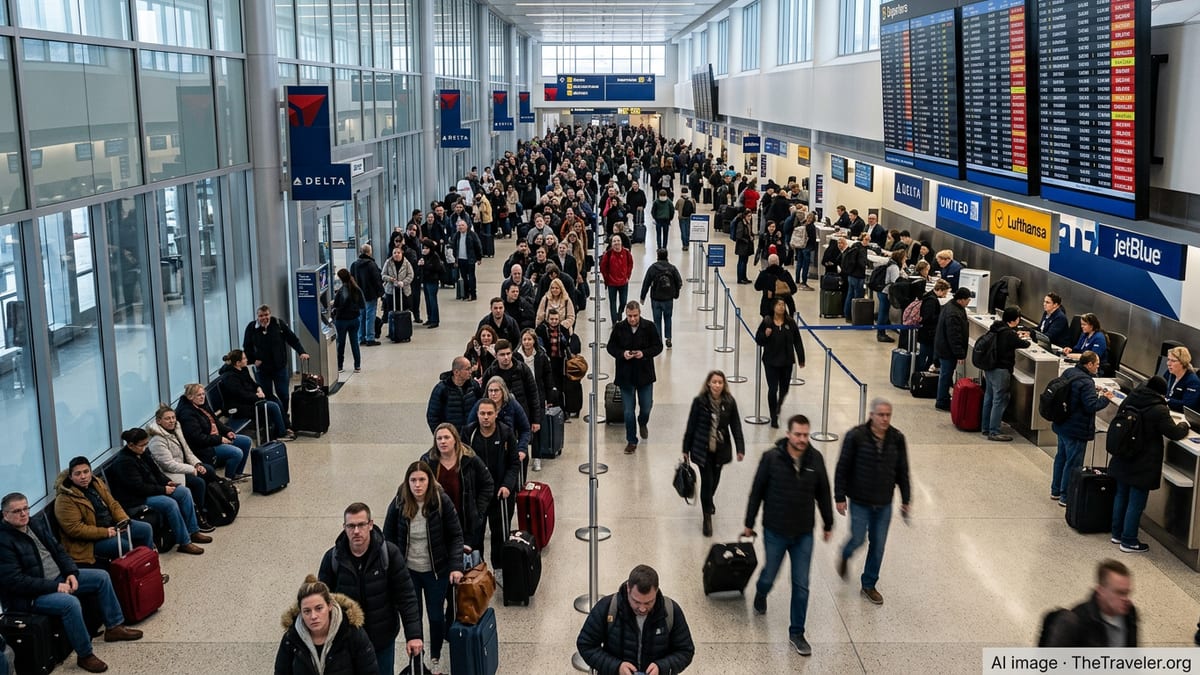
Back-to-back tire failures trigger safety questions
According to multiple news and aviation community reports, the incidents occurred on Monday at Chicago O’Hare International Airport, when two separate mainline passenger flights experienced tire failures during landing. In each case, the aircraft came to a controlled stop on the runway, and early accounts indicate there were no serious injuries among passengers or crew.
Initial descriptions shared in broadcast coverage and online posts suggest that at least one of the jets suffered multiple tire failures on the main landing gear, leaving the aircraft immobilized on the runway. Emergency vehicles responded and passengers remained on board while ground crews assessed the condition of the aircraft and runway surface.
Within a short period, a second airliner landing at O’Hare reported a similar problem, with one or more tires blowing as the aircraft decelerated. That sequence of events, involving different carriers on separate flights but at the same airport and on the same day, is considered highly unusual and has drawn the attention of federal regulators.
The Federal Aviation Administration has opened an investigation into the circumstances surrounding both landings. Published accounts indicate the review will focus on potential common factors, including runway surface conditions, possible foreign object debris, tire condition, and aircraft braking actions during touchdown and rollout.
Runway debris and maintenance under renewed scrutiny
Specialists note that modern airliner tires are designed to withstand significant loads and speeds, making simultaneous or closely timed failures at a single airport an uncommon occurrence. Aviation analysts commenting on the events have highlighted runway debris and surface contamination as among the potential areas of concern, along with recent maintenance performed on the aircraft wheels and brakes.
Foreign object debris, often referred to in the industry as FOD, can include tools, hardware, fragments of rubber, or other small objects that end up on a runway or taxiway. Even minor items can damage a tire when struck at landing speeds. O’Hare, as a major international hub with dense traffic, conducts regular inspections to remove FOD, but the closely spaced tire failures are expected to prompt a detailed review of those procedures during the relevant time window.
Publicly available FAA safety briefings emphasize that aircraft tire failures, while rare, are part of the risk envelope for high-energy operations such as takeoff and landing. Investigations typically examine maintenance records, the age and condition of the tires, inflation pressures, and any recent heavy-braking events that may have stressed the wheel assemblies.
In the Chicago incidents, investigators are expected to look not only at the individual aircraft histories but also at whether any common external factor at O’Hare, such as a patch of degraded pavement, spilled material from ground equipment, or undetected debris, may have contributed to both events.
Passenger disruption but no reports of serious injury
Passengers on the affected flights described extended delays on the tarmac as emergency services and airport operations teams worked around the disabled aircraft. In one case, travelers were held on board for an extended period before being transported to the terminal, while subsequent departures and arrivals experienced knock-on delays as the runway remained partially or fully closed.
Despite the dramatic nature of blown tires on landing, available reports indicate that occupants did not suffer serious injuries. Standard procedures call for pilots to maintain directional control, bring the aircraft to a stop using remaining braking capability and reverse thrust, and coordinate with air traffic controllers and airport rescue and firefighting units.
For many travelers, the incidents serve as a visible reminder of the complexity of modern hub operations, where a single disabled aircraft can affect dozens of flights in quick succession. Airlines involved in the Chicago events have initiated internal reviews and are cooperating with the federal investigation, according to statements referenced in news coverage.
Airports and carriers typically offer rebooking options and, in some cases, compensation when major mechanical incidents disrupt operations. In this case, travelers reported missed connections and overnight delays while waiting for alternate flights out of O’Hare.
How rare are multiple tire blowouts at one airport?
Data compiled by aviation regulators and safety organizations show that individual tire failures do occur across the global airline network, but most are contained events that do not lead to injuries or major aircraft damage. What sets the O’Hare episode apart is the clustering of two similar failures within hours at the same major airport, an alignment that raises questions about shared underlying factors.
Experts point out that the sheer volume of operations at an airport like O’Hare means that statistically, some technical events are inevitable over time. Tens of thousands of annual takeoffs and landings concentrate risk in a small geographic area. Even so, two nearly back-to-back tire failures are likely to be treated as a signal that warrants closer review rather than as simple coincidence.
Investigations into past landing-gear and tire incidents at other airports have, in some cases, prompted changes to tire testing standards, runway inspection routines, and maintenance documentation. The Chicago events may similarly influence how regulators and airport operators approach high-density runway environments and the monitoring of pavement conditions.
For travelers, the events are a reminder that modern air transport incorporates multiple layers of redundancy and oversight. Even when a component such as a tire fails, aircraft are designed to remain controllable and emergency procedures are well established, which appears to have been the case in both Chicago landings.
Next steps in the FAA review
The FAA’s inquiry into the O’Hare tire failures is expected to examine flight data recorders, maintenance logs, and reports from flight crews, ground personnel, and airport operations teams. The agency typically begins with a preliminary fact-gathering phase before determining whether further regulatory or safety actions are warranted.
Publicly available information indicates that inspectors will focus on items such as touchdown speeds, braking inputs, runway friction values, and weather conditions at the time of landing. Any materials recovered from the runway, including tire fragments or other debris, are likely to be analyzed to determine the sequence of damage and whether an external object initiated the failures.
Depending on the findings, the review could lead to recommendations affecting both the airlines involved and the wider airport system, such as adjustments to inspection frequencies, guidance on tire maintenance, or improvements in how potential hazards on the runway are detected and removed. In some previous cases, focused investigations into specific technical incidents have contributed to broader safety enhancements across the industry.
The investigation at Chicago O’Hare comes at a time of heightened scrutiny on U.S. aviation safety, with regulators, airlines, and airports facing pressure to address a series of high-profile mechanical events and runway incidents. The outcome of the O’Hare review will likely feed into that wider conversation over how to maintain resilience in an increasingly busy airspace system.