


More news on this day
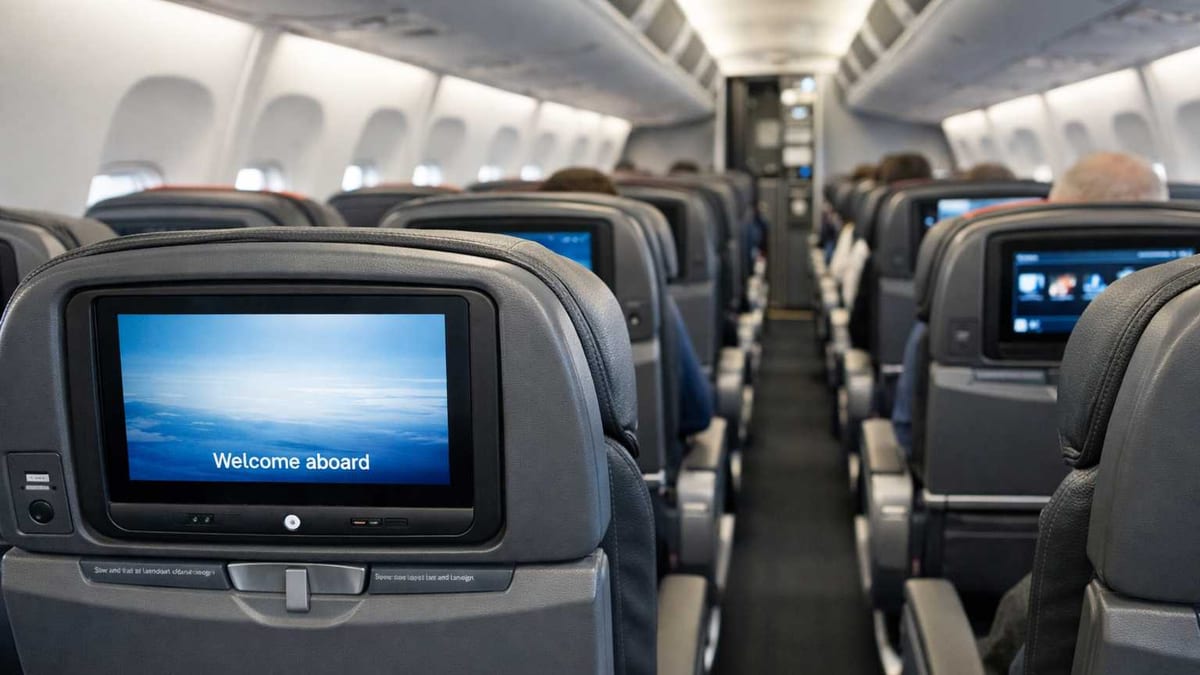
American Airlines is pushing ahead with a broad cabin refresh that will bring 4K seatback screens, upgraded seats and expanded charging options to much of its long-haul and premium fleet, marking a notable shift for a carrier long associated with a bring-your-own-device approach to inflight entertainment.
Get the latest news straight to your inbox!
From Wireless-Only Strategy to Screen-Centric Cabins
For much of the past decade, American Airlines has leaned heavily on passengers’ personal devices and onboard Wi-Fi, removing many older seatback systems on domestic narrowbody aircraft while rivals invested in new screens. Industry coverage has frequently contrasted that approach with the screen-equipped fleets at Delta Air Lines and United Airlines, which have used built-in entertainment as a differentiator in the crowded U.S. market.
Recent product announcements indicate that American is now repositioning its onboard experience around a mix of high-speed connectivity and new, integrated displays. Publicly available information shows that upcoming Boeing 787-9, Boeing 777-300 and Airbus A321XLR aircraft are being delivered with redesigned cabins that include 4K seatback monitors in Main Cabin, alongside updated premium seating products. These aircraft are set to anchor American’s long-haul network and key transcontinental routes, where inflight amenities are most closely scrutinized by travelers.
Reports also point to a pipeline of retrofits that will align certain existing widebody jets with the new standard, effectively extending the seatback strategy beyond just brand-new deliveries. Together, the changes amount to a major refresh of the airline’s global fleet, gradually replacing its earlier emphasis on streaming-only entertainment with a more traditional screen-at-every-seat model on flagship routes.
While not every domestic narrowbody will receive built-in displays, the scale of the long-haul and premium-focused program represents a significant course correction. The move signals that, for American, the future of entertainment is no longer an either-or choice between Wi-Fi and seatback systems but an attempt to combine both.
Details of the New Seatback Entertainment Systems
According to recent announcements, American’s refreshed cabins will feature 4K resolution seatback screens for Main Cabin passengers on future 787-9, 777-300 and A321XLR aircraft. The screens are being introduced alongside larger content libraries, with hundreds of films, television series, audio options and lifestyle programming updated on a regular basis. The airline has highlighted the goal of delivering a more cinematic experience at each seat, rather than a basic monitor used only for safety videos and a limited collection of shows.
The new displays will be paired with Bluetooth connectivity, allowing customers to use their own wireless headphones instead of relying solely on wired sets. This capability responds to shifting passenger expectations, as wireless earbuds have become the default choice for many travelers. Power outlets, including both AC and USB-A/USB-C ports, are planned at every seat, ensuring that devices can be charged while passengers stream, work or play games throughout the flight.
The hardware upgrades extend to the physical seating as well. American has showcased new trim and finish in its latest cabins, with updated upholstery, more refined lighting and redesigned storage spaces. In premium cabins, the Flagship Suite and Flagship Suite Preferred products are designed around privacy doors and larger personal surfaces, integrating the seatback screen into a broader “private suite” aesthetic.
Together, these elements are intended to deliver a step-change from American’s previous generation of interiors, in which many passengers depended largely on their own phones or tablets and a less cohesive cabin design. The latest layouts try to position the screen as part of a fully integrated personal environment that supports work, rest and entertainment in equal measure.
Widebody and A321XLR Fleets at the Center of the Overhaul
Publicly available information from American’s product updates indicates that the heart of the new seatback strategy lies in its long-haul and higher-margin operations. Future Boeing 787-9 deliveries and retrofitted 777-300 aircraft are expected to carry the upgraded cabins, providing a consistent experience on many transatlantic and transpacific routes that anchor the carrier’s global network.
The Airbus A321XLR, a long-range narrowbody designed for thinner transatlantic markets and premium domestic services, is also a key part of the plan. American has previewed this aircraft with a long-haul style interior, including lie-flat Flagship Suite seating up front and seatback entertainment and power outlets throughout Main Cabin. Early route plans show the A321XLR being deployed on select international and transcontinental flights, where a full-featured seatback system can be a deciding factor for customers choosing among competing carriers.
These investments come in parallel with a broader fleet renewal effort that includes new orders for Airbus A321neo and Boeing 737 MAX aircraft, as well as regional jets with upgraded interiors. While not all of those jets are slated for seatback installations, the widebody and A321XLR projects signal that American is intent on elevating the experience where competition is most intense and yields are highest.
By concentrating fully integrated seatback systems on long-haul and flagship routes, the airline can spread the cost of installation and maintenance over flights where passengers are more likely to make full use of the features. The strategy also positions American to better match or exceed the product standards set by major competitors on critical business and leisure corridors.
Balancing Screens, Wi-Fi and Cost Pressures
Adding seatback screens to hundreds of aircraft carries substantial upfront and ongoing expense, including equipment purchase, integration, maintenance and content licensing. American’s evolving strategy appears to balance those costs with an aggressive push on connectivity. The airline has highlighted expanding high-speed satellite Wi-Fi across both mainline and regional fleets, along with ad-supported options and connectivity benefits for members of its AAdvantage program.
Industry analyses suggest that combining robust Wi-Fi with built-in screens can create a layered entertainment ecosystem. Passengers who prefer larger displays and curated content can rely on the seatback system, while others can use personal devices to stream from their own subscriptions or work in the cloud. This hybrid model also allows the airline to continue monetizing connectivity while justifying the capital investment in new hardware.
From an operational perspective, American’s decision to focus seatback installations on specific fleet types may help control complexity. Standardizing interiors within long-haul and flagship subfleets can simplify maintenance, training and spare parts management while still giving the airline flexibility to keep certain domestic workhorse narrowbodies on a Wi-Fi-only model.
For travelers, the result is likely to be a more predictable experience on many international and premium routes, contrasted with a bring-your-own-device environment on much of the domestic network. Over time, customer feedback and competitive pressures could influence whether the seatback program expands beyond its current scope.
What Travelers Can Expect in the Coming Years
The rollout of American’s seatback-equipped cabins will not be instantaneous. Fleet renewal and retrofit programs typically take several years, and the timing is influenced by aircraft delivery schedules, maintenance windows and supplier capacity. Travelers can expect to see the newest interiors appear first on freshly delivered 787-9s and A321XLRs, followed by progressively retrofitted 777-300 aircraft as they cycle through heavy maintenance checks.
As more of these jets enter service, passengers on long-haul routes to Europe, parts of South America and select transpacific destinations are likely to encounter the updated cabins with 4K screens, redesigned seats and enhanced lighting. Premium transcontinental services between key U.S. hubs and major coastal cities are also candidates for early deployment, as American seeks to showcase its latest product on competitive business routes.
In the meantime, American is continuing to promote improvements in Wi-Fi coverage, ad-supported connectivity options and refreshed content libraries accessible on personal devices. For customers, this means that even flights without new seatback systems may offer a more robust digital experience than in previous years, particularly on regional jets and older narrowbodies.
Taken together, these developments signal a notable shift for the airline. After years of standing apart from rivals by emphasizing a wireless-only approach on many aircraft, American is now investing heavily in seatback screens as part of a wider effort to modernize cabins, increase comfort and sharpen its competitive edge on long-haul and premium services.