


More news on this day
An American Airlines passenger jet suffered a dramatic landing at Chicago O’Hare International Airport after two main-gear tires failed on touchdown, sending smoke billowing from the runway and prompting an immediate emergency response, according to early media and social media reports.
Get the latest news straight to your inbox!
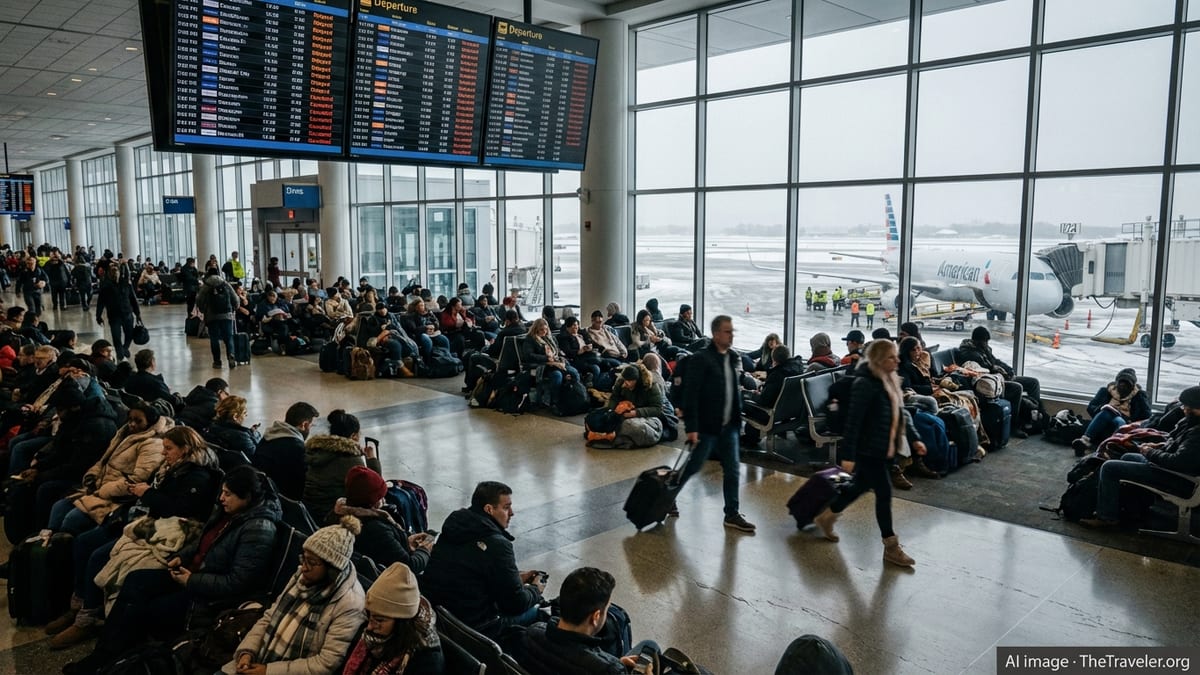
Incident unfolds during evening arrival at busy hub
Published coverage and passenger accounts indicate the incident occurred during a scheduled arrival at Chicago O’Hare, one of the world’s busiest hubs, when the aircraft experienced a hard landing that led to two tires on the same main landing-gear assembly blowing out. Video and photos shared on social media show the jet decelerating on the runway with heavy white smoke streaming from the affected gear and the aircraft coming to a controlled stop on the pavement.
Reports describe the aircraft remaining on the runway for some time as emergency vehicles approached and ground crews assessed the condition of the landing gear. Passengers were kept on board while the situation was evaluated, a common practice when there is no active fire and the aircraft appears structurally stable.
There were no immediate indications of serious injuries among the passengers or crew. Publicly available information suggests that the primary impact was operational, with the disabled aircraft blocking the runway and forcing air-traffic controllers to reroute traffic during a peak period for inbound and outbound flights.
Initial accounts do not specify the flight number or the aircraft type involved, but images circulating online show a twin-engine narrowbody in American Airlines livery on a standard O’Hare runway, consistent with a domestic or short-haul international service.
Runway closure and ripple effects for O’Hare traffic
The tire failures led to a temporary shutdown of the affected runway while airport operations teams inspected the surface for debris and rubber fragments. Even minor tire damage can leave material on the pavement that must be removed before the runway can safely reopen to other traffic.
O’Hare typically handles thousands of movements per day, so a single runway out of service can quickly create delays and diversions. Tracking data and local media coverage on Monday evening showed arrival and departure holds as controllers worked around the disabled jet and shifted flights to alternative runways.
Some connecting passengers reported missed onward flights as a result of the disruption. Other airlines using the same runway also experienced knock-on delays while crews waited for clearance to taxi or depart, illustrating how a single mechanical incident can briefly ripple through the wider schedule at a major hub.
Once specialized equipment arrived, maintenance personnel reportedly secured the landing gear, inspected the wheels and brakes, and began preparations to tow the aircraft clear so that runway inspections and surface cleaning could be completed.
FAA and airline launch standard post-incident reviews
Following the event, the Federal Aviation Administration opened a routine incident review, a standard step whenever there is a significant landing-gear or runway event at a large U.S. airport. Such reviews typically examine maintenance records, recent tire changes, braking data, and flight-crew reports to determine how and why multiple tires failed on the same landing.
American Airlines is expected to conduct its own internal assessment, focusing on the aircraft’s recent maintenance history, tire condition and age, and whether any foreign object on the runway may have contributed to the blowouts. Investigators usually look for signs of over-stress, heat damage, or impact cuts in the failed tires.
These inquiries also review flight data from the aircraft’s onboard recorders, which can show approach speed, sink rate at touchdown, braking inputs, and the deployment of systems such as spoilers and thrust reversers. Together, these parameters help determine whether the landing profile was within normal limits or placed unusual loads on the landing gear.
Results of such reviews are rarely immediate. In many similar events, authorities eventually conclude that a combination of factors, from subtle tire damage to runway conditions, contributed to the failure rather than a single, easily identified cause.
How unusual are multiple tire failures on landing?
Aviation experts note that individual tire failures during landing or rollout are not unheard of, particularly at high-traffic airports where aircraft land at high weights and brake hard in varying weather conditions. Airliner tires are designed to contain failures and are paired in multiple-wheel bogies to provide redundancy if one tire deflates.
However, the simultaneous loss of two tires on the same main gear, as reported in this case, is less common and generally draws closer scrutiny. Investigators typically examine whether the tires were damaged by debris, whether they were operated close to their wear limits, or whether an unusually firm touchdown or aggressive braking contributed to the overload.
Industry data published in recent years indicates that tire and brake issues account for a notable share of runway incidents but very rarely escalate into serious accidents when crews retain directional control. Modern jets are built to remain controllable even with one or more deflated tires, provided the landing gear structure remains intact and runway conditions are not severely degraded.
Events of this type often lead airports to reinforce routine runway inspections for foreign object debris, while airlines may refresh guidance to pilots on braking techniques and to maintenance teams on tire inspection thresholds.
Passenger experience and next steps for the aircraft
Passengers aboard the American Airlines flight described a loud bang, intense vibration, and heavy braking as the aircraft rolled out after touchdown, followed by a pause on the runway while fire and rescue vehicles positioned around the jet. Cabin lights reportedly remained on, with crew members instructing travelers to remain seated until the situation was secure.
After emergency services confirmed there was no fire and that the aircraft could be safely moved, passengers were expected to disembark either at a remote stand using mobile stairs or at a gate once the jet was towed in. Standard practice in such situations is to rebook travelers on later flights and arrange overnight accommodation for those unable to continue their journeys the same day.
The aircraft itself will remain out of service until engineers complete a detailed inspection of the landing gear, wheel assemblies, and surrounding structure. Any damaged tires, wheels, or brake components will be replaced, and the jet will undergo required test procedures before being cleared to return to commercial operations.
For O’Hare, the episode underscores the complexity of managing safety and capacity at a major international hub. While runway tire failures remain relatively rare and, in most cases, survivable without serious injury, each incident prompts renewed attention to runway maintenance, airline procedures, and the resilience of large airports when a single jet unexpectedly comes to a stop in the middle of a key piece of infrastructure.