


More news on this day
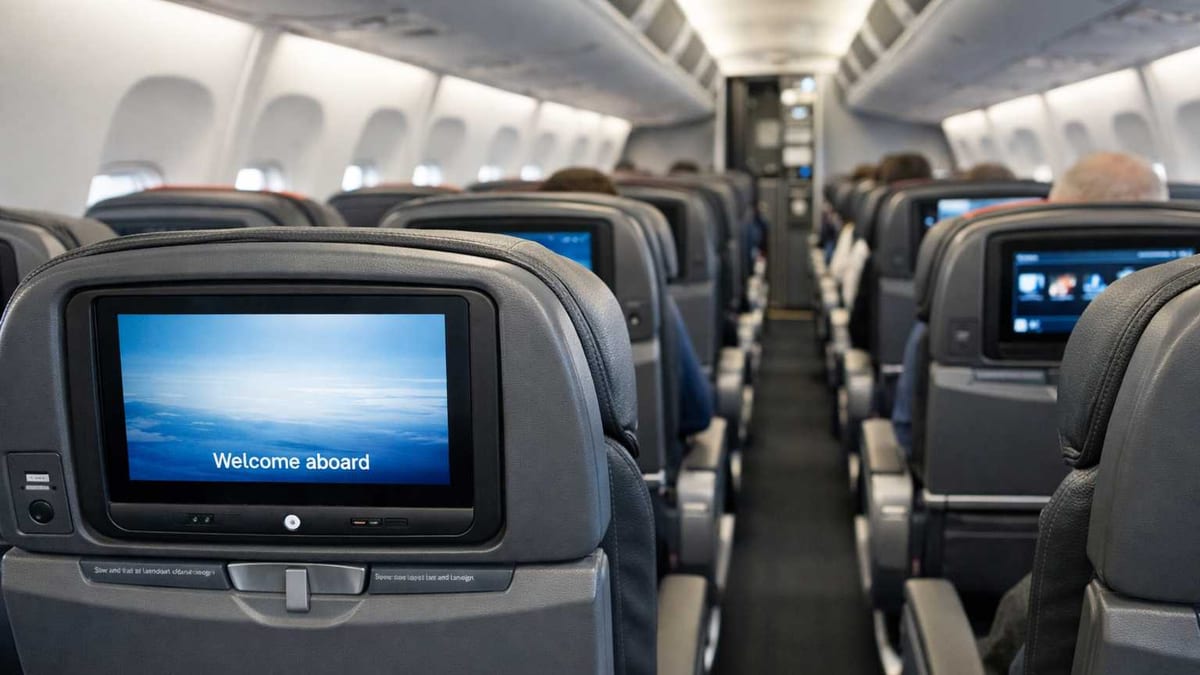
Seatback screens, once written off as relics of a pre-smartphone era, are edging back into American Airlines’ inflight experience as the carrier rethinks how it delivers entertainment in a competitive U.S. market.
Get the latest news straight to your inbox!
From phase-out to fresh focus on built-in entertainment
American Airlines spent much of the past decade moving away from traditional seatback entertainment, especially on its domestic narrowbody fleet. Beginning in 2017, the airline pursued a “bring your own device” approach, arguing that most travelers preferred to stream content on phones, tablets, and laptops connected to onboard Wi-Fi. Many newly delivered narrowbody jets arrived without embedded screens, and older aircraft were gradually refitted to remove them.
Recent developments suggest that strategy is shifting. Industry coverage in 2026 indicates American is now actively considering, and is reportedly close to approving, the return of seatback screens on portions of its narrowbody fleet. Reports describe internal evaluations of hardware options and cabin layouts, with attention on future Airbus A321neo family deliveries and potential refits on select workhorse aircraft types.
This reversal is unfolding against the backdrop of a wider North American trend. Delta Air Lines and United Airlines have leaned heavily into embedded entertainment as a differentiator, promoting 4K-capable screens, Bluetooth audio and expanded content libraries. With many U.S. travelers increasingly associating full-service carriers with seatback screens, American’s evolving stance appears aimed at closing a perceived competitive gap.
American is not abandoning the personal device model it championed, but rather appears to be layering screens back in where they can support a more premium narrative. That approach mirrors a broader “premiumization” strategy across its long-haul and high-yield routes, where cabin design and onboard amenities are being refreshed in tandem.
New-generation cabins point to 4K screens and more power
American’s most recent cabin announcements offer an early look at what its next wave of entertainment hardware will likely include. Publicly available information about future Boeing 787-9, Boeing 777-300ER refreshes and Airbus A321XLR aircraft describes a new interior concept built around the airline’s Flagship Suite business-class seats and reworked premium cabins. In the Main Cabin, those plans specify 4K seatback screens, Bluetooth connectivity, and both AC and USB power at every seat.
Although early communications focused largely on widebody jets and the long-range A321XLR, the same design language is expected to influence eventual narrowbody decisions. High-resolution displays, standard charging ports and wireless audio support are increasingly seen as baseline expectations on newly configured aircraft, rather than optional extras. For American, bringing these features into the Main Cabin is part of an effort to visually and functionally modernize cabins that, on some routes, still reflect choices made before streaming and high-speed Wi-Fi became commonplace.
The airline’s fleet plan also shows a substantial pipeline of new aircraft, including additional A321neo family jets and Boeing 787-9s, which provide natural opportunities to embed updated entertainment systems from the factory. Retrofit programs on existing widebodies are already under way, with new premium interiors being installed and cabin layouts adjusted to accommodate more business-class seating alongside updated hardware for all passengers.
While specific narrowbody retrofit decisions have not been publicly detailed, the technology blueprint emerging on the long-haul side clearly points to a return of integrated screens as part of a broader hardware refresh, rather than an isolated change.
Wi-Fi first, but entertainment everywhere
Alongside the renewed emphasis on seatback screens, American continues to expand the connectivity backbone that underpins both personal-device and embedded entertainment. The airline now markets streaming-capable Wi-Fi across its entire mainline fleet, promoting the ability for customers to access their own streaming subscriptions and online services during flight. Gate-to-gate connectivity on most mainline aircraft allows travelers to stay online from boarding through arrival, reflecting a shift from occasional connectivity to an always-on expectation.
American’s entertainment platform offers a rotating catalogue of roughly 1,500 movies, television series, audio programs and lifestyle content, according to its published materials. The airline updates hundreds of titles each month, aiming to align choices with current viewing trends and major award seasons. That catalogue is accessible both through seatback systems where installed and via browser-based portals or the airline’s app on personal devices.
Frequently asked questions on American’s entertainment site already describe how customers can identify whether a specific flight features seatback screens or only streaming to personal devices. This suggests that even before a large-scale narrowbody rollout, the airline is positioning screens as one of several amenity variables, alongside Wi-Fi type, in-seat power and live television availability.
The net effect is a dual-layer model: embedded screens on select aircraft and routes for a more traditional, curated viewing experience, and a Wi-Fi-driven ecosystem that allows travelers to mix airline-provided content with their own subscriptions, regardless of whether a physical screen is installed in the seatback.
Competitive pressure and changing passenger expectations
American’s evolving approach to inflight entertainment is unfolding in a hyper-competitive domestic market where product details are scrutinized on social media and travel forums. Many frequent flyers now compare fleets by the presence of seatback screens, reliable power outlets and Bluetooth audio, especially on cross-country and longer domestic routes where passengers are more likely to watch full-length films or work on laptops.
Rivals have not stood still. Delta has long promoted the ubiquity of its embedded screens, while United is in the midst of a multi-year project to add seatback entertainment across a large portion of its narrowbody fleet. For travelers choosing between airlines on otherwise similar schedules and fares, the promise of a modern screen and simplified entertainment experience can tip the scales.
For American, the reported move back toward screens can be read as a response to those market dynamics. The earlier argument that most customers prefer their own devices is still reflected in the airline’s investment in high-speed Wi-Fi and streaming partnerships. Yet, as cabins elsewhere in the industry become more visually sophisticated, the absence of a screen in the seatback has, in many cases, come to signal an older or less premium product, regardless of the underlying connectivity.
Reintroducing seatback entertainment, especially if paired with 4K displays and seamless Bluetooth audio, offers American a way to address that perception while also making its expanding content library more visible. Instead of requiring passengers to scan a QR code or open a browser, a powered-on screen can highlight new releases, curated channels and airline partnerships as soon as travelers sit down.
What travelers can expect in the coming years
Travelers should not expect an overnight transformation across American’s domestic network. Large fleets take years to refresh, and the airline continues to balance capital spending on new aircraft, retrofits, and other priority projects such as premium lounge expansions and regional-cabin upgrades. Industry reporting suggests the first visible wave of new or returning seatback screens will likely appear on specific aircraft types and high-profile routes, including long domestic segments and transcontinental services.
Over time, as new jets arrive and existing airframes cycle through heavy maintenance, more cabins are expected to feature a blend of large 4K displays, consistent power access and robust wireless connectivity. For passengers, the practical difference will be greater choice in how to pass the time: plug in headphones and browse the seatback interface, or stay on a personal device while taking advantage of the same content library and high-speed Wi-Fi.
American has framed its broader onboard evolution as creating a “reimagined” experience across cabins, from premium suites to standard economy. In that context, the reported return of seatback screens is less a nostalgic nod to the past and more a recognition that in an era of high expectations, visible technology in the seatback remains a powerful symbol of modernity.
As decisions on narrowbody installations move closer to reality, travelers booking American flights in the coming years are likely to see more aircraft marketed not only for their Wi-Fi capabilities but also for the presence of next-generation seatback entertainment, signaling a significant shift from the airline’s device-only ambitions of the late 2010s.