


More news on this day
Train operations on the key Jamira–Bairabi rail section connecting Assam and Mizoram have resumed after intensive repairs to soil erosion and landslip damage triggered by heavy rainfall in early September.
Get the latest news straight to your inbox!
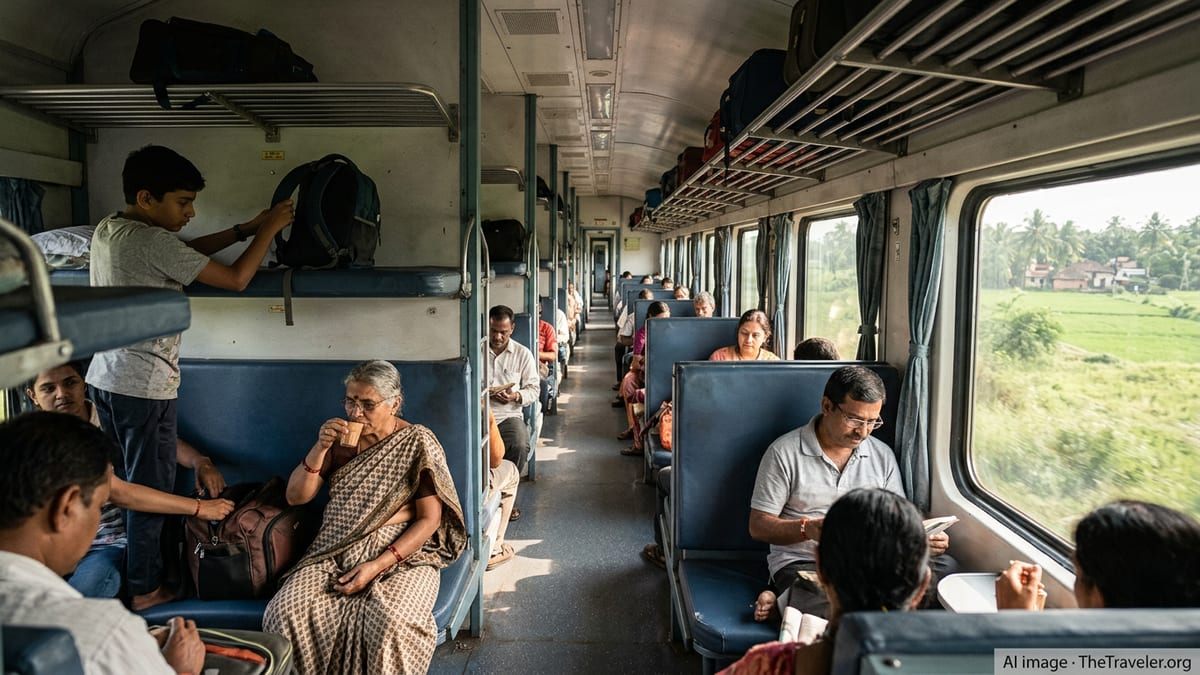
Rain Triggered Erosion Severed Mizoram’s Rail Lifeline
According to publicly available information, the disruption began on the evening of September 3, 2026, when continuous heavy rainfall along the Assam–Mizoram border caused severe soil erosion near the tracks between Jamira in Assam and Bairabi in Mizoram on the Katakhal–Bairabi section. The affected stretch forms part of the broader rail access to Mizoram, including onward connectivity via Bairabi toward the Bairabi–Sairang line, which links the state more directly with the national network.
Multiple news reports indicate that around 50 to 70 metres of the track formation were compromised after the downpour undermined the embankment and slope supporting the line. In some accounts, the impact zone extended several dozen metres from the centre of the track, creating a significant stability risk for rail traffic. As a result, rail managers suspended movement on the section and activated emergency protocols for inspection, safety checks, and staged restoration.
Published coverage shows that the soil failure and associated landslip immediately cut off passenger and freight services into Mizoram, forcing cancellations and diversions of trains that normally use the Jamira–Bairabi corridor. The shutdown added strain to already weather-sensitive road links in the hilly region, underlining how exposed the state’s transport lifelines remain to intense monsoon systems.
Intensive Engineering Effort Rebuilt the Damaged Formation
Reports from regional outlets describe an intensive engineering response in the days following the incident. Track and civil engineering teams were mobilised to the remote site to stabilise the slope, rebuild the eroded formation and reinstate the track geometry to operational standards. The absence of direct road access to parts of the corridor, highlighted in earlier coverage, reportedly complicated logistics for moving men, machinery and construction materials to the damaged location.
Publicly available updates from the Northeast Frontier Railway zone indicate that restoration activities focused first on halting further erosion through protective works and drainage improvements. Only after the formation was secured did crews move to pack fresh ballast, realign the rails and check structural integrity of sleepers, fastenings and nearby bridges. The scale of the washout meant that work continued round the clock under constrained working windows due to weather and terrain.
As the repairs progressed, successive advisories revised train operations, with some services partially restored on unaffected portions of the route while the core damaged segment remained closed. This staged approach allowed limited regional movement to resume even before the full reopening of the Jamira–Bairabi stretch, while ensuring that no trains ran over sections still under repair.
Services Resume as Safety Checks Clear the Jamira–Bairabi Section
According to the latest regional news coverage, rail authorities have now completed key restoration milestones on the Jamira–Bairabi section, allowing regular train movements to restart. The reopening follows post-repair safety inspections, test runs and speed trials designed to validate the strength of the rebuilt formation and confirm that signalling, track circuits and other safety systems are functioning as intended.
Reports indicate that passenger services connecting Mizoram with Assam and the wider Northeast Frontier Railway network are being gradually reinstated as operational plans revert from diversions and short-terminations to normal schedules. This includes express and local passenger trains that rely on the Katakhal–Bairabi link, which had seen a series of cancellations and adjustments between September 5 and 11 while repairs were underway.
Freight operations are also expected to benefit from the restored line, as the route serves as an entry point for essential commodities moving into Mizoram. With the track cleared for traffic, logistics chains that had shifted to longer road routes during the closure can revert to a more balanced mix of rail and road, reducing both costs and transit times for shippers.
Broader Significance for Mizoram’s Expanding Rail Network
The disruption and subsequent restoration underscore the strategic importance of the Jamira–Bairabi section in the context of Mizoram’s expanding rail connectivity. Bairabi functions as a gateway station toward the Bairabi–Sairang line, a relatively new broad-gauge corridor designed to bring rail services closer to the state capital region and integrate Mizoram more firmly into India’s northeastern rail grid.
Background documentation on regional projects highlights that the Bairabi–Sairang route and its connecting links involve extensive tunnelling, bridges and complex hill engineering, reflecting the technical challenges of building and maintaining rails in this terrain. The recent landslip reinforces concerns that even completed sections remain vulnerable to intense rainfall events, especially during active monsoon periods.
Transport observers have noted that reliable rail access is central to long-term plans for boosting trade, tourism and mobility in Mizoram, as well as for linking the state to multimodal initiatives aimed at improving connectivity with neighbouring countries. Consistent and resilient operation of feeder sections like Jamira–Bairabi is therefore seen as foundational for the larger economic potential of these corridors.
Weather Resilience and Future Preparedness in Focus
The episode has renewed attention on climate and weather resilience across the Northeast Frontier Railway network. A combination of steep slopes, high rainfall intensity and geologically fragile formations makes some hill sections particularly prone to slips, washouts and erosion that can sever critical lines with little warning. Recent case studies and technical papers from within the Indian Railways system have frequently highlighted the need for enhanced slope monitoring, drainage upgrades and real-time data on rainfall thresholds.
In the wake of the Jamira–Bairabi incident, infrastructure specialists are pointing to measures such as improved surface and subsurface drainage, slope reinforcement, vegetation management and proactive maintenance as key tools to reduce the likelihood and severity of similar events. The restoration itself, involving reinforcement of the affected embankment and inspection of nearby vulnerable stretches, is viewed as an opportunity to build back with higher safety margins.
For passengers and freight users, the reopening of the route brings immediate relief from prolonged detours and disruptions. In the longer term, the Jamira–Bairabi experience may influence how future works along the Assam–Mizoram border and other northeastern hill sections are planned and prioritised, with a stronger emphasis on anticipating extreme weather and strengthening critical links before the next heavy monsoon cycle.
Sources: The Indian Express; Morung Express; Hindustan Times; Northeast Update; NorthEast India Connect