


At barely more than two square kilometres, Monaco should be a mere footnote on the map of Europe. Instead, this tiny principality exerts an outsized pull on luxury travelers, luring them with superyachts, designer boutiques and one of the most glamorous event calendars in the world. Far from being a throwback to a bygone jet-set era, Monaco in 2026 is a sharpened, future-facing destination that keeps reinventing what high-end travel can be.
Get the latest updates straight to your inbox!
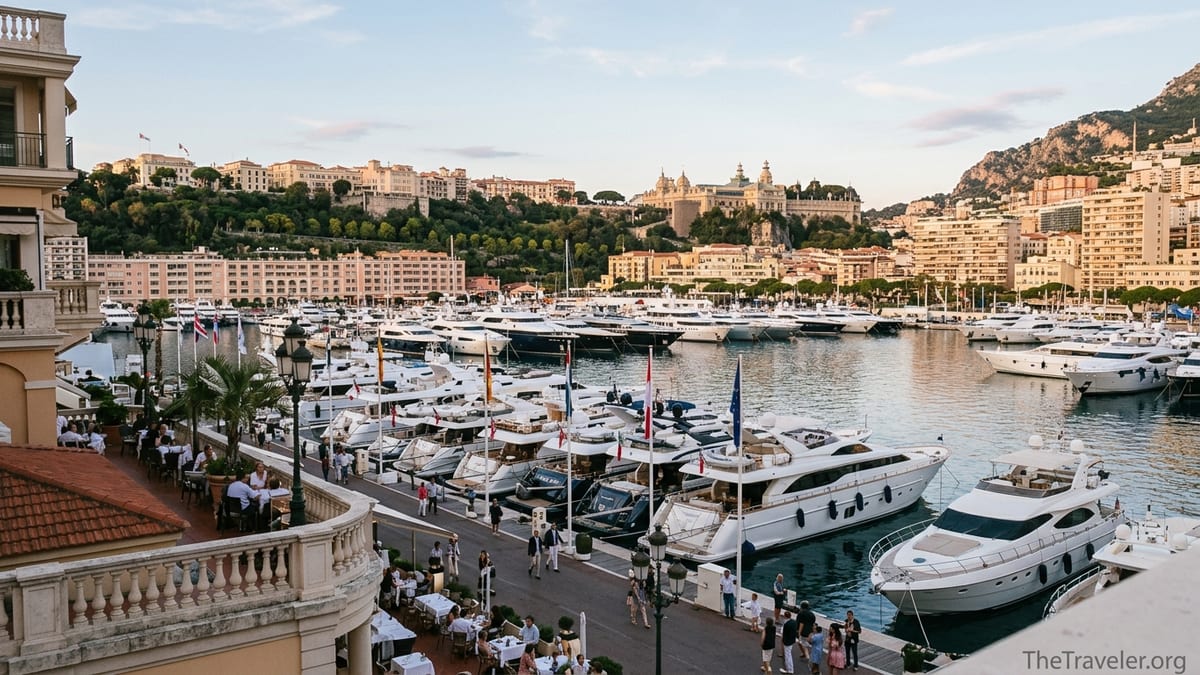
A Small State With Global Luxury Clout
Monaco’s scale is part of its fascination. With a territory of just a little over 2 square kilometres, it welcomes roughly a few hundred thousand visitors per year, putting it among Europe’s densest tourism destinations relative to size. Hotels routinely report high occupancy across much of the year, particularly in five-star properties that anchor the destination’s luxury reputation. For travelers, that compactness translates into something rare: you can check into a sea-view suite, reach a Michelin-starred restaurant, a designer flagship and a casino gaming table, all on foot within minutes.
Recent tourism reports from Monaco’s authorities show a post-pandemic rebound that has pushed the principality to new records in 2024, with strong growth in overnight stays and spending. The bulk of visitors still come from neighbouring France and other European markets, but there is a visible rise in guests from North America, Asia and the Middle East. This increasingly international mix is palpable at hotel bars and on the terraces of Casino Square, where you are now as likely to overhear conversations in English, Arabic or Mandarin as in French or Italian.
Recognition has followed. In early 2025, Monaco was named Best European Destination for 2025 by a major European travel rankings body, reflecting both its enduring glamour and the way it has modernised its tourism offer. For luxury travellers, such accolades are a useful shorthand: they signal that the destination is not just resting on reputation, but actively investing in its tourism infrastructure, cultural life and sustainability.
Those investments show up on the ground in subtle ways. The waterfront promenade between Port Hercule and the new Mareterra district feels more landscaped and pedestrian-friendly than even a few years ago. Public elevators stitch together the steep slopes of Monte Carlo, shuttling you smoothly from harbour level to the boutiques of the Carré d’Or. The result is that even as price tags climb, the basic experience of moving through Monaco has become more pleasant and coherent.
Monte Carlo’s Icons: Hotels, Casinos and Legendary Squares
Most luxury trips to Monaco still orbit around Monte Carlo, the district that concentrates the principality’s grand hotels and Belle Époque architecture. The Hôtel de Paris Monte-Carlo, overlooking Casino Square, remains the flagship. Following a major renovation completed just before the pandemic, its rooms and suites now combine marble bathrooms and classical moldings with discreet contemporary tech. Entry-level rooms often start well above 800 to 1,200 euros per night in high season, while signature suites with terraces facing the square run into several thousand euros.
Across the square, the more intimate Hôtel Hermitage Monte-Carlo offers a slightly softer mood, with winter gardens and views over the port. Here, too, rates in peak periods are unapologetically high, but many guests accept the premium for the ability to walk from their suite to the Opéra de Monte-Carlo or the famous Casino de Monte-Carlo in less than five minutes. A short stroll away, newer five-star addresses with contemporary design, such as Hôtel de Paris’ sister properties or sea-facing resorts near Larvotto Beach, cater to travelers who prefer sleek lines and rooftop pools to Belle Époque ornament.
Casino Square itself continues to function as Monaco’s open-air theatre. Supercars idle before the steps of the casino, tourists cluster around the reflective sculpture in the gardens, and the terraces of the historic Café de Paris fill from late afternoon with people-watching aperitifs. For the price of a couple of spritzes or glasses of Champagne, you can effectively buy a front-row seat on one of Europe’s most photogenic social stages. Inside the casino, classic gaming rooms with chandeliers and frescoed ceilings coexist with more modern spaces, illustrating how Monaco keeps one foot in tradition and another in contemporary entertainment.
Even travelers who are indifferent to gambling find architectural interest here. The casino and opera house share a building designed by the same architect as the Paris Opéra, and guided visits periodically open normally private areas. Paired with the marble halls of Hôtel de Paris and the restored facades around the square, these interiors demonstrate how carefully Monaco curates its historic core, reinforcing a sense of continuity that many newer resort destinations lack.
The Event Calendar: Grand Prix, Yacht Show and Year-Round Spectacle
Monaco’s events are central to its mystique, concentrating some of the world’s highest-spending travellers into a tiny space for intense bursts of activity. The Formula 1 Monaco Grand Prix, held each May, is still the headline act. In 2025, the event ran in late May under a title sponsorship with a major Swiss watch brand, with cars threading through harbourfront chicanes and up the hill past the casino. Grandstand seats for race day regularly sell for several hundred euros, while hospitality packages in trackside buildings, with gourmet catering and terrace views, can run to several thousand euros per person.
Around the same time, the streets transform into an open-air paddock and party venue. Rooftop bars install temporary grandstands, superyachts in Port Hercule become private viewing platforms, and hotels enforce multi-night minimum stays at peak-season rates. Even if you never enter the circuit, walking through La Condamine or standing on a public terrace to watch practice sessions offers a sense of the spectacle. For many luxury travellers, timing a visit to coincide with the Grand Prix is less about motorsport than about being woven into a particularly concentrated moment of global glamour.
In autumn, the Monaco Yacht Show takes over Port Hercule for several days, with an array of superyachts open to brokers and qualified buyers. Current editions feature hundreds of vessels, many over 50 metres in length, accompanied by exhibitors showcasing tenders, helicopters, water toys and bespoke services. Access to the docks is ticketed and priced substantially higher than a regular museum visit, which helps maintain a professional tone, but premium hospitality experiences and private cocktail events on board are where much of the networking happens.
The sporting calendar extends beyond motorsport and yachting. Each April, the Rolex Monte-Carlo Masters, a major men’s tennis event, is staged at the Monte-Carlo Country Club on the border with France. Weekday tickets for early rounds can start in the low three figures, with prices rising steadily towards quarter-finals and finals. Paired with spring weather, sea views from the stands and relatively easy access from central Monaco by bus or taxi, the tournament offers a less frenetic but still luxurious counterpoint to the Grand Prix. Add in international art fairs, ballet seasons and charity galas, and Monaco becomes less a summer-only stop and more a year-round events hub.
Waterfront Luxury: Beaches, Beach Clubs and the Superyacht Scene
For a principality famed for its harbour, Monaco has had to work creatively with its limited natural beachfront. The main public strand at Larvotto has been redeveloped in recent years into a more stylish urban beach, with a promenade of restaurants, casual bars and ice-cream counters. Sunbed and umbrella rentals on the public section are typically priced higher than on many Mediterranean beaches, reflecting both demand and the cost of maintaining the shoreline, but still give access to the same clear water and sheltered bay.
Private beach clubs and hotel-owned waterfronts cater to guests seeking greater comfort and exclusivity. Monte-Carlo Beach, located on the eastern edge of the principality, combines a historic seaside hotel with a beach club where cabana rentals, pool access and restaurant reservations are bundled into premium day packages. Rates for a pair of front-row sunbeds with service can run into the low hundreds of euros in high season, especially on weekends, and reservations are essential on peak dates. A short walk away, venues like La Vigie offer elevated Mediterranean dining perched above the water, with menus that pair local seafood with Italian or Riviera-inspired flavours.
Recent seasons have also seen the opening or refresh of several waterfront concepts by the main hotel operator in Monaco, adding new beach restaurants and upgraded pool bars aimed at a younger, lifestyle-driven audience. These venues lean into DJ sets, shared plates and destination cocktails, targeting travellers who might otherwise choose Ibiza or Mykonos. Yet the tone in Monaco remains more polished: dress codes are gently enforced, and table minimums for prime spots in high season can reach several hundred euros for an afternoon.
Parallel to the beach clubs, the superyacht scene remains a defining part of Monaco’s maritime appeal. Even outside the Monaco Yacht Show, Port Hercule and the smaller Port de Fontvieille host an impressive concentration of large yachts throughout the summer. Visitors can book semi-private boat tours or day charters that depart from Monaco and trace the coast towards Cap-Ferrat or the Italian border. While the largest superyachts charter for prices that run into five or six figures per week, smaller crewed motorboats can sometimes be booked for a day in the low four figures, allowing groups to experience the coastline from the water without the need to own a vessel.
Beyond the Glitz: Culture, Cuisine and Everyday Monaco
Despite its reputation as a playground of wealth, Monaco has a quieter cultural life that rewards travellers willing to look beyond the obvious. The old town on the Rock of Monaco, with the Prince’s Palace and narrow streets, feels almost like a different city. Here, visitors can watch the daily changing of the guard, visit small museums and enjoy views over both harbours. Cafés in this part of town serve simpler, reasonably priced lunches compared with the grand hotels below, making it a good place to step back from the high-gloss image.
Culturally, the principality punches well above its size. The Opéra de Monte-Carlo and the Ballets de Monte-Carlo present seasons that attract international performers, and museum spaces along the seafront, including the famed oceanographic institution, host rotating exhibitions. Ticket prices for performances and museum entries are often comparable to those in major European capitals, meaning that cultural experiences can be among the more accessible luxuries in Monaco, especially outside key events weeks.
Food is another area where Monaco has diversified. Yes, there are still three-starred tasting menus where dinner for two with wine can easily exceed four figures. But there is also an expanding middle ground of bistros, contemporary Mediterranean restaurants and Italian trattorias serving high-quality ingredients at prices broadly similar to those in Paris or Milan. Newer venues in redeveloped districts such as the reclaimed Mareterra waterfront mix international cuisine with views over the sea, drawing both residents and guests for more casual nights out.
Everyday details reveal a different side of the principality. Local markets in La Condamine sell seasonal produce and prepared foods, and it is not uncommon to see residents doing their shopping on foot, greeting stallholders by name. Public transport within Monaco is straightforward, with local buses and a network of lifts and escalators helping to reduce reliance on cars. For visitors, this means that while taxis and private cars remain part of the luxury offer, they are not the only way to navigate the city-state.
Lifestyles of the Ultra-Wealthy: Real Estate, Retail and Discreet Services
One reason Monaco fascinates luxury travellers is that it offers a glimpse into how the ultra-wealthy really live. Real estate prices in the principality remain among the highest in the world, with new-build apartments in prime developments routinely priced in the tens of millions of euros. Projects such as the seafront Mareterra land extension have created entire new districts of ultra-luxury residences, complete with private pools, concierge services and moorings for large yachts. While these properties are beyond the reach of most visitors, their presence shapes the environment in subtle ways, from the quality of public landscaping to the calibre of ground-floor retail.
High-end shopping is concentrated in and around the Carré d’Or district, where flagship boutiques from leading French and Italian fashion houses sit alongside jewellery and watch brands. Prices here are in line with, or slightly above, those found in Paris or Milan, but the experience is tailored to a clientele accustomed to private appointments, multilingual staff and discreet security. Travellers staying in nearby hotels can often arrange for in-room fittings or private viewings, especially during quieter months when boutiques are less crowded.
Behind the visible layer of consumption lies an ecosystem of discreet services that help maintain Monaco’s luxury machine. Specialist agencies arrange helicopter transfers from Nice airport, private security details for high-profile guests and last-minute yacht provisioning. Wellness has become another key pillar, with several five-star hotels offering expansive spa facilities, medical check-ups and personalised fitness programs. For visitors who have the means, it is possible to fly in for a long weekend that combines designer shopping and fine dining with consultations from leading cosmetic doctors or nutritionists.
Even for those not tapping into this rarefied tier of services, there is curiosity value in simply observing how seamlessly the city caters to its wealthiest residents. The parking garage beneath Casino Square may feature more high-performance sports cars in a single row than many cities see in a month, yet the atmosphere above ground remains surprisingly relaxed. Staff in hotels and restaurants are adept at treating a couple in resort wear and a billionaire in a tailored suit with equal courtesy, which contributes to a sense that Monaco, while exclusive, is not entirely closed off.
Planning a Luxury Stay: Practical Realities and Emerging Trends
Luxury in Monaco does not come cheap, and travellers considering a visit should approach planning with realistic expectations. In high season, especially during the Grand Prix, Yacht Show or major conferences, nightly rates at leading five-star hotels can reach levels comparable to or higher than those in Paris during Fashion Week or Venice during the Biennale. Even well in advance, finding sea-view rooms or suites on peak dates can be challenging, and some properties apply multi-night minimums. Outside of major events, however, shoulder seasons in spring and autumn can offer somewhat softer pricing while preserving pleasant weather.
Dining and nightlife follow a similar pattern. A casual lunch on a hotel terrace, with a main course and a glass of wine, can easily approach 50 euros per person or more, while multi-course dinners at top restaurants rise steeply from there. That said, travellers who mix high-end meals with simpler options, such as pizza or street-level bistros in La Condamine, can moderate their overall budget without sacrificing the sense of being in Monaco. Many visitors choose to splurge on one or two major experiences, such as a tasting menu or a day at a leading beach club, and keep other days more low-key.
New trends are also shaping how luxury manifests in the principality. Sustainability has become more prominent, with hotel groups highlighting energy-efficient renovations, sustainable seafood sourcing and initiatives to reduce single-use plastics. The Yacht Club de Monaco’s events calendar increasingly features gatherings focused on greener technologies in boating, from electric tenders to alternative fuels. For travellers, this translates into more opportunities to engage with luxury experiences that also consider environmental impact, whether that is choosing a boat charter that emphasises eco-friendly practices or supporting restaurants working with local producers.
Digital services round out the picture. Major hotels and event organisers now integrate apps and online platforms for everything from booking spa treatments to securing event tickets. High-speed connectivity is taken for granted, and concierge teams are adept at arranging last-minute reservations via messaging. This combination of hyper-traditional luxury and smoothly integrated technology is part of what keeps Monaco feeling current, even as its skyline of pastel facades and terraced gardens remains instantly recognisable.
The Takeaway
Monaco retains its position as one of Europe’s most fascinating luxury destinations because it manages a delicate balance. It is at once a historic resort with Belle Époque architecture and a test-bed for the latest expressions of wealth, from cutting-edge yachts to eco-conscious marinas. It offers ultra-exclusive residences and services that most visitors will only ever glimpse, yet also provides accessible pleasures in the form of promenades, cultural institutions and sea swims in a sheltered bay.
For travellers, the question is less whether Monaco is worth visiting and more how to approach it. Those expecting low prices or bohemian edginess will likely be frustrated. But visitors who are prepared for premium costs, who value people-watching and architectural beauty as much as poolside lounging, will find a destination that rewards both short, high-intensity stays around major events and slower, shoulder-season visits. In a European luxury landscape crowded with contenders, Monaco remains the benchmark against which many others are measured.
FAQ
Q1. Is Monaco only worth visiting if I can afford five-star hotels?
Not necessarily. While Monaco is known for its luxury hotels, there are mid-range options in and just outside the principality, and visitors can also stay in nearby French towns like Beausoleil or Cap-d’Ail and commute in by bus or on foot, enjoying Monaco’s restaurants, museums and promenades without paying top-end nightly rates.
Q2. When is the best time to visit Monaco for a luxury-focused trip?
The answer depends on your priorities. If you want maximum glamour and don’t mind crowds or high prices, aim for late May during the Grand Prix or late September for the Monaco Yacht Show. For a more relaxed but still luxurious experience, consider April, early June or October, when the weather is usually pleasant, hotels are slightly less busy and reservations are easier to secure.
Q3. How expensive is dining in Monaco compared with other European cities?
Monaco is generally more expensive than most European capitals, especially in hotel restaurants and venues around Casino Square. However, if you venture into La Condamine or the old town, you’ll find bistros, pizzerias and cafés with prices closer to those in Paris or Milan, especially at lunchtime, allowing you to combine occasional splurge dinners with more moderate meals.
Q4. Do I need to be invited to attend events like the Monaco Yacht Show?
No invitation is required to enter the official show itself, but access is ticketed and priced higher than typical exhibitions. Private parties and receptions on board individual yachts are usually by invitation or reserved for prospective buyers and industry professionals, so most leisure visitors experience the show from the docks and associated hospitality areas.
Q5. Is Monaco a suitable destination for families?
Yes, provided you are comfortable with the higher costs. Children often enjoy the oceanographic museum, the harbourfront, the public playgrounds and the beach at Larvotto. Some luxury hotels offer kids’ clubs or family-oriented services in summer. Families may want to avoid the busiest Grand Prix days, when streets are crowded and hotel prices peak.
Q6. How easy is it to get around Monaco without a car?
Very easy. The principality is compact, and most areas of interest can be reached on foot, though there are steep hills. A network of public elevators and escalators helps connect different levels of the city, and local buses cover routes from the train station to key districts and the beaches. Taxis and ride services are available but often unnecessary for short stays.
Q7. Can I visit Monaco as a day trip from nearby cities?
Yes. Many travellers visit as a day trip from Nice, Cannes or Italian towns along the Ligurian coast, arriving by regional train, bus or car. A day is enough to stroll around Monte Carlo, see Casino Square, walk through the old town and visit one or two attractions. However, staying overnight allows you to experience Monaco’s evening atmosphere, from terrace dinners to illuminated harbours.
Q8. Is there a dress code in Monaco’s luxury venues?
Dress codes vary. Beach clubs and daytime terraces are generally relaxed but still favour smart casual attire. In the casino, fine-dining restaurants and certain hotel bars, guests are expected to dress more formally in the evenings, with jackets for men and elegant outfits for women. Sportswear and beachwear are usually not accepted in these settings.
Q9. How far in advance should I book for major events like the Grand Prix?
For the Monaco Grand Prix, it is advisable to secure accommodation and race tickets many months, and in some cases a year, in advance, especially if you want a specific hotel, sea-view room or hospitality terrace. For the Monaco Yacht Show and the Rolex Monte-Carlo Masters, several months’ lead time is also prudent, though there may be more flexibility outside the most in-demand dates and locations.
Q10. Is Monaco making efforts to become more sustainable as a luxury destination?
Yes. The government and key institutions, including major hotel groups and the Yacht Club, have introduced initiatives related to energy efficiency, waste reduction and support for cleaner marine technologies. While Monaco still attracts energy-intensive activities such as yachting and motorsport, travellers increasingly have options to choose experiences and suppliers that place more emphasis on sustainability.