


For many travelers, sending money across borders is just as common as booking a budget flight or hunting down a last-minute hostel. Whether you are a digital nomad wiring rent back home, a student paying tuition from overseas, or a backpacker helping family in another country, the service you choose can quietly eat into your cash through fees and exchange rates. Two of the biggest names in this space are MoneyGram and Remitly. Both can move your money quickly, but which one usually leaves more in your pocket?
Get the latest updates straight to your inbox!
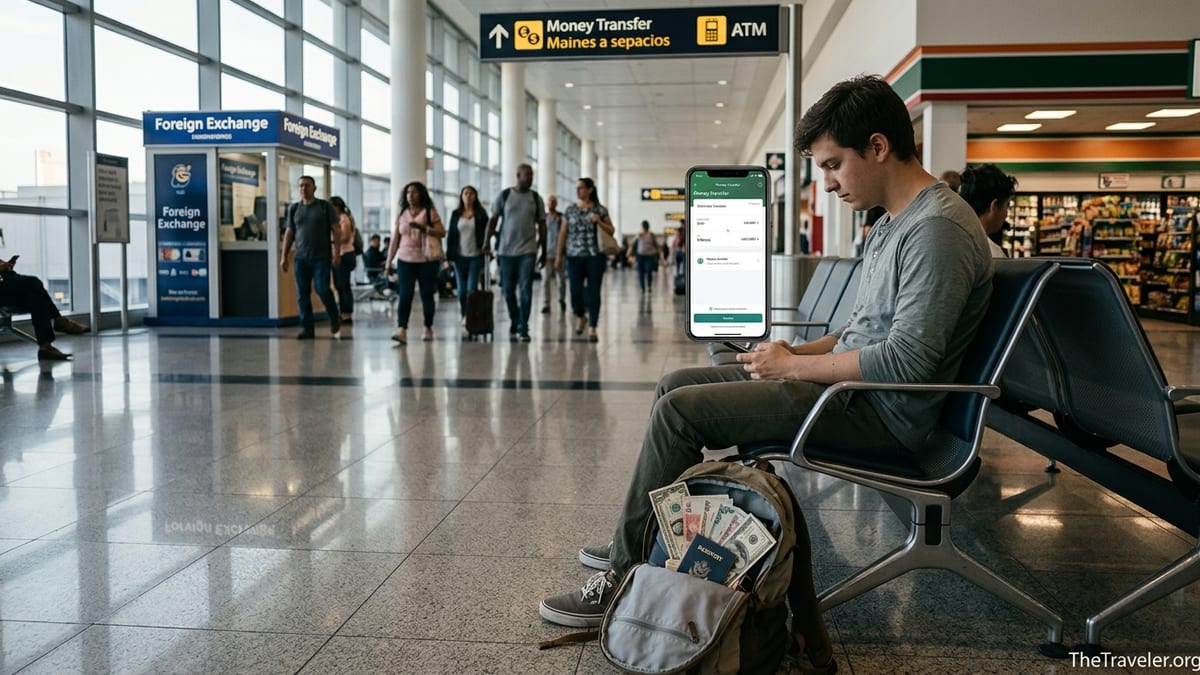
MoneyGram and Remitly in a Nutshell
MoneyGram is one of the oldest money transfer brands in the world, with roots going back to the mid‑20th century. Today it serves more than 200 countries and territories and supports over 100 currencies, with hundreds of thousands of physical agent locations where people can send and pick up cash. That physical reach makes MoneyGram a familiar sight in supermarkets, post offices and corner shops from Mexico City to Manila.
Remitly is a newer, app‑first remittance company based in Seattle that focuses on digital transfers from wealthier countries such as the United States to more than 170 countries worldwide. It has no in‑person branch network of its own and instead partners with local banks, mobile wallets and cash pickup providers. For travelers, that usually means you control everything from your phone: you create the transfer, choose delivery speed, and track it in the app.
Both companies charge a visible transaction fee and build a margin into the exchange rate between currencies. The real cost you pay will vary by route, how you fund the transfer, and whether you are a new or repeat customer. Remitly often promotes “special FX” or first‑transfer discounts, while MoneyGram sometimes waives transfer fees for first‑time digital users, but in both cases the promotional math changes after that first transaction.
For a traveler trying to stretch a limited budget, the headline fee rarely tells the full story. To compare MoneyGram and Remitly fairly, you need to look at total cost: the fee plus the exchange rate you are offered and, just as importantly, how usable each service is in the places you travel.
Fees and Exchange Rates: Where Money Is Really Won or Lost
Both MoneyGram and Remitly make money in two main ways. First, they may charge you a transfer fee, which can be a flat amount or tiered by transfer size. Second, they offer you an exchange rate that is slightly less favorable than the real mid‑market rate you would see on a currency site. The difference between those two rates is called the exchange rate margin, and it can quietly be the biggest part of your cost.
Independent comparisons in 2025 and early 2026 found that for many popular routes, Remitly typically offered a stronger exchange rate than MoneyGram, especially for digital transfers to bank accounts or mobile wallets. For example, one 2026 comparison of a 1,000 US dollar transfer to the Philippines found that a typical MoneyGram online cash‑pickup transfer involved about a 2 percent exchange rate margin plus a transfer fee of roughly 15 dollars, while a comparable Remitly transfer to a mobile wallet used a margin closer to 0.5 percent with a fee of about 4 dollars. In that scenario, Remitly left the recipient with roughly 20 dollars more in local currency than MoneyGram for the same 1,000 dollars sent.
However, these numbers can flip when you factor in promotions. MoneyGram has periodically offered zero‑fee promotions for first‑time online senders on some corridors. In those cases, the only cost is the exchange rate markup. Remitly, meanwhile, frequently advertises first‑transfer deals such as no fees plus a temporarily boosted exchange rate for up to a certain cap, for instance 5,000 or 6,000 US dollars on specific routes like United States to India. For a traveler sending money home for the first time or making an unusually large one‑off payment, either provider could temporarily be the cheaper option, depending on that day’s promotion.
For repeat transfers, which matter more to long‑term travelers and expats, several independent money transfer comparison sites report that Remitly generally delivers more local currency on digital routes, especially where the delivery is to a bank account or mobile wallet rather than cash pickup. The pattern is less clear when both services are used in their traditional strength, which is US dollar cash paid in at an agent and local currency cash collected at another agent. There, MoneyGram’s large network can sometimes justify a slightly higher cost if your recipient lives far from a bank and needs physical cash the same day.
Real‑World Cost Examples for Common Travel Scenarios
To understand how these differences feel in real life, imagine a US traveler working remotely from Mexico and sending money regularly to family in Manila. On a random day in spring 2026, a typical search of available services showed MoneyGram charging a fee in the mid‑teens to send 300 dollars for peso cash pickup in the Philippines, with an exchange rate a bit below the mid‑market peso rate. A traveler using Remitly Express from the United States to a mobile wallet like GCash might see a fee of around 4 dollars and an exchange rate closer to the market rate. In net terms, the Remitly route could leave the family with the equivalent of several dollars more per transfer, which adds up over a year.
Consider another scenario: a Nigerian student flying from New York to Paris for a semester abroad who needs to send 1,000 dollars back to a bank account at home. With MoneyGram, paying with a debit card and sending to a Nigerian bank often involves a fee, plus a rate that may be one to two percent weaker than the mid‑market. Remitly, on some larger transfers, may waive the fee entirely and rely mainly on the exchange rate margin. If its margin that day is roughly one percent and MoneyGram’s total impact (fee plus margin) works out closer to three percent, Remitly could deliver around 20 dollars extra on a 1,000 dollar transfer. That difference might cover a mobile data plan or several days of local transport for the family at home.
A third example highlights why MoneyGram can still be attractive for travelers. Suppose you are trekking in rural Guatemala when a family member back home suddenly needs cash, but they do not have a bank account and the nearest Remitly cash pickup partner is a long bus ride away. The town does have a MoneyGram branded counter inside a grocery store. Even if MoneyGram’s total cost is a few dollars more, the ability for your relative to pick up cash quickly and nearby could be worth the extra cost. In emergencies or very remote locations, access can matter as much as saving every last cent on the exchange rate.
For frequent, planned transfers where both MoneyGram and Remitly have digital options to local bank accounts, though, Remitly’s pattern of slightly lower fees and tighter exchange rate margins often makes it the cheaper long‑term choice for travelers.
Coverage, Cash Pickup, and Traveler Convenience
From a traveler’s perspective, one of the biggest questions is not just “Which is cheaper?” but “Which actually works where I am going?” MoneyGram’s strongest asset is its physical network. It operates in over 200 countries and territories and partners with hundreds of thousands of agents, including supermarket chains, postal offices, exchange kiosks and dedicated money transfer shops. If you are wandering through a bus station in rural Morocco or a small town in Honduras, you are more likely to see a MoneyGram window than a branded Remitly location.
Remitly, by contrast, leans heavily on digital delivery. It partners with banks, mobile wallets, and regional payout companies rather than running its own branded storefronts. In many countries, the recipient can collect money at a partner bank branch, load it directly into a mobile wallet, or receive it into a bank account. For example, in countries like the Philippines or India, Remitly integrates with major banks and wallet providers, which means funds can arrive directly in accounts that travelers or their families already use for everyday spending.
For tourists and nomads who are comfortable handling most logistics on a smartphone, Remitly’s app‑first approach can be more convenient. You can set up transfers from a hostel in Lisbon or a coworking space in Chiang Mai without hunting for a physical agent. However, if you are in a country where reliable mobile data is an issue or you or your recipient prefer cash, MoneyGram’s in‑person network can be a lifesaver. In many developing regions, having a nearby agent that understands local ID requirements and can help a recipient in their language is a real advantage.
When deciding which service saves you the most money, factor in the indirect costs of convenience. A slightly cheaper Remitly transfer is less useful if your recipient has to travel for hours to reach a pickup point, and the bus ticket ends up costing more than the difference in exchange rate. Likewise, if you are an urban traveler moving between big cities with solid banking infrastructure, the ease of digital transfers through Remitly can free you from lining up at agent counters and paying higher cash‑handling fees.
Speed, Transfer Limits, and Payment Methods
Both MoneyGram and Remitly market fast transfers, especially when you pay with a debit or credit card and the recipient picks up cash. In many popular corridors, MoneyGram cash‑to‑cash transfers can be available within minutes, provided there are no compliance checks and the payout location has sufficient liquidity. Remitly offers two main speed tiers: a slower Economy option when you pay from a bank account, which can take one to three business days, and a faster Express option funded by card that can deliver funds within minutes on common routes.
For digital‑first travelers, speed is often comparable between the two when using similar funding and payout methods. The bigger difference is in limits and how each provider handles larger transfers. MoneyGram sets transfer limits that depend on your location, verification status, and the specific route. For US‑based users, typical daily or monthly caps for online transfers may apply, but they can sometimes be raised after additional verification. Remitly, on the other hand, publicly advertises upper limits per transfer that can reach tens of thousands of dollars for fully verified users, though initial caps are lower for new accounts until you submit more documentation.
How you pay also affects the final cost. With both services, funding by credit card is usually the most expensive option, sometimes incurring an extra percentage fee and potentially being treated as a cash advance by your card issuer. Paying via bank transfer or debit card is generally cheaper. For instance, Remitly may charge an additional fee of around 3 percent for certain credit card funded transfers from the United States, which can quickly outweigh any promotional exchange rate on a large transfer. Travelers should check whether their bank card charges foreign transaction fees when paying for a transfer in another country, as those extra costs will not appear in the money transfer app but still hit their wallet.
If you are a traveler who occasionally needs to send a relatively small amount, such as 100 or 200 dollars at a time, Remitly’s modest flat fees and competitive exchange rates can be appealing, especially when combined with fee‑free or reduced‑fee promotions. For sending larger amounts such as 2,000 dollars or more, both providers tend to reduce or waive flat fees and rely more on the exchange rate spread. In those situations, even a small difference in the rate, like 0.5 percent, can mean 10 dollars or more of additional local currency on the other side.
Promotions, Loyalty Programs, and Hidden Costs
Promotions are a big part of the landscape for both MoneyGram and Remitly, and they can significantly affect which option is cheaper at any moment. Remitly is especially known for aggressive first‑time user offers, such as boosted exchange rates and zero fees up to a promotional cap on routes like US to India or US to the Philippines. Regular users also report referral bonuses in the form of credit toward future transfers or additional promotional rates when inviting friends.
MoneyGram has responded with its own digital promotions, often waiving fees for first‑time online sends from key markets like the United States. For travelers who previously only used in‑person agents, switching to the mobile app for the first time can unlock much lower visible fees. However, it remains crucial to check the exchange rate being offered, because a zero‑fee promotion can sometimes be offset by a wider exchange rate spread compared with competitors.
Both services have experimented with loyalty features. Remitly offers a membership‑style program in some markets that charges a monthly fee in exchange for cashback or rewards on transfers, which could benefit frequent senders but may not be worthwhile for occasional travelers. MoneyGram has at times offered point‑based loyalty schemes that reward regular users with discounted fees or other perks. Before enrolling, calculate how often you truly send money while traveling. A digital nomad wiring rent every month might recoup the cost of membership, but a backpacker sending family money once a year is unlikely to benefit.
Hidden costs also deserve attention. Besides the exchange rate markup, consider ATM withdrawal fees if the recipient needs to take cash out of a bank account, or mobile wallet cash‑out charges in countries where wallet providers levy their own fees. If you are moving between countries, foreign transaction fees from your own bank card can quietly add two to three percent to the total cost when you fund transfers in a foreign currency. Finally, factor in your time: standing in line at a busy MoneyGram counter during lunch in a crowded market can be more stressful than managing everything through an app, even if the difference in pure financial cost is small.
Choosing the Right Service for Your Travel Style
For many travelers, there is no single winner between MoneyGram and Remitly. Instead, the smarter strategy is to match the service to your travel style and each specific transfer. If you are a digital‑savvy traveler who spends most of your time in cities with strong banking infrastructure, Remitly will often be the cheaper long‑term option for regular remittances, especially to popular destinations in Latin America, Asia, and parts of Africa. Its combination of competitive exchange rates, transparent app interface, and frequent promotions tends to result in more local currency arriving at the other end.
If you or your recipient rely on cash and live in or travel through areas with few bank branches or limited smartphone adoption, MoneyGram’s wide network of agents can be invaluable. In those circumstances, paying a few dollars more in total transfer cost can be a reasonable trade‑off for reliability and accessibility. Travelers arriving in a new country with little local language knowledge may also appreciate being able to walk into a recognizable MoneyGram‑branded counter at a supermarket and get help from staff who handle remittances every day.
A practical approach for cost‑conscious travelers is to treat each transfer like booking a flight. Before sending, quickly compare what MoneyGram and Remitly will deliver in local currency for the exact amount you plan to send, using the same funding method and payout option. Pay attention to the estimated arrival time and any limits on how often you can send. Over the course of a long trip, consistently choosing the cheaper service for each transfer might save you enough for an extra regional flight or a week in a guesthouse.
It is also wise to keep a backup option. Some travelers maintain both a MoneyGram and a Remitly account so they can switch if one service experiences an outage, raises fees on a particular route, or hits a transfer limit at an inconvenient moment. Since both companies require identity verification for larger or repeated transfers, setting up accounts before you depart can prevent delays later when you urgently need to send money.
The Takeaway
When it comes to saving money, Remitly usually edges out MoneyGram for travelers who send regular digital transfers to bank accounts or mobile wallets. Its combination of lower average fees on many routes and tighter exchange rate margins often means a higher payout amount for your recipient, especially after you move beyond the first‑transfer promotions and into ongoing use. This makes Remitly a strong choice for digital nomads, overseas students, and long‑term travelers supporting family back home.
MoneyGram remains highly relevant, particularly for cash‑based scenarios and remote locations. Its enormous agent network gives travelers and their families the ability to send and receive physical cash in places where bank accounts and smartphones are less common. If you need same‑day cash pickup in a small town, MoneyGram may be the only practical option, even if it costs slightly more than a digital‑only competitor.
For most travelers who have access to both services, the smartest move is not to pledge loyalty to either brand but to compare them each time you send. Check the real exchange rate, note the fee, and calculate how many units of local currency your recipient will actually receive. Then weigh that against practical realities like location, speed, and comfort with mobile apps. Over months of travel, these small choices can add up to meaningful savings without sacrificing reliability.
Ultimately, “Which option saves more money?” depends on your route, habits, and the day’s promotions. As a rule of thumb, start with Remitly for digital transfers when both options are available, and fall back on MoneyGram for cash‑heavy situations or when its vast network offers a practical advantage. That way, your money transfer strategy supports your travels instead of quietly draining your budget.
FAQ
Q1. Which service is usually cheaper for travelers, MoneyGram or Remitly?
For many popular digital routes where money goes from a bank card to a bank account or mobile wallet, Remitly often ends up cheaper because of lower average fees and a tighter exchange rate margin. However, on some cash‑to‑cash routes or during specific promotions, MoneyGram can be competitive or even cheaper, so it is worth checking both for each transfer.
Q2. Is MoneyGram better if my family needs to pick up cash?
Yes, in many cases. MoneyGram’s strength is its huge physical agent network, which makes it easier for recipients to pick up cash in small towns or areas with limited banking infrastructure. If your family lives near a MoneyGram agent but far from a bank or Remitly cash pickup partner, paying a little extra in fees can be worth the convenience.
Q3. Does Remitly always have lower fees than MoneyGram?
No. While Remitly often has lower overall costs for digital transfers, neither provider is consistently cheapest on every route. Fees and exchange rate margins change by country pair, amount, and funding method. Sometimes MoneyGram runs zero‑fee promotions or offers a competitive exchange rate that narrows or reverses the usual gap, so it is important to compare in real time.
Q4. How do exchange rates affect the real cost of my transfer?
The exchange rate you are offered determines how much local currency the recipient receives for each unit of your currency. Even if a service charges a low or zero fee, a weak exchange rate can cost you more than a visible fee. For example, on a 1,000 dollar transfer, a difference of just 1 percent in the rate can mean 10 dollars more or less arriving on the other side, which can easily outweigh a small transfer fee.
Q5. Are first‑time promotions worth using for travelers?
They usually are, as long as you understand they are temporary. Both MoneyGram and Remitly frequently offer no‑fee or boosted‑rate promotions on the first transfer or up to a capped amount. For a traveler making a one‑off large payment, such as a rental deposit or tuition installment, these promotions can save a meaningful amount. After the promotion ends, you should compare standard rates again to decide whether to stay or switch.
Q6. Which service is better for frequent small transfers, like 100 or 200 dollars?
Frequent small transfers tend to favor providers with low flat fees and strong exchange rates. Remitly often performs well here, especially on routes where it charges only a modest fee and offers a rate close to the market level. However, if your recipient needs cash pickup from a nearby MoneyGram agent, the extra convenience might justify any small cost difference.
Q7. What payment method is best to keep costs down?
Funding transfers with a bank account or debit card is usually cheaper than using a credit card with either MoneyGram or Remitly. Credit card funded transfers can incur additional percentage‑based fees and may be treated as cash advances by your card issuer, which means interest charges from day one. Wherever possible, travelers should use debit or bank transfers and avoid paying extra foreign transaction fees on their cards.
Q8. How can I quickly compare MoneyGram and Remitly before sending?
The simplest approach is to start a transfer quote with both services for the same amount, route, and funding method without completing the transaction. Each service will show the transfer fee, the exchange rate, and the estimated amount the recipient will receive. By comparing those final payout numbers side by side, you can see which option is cheaper for that specific transfer.
Q9. Are MoneyGram and Remitly safe for travelers to use?
Both MoneyGram and Remitly are regulated money transfer providers in the markets where they operate and use security measures such as identity verification and transaction monitoring. For travelers, the main safety considerations are protecting your login details, using secure internet connections when sending money, and ensuring that recipients know how to collect funds safely at their end.
Q10. Should I rely on only one provider for all my transfers?
Keeping accounts with both MoneyGram and Remitly can be a smart strategy for frequent travelers. That way you can choose whichever service is cheaper or more convenient for each transfer and have a backup if one provider experiences a technical issue or hits a limit that temporarily blocks you from sending more. Flexibility usually leads to better savings over the course of a long trip.