


When you are planning an international trip, figuring out how to move money across borders can be just as important as booking your flights. MoneyGram, one of the largest money transfer companies in the world, promises fast cash pickups and bank transfers in more than 200 countries. But is MoneyGram actually a legitimate, practical option for international travel transfers, or are you better off sticking to bank cards and modern fintech apps? This guide breaks down how MoneyGram works in 2026, what it does well, where it can go wrong, and how real travelers can use it safely on the road.
Get the latest updates straight to your inbox!
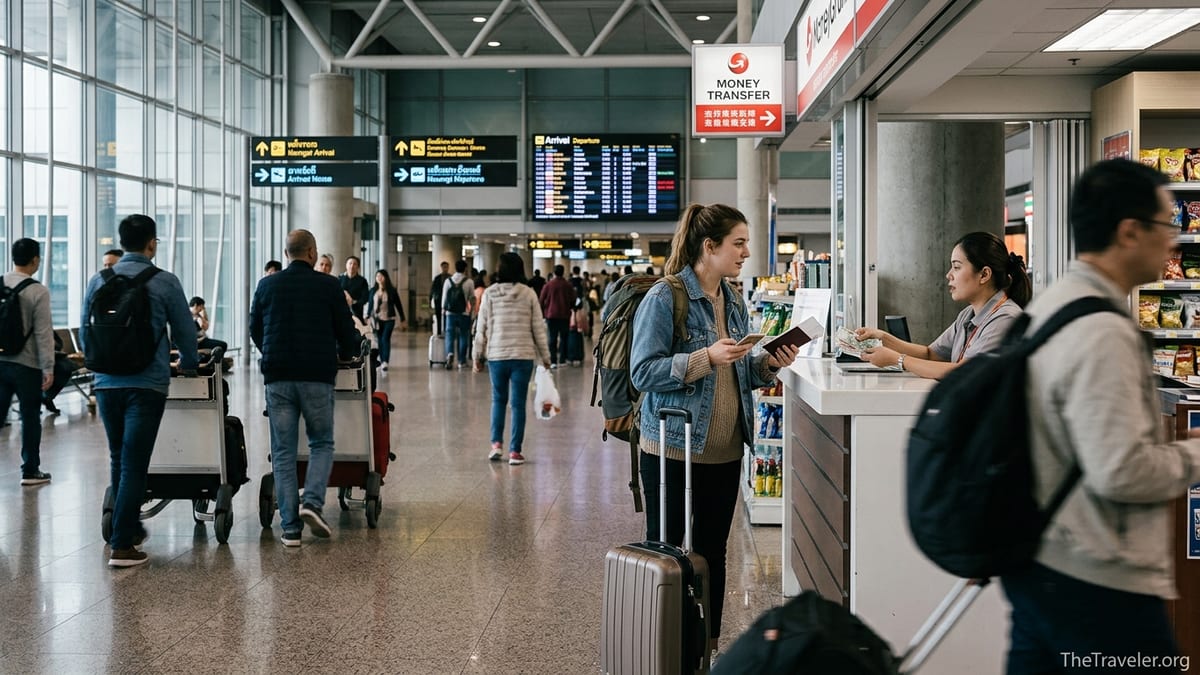
How MoneyGram Works for Travelers Today
MoneyGram is a global money transfer company that has been operating for decades and now serves an estimated tens of millions of customers worldwide. Through a mix of an official mobile app, website, and a vast network of roughly hundreds of thousands of agent locations in over 200 countries and territories, it lets you send money that can arrive in minutes as cash pickup, bank deposit, debit card deposit, or mobile wallet credit, depending on the corridor. In simple terms, it is a bridge between your home funds and local cash or accounts wherever you are traveling.
For travelers, the most common use cases are cash pickup and bank deposit. For example, a traveler from the United States heading to Mexico can fund a transfer by debit card or bank account through the MoneyGram app before departure. Their partner or friend can pick up Mexican pesos in cash at a supermarket or convenience store in Mexico City, often within minutes of the transfer being authorized. In other routes, such as from the UK to India, the same traveler might send money directly to an Indian bank account, which can also arrive quickly in typical conditions.
MoneyGram has kept pace with digital trends. A majority of transfers are now initiated online or in the app rather than at a physical counter, yet the company still relies heavily on its agent locations for cash payout. According to recent corporate materials, that footprint extends to several hundred thousand locations worldwide, including major partners like supermarket chains, post offices, and banks. This combination of digital sending and in-person cash pickup is what makes MoneyGram especially visible to travelers who need local cash in destinations where card acceptance is uneven.
In 2026 MoneyGram has also started to feature more prominently as a cash-out option for newer financial platforms. Some crypto exchanges and digital wallets now let users withdraw balances in local currency via MoneyGram cash pickup at participating agents. For a traveler who gets paid in digital dollars or stablecoins, this can make MoneyGram a practical last mile, turning online balances into actual banknotes in cities from Lagos to Lima.
Is MoneyGram Legit and Regulated?
From a regulatory standpoint, MoneyGram is a legitimate, licensed financial services provider in the markets where it operates. In the United States it holds money transmitter licenses across individual states and is overseen by regulators such as the New York State Department of Financial Services, which publicly lists MoneyGram as a licensed money transmitter. Similar oversight exists in other regions, where it must comply with anti money laundering rules, know your customer requirements, and consumer protection laws.
The company has been subject to scrutiny over the years, including enforcement actions related to its handling of fraud and compliance failures. Regulators and consumer protection agencies have previously criticized gaps in how the company detected and stopped fraudulent transfers, which led to settlements and additional obligations. While these episodes underline that problems have existed, they also confirm that MoneyGram is large and regulated enough to attract serious oversight and to be compelled to improve systems when deficiencies are found.
Stability is another part of legitimacy. MoneyGram has survived several economic cycles, competition from banks and newer fintech apps, and even a major pivot in ownership and strategy. Despite a crowded field that now includes Wise, Revolut, Remitly, Western Union, and bank-based alternatives, MoneyGram has continued to operate globally, adjust its digital tools, and add new payout options. For travelers, that long operational history means you are not dealing with a fly by night service that might disappear mid trip.
All of this said, regulatory approval does not guarantee a flawless experience. Complaints logged with consumer bodies and online review platforms highlight issues such as delayed transfers, blocked payments for compliance review, and frustrations around getting refunds when something goes wrong. These problems are not unique to MoneyGram, but they are reminders that while the company itself is legitimate, user experience can vary and travelers should build in some margin for delays, especially when they depend on time sensitive cash pick ups.
Fees, Exchange Rates and Real World Cost Examples
Legitimacy is one thing, cost is another. MoneyGram generally makes money in two ways: an upfront transfer fee and a markup on the exchange rate applied to your currency conversion. Fees and rates vary widely depending on the corridor, the funding method, the payout method, and how much you send, so travelers must check a live quote before committing.
As a practical example, consider a U.S. traveler sending the equivalent of 500 U.S. dollars to be picked up in euros in Spain. If a mid market rate places 1 dollar at a certain level against the euro, MoneyGram might offer a rate that is one to three percent weaker for a standard consumer transfer. On top of that, there could be a flat fee when paying with a bank account, and a higher fee if funding by credit card. The exact numbers change daily, but in many corridors the total cost can end up in the range of a few percent of the amount sent once both the fee and the exchange rate margin are considered.
On other routes, particularly those considered higher risk or less competitive, reviews and independent comparisons have measured even larger markups. Some analyses in 2026 still report corridors where the effective markup can climb notably higher than three percent. That does not mean every transfer is that expensive, but it is a signal that travelers should not assume they are getting near perfect interbank rates. The company itself notes in its materials that it makes money from currency exchange and that rates and fees can change without notice.
There are also fees attached to using any linked cards internationally. For example, MoneyGram states that using a branded debit card at international ATMs generally triggers a foreign transaction fee of around three percent, plus a flat fee for the withdrawal, on top of any fee charged by the ATM owner. These charges can make repeated small withdrawals poor value for travelers. In practice, a backpacker withdrawing the equivalent of 100 dollars abroad might easily lose several dollars in combined ATM and card fees, which quickly adds up over the course of a multi week trip.
Practical Use Cases for Travelers
MoneyGram tends to shine in a narrow but important set of travel scenarios, especially where a traveler or their family needs cash in a country where banking infrastructure and card acceptance are limited. One classic example is a traveler visiting rural parts of the Philippines, West Africa, or Central America, where local guesthouses and transport providers still operate on a cash only basis. In such places a friend or family member back home can send funds for cash pickup at a nearby MoneyGram agent, such as a small bank branch or neighborhood store, often within minutes.
Another common use case is emergency support when cards stop working. Imagine arriving in Nairobi or Lima and discovering that your main bank card has been frozen for suspected fraud. If your bank cannot resolve the issue quickly, a family member at home can use MoneyGram to send you enough cash to cover a few days of accommodation, food, and transport. You then visit a partner agent, present your passport and the transfer reference number, and walk out with local currency that can keep your trip moving until normal banking access is restored.
MoneyGram is also used by some travelers who are based in one country long term and receiving money from abroad. An English teacher in rural Vietnam or a volunteer in Guatemala might set up a pattern where their parents periodically send money from the United States or Europe via the app, and the traveler picks up cash at a local supermarket or pharmacy that acts as a MoneyGram agent. This arrangement can be especially useful when opening a local bank account is time consuming or impossible due to visa status.
In 2026 a newer pattern is emerging where digital finance users withdraw their online balances through MoneyGram. For instance, someone who holds earnings with a digital wallet or an exchange that supports MoneyGram cash pickup can initiate a withdrawal and collect local currency at an agent in their destination country. A remote worker who gets paid in digital dollars might land in Mexico City, initiate a USD withdrawal through a partner app, and pick up pesos at a MoneyGram counter in a supermarket within the hour. For tech savvy travelers who still need physical cash, this hybrid approach can be attractive.
Risks, Scams and Common Pitfalls
Although MoneyGram itself is a regulated business, its services are a frequent target for scammers. Money transfer systems are attractive to fraudsters because cash pickups are fast and, once collected, difficult to reverse. Consumer protection organizations in the United States have repeatedly listed money transfer related fraud among the most common scam categories, including romance scams, emergency scams, and fake online purchases. The basic pattern is that the scammer persuades a victim to send money through a legitimate service like MoneyGram, then collects it and disappears.
Real world stories shared in online forums and complaint boards illustrate how this affects ordinary users. Travelers and their families have reported scenarios where unauthorized parties used stolen card details to fund MoneyGram transfers, only discovering large debits on their bank statements after the fact. Others describe sending money to a supposed landlord, tour operator, or seller they met online, only to find out that the recipient was fraudulent and the cash was picked up instantly, leaving little recourse.
There are also operational risks that can frustrate travelers even in genuine transactions. Transfers can be delayed or blocked by automated compliance checks, especially when sending to higher risk destinations or using new payment methods. Some customers report struggling to get clear answers from customer service when a transfer is held, canceled, or misdirected, particularly in cross border bank deposit scenarios where money seems to vanish between institutions. Complaints to agencies such as the Better Business Bureau and discussion threads often mention long wait times for refunds and the need to escalate cases before resolution.
Data security is another concern. In the past few years, reports have surfaced of security incidents and data breaches related to MoneyGram or its partners, prompting worry among users about how safely their personal and financial information is stored. While the company has emphasized that transfer systems continue to operate and that remedial steps have been taken, travelers should remember basic hygiene: use strong unique passwords, enable multi factor authentication where offered, and avoid initiating transfers on public or insecure Wi Fi networks.
How MoneyGram Compares to Alternatives for Travel
When deciding whether to use MoneyGram for international travel, it helps to compare it against realistic alternatives. For many travelers with bank accounts and credit cards from major issuers, using a low fee debit card or a travel credit card at ATMs and merchants abroad remains the simplest option. Some banks and fintechs, particularly online players, offer near zero foreign transaction fees and exchange rates that closely track the mid market rate, making everyday card usage abroad relatively efficient.
App based services such as Wise, Revolut, and similar fintechs specialize in cheaper international transfers and multi currency accounts. A traveler can hold balances in multiple currencies, convert at or near mid market rates, and spend via a linked debit card in destinations worldwide. When these services are available in both the sending and receiving country, they often undercut traditional remittance players like MoneyGram on cost and transparency. However, they are less useful when the recipient needs physical cash in a location without strong card or banking infrastructure.
Western Union is probably MoneyGram’s closest direct competitor from a traveler’s point of view. It offers a similarly large global network of cash pickup locations and a blend of digital and retail sending options. In many corridors the pricing and experience of Western Union and MoneyGram are comparable, although individual quotes can vary. A traveler urgently sending 300 dollars to be picked up in cash in Morocco would be wise to check both services, paying attention not just to the transfer fee but also to the effective exchange rate each one offers.
Local bank transfers and domestic mobile wallets can also be powerful tools once you are on the ground. In countries like Kenya, Thailand, or India, local instant transfer systems and mobile money platforms can be cheap and widely accepted. In some itineraries, a smart strategy is to use a low cost international transfer service to send funds to a local bank or wallet, then rely on that system for day to day spending. MoneyGram can play a role in this stack, but for many well served destinations it will be one of several tools rather than the default choice.
Best Practices for Using MoneyGram Safely on the Road
If you decide that MoneyGram fits your travel needs, a few practical habits can significantly reduce risk and frustration. First, treat it as a backup or niche tool rather than your only access to funds. Carry at least two bank cards from different issuers and enable their international usage before departure. Use MoneyGram primarily when you or your recipient cannot easily access funds by card or ordinary bank transfer.
Second, always verify the pickup network in your specific destination before sending money. Use the official locator to check that a MoneyGram agent exists in the town or neighborhood where the recipient is located, and confirm operating hours. Real travelers have reported arriving in cities like Tokyo or smaller provincial capitals only to find that specific agent branches were closed, relocated, or no longer offering MoneyGram services. Calling ahead to a likely agent, or checking recent local information, can prevent stranded pickups.
Third, double check recipient information before confirming a transfer. For cash pickup, ensure the recipient’s full name matches their government issued ID exactly, including middle names and spelling. For bank deposits, verify account numbers or IBANs carefully, since misdirected transfers can be difficult and slow to recover. Whenever possible, send a small test transfer first to ensure everything works before committing to a large amount that you or your traveler will rely on abroad.
Finally, stay scam aware. Never send MoneyGram transfers to strangers for online purchases, rental deposits, or deals that seem too good to be true. If someone pressures you to pay a “visa fee,” “customs charge,” or “emergency expense” via MoneyGram, especially if you only know them online, step back and verify the story through independent channels. Use the service only for people you know and trust, and encourage family members to follow the same rule when sending you funds while you are traveling.
The Takeaway
MoneyGram is a legitimate, long standing player in the global money transfer market and, when used carefully, can be a useful tool for international travelers. It is regulated, widely available, and capable of delivering cash or bank deposits quickly across a huge range of countries and currencies. For travelers heading to regions with limited card acceptance, or those who occasionally need emergency cash support from friends and family back home, it offers practical options that newer app only services still cannot fully match.
At the same time, it is not a perfect solution. Fees and exchange rate markups can be significantly higher than some modern alternatives, and the service has a history of being exploited by scammers who prey on unsuspecting users. Complaints about delays, blocked transfers, and inconsistent customer support show that things can and do go wrong, especially when you are under pressure on the road.
The smartest approach for most travelers is to treat MoneyGram as one tool in a broader money strategy. Rely primarily on low fee cards and reputable fintech or bank transfers where possible, and reserve MoneyGram for scenarios where cash pickup or specific payout corridors make it the most practical option. Used with awareness, it can bridge the gap between digital funds at home and real world cash where your travels take you.
FAQ
Q1. Is MoneyGram a safe option for international travel transfers?
MoneyGram is a regulated, long established money transfer company, and in that sense it is safe. The main risks come from scams and user error, such as sending money to the wrong person or account. If you only send to people you know and carefully check details, it can be a solid backup option for travel.
Q2. How fast do MoneyGram transfers arrive when I am abroad?
Many MoneyGram transfers for cash pickup arrive within minutes once they are approved, especially on popular routes such as the United States to Mexico or Europe to North Africa. Bank deposits can also be quick but may take several hours or longer depending on local banking systems and compliance checks.
Q3. Are MoneyGram fees higher than using a debit card or travel card?
In most well served destinations, yes, MoneyGram tends to cost more than using a low fee debit or travel card. You typically pay both a transfer fee and an exchange rate markup, which together can amount to a noticeable percentage of the amount sent, especially on smaller transfers.
Q4. When does using MoneyGram for travel make the most sense?
MoneyGram is most useful when someone needs physical cash in a country where they cannot easily use cards or access a bank account. This includes emergency support if your card is blocked or lost, or sending money to friends or family in regions with limited banking infrastructure.
Q5. Can I pick up MoneyGram transfers in any currency I want?
No. The available payout currencies depend on the country and the specific corridor. In many destinations you will receive the local currency at the exchange rate quoted when the sender created the transfer. You generally cannot choose a different currency at the counter.
Q6. What identification do I need to collect a MoneyGram transfer while traveling?
Usually you will need a government issued photo ID that matches the name on the transfer, such as a passport or national ID card, plus the reference number provided by the sender. Some countries may require additional details like the sender’s name and country or the exact amount expected.
Q7. What happens if the MoneyGram agent near me is closed or no longer active?
If a specific agent is closed, you can usually pick up the transfer at another active MoneyGram location in the same country, provided it offers cash pickup services. This is why it is important for either you or the sender to confirm current, open locations before sending time sensitive funds.
Q8. Can I get a refund if a MoneyGram transfer is not picked up?
In many cases, if a transfer has not been picked up and is still in active status, the sender can cancel it and receive a refund of the principal, though fees may not always be fully refunded. If the transfer is under review or affected by compliance checks, the process can take longer and may require contacting customer support.
Q9. Is MoneyGram a good way to pay for hotels or tours abroad?
Generally no. Reputable hotels, tour operators, and airlines usually accept cards or bank transfers and rarely ask for payment via MoneyGram. If a business insists on being paid only through MoneyGram, especially before you arrive, treat it as a red flag and look for alternatives.
Q10. How can I avoid MoneyGram related scams while traveling?
Never send MoneyGram transfers to strangers, online sellers, or people you only know from the internet, and be very skeptical of anyone asking you to pay fees, fines, or deposits via money transfer. Use MoneyGram only for trusted contacts and verify any urgent money requests by speaking directly to the person on a known phone number before sending funds.