


MoneyGram is one of the most familiar names at airport kiosks, corner shops, and supermarket service desks around the world. For travelers, migrant workers, and families supporting relatives abroad, it often feels like the quickest way to move cash across borders. But behind the familiar red logo and the promise of “money in minutes,” there are rules, limits, fees, and practical headaches that most travelers only discover the hard way. Before you rely on MoneyGram for your next trip or remittance, it pays to understand what you are not being told upfront.
Get the latest updates straight to your inbox!
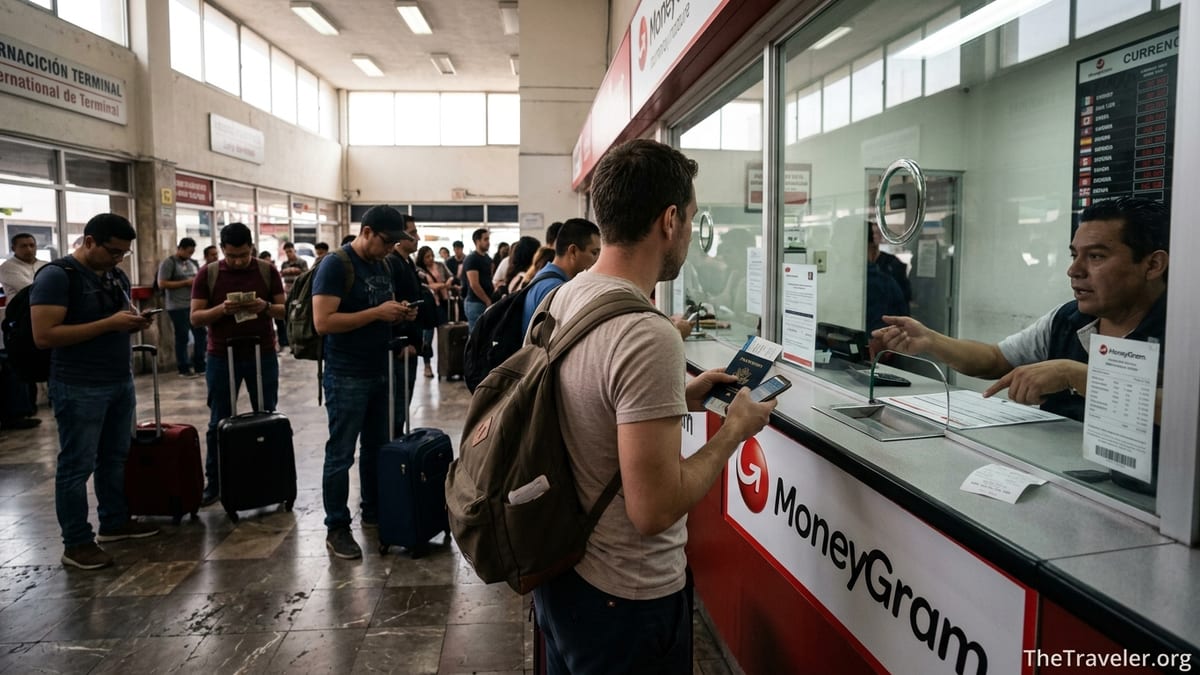
MoneyGram Is Convenient, But Not Always Cheap
From a traveler’s point of view, MoneyGram looks simple. You walk into a kiosk in New York, pay in dollars, and someone in Mexico City picks up pesos in cash ten minutes later. What most first-time users do not realize is that they are paying twice: once in the visible transfer fee and again in the exchange rate margin. MoneyGram itself states that it makes money from currency exchange in addition to the transfer fee, which means the rate you see already includes a markup over the mid-market rate you might find on a currency converter or search engine.
In practice, this can be significant. Independent price checks in 2024 and 2025 found that on some common routes, such as sending US dollars to Mexican pesos, MoneyGram’s offered rate could be more than 1 peso per dollar worse than the mid-market rate. Over a 1,000 dollar transfer, that difference alone can quietly cost you the equivalent of a restaurant meal for two in Mexico City. On larger transfers above 5,000 dollars, comparison sites have observed average combined costs over 100 dollars once you add the flat fee and the embedded exchange rate margin.
Travelers are often drawn in by promotions such as “zero fee on your first online transfer” that appear in 2025 and 2026 referral campaigns. These offers usually waive only the explicit transfer fee, not the exchange margin, so the company still earns revenue by giving a slightly worse currency rate. That does not automatically make the offer bad, but it means you should still compare the rate against alternatives like Wise, Remitly, or a bank transfer through your own bank before assuming “zero fee” equals cheapest.
Imagine you are backpacking in Thailand and need to send 300 dollars to a friend in Peru who just had their wallet stolen. Between the transfer fee and the exchange margin on two thinly traded currencies, the total cost through MoneyGram could easily reach the price of a decent hostel week in Chiang Mai. For small emergency transfers, that extra cost may be acceptable. For regular support payments, it adds up quickly over months and years.
Transfer Limits, Unwritten Rules, And Country Surprises
One of the least advertised aspects of MoneyGram is how strict and variable its transfer limits can be. For many corridors from the United States, third-party guides in 2026 report that the standard online limit is about 10,000 dollars in any rolling 30-day period for international transfers, with around 15,000 dollars possible for some domestic transfers inside the United States. MoneyGram itself confirms that limits depend on payment method, send country, destination country, and the way the money is received.
That sounds straightforward until you discover how those limits play out when you are already stressed on the road. A traveler trying to pay an overseas tuition deposit of 12,000 dollars from the United States to Europe might find that their online transfer keeps failing with a vague error, simply because the amount exceeds the corridor’s 30-day limit. The app may not explain this clearly, and customer support can take time to respond. In some cases, travelers end up splitting payments into multiple smaller transfers or resorting to a bank wire, losing days in the process.
Limits are also shaped by local regulations. Some sending countries cap individual transfers much lower than the United States, sometimes as low as the equivalent of a few thousand dollars. In countries with stricter anti-money-laundering rules or volatile currencies, MoneyGram may apply additional internal limits or require more documentation, such as local tax numbers or proof of address, before letting you send or receive. These details are rarely highlighted in marketing materials, so the first time many travelers learn about them is at the counter when an agent refuses their intended amount.
For digital-first users, the picture is even more fragmented. The MoneyGram wallet and mobile app products have their own internal funding and withdrawal caps, sometimes in the range of tens of thousands of dollars per month for verified accounts, but potentially much less for new users pending full compliance checks. A traveler who tops up their in-app wallet from a U.S. bank expecting to immediately cash out the entire balance in cash abroad may be told they can only withdraw part of it until additional checks are completed or until a monthly limit resets.
Cash Pickup Is Fast, But Identification Rules Can Ruin Your Day
One of MoneyGram’s biggest selling points is cash pickup. With hundreds of thousands of agent locations worldwide, your recipient can often collect physical cash within minutes at a neighborhood grocery store, pharmacy, or bank branch. For travelers in countries with limited card acceptance or unreliable ATMs, this can feel like a lifeline. But cash pickup also comes with strict and sometimes confusing identification rules that many senders do not learn until their recipient is already in line.
MoneyGram’s guidance is that recipients must bring a valid photo ID and the reference number. In reality, which documents count as “valid” can differ dramatically by country and even by individual agent. In some European countries, staff may insist on a passport rather than a national ID card for foreign tourists. In parts of West Africa or South Asia, an expired passport might be rejected even if the local law technically allows it to be used with additional documents. Travelers have reported being turned away because the name on the transfer did not perfectly match the name on the passport, down to middle names or hyphenated surnames.
Imagine you are in Manila after your wallet was stolen, and a friend in Chicago sends you 500 dollars for emergency expenses. You show up at a MoneyGram counter with a temporary police report and a photo of your passport stored on your phone, only to be told that only an original physical passport will be accepted. If the nearest consulate is in another city, that “money in minutes” promise quickly evaporates. Meanwhile, your sender might face a delay or fee in trying to cancel the transfer and send via a different method.
There are also practical issues around agent cash availability. A neighborhood shop in a rural town may not hold enough cash to pay out a 2,000 dollar transfer in local currency, especially early in the day. Staff might ask your recipient to return later or to split the pickup into several smaller withdrawals. In extreme cases, travelers have had to visit multiple locations in the same city to piece together the full amount they were sent. None of this is visible when you confirm the transfer online from another country.
Technical Outages, Frozen Accounts, And The Risk Of Being “De-Risked”
Most MoneyGram transfers work as advertised, but when something goes wrong, travelers can find themselves stuck between corporate risk controls and slow customer service. In late 2024, a cybersecurity incident reported to regulators forced MoneyGram to take some systems offline temporarily, disrupting services for parts of its customer base. Around that time and afterward, users on discussion forums described being unable to send or receive money, encountering persistent error messages, or discovering that their local supermarket had quietly removed MoneyGram services from its systems.
More worrying for travelers are account holds and deactivations triggered by automated fraud and compliance systems. Several users have shared stories of creating an online or app-based MoneyGram account, successfully funding a transfer with a bank card, and then seeing the account locked due to “security concerns” before the recipient could collect. In some of these cases, MoneyGram indicated that refunds would be sent by paper check or after extended review, leaving the sender out hundreds of dollars and the recipient with nothing during a family emergency.
People who work in remittance compliance often explain that these controls exist to stop money laundering, romance scams, and other fraud schemes. The problem for ordinary travelers is that legitimate transfers can be caught in the same net, especially if they involve high-risk destinations, unusual amounts, or inconsistent sender behavior. A frequent pattern is a customer who only ever sends 200 dollars to family in Central America suddenly trying to send several thousand dollars to a new recipient in another part of the world. The transaction may look suspicious to algorithms even if it is entirely legitimate, and reversing it can take weeks.
Technical reliability is another under-discussed issue. When MoneyGram’s website or app experiences downtime, travelers abroad may have very few backup options if they do not carry multiple cards or have local bank accounts. A backpacker in South Africa who relies solely on app-based cash pickup could find themselves stranded if the service goes offline on a weekend and local agents refuse to process manual transfers without the reference number generated by the digital system. Scrolling through social media or forums during such outages shows a common thread: customers get canned responses from support while they wait for updates, with little guidance on when the system will be fully restored.
Compliance Flags, Scams, And The Shadow Side Of Remittances
MoneyGram operates under intense regulatory scrutiny because criminals and fraudsters have historically misused cash transfer companies for scams. The company itself admitted to anti-money-laundering and wire fraud violations in a 2012 case and spent years under special compliance monitoring before completing its obligations in 2021. That history explains why today’s risk controls are so aggressive, but it also means that travelers are often caught off guard by questions or delays that feel invasive when they just want to help a loved one in need.
At the counter or in the app, you may be asked to state the purpose of your transfer, provide extra details about your relationship with the recipient, or answer follow-up questions if your pattern of transfers changes. A student in Canada sending support to grandparents in the Philippines might suddenly be asked to explain why the latest transfer is larger than usual or why the recipient is in a different city. If you are not prepared to answer clearly, the agent may refuse the transfer altogether.
On the other side, scammers deliberately try to push victims into using services like MoneyGram because cash pickup is hard to reverse once claimed. Common scenarios include fake online romances, urgent “relative in trouble” calls, or fraudulent apartment deposits where the landlord insists on a MoneyGram payment as proof of funds. Law enforcement and consumer advocates repeatedly warn that legitimate businesses rarely insist on payment via cash transfer, and that once a scammer collects the cash abroad, recovering it is nearly impossible.
Travelers are particularly vulnerable when far from home. For example, a tourist in Spain might receive a WhatsApp message that appears to be from their child back in the United States, claiming their phone was stolen and asking for an urgent MoneyGram transfer to a friend’s name. In the confusion of time zones and international roaming, even savvy people have fallen for such schemes. Educating your family before you travel, agreeing on a private “code word” for emergencies, and refusing to send MoneyGram transfers to strangers are practical steps that can prevent these nightmares.
Exchange Rates, Promotions, And How To Comparison-Shop Smartly
Beyond the headline fees and safety issues, one of the subtler truths about MoneyGram is that its pricing is highly dynamic. The exchange rate you see on a Monday afternoon for dollars to Kenyan shillings may be different from the rate on Tuesday morning, even if global markets have barely moved. MoneyGram’s own currency tools note that rates can vary based on payment method, receive method, destination, and timing, which means the company is constantly adjusting margins in the background.
Promotions add another layer of complexity. First-transfer offers with zero or reduced fees, loyalty discounts for frequent senders, or region-specific campaigns can make MoneyGram briefly competitive or even cheaper than rivals on certain routes. At the same time, some high-demand corridors subsidized by promotions at one moment may quietly become more expensive later, once the promotional period ends. An expatriate in London sending money home to Nigeria might find that MoneyGram is the best deal in January during a New Year campaign but significantly less attractive by March.
A practical way to handle this is to treat MoneyGram as one quote among several whenever you plan a transfer larger than pocket money. Before confirming a 2,000 dollar support payment to family abroad, open two or three other services or your bank’s online tool and compare the total cost: how much your recipient will receive in local currency after all fees and margins. In some cases, MoneyGram will be within a few dollars of the competition and worth using if the agent location is convenient. In others, the gap may be large enough that it makes sense to switch.
For travelers who combine frequent trips with regular remittances, it can even make sense to diversify by route. You might find that MoneyGram is the best solution for small, fast cash pickups in rural Guatemala, while an online-only service with mid-market rates is better for predictable monthly transfers to a bank account in India. The key is to avoid falling into the habit of using MoneyGram simply because its logo is familiar at the corner store, without ever shopping around.
The Takeaway
MoneyGram fills a real need for travelers and families who move money across borders. Its vast network of agents, support for cash pickup, and increasingly capable mobile app make it a powerful tool when used with open eyes. What almost nobody tells first-time users, however, is that convenience comes with trade-offs: higher all-in costs than the headline fees suggest, strict and sometimes opaque transfer limits, identification rules that can derail emergency pickups, and risk controls that may freeze legitimate transfers without warning.
If you are planning to rely on MoneyGram on your next trip, treat it as one option in a broader toolkit rather than your only lifeline. Learn the identification documents agents in your destination accept, understand that international online transfers from the United States typically face a 10,000 dollar cap per 30 days, and prepare backup methods such as a second card, an online remittance service, or a trusted person with local banking access. Above all, agree with your family and friends never to use MoneyGram to pay strangers, landlords you have never met, or anyone rushing you into a decision.
Used thoughtfully, MoneyGram can still be a practical way to get cash into difficult places quickly. Used blindly, it can leave both travelers and their loved ones caught between fees, frozen accounts, and unreachable support at the worst possible moment. Knowing these realities before you walk up to the counter or tap “Send” on your phone is the difference between a helpful tool and an avoidable travel headache.
FAQ
Q1. Is MoneyGram safe for travelers to use abroad?
MoneyGram is a licensed, regulated money transfer company and generally safe to use, but travelers should be aware that transfers can be delayed, blocked, or frozen by automated fraud and compliance systems, especially if they involve high-risk countries, unusual amounts, or new recipients. It is wise to keep alternative payment methods and not rely solely on one service.
Q2. How much can I send through MoneyGram from the United States?
For most international routes from the United States, online transfers are typically capped at around 10,000 dollars in any rolling 30-day period, while some domestic transfers may allow up to about 15,000 dollars. Exact limits vary by destination, payment method, and your verification status, so you should always check the limit shown in the app or at the counter before planning a large transfer.
Q3. Why did my MoneyGram transfer get cancelled or my account locked?
Transfers and accounts can be blocked when MoneyGram’s internal systems flag potential fraud or money laundering risks, even when the transaction is legitimate. Sudden changes in transfer patterns, large first-time amounts, or high-risk destinations can all trigger reviews. In those cases, funds are usually returned, but the process can be slow and may involve paper checks or additional identity verification.
Q4. What ID does my recipient need to pick up cash?
Recipients generally need a valid government-issued photo ID that exactly matches the name on the transfer, plus the reference number. Accepted documents differ by country and sometimes by agent location, and some agents may insist on a passport for foreign tourists even if other IDs are technically acceptable. When possible, confirm locally which documents are accepted before sending money.
Q5. Are MoneyGram’s “zero fee” or promo transfers really free?
Promotions that advertise zero fees usually waive only the explicit transfer fee. MoneyGram still earns revenue through the exchange rate margin, which means your recipient may receive less local currency than if you used a service that offers the mid-market rate. You should compare the total amount your recipient would receive, not just the visible fee.
Q6. How fast does MoneyGram deliver money internationally?
Cash pickup transfers on popular routes often arrive within minutes, while bank deposits or mobile wallet transfers can range from near-instant to several hours or, in some cases, longer if additional checks are needed. Public holidays, time zones, and local banking hours can all affect delivery times, so “within minutes” should be treated as a best case rather than a guarantee.
Q7. Can I get a refund if my MoneyGram transfer is not collected?
If a transfer has not yet been collected or credited to an account, you can usually request a cancellation and refund through the app, website, or an agent. Refunds may be subject to processing times and sometimes fees, and if compliance reviews are involved, they can take days or even weeks. Keeping copies of your receipt and monitoring the transfer status helps if you need to contact support.
Q8. Is MoneyGram cheaper than banks or other transfer apps?
Sometimes, but not always. For small, urgent cash payouts, MoneyGram can be competitive, especially when promotions are active. For larger or regular transfers to bank accounts, online-focused services or even some bank wires may offer better exchange rates and lower total costs. The only reliable way to know is to compare how much your recipient will receive in local currency after all fees and margins.
Q9. What happens if MoneyGram’s app or website goes down while I am traveling?
If the app or website is experiencing outages, you may be unable to send new transfers, track existing ones, or generate reference numbers for pickups. Some agent locations may still process transactions manually, but others rely on the central system and may turn you away until service is restored. This is why travelers should carry backup options such as a secondary card, some emergency cash, or access to an alternative remittance service.
Q10. How can I avoid scams when someone asks me to use MoneyGram?
You can reduce your risk by sending MoneyGram transfers only to people you know and trust, never to strangers, online sellers, or supposed landlords who insist on cash pickup. Be suspicious of urgent requests claiming a relative is in trouble, especially if they ask you to send money to a different person’s name. Before you travel, agree with family and close friends on how you will verify emergency requests, such as using a prearranged code word, and remember that once cash is collected, it is usually impossible to recover.