


Montreal is in the middle of a major transit transformation, and few projects are watched as closely by travelers as the Réseau express métropolitain, or REM. For visitors landing at Montreal Trudeau International Airport (YUL), the big question is clear: when will there be a direct REM train from the terminal to downtown, and what is the smartest way to get into the city until that happens? This guide walks you through what is planned, how the airport REM station is expected to work, how it will change downtown transfers, and the options you should use today.
Get the latest updates straight to your inbox!
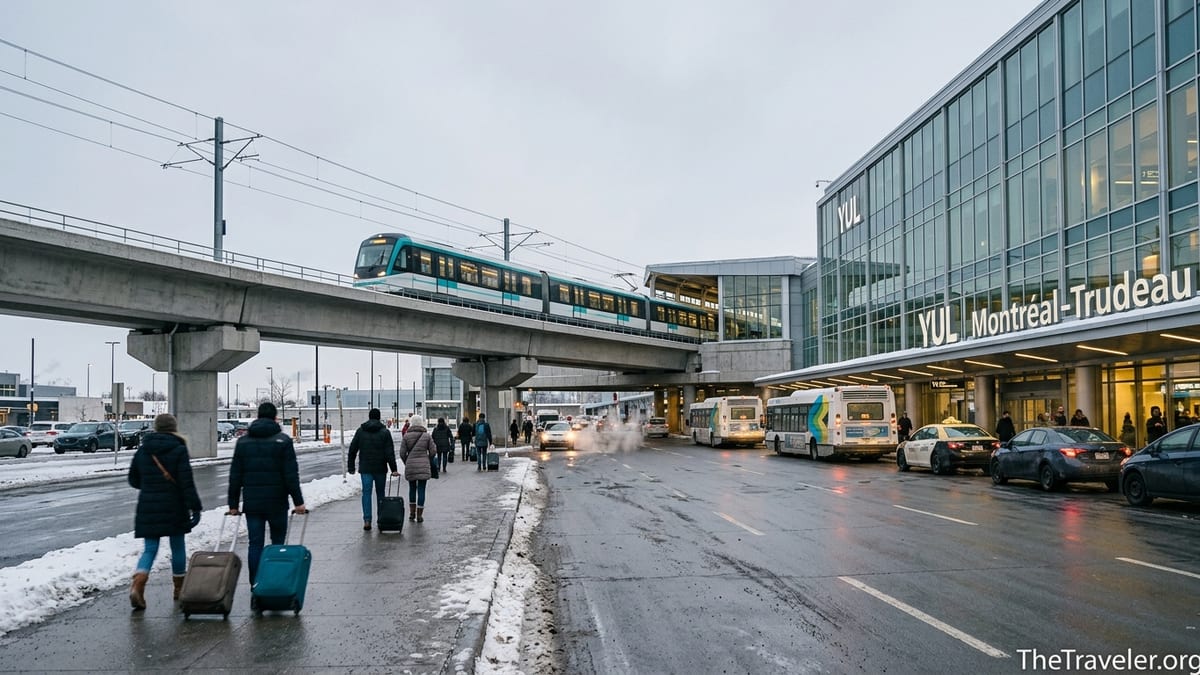
Understanding the REM and Where the Airport Fits In
The REM is a new automated light rail system designed to link key parts of Greater Montreal with fast, frequent, electric trains. The first section, between Brossard on the South Shore and Gare Centrale in downtown Montreal, opened in July 2023 and now offers a ride of about 18 minutes from end to end. Trains typically run every few minutes during the day, making it a reliable backbone for commuters and visitors heading into the central business district.
The full REM network is planned to stretch roughly 67 kilometers with 26 stations across multiple branches serving the South Shore, West Island, North Shore and Montreal’s airport. The airport connection is part of the so‑called main line that will run from the suburbs of Deux‑Montagnes and the West Island through downtown to Brossard. For travelers, this means the airport will not be a stand‑alone spur, but fully integrated into a continuous line that passes right through the city center.
The airport station itself, officially named YUL‑Aéroport‑Montréal‑Trudeau, is under construction on the airport grounds. According to the REM project team, commissioning of the branch that serves the airport is currently forecast for 2027, although exact timing will depend on testing and construction progress. In practice, that means there is no REM station inside the airport terminal yet, and anyone flying into Montreal today still relies on buses, taxis, ride‑shares or private transfers to reach downtown.
For travelers planning trips in 2026 and early 2027, the key takeaway is that you should not count on the REM airport train being ready unless your airline, the airport authority or the REM operator clearly announces an opening date close to your travel time. The project is advancing, but construction timelines for major rail infrastructure can shift, so treat the current 2027 target as indicative rather than guaranteed.
What the YUL REM Station Will Look Like and How It Should Work
The future YUL‑Aéroport‑Montréal‑Trudeau station is being built directly on the airport site in Dorval. Trains heading from the city toward the airport will dive underground near Marie‑Curie station in the Technoparc business district and enter a tunnel that curves toward the terminal. The concept is to give passengers a seamless, weather‑protected trip from the downtown core straight into the airport, similar to the airport rail links seen in cities like Vancouver or Toronto.
Early project documents and press briefings indicate that the walk between the REM platforms and the main terminal building is expected to be entirely indoors, via new underground or enclosed corridors that connect to the check‑in and arrivals areas. Travelers arriving in a Montreal winter should be able to step off the REM and reach baggage claim without going outdoors. While the final layout may evolve as construction advances, the overall idea is a tight integration between the station and the terminal, not a remote stop requiring an external shuttle.
In terms of journey time, the REM promoter has long cited an approximate 20‑minute travel time between downtown and the airport once the line is in service. Today the section from Gare Centrale to Brossard already clocks in at about 18 minutes, so a similar airport timing feels plausible, though the exact timetable will only be confirmed closer to opening. For a real‑world comparison, that would put Montreal’s airport connection in the same range as Vancouver’s Canada Line link between YVR and downtown, and noticeably faster than typical rush‑hour taxi rides from YUL into the central business district.
Once operating, the airport branch will share tracks with two other REM branches that converge at Bois‑Franc and then run through downtown to the South Shore. That means trains serving YUL will be part of the same high‑frequency pattern used by commuters from the West Island and Deux‑Montagnes. In practice, you can expect a direct train at least every few minutes at peak times and at regular intervals into the late evening, but exact frequencies and overnight service patterns will be defined in the final operating plan.
How the REM Airport Link Will Change Downtown Transfers
One of the biggest changes the airport REM station will bring is the way travelers connect to downtown hotels, universities and business districts. Today, the main transit gateway for airport passengers is the 747 bus, which runs 24 hours a day between YUL and central Montreal, including major hubs such as Lionel‑Groulx metro station and Berri‑UQAM. Once the airport REM opens, the focal point will shift decisively to Gare Centrale, which is already the downtown terminus of the South Shore REM branch.
Gare Centrale sits under the office towers around Place Bonaventure and is within walking distance of much of the downtown core, including many large hotels on René‑Lévesque Boulevard and in the underground city. For example, travelers staying near the Bell Centre, the Fairmont The Queen Elizabeth, or hotels in the Square Victoria and Old Montreal fringes will be within a 10 to 15 minute walk of the REM platforms at Gare Centrale. For others, direct indoor connections to the Montreal metro at Bonaventure station and nearby connections at Square‑Victoria‑OACI make onward travel straightforward.
Beyond Gare Centrale, the REM also intersects the metro at McGill and Édouard‑Montpetit, which are key stations on the green and blue lines respectively. This will matter for visitors heading to McGill University, the downtown shopping spine along Sainte‑Catherine Street, or residential districts in the Plateau and Outremont. In a future scenario, an arriving passenger could go from the airport to McGill REM station, walk directly into the metro network, and be on a green line train toward Place‑des‑Arts or Berri‑UQAM within minutes, without ever stepping onto a bus.
For business travelers with meetings in suburban office parks along the West Island or in the South Shore’s Brossard sector, the integrated REM network will be especially attractive. A consultant landing at YUL for a morning meeting in Brossard’s Quartier DIX30, for instance, could ride the REM into Gare Centrale and remain on the same line straight to Du Quartier station, walking from there to the shopping and office complex in around 10 minutes. That kind of one‑seat ride across the metropolitan area simply does not exist today using public transit from the airport.
Transport Options You Should Use Now Between YUL and Downtown
Until the airport REM branch opens, the most practical and budget‑friendly public transit option between Montreal Trudeau Airport and downtown is the STM’s 747 express bus. The line runs 24 hours a day, 7 days a week, linking the airport with central hubs such as Lionel‑Groulx metro station, Gare Centrale’s vicinity and the Berri‑UQAM area. At the time of writing, the standard 747 fare is aligned with a special transit ticket that functions as a 24‑hour pass on the metro and buses, making it particularly good value for short city stays.
Expect the 747 journey between YUL and downtown to take roughly 45 to 60 minutes depending on traffic, especially if you are traveling during weekday rush hours or on Friday afternoons. For example, a traveler landing at 4:30 p.m. on a winter Friday and heading to a hotel near Berri‑UQAM should budget an hour for the bus ride, plus a margin for baggage and customs. By contrast, a late‑evening arrival around 10:00 p.m. might find the 747 covers the route in closer to 35 to 40 minutes, with less congestion on the Ville‑Marie Expressway.
The 747 departs from a designated stop directly in front of the terminal. Tickets can be bought from vending machines inside the arrivals area or at the stop using a credit card, and STM staff are typically present during busy periods to assist visitors. For example, a solo traveler landing from New York who plans to spend one night downtown before catching a VIA Rail train to Quebec City the next day might buy a single 747 ticket, ride to the Berri‑UQAM area, use the pass on the metro that evening and the next morning, and then walk to nearby Gare d’autocars or hop onto the metro for Central Station.
Other current options include regular taxis, app‑based ride‑shares and private shuttles. A metered taxi from YUL to most downtown hotels has a flat rate set by the city, which can be competitive for two or three travelers sharing the ride. Ride‑share prices fluctuate with demand, but during off‑peak hours a car into the central business district can be comparable in cost to two 747 tickets, with the advantage of direct door‑to‑door service. For families with young children, significant luggage, or late‑night arrivals in winter, the extra expense of a private car is often justified for comfort and convenience.
How to Choose the Best Option Today: Sample Itineraries
Which option makes the most sense right now depends on your budget, schedule and destination. Consider a weekend tourist couple arriving from Toronto on a Friday evening and staying at a boutique hotel near Place‑des‑Arts. With two carry‑on bags and no children, they might opt for the 747 to Lionel‑Groulx, transfer to the green line metro and ride to Place‑des‑Arts station, finishing with a short walk along Sainte‑Catherine Street. They pay roughly the cost of two bus tickets, gain 24‑hour transit passes for sightseeing the next day, and avoid taxi queues.
A corporate traveler arriving at 8:00 a.m. on a Monday with a meeting at a law firm on René‑Lévesque Boulevard might make a different choice. The combination of morning rush‑hour traffic, a tight schedule and the need to arrive looking presentable may push them toward a flat‑rate taxi or pre‑booked private car. They can work or take calls in the back seat and be dropped at the front door of their office tower, avoiding any transfer or walking in potentially slushy winter streets.
Families often land somewhere in the middle. A family of four arriving midday for a summer holiday, heading to a rental apartment in the Plateau, might take the 747 to Berri‑UQAM and then transfer to the orange line toward Mont‑Royal. The cost of four bus tickets will probably be lower than two taxis or a large ride‑share vehicle, yet the connections are straightforward and stations are stroller‑friendly with elevators. Parents should keep in mind that the 747 can be crowded at peak times, so if arriving with jetlagged children and multiple suitcases, spending more on a private transfer may still be the saner choice.
Another practical scenario involves onward rail connections. Many visitors land at YUL and then continue to Quebec City or Ottawa by train. In that case, the 747 or a taxi into the Central Station area is the logical move. Today, you might ride the 747 to the downtown stop nearest Gare Centrale and walk 5 to 10 minutes through the underground city to the VIA Rail concourse. When the airport REM opens, this will simplify dramatically: the train from the airport will arrive directly under Central Station, eliminating surface transfers entirely.
Planning Ahead for the Airport REM Opening
If you are scheduling travel for late 2027 or beyond, it is worth tentatively planning around the REM airport connection while staying flexible. Project materials from the REM operator and local transport agencies continue to emphasize 2027 as the expected commissioning year for the YUL branch. However, the complexity of tunneling under an active airport and integrating with existing infrastructure means schedules can slip. Before committing to tight onward connections, always check the latest information from the REM and YUL websites in the months leading up to your trip.
When the airport station does open, you will want to think about how it fits with your own travel style. Some travelers will gravitate to the predictability and fixed price of the train, especially in peak traffic periods when a taxi can take 40 minutes or more to reach downtown. Others will still prefer taxis or ride‑shares that drop them directly at their hotel lobby, especially if they are carrying skis, musical instruments or trade‑show materials that make rail travel cumbersome. The REM will be a powerful new option, but not the only one.
One smart strategy for frequent visitors is to plan mixed‑mode trips. For example, you might arrive in the city during a weekday afternoon, use the REM to reach a downtown office quickly, and then take a taxi back to the airport for a late‑night departure when roads are clear and ride‑shares are cheaper. Similarly, if you are staying in a hotel directly connected to Gare Centrale or the underground city, the REM will likely become your default, while those lodged in more residential neighborhoods might still find that a short metro ride plus a taxi makes more sense door‑to‑door.
Expect some adjustment period in the first months after opening. When Rome’s Leonardo Express or Toronto’s Union Pearson Express launched, passengers initially faced learning curves on ticketing, wayfinding and connections, which settled down after operators refined signage and schedules. Montreal will likely follow a similar path. If you are among the early adopters of the YUL REM line, give yourself extra time, read signage carefully, and be prepared for minor tweaks to schedules as the system ramps up.
The Takeaway
For now, Montreal Trudeau Airport does not yet have an operating REM station, and the safest assumption for trips through 2026 is that you will still be using the 747 bus, taxis, ride‑shares or private transfers to reach downtown. The 747 remains the workhorse public option, offering 24‑hour service and an integrated transit pass that is especially attractive to budget‑conscious visitors and solo travelers staying in central neighborhoods.
Looking ahead, the YUL‑Aéroport‑Montréal‑Trudeau REM station promises to transform this experience. When it opens, likely around 2027, it should offer a fast, mostly underground ride of roughly 20 minutes between the terminal and Gare Centrale, plus easy transfers to the metro at McGill, Édouard‑Montpetit and Bonaventure. For many visitors, that will mean a simpler, more predictable and often quicker journey between plane and hotel, regardless of traffic on the highways above.
The smartest approach is to plan based on today’s proven options while keeping an eye on the evolving REM project. If you are traveling soon, learn where to catch the 747, confirm current fares and journey times, and decide whether a taxi or ride‑share might better suit your circumstances. If your trip is a year or two away, check back as your departure date approaches to see whether the REM airport station has opened, and be ready to adjust your plans to take advantage of one of North America’s most significant new airport rail links.
FAQ
Q1. Is the REM train already running to Montreal Trudeau Airport? As of mid‑2026, the REM does not yet serve Montreal Trudeau Airport, and there is no passenger train station operating inside the terminal.
Q2. When is the YUL REM airport station expected to open? The airport branch of the REM is currently forecast to open in 2027, but this is a project timeline and could shift depending on construction and testing.
Q3. How long will the REM take from the airport to downtown once it opens? Project estimates suggest a ride of around 20 minutes between YUL and downtown’s Gare Centrale, though exact schedules will only be confirmed closer to launch.
Q4. What is the best public transit option from YUL to downtown right now? Today, the STM 747 express bus is the primary public option, running 24 hours a day between the airport and central Montreal, including key metro and bus hubs.
Q5. How much does the 747 airport bus cost and what does the ticket include? The 747 fare is aligned with a special STM ticket that typically functions as a 24‑hour pass on the city’s metro and buses, making it good value for short stays.
Q6. Will the REM airport station be directly connected to the terminal building? Yes, the YUL‑Aéroport‑Montréal‑Trudeau station is being built on airport grounds with enclosed connections planned between the platforms and the main terminal areas.
Q7. Which downtown station will I use if I take the REM from the airport? The main downtown hub will be Gare Centrale, located under central office towers and a short walk from many hotels, with connections to the metro at nearby Bonaventure.
Q8. Will I still be able to use taxis and ride‑shares once the REM opens? Absolutely. Taxis and ride‑shares will continue to operate at YUL, and the REM will simply be an additional option for reaching downtown and the suburbs.
Q9. Is it safe to plan tight train or flight connections based on the future REM schedule? Until the airport branch is officially open and schedules are firm, it is safer not to plan very tight connections that rely on the REM, especially for same‑day transfers.
Q10. How can I check the latest status of the YUL REM station before I travel? Before your trip, consult recent updates from the REM operator and Montreal Trudeau Airport, or check with your airline or hotel for the most current information on airport‑city links.