


Two summits dominate conversations in Great Smoky Mountains National Park: Mount Le Conte and Clingmans Dome. One demands a full day on rugged trails to reach a rustic mountaintop lodge. The other offers a short, steep walk from a paved parking area to a concrete observation tower on the highest point in the park. Both deliver big Smokies views, but the experiences could hardly be more different. Choosing between them depends less on which is "better" and more on what kind of day in the mountains you want.
Get the latest updates straight to your inbox!
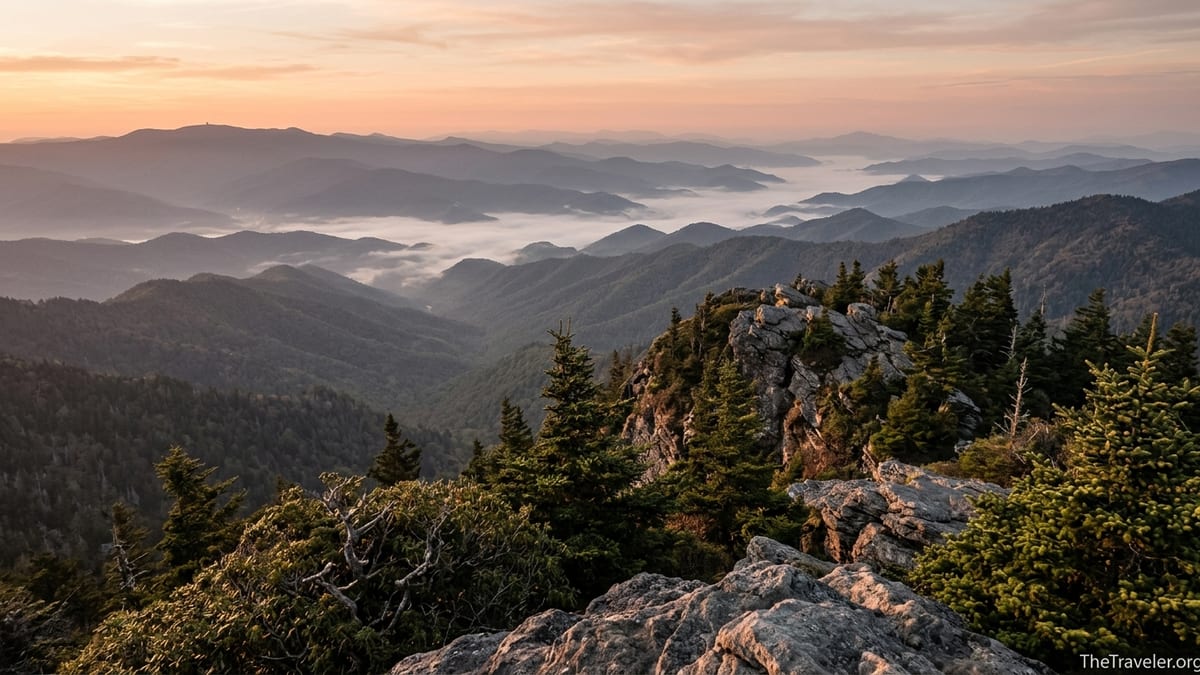
Understanding the Two Icons of the Smokies
Mount Le Conte and Clingmans Dome sit just a few miles apart as the crow flies along the high spine of the Great Smoky Mountains, straddling the Tennessee and North Carolina border. Clingmans Dome is the highest point in the park at 6,643 feet, topped by a mid-century concrete observation tower and reached by a paved half-mile path from a large parking area. Mount Le Conte, rising to 6,593 feet, is technically lower, yet it is often described as the “tallest” mountain in the Smokies because it climbs more than 5,000 feet from its base near Gatlinburg to its summit plateau.
For visitors driving in from Gatlinburg or Pigeon Forge, Clingmans Dome is usually the first name they recognize from brochures and hotel desk maps. The Clingmans Dome Road turnoff sits along Newfound Gap Road, the park’s main artery. In peak season, you can expect the Dome parking lot to be packed by mid-morning, with vehicles circling for space. Mount Le Conte, by contrast, is better known among hikers. Reaching it requires committing to one of several long trails, such as Alum Cave, Trillium Gap or Rainbow Falls, with most routes ranging from about 10 to 13 miles round trip and thousands of feet of elevation gain.
Both summits share elements of the same high-elevation spruce–fir forest, cool temperatures compared with the valleys, and wide views over a sea of ridges. Yet the way you encounter those landscapes is what sets these peaks apart. A family with grandparents and young kids in tow may gravitate toward Clingmans Dome for its accessibility, while a seasoned hiker might consider the Dome a warm-up hike en route to a multi-day Le Conte trip.
Another shared factor is logistics. As of 2026, Great Smoky Mountains National Park requires a parking tag for any vehicle parked for more than 15 minutes at either trailhead or overlook. Day tags are relatively inexpensive and sold at kiosks and visitor centers, but the need to purchase one adds a small planning step to both trips. Whether you are tackling the long climb to Le Conte or simply driving to the Dome parking lot, you will need that tag on your dashboard.
How You Get There: Approach and Effort
If you measure rewards by effort earned, Mount Le Conte clearly asks more of you. The most popular approach, Alum Cave Trail, is roughly 10 miles round trip to the summit area, with an elevation gain of around 2,600 feet. The trail starts along Alum Cave Creek in lush hardwood forest, passes through a natural rock arch known as Arch Rock, climbs to open views at Inspiration Point, then traverses beneath the dramatic overhang of Alum Cave Bluffs before steepening considerably on the upper mountain. Many hikers treat it as a full-day outing, often starting around sunrise to avoid afternoon storms and secure parking at the small trailhead along Newfound Gap Road.
Other Le Conte routes offer different flavors of challenge. Trillium Gap, which begins off Roaring Fork Motor Nature Trail, is longer but somewhat gentler and passes Grotto Falls, a popular landmark where the trail ducks behind the curtain of water. Rainbow Falls and Bullhead, starting near Gatlinburg, climb directly up the mountain’s flanks, with Rainbow offering its own namesake waterfall and Bullhead known for its exposed, often hot sections. Strong hikers sometimes link two different trails to create a loop, arranging a local shuttle or a two-car setup between trailheads.
Clingmans Dome’s summit path is much shorter but can still surprise visitors with its intensity. From the Dome parking area at around 6,300 feet, the paved path climbs about 330 vertical feet in a half-mile to reach the observation tower. On paper, it sounds like an easy stroll, and many people set out in flip-flops or casual sneakers. In reality, the grade is sustained and quite steep. It is common to see families pausing at benches along the way, especially on humid summer afternoons. Although the path is paved, it is not wheelchair accessible in practice for many users because of the steepness.
When comparing reward per step, you might argue that Clingmans Dome wins pure efficiency. You can leave a hotel in Gatlinburg after breakfast, drive to the trailhead, walk up, soak in the view, and be back in town well before lunch. Yet for those who relish a day of movement and the meditative rhythm of hiking, Le Conte offers a more immersive journey where the approach is the experience, not just a means to an end.
Views, Scenery, and Atmosphere at the Top
Clingmans Dome’s claim to fame is its 360-degree panorama. The concrete observation tower, reached by a spiraling ramp, rises above the treetops and provides an unobstructed horizon-to-horizon view on clear days. Interpretive signs point out landmark ridges and peaks in Tennessee and North Carolina. On a crisp autumn afternoon with low humidity, you may see layer upon layer of blue ridges fading into the distance in every direction. The tradeoff is that the setting is undeniably built: the tower, paved path, and large parking lot mean you never really forget you are at a popular roadside attraction.
Mount Le Conte’s views are more varied and feel wilder, even though the summit area includes the well-known LeConte Lodge and an overnight shelter. There is no single observation tower. Instead, hikers wander to several viewpoints along short side paths from the main trail. Cliff Tops, a rocky promontory just above the lodge area, delivers spectacular sunsets over the Tennessee side, with Gatlinburg’s lights winking on far below as dusk settles. Myrtle Point, reached by a quieter trail extension past the summit cairn at High Top, is famed for sunrise. On a calm morning, it is possible to sit almost alone on the rocks, watching the first light catch the distant ridges while low clouds pool in the valleys.
The atmosphere at both summits depends heavily on timing. A midday summer visit to Clingmans Dome often means jostling with crowds for space along the railing, waiting for a gap in the selfie line, and hearing conversations in multiple languages. In contrast, a late-fall weekday sunrise at Myrtle Point might involve only a handful of hikers wrapped in jackets, sharing a quiet sense of accomplishment after climbing in the dark with headlamps. Even Le Conte, however, can feel busy on sunny October weekends when the combination of peak foliage and cooler temperatures draws a surge of hikers.
Weather is another major factor in how rewarding the views feel. Both summits are frequently shrouded in fog or low cloud. Clingmans Dome’s tower is notorious for “socked-in” days when you can see only a gray wall a few yards away. Many travelers recount driving the hour from Gatlinburg only to find the top completely clouded in. On Mount Le Conte, cloud can lend its own charm: spruce–fir forest dripping with mist, limited views giving way to fleeting gaps as clouds swirl. Still, if a wide-open vista is your priority, planning for flexible timing and checking local forecasts can pay off at either peak.
Solitude, Crowd Levels, and Overall Vibe
From a crowd standpoint, Clingmans Dome is one of the most heavily visited spots in Great Smoky Mountains National Park. During peak months, especially June through October, it is common for the parking lot to fill by mid-morning. Tour buses, rental cars, and families on day trips all converge at the same point. The result can feel more like an overlook along a busy highway than a backcountry summit. That said, even at the Dome, small pockets of quiet exist. The short side trails that depart from the parking area onto the Appalachian Trail or the Forney Ridge Trail quickly thin out the crowds, and you can find more space to yourself a few minutes away from the tower.
Mount Le Conte attracts a different kind of crowd. The trailheads, particularly Alum Cave, are extremely popular, and you may find yourself hiking in a slow-moving train of people on sunny weekends in summer and fall. However, the length and difficulty of the hike naturally filter visitors. You are more likely to encounter people with at least some hiking experience, carrying daypacks or overnight gear, swapping trail conditions and stories about past trips. The shared effort tends to foster a more communal, trail-minded vibe than the quick up-and-down of Clingmans Dome.
If solitude is important to you, your best bet for Le Conte is to start early, choose a less popular route like Bullhead or Trillium Gap, or visit on a shoulder-season weekday in late April, early May, or November when weather is less predictable. On Clingmans Dome, aiming for early morning or late evening can reduce crowds, particularly outside of high summer. Arriving for sunrise, when the parking lot is half empty and the air is cold, offers a quieter side of the Dome that many mid-day visitors never see.
The “feel” at the top is shaped by what you did to get there. After several hours of climbing to Le Conte, most people linger. They explore Cliff Tops and Myrtle Point, snack on the porch benches at LeConte Lodge, or simply sit under the spruces and watch clouds drift by. At Clingmans Dome, visits are often short. Many families spend 20 to 40 minutes at the top, snap photos, and head back down. If your idea of a rewarding summit includes unhurried time to settle into the landscape, Le Conte usually delivers that better, though you have to earn it.
Comfort, Facilities, and Practical Logistics
On the comfort scale, Clingmans Dome is the clear winner. From the parking lot, you will find restrooms, interpretive signs, and a relatively short paved trail. Although there is no visitor center at the tower itself, rangers are often present in peak season answering questions and providing basic information about the area. You can drive up in casual clothing, carry just a light jacket and water bottle, and be perfectly fine on a sunny, mild day. For families with very young children, older relatives, or anyone with limited mobility, the ability to adjust or turn back at any point on the paved path is a major advantage.
Mount Le Conte is more of an undertaking. There are no services along the trail. Water sources can be unreliable on certain routes later in the season, and hikers typically carry at least 2 to 3 liters per person for a full-day ascent and descent, along with substantial snacks or lunch. Good hiking shoes, weather layers, and basic safety gear such as a map or offline navigation app are important. The upper mountain is cooler and often windier than the valleys, so even on July afternoons you may want a light fleece or rain shell at the summit.
One unique comfort factor in Le Conte’s favor is LeConte Lodge. This rustic lodge, accessible only by trail, offers overnight cabins and multi-room lodges booked far in advance. Guests are served hearty family-style dinners and breakfasts, and day hikers can usually buy simple items like lemonade, hot chocolate, and a packed lunch on the lodge’s porch during operating season. Spending the night dramatically changes the summit experience. Instead of racing the daylight to get down, you can watch sunset at Cliff Tops, sleep high on the mountain, and catch sunrise at Myrtle Point the next morning.
Logistically, both destinations are affected by seasonal road conditions. Clingmans Dome Road usually closes in winter, roughly from December through March, depending on weather and park decisions. This makes the summit inaccessible by vehicle during those months, although strong backcountry hikers can still approach via the Appalachian Trail. Trails to Mount Le Conte remain open year-round, but winter brings ice and snow on upper sections, and traction devices such as microspikes become highly advisable. Weather can change quickly, so a day that starts mild in Gatlinburg can mean freezing wind and patchy ice near the summit by afternoon.
Who Each Summit Is Best For
Clingmans Dome is ideal for travelers who want a major Smokies viewpoint with minimal hiking. If you are on a tight schedule, traveling with young kids, or simply not interested in a strenuous climb, the Dome’s short path provides access to the park’s highest point with relatively little time and energy. It also works well as part of a scenic driving day that includes Newfound Gap, roadside overlooks, and possibly a short leg on the Appalachian Trail. For visitors who are unsure how they will handle high elevation or cooler temperatures, Clingmans Dome offers an easy trial run: you can quickly retreat to your car if the weather turns unpleasant.
Mount Le Conte, by contrast, best suits hikers who are reasonably fit and comfortable spending most of a day on trail. You do not need to be an elite athlete, but you should be prepared for sustained climbing, uneven surfaces, and potential exposure near steep drop-offs on sections of Alum Cave Trail. For many people, reaching Le Conte becomes a personal milestone. It is common to hear local hikers refer to their “first Le Conte” with the same pride someone might reserve for their first half marathon.
If you have already spent a couple of days in the Smokies doing shorter hikes such as Laurel Falls, Chimney Tops overlook, or Alum Cave Bluffs as a turnaround point, and you found those outings enjoyable rather than exhausting, you are probably ready to plan a Le Conte summit day. Consider starting with the Alum Cave route for its variety of scenery, or Trillium Gap if you prefer a gentler grade and do not mind a longer distance. Travelers who want to deepen their connection with the park may find that the effort of reaching Le Conte unlocks a deeper appreciation for the Smokies’ scale and ecology than a quick trip to Clingmans Dome.
For mixed groups, one practical strategy is to split experiences. On one day, everyone can drive to Clingmans Dome together, and those who are up for it can walk to the tower while others enjoy the views from lower down or stroll the parking-area paths. On another day, the stronger hikers tackle Le Conte while others explore easier valley trails, historic cabins, or Cades Cove by car or bicycle. In that sense, the two summits complement rather than compete with each other, allowing each traveler to choose their own level of adventure.
Safety, Seasons, and When Each Peak Shines
Both Mount Le Conte and Clingmans Dome present typical mountain hazards that can affect how rewarding your experience feels. Sudden thunderstorms, particularly from late spring through early fall, can bring lightning, heavy rain, and slick rock surfaces. On Le Conte, this matters more because you are exposed for many hours on trail. Sections of Alum Cave Trail include narrow ledges with cables bolted into the rock for security; these can feel intimidating when wet. On Clingmans Dome, the main concerns are lightning risk at the exposed tower and reduced traction on the steep paved path when it is wet or icy.
Seasonally, Clingmans Dome tends to shine from late April through October, when the access road is open and the spruce–fir forest along the ridge feels especially lush. Summer afternoons can be busy and sometimes hazy, but the Dome often offers temperatures 10 to 20 degrees cooler than the lowlands, making it an appealing escape from heat. Fall brings vivid color in the mid-elevation forests below, even if the conifers at the summit remain mostly green.
Mount Le Conte is rewarding year-round for experienced hikers, but each season changes its character. In spring, wildflowers line the lower trails and lingering patches of snow can remain in the spruce–fir zone. Summer brings long daylight hours and generally dry footing, though humidity and storms become factors. Autumn is prime time for many, with cooler temperatures and dramatic color in the surrounding valleys. Winter on Le Conte is a niche but magical experience, with rime ice coating trees and limited crowds, provided you are equipped with proper cold-weather clothing, traction, and navigation confidence.
In terms of pure safety margin for a casual visitor, Clingmans Dome is the more forgiving choice. You can often see incoming weather, shorten your visit, and be back in your car within minutes. On Le Conte, once you are several miles up trail, turning around still requires hours of hiking. For that reason, checking the latest forecast, starting early, and packing headlamps, extra layers, and more food and water than you think you need are all wise steps for the Le Conte experience.
The Takeaway
When you weigh Mount Le Conte against Clingmans Dome, the question is not which summit is objectively better, but which fits the day and the traveler in front of you. Clingmans Dome delivers a high-elevation panorama, a sense of reaching the top of the Smokies, and a straightforward outing that nearly any visitor can attempt with minimal preparation. It is efficient, accessible, and easy to add to a broader driving tour of the park.
Mount Le Conte offers a richer, slower-burning reward. The day-long climb, the transitions from cove hardwoods to spruce–fir forest, the rock outcrops of Cliff Tops and Myrtle Point, and the possibility of an overnight stay at LeConte Lodge create a layered experience that many hikers remember for years. The summit feels earned in a way that a short paved climb rarely can. For some, that effort is exactly what makes Le Conte the more meaningful summit.
If you have only a couple of hours and want a big view, pick Clingmans Dome. If you have a full day, reasonable fitness, and a desire to feel the Smokies under your feet rather than just beneath your tires, put Mount Le Conte at the top of your list. Many travelers eventually do both and come away with a clear favorite. Often, the answer to which summit experience is more rewarding says as much about their own style of adventure as it does about the mountains themselves.
FAQ
Q1. Is Mount Le Conte harder than Clingmans Dome?
Yes. Reaching Mount Le Conte typically involves 10 to 13 miles of hiking with significant elevation gain on uneven trails, while Clingmans Dome is a steep but short half-mile paved path from the parking area.
Q2. How long does it take to hike Mount Le Conte?
Most hikers should plan for 6 to 9 hours round trip, depending on the trail used, fitness level, breaks, and weather. Many start early in the morning to allow plenty of daylight.
Q3. Can beginners hike to Mount Le Conte?
Motivated beginners who are reasonably fit and used to walking several miles can hike Le Conte if they prepare carefully, start early, carry proper gear, and choose a good-weather day. However, complete non-hikers may find it too strenuous.
Q4. Do I need a reservation or permit for either summit?
You do not need a hiking permit for day trips to Mount Le Conte or Clingmans Dome, but you do need a paid parking tag for your vehicle in Great Smoky Mountains National Park. Overnight stays at LeConte Lodge or the backcountry shelter require separate advance reservations.
Q5. Which summit has better sunrise and sunset views?
Mount Le Conte is generally better for both, with Myrtle Point renowned for sunrise and Cliff Tops for sunset. Clingmans Dome can also be spectacular at either time but is more exposed to wind and crowds when access road traffic is high.
Q6. Is Clingmans Dome open year-round?
No. The access road to Clingmans Dome usually closes in winter due to snow and ice and reopens in spring, but exact dates vary by year and conditions. The summit can still be reached by long backcountry hikes when the road is closed.
Q7. What gear should I bring for Mount Le Conte compared with Clingmans Dome?
For Le Conte, plan on sturdy hiking shoes, layered clothing, rain protection, 2 to 3 liters of water, plenty of food, and basic safety gear such as a map or GPS and a headlamp. For Clingmans Dome in summer, comfortable walking shoes, a light jacket, and water are often enough, though extra layers are wise in cooler months.
Q8. Can families with small children enjoy these summits?
Families with small children commonly visit Clingmans Dome, even if they take frequent breaks on the steep paved path. Only older or very experienced children usually tackle Mount Le Conte, given the long distance and time commitment.
Q9. How do crowds compare between Mount Le Conte and Clingmans Dome?
Clingmans Dome often feels more crowded because a high number of visitors share a short path and small tower area. Mount Le Conte’s trails can be busy, especially Alum Cave, but the longer distance and spread-out viewpoints usually create a less congested feel.
Q10. If I only have one day in the Smokies, which summit should I choose?
If you want a major view with limited time or effort, choose Clingmans Dome. If you have a full day, enjoy hiking, and want an immersive mountain experience you will likely remember for years, choose Mount Le Conte.