


More news on this day
Nighttime air traffic at Moscow’s key airports was curtailed for a second consecutive night this week, as Russia temporarily restricted flights in and out of the capital following Ukrainian warnings that its drone campaign could effectively close the country’s skies to civil aviation.
Get the latest news straight to your inbox!
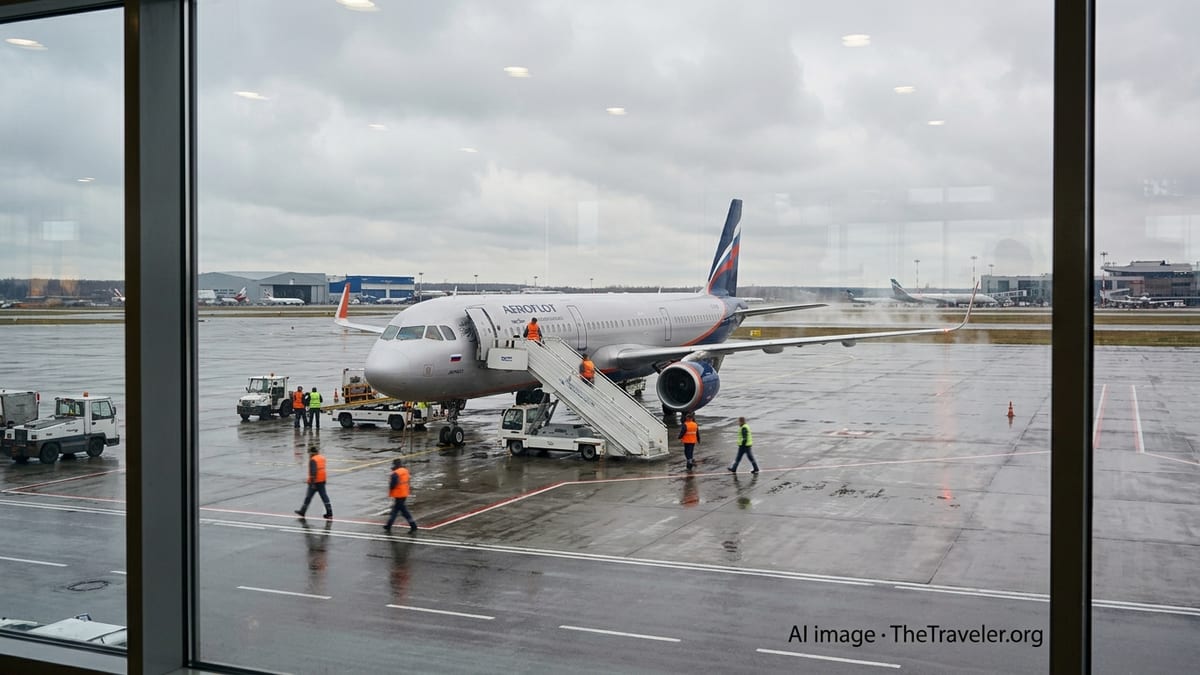
Second Night of Disruption at Moscow Hubs
Flights at Moscow’s Vnukovo and Sheremetyevo airports were again subject to overnight restrictions on September 2, limiting arrivals and departures for several hours and forcing carriers to delay or cancel services. Publicly available flight-tracking data showed widespread disruption across evening and night-time schedules, with many services diverted to other airports or held on the ground.
According to published coverage, the latest curbs followed similar limits the previous night, creating a pattern of back-to-back nocturnal interruptions at two of Russia’s most important international gateways. Reporting from regional media and independent outlets indicates that, while daytime timetables have largely continued to operate, repeated night closures are becoming a recurring feature of air travel in and out of the Russian capital.
Russia’s Federal Air Transport Agency, Rosaviatsia, described the measures as temporary restrictions on aircraft takeoffs and landings. Notices to air missions, or NOTAMs, issued in recent weeks for Moscow-area airspace and other regions have repeatedly cited short-term closures or constraints, contributing to an increasingly fragmented operating environment for airlines serving Russia.
Tracking data reviewed by international media suggests that, even after restrictions were formally lifted on September 3, a large share of scheduled services into Sheremetyevo remained delayed or canceled, pointing to lingering knock-on effects from the disruptions earlier in the week.
Kyiv’s ‘Closed Skies’ Warning Raises Aviation Risk Calculus
The latest wave of restrictions came shortly after Ukrainian President Volodymyr Zelensky addressed airlines, insurers and governments on September 1, warning that Russian airspace would become de facto closed because of an expanded drone campaign. According to reporting by Ukrainian and international outlets, Kyiv has informed the International Civil Aviation Organization that it sees elevated risks for civilian aircraft operating over Russia.
Ukrainian officials have urged ICAO member states to consider a full halt to civil aviation over Russian territory, arguing that intensified long-range drone strikes and Russia’s own air defense activity create an unpredictable environment. Public statements and leaked correspondence cited in regional media show Ukraine framing the move as a preventative step, referencing past wartime incidents in which civilian jets became collateral in broader conflicts.
Moscow has rejected that assessment. Rosaviatsia issued a NOTAM asserting that documents circulated by Ukraine regarding Russian airspace have no legal force and, in its view, violate core civil aviation conventions. Russian authorities maintain that the country’s air transport system and ground infrastructure continue to function in what they characterize as a planned, orderly mode, even as they acknowledge temporary local restrictions.
For airlines and insurers, the exchange underscores the widening gap between competing risk narratives. While Russia presents the closures as short-lived security steps, Ukraine’s messaging places sustained pressure on commercial actors to reconsider routing decisions over or into Russian territory.
Pattern of Night Closures and Drone-Linked Restrictions
The capital’s latest airport shutdowns are part of a broader pattern of ad hoc airspace restrictions across Russia over the past month. Interfax and regional outlets have documented multiple temporary suspensions at airports in Volga and Black Sea regions, including Samara, Kazan, Gelendzhik, Ulyanovsk and others, often coinciding with reports of hostile drones or heightened air defense activity.
In mid-August, Rosaviatsia confirmed that a series of regional airports had halted arrivals and departures under temporary regimes, while Moscow’s Domodedovo and Vnukovo also faced closures around the same period. Coverage from Russian and international media links several of these episodes to drone activity near major urban areas, prompting precautionary diversions and route recalculations by flight crews.
Officially published NOTAMs for the Moscow flight information region show repeated short-term airspace closures, sometimes within relatively small radiuses and low altitude bands. Although such notices are framed as localized and time-limited, the frequency of their issuance around key hubs has resulted in cumulative disruption, particularly for night operations and connecting traffic.
Observers who track Russia’s aviation sector note that the repeated closures follow earlier episodes in which drones were reported near Moscow, leading to diversions and delays. The latest two-night sequence at Vnukovo and Sheremetyevo suggests that overnight windows are increasingly treated as higher risk, with authorities opting to reduce traffic volumes when drone activity is more likely.
Implications for Travelers and Airlines Serving Russia
For passengers, the most immediate impact has been a spike in last-minute changes. Flight-tracking portals referenced in recent reports show aircraft bound for Moscow holding over alternate regions, diverting to Sheremetyevo when other airports close, or returning to origin points if restrictions outlast their fuel margins. Travelers on early morning or late-night flights appear particularly vulnerable to cascading delays.
Airlines serving Russian routes face a more complex planning environment as they weigh updated risk assessments from insurers and regulators against commercial demand. International coverage indicates that some foreign carriers continue to operate into Moscow, while others had already withdrawn from Russian markets earlier in the war, limiting options for onward connections.
The evolving pattern of closures also intersects with longstanding concerns about aircraft maintenance and sanctions. Analysts quoted in global media have argued that restrictions on spare parts and servicing for Russia’s Western-built fleet may already be eroding safety margins, even before factoring in the added hazard of potential drone-related incidents near major hubs.
Industry specialists say that, if Ukraine’s campaign to deter flights succeeds in shifting insurer or regulator stances, the economic impact on Russian aviation could be significant. Higher insurance premiums, rerouting costs and unpredictable airport access would further isolate Russia’s air travel network from global traffic flows.
Escalating Airspace Dispute Extends Beyond Russia
The latest developments around Moscow’s airports are unfolding against a wider backdrop of contested airspace across Eastern Europe and the Black Sea region. Drone attacks, electronic warfare measures and periodic closures have been reported in several neighboring countries since the full-scale invasion began, complicating flight planning on transcontinental routes between Europe and Asia.
Analysts point out that even localized temporary restrictions can have outsize effects on global aviation when they affect major hubs or busy flight corridors. Each night of disrupted operations at Moscow’s airports forces carriers to re-time or reroute aircraft, consuming additional fuel and narrowing the margins in already tight long-haul schedules.
Aviation data platforms continue to show significant traffic into and over Russia, particularly from airlines based in countries that have maintained closer economic ties with Moscow. How long that pattern persists may depend less on formal government restrictions and more on evolving risk calculations inside airlines, leasing companies and insurance firms watching the drone campaign unfold.
For now, travelers heading to or through Russia face an environment in which published schedules can change with little warning, especially at night. The second consecutive evening of darkness at Moscow’s main airports suggests that such volatility may endure as long as drones and air defenses remain central features of the conflict.
Kyiv Independent: Moscow airports cancel flights after Zelensky’s ‘closed skies’ warning
The Moscow Times: Московские аэропорты закрыли вторую ночь подряд
Interfax: Глава Минтранса пообещал не допустить значимых перерывов