


More news on this day
Ukraine has formally warned the UN’s International Civil Aviation Organization (ICAO) about what it describes as rapidly growing safety risks for civilian flights in Russian airspace, after a new wave of long-range drone operations triggered fresh disruptions at Moscow airports and heightened concern across the global aviation sector.
Get the latest news straight to your inbox!
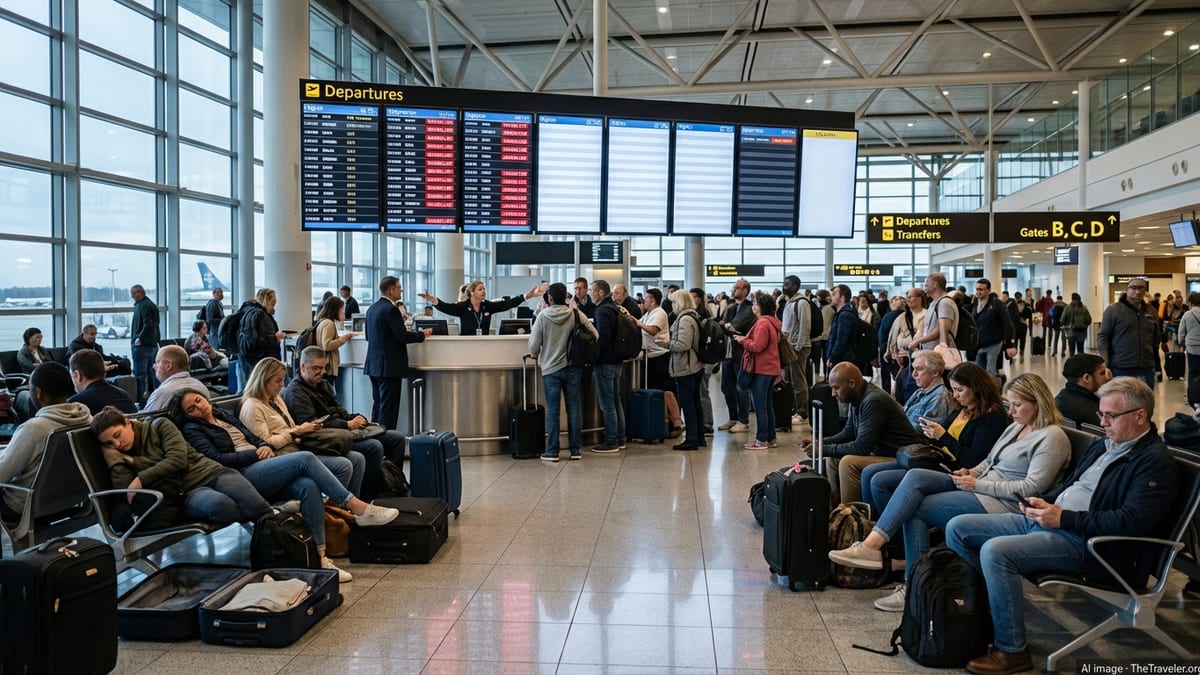
Formal Notification to ICAO Marks New Phase in Airspace Dispute
Publicly available information indicates that on 2 September 2026 Ukraine filed an official notification with ICAO, stating that it considers Russian airspace unsafe for civil aviation because of intensified military activity and expanding long-range drone operations. Kyiv’s move follows months of cross-border strikes and comes as the conflict, now in its fifth year, increasingly spills deep into Russian territory.
According to published coverage, Ukrainian officials framed the step as a safety alert rather than an attempt to impose a legal closure of Russian airspace. ICAO does not have direct authority to shut airspace, but notifications of this kind carry weight in airline risk assessments and insurance decisions, particularly when they relate to conflict zones or complex military activity near busy flight corridors.
The warning was delivered shortly after President Volodymyr Zelenskyy urged airlines, insurers, and other aviation stakeholders to reassess operations involving Russia, arguing that the density of military aircraft, air defense systems, and drones in Russian skies has reached a level that, in Ukraine’s view, is incompatible with normal commercial traffic.
Industry-focused outlets report that ICAO, for its part, has recently highlighted broader global concerns about civil aviation over or near conflict zones, with an emphasis on the growing role of long-range weapons, unmanned aircraft systems, and powerful air defense complexes that can operate across a wide altitude spectrum.
Drone Activity Drives Repeated Disruptions at Moscow Airports
The latest notification comes against a backdrop of recurring drone incidents that have affected major Moscow airports over the past two years, including Sheremetyevo, Domodedovo and Vnukovo. Russian media and independent monitors have documented repeated closures of runways, diversions, and delays linked to the interception of suspected Ukrainian drones in the capital region.
Reports from aviation analysts suggest that Russian air defense units frequently impose temporary airspace restrictions around Moscow when drones are detected, grounding or diverting flights until airspace is cleared. In several high-profile episodes, debris from intercepted drones has reportedly fallen near transport infrastructure, leading to precautionary suspensions of operations at nearby airports.
Travel and aviation outlets note that these disruptions are often short-lived, measured in hours rather than days, but they are becoming more regular as Ukraine expands the range and tempo of its strikes. For carriers and passengers, even brief closures can cascade into missed connections, aircraft rotations out of sequence, and higher operational costs.
Russian transport authorities have responded by emphasizing enhanced coordination between civil aviation services and security agencies, stating that measures are in place to maintain safety for domestic and international flights. However, external risk advisories continue to flag Russian airspace, especially near the Ukrainian border and around key hubs, as exposed to fast-evolving military activity.
Airlines and Insurers Reassess Routes Over and Into Russia
Ukraine’s message to ICAO explicitly targets the remaining foreign airlines that still overfly or serve Russia, urging them, along with their insurers and reinsurers, to weigh the elevated risk profile. Large European Union and North American carriers largely withdrew from Russian routes shortly after the full-scale invasion in 2022, but numerous carriers from the Middle East, Asia and parts of Africa continue to use Russian airspace.
According to specialist aviation media, long-haul routes between Europe and Asia have largely been reoriented via Central Asia, the Middle East, or the Arctic periphery for Western carriers, while some non-Western airlines have maintained more direct trans-Russian corridors. Those airlines typically cite continuous monitoring of security assessments and national regulatory guidance when justifying their routing decisions.
For insurers, Ukraine’s formal notification to ICAO adds another data point to ongoing risk calculations. War-risk premiums and coverage limits can change quickly when a conflict zone is perceived to expand, particularly if there is a possibility of misidentification between civil and military traffic or of debris from intercepted drones falling into busy flight paths.
Existing advisories from European and international regulators already recommend caution or outright restrictions on parts of Russian airspace, especially near the border with Ukraine. The new notice from Kyiv is expected to intensify discussions within airline safety departments and insurance committees about whether continued exposure is justified by the commercial benefits of shorter routings and access to Russian markets.
Safety Lessons from Earlier Conflict Zones Inform Current Warnings
Ukraine’s warning to ICAO also reflects lessons learned from previous civil aviation tragedies in conflict zones, where military operations intersected with commercial corridors. International guidance developed since the mid-2010s stresses the need for early risk communication, shared situational awareness, and conservative routing decisions when long-range weapons and air defense systems are active.
In its recent communications, ICAO has underscored the importance of improving threat and risk assessment processes for flights over or near contested areas. The organization is updating key manuals that guide states and operators on managing military-civil airspace interaction, with specific references to drones, cruise missiles, and interference with satellite navigation signals.
Aviation risk consultancies cited in public reporting highlight several converging hazards in Russian airspace: the proliferation of unmanned systems, frequent activation of layered air defenses, and the possibility of electronic warfare affecting navigation and communication. Each of these factors, individually manageable in peacetime, becomes more problematic when combined with near-daily cross-border strikes and high political tension.
For TheTraveler.org’s audience of frequent flyers and travel planners, these developments illustrate how geopolitical risk can alter the calculus behind seemingly routine route choices. Many of the changes are invisible to passengers, but they shape airline scheduling, ticket pricing, and the availability of certain city pairs.
Implications for Travelers Planning Routes that Cross the Region
For most travelers from North America and the European Union, the immediate impact of Ukraine’s latest warning may be limited, since the main Western carriers have already rerouted away from Russian airspace. Long-haul itineraries between Europe and Asia, for example, have been operating on alternative corridors since 2022, with some increase in flight times but relatively stable connectivity.
The picture is more nuanced for passengers flying on non-Western carriers that still operate to or over Russia. Public schedules show that several major airlines from the Gulf, Türkiye, China, and other states maintain services to Moscow and other Russian cities, while also using Russian skies as a transit shortcut on certain flows between Asia and the Middle East.
Travel risk advisers recommend that passengers who are concerned about overflight exposure review routing details when booking, pay attention to airline statements on safety and risk management, and stay informed about evolving advisories from national regulators. While the statistical risk to any individual flight remains difficult to quantify, many corporate travel policies now include explicit guidance on avoiding certain airspace regions where feasible.
As Ukrainian drone operations continue to reach deeper into Russia and Moscow responds with dense air defense activity, the pressure on airlines, regulators, and international bodies to clarify acceptable risk thresholds is likely to build. For now, Ukraine’s move to formally flag Russian airspace to ICAO reinforces that the conflict’s effects on global aviation are far from contained.
Euronews: Ukraine formally warns airlines that Russian airspace is unsafe
TravelDailyNews: Ukraine warns ICAO over Russian airspace
Aviacionline: ICAO urges greater protection for civil aircraft in conflict zones
RFE/RL: How much can Ukraine disrupt civilian flights in Russia?