


More news on this day
MSC Group’s cruise division is advancing plans for a new beach destination in the Dominican Republic, with a joint venture set to transform Catalina Island off La Romana into an upgraded hub for cruise passengers and resort guests.
Get the latest news straight to your inbox!
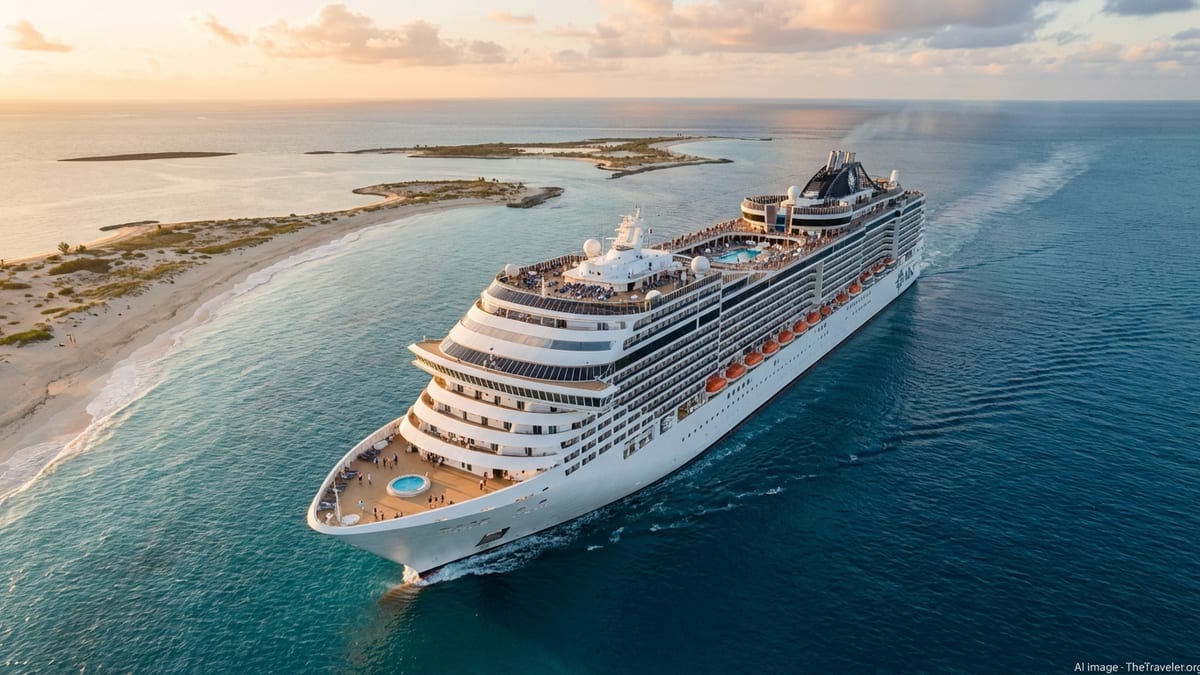
Joint Venture Targets Catalina Island Redevelopment
Publicly available information shows that CTL Maritime, part of MSC Group, and Casa de Campo Resort & Villas have entered a joint venture to operate and redevelop the existing beach operation on Catalina Island, a low-lying islet a short distance from the Dominican Republic mainland near La Romana. The agreement positions the island as a dedicated leisure stop for cruise itineraries and private resort traffic.
Reports indicate that the project will focus on modernizing guest facilities rather than building a traditional resort town. Plans described in company materials point to upgraded beach infrastructure, improved logistics for disembarkation and return to the ship, and a more seamless day experience for visitors. The island has long been used as a call on select Caribbean itineraries, but the new structure is expected to formalize and expand its role within MSC’s regional network.
The joint venture will see cruise passengers from MSC Cruises and sister luxury brand Explora Journeys share the island with guests from Casa de Campo, as well as travelers arriving with other cruise lines under commercial agreements. That mixed-use model reflects a broader shift in the Caribbean, where private or semi-private destinations are increasingly developed in partnership with local operators and resort groups.
Financial terms of the arrangement have not been publicly disclosed, but the move underscores MSC Group’s ongoing investment strategy in destination infrastructure across the Caribbean and Atlantic, following earlier projects in The Bahamas.
New Beach Hub Backs La Romana Homeport Strategy
The Catalina Island redevelopment is closely linked with MSC Cruises’ decision to base a ship year-round in La Romana, a port city on the country’s southern coast. According to published coverage and company schedules, the line plans weekly departures from La Romana beginning in late 2026, with itineraries highlighting Southern Caribbean ports and multiple Dominican Republic stops.
Itinerary information currently available indicates that Catalina Island will feature as a central beach call on these voyages, creating an easy-access day stop just offshore from the homeport. Positioning a dedicated beach destination so close to the embarkation city is intended to simplify operations, reduce tender times, and offer a controlled environment that can support large passenger volumes.
Travel trade materials suggest that MSC will market La Romana as an alternative Caribbean gateway for North American and European guests, complementing its established presence at PortMiami and other regional embarkation points. The Catalina Island project is therefore expected to serve both as a marquee selling point and as a practical asset that supports year-round deployment from the Dominican Republic.
For the Dominican tourism sector, the strategy adds another cruise-focused node to an already diverse map that includes Puerto Plata, Amber Cove, and the capital region. Industry analysts note that expanding homeport and private-destination capacity can increase passenger spending in local airports, hotels, and tour operations linked to pre- and post-cruise stays.
Part of a Growing Private Destination Portfolio
The Catalina Island initiative in the Dominican Republic comes as MSC Group’s cruise division continues to expand its portfolio of exclusive and semi-exclusive island destinations. In April 2026, the group unveiled plans for Sandy Cay, a luxury private island retreat in The Bahamas located near its existing Ocean Cay MSC Marine Reserve and slated to open in 2028.
Ocean Cay, which opened to cruise guests after a substantial redevelopment of a former industrial sand extraction site, has become a core feature of many MSC Caribbean itineraries. The island has been marketed as a marine reserve with curated beach areas, water sports, and late-night stays, allowing the company to control the onshore experience more tightly than in conventional port calls.
By adding Sandy Cay and now moving to elevate Catalina Island, the group is effectively stitching together a network of branded destinations across the northern Caribbean. Travel industry observers see this as part of a wider trend among global cruise operators to secure long-term access to beach experiences that can be tailored to each brand’s positioning, from mass-market to luxury.
For passengers, the growth of such properties translates into more predictable shore experiences, often with consistent pricing structures and familiar amenities. For cruise lines, it provides greater control over security, crowd management, and ancillary revenue streams tied to cabanas, excursions, and dining.
Implications for Dominican Tourism and Local Stakeholders
The redevelopment of Catalina Island is expected to have ripple effects for tourism stakeholders in La Romana and the surrounding region. Casa de Campo Resort & Villas, already one of the country’s best-known upscale properties, will manage on-island operations and beach club facilities through the joint venture, integrating cruise day visits with its wider resort offering.
Local tour operators and transport providers could benefit from a rise in passenger throughput tied to year-round cruise deployment and the enhanced appeal of a branded island experience. At the same time, the concentration of visitors on a controlled beach property may reshape how spending is distributed between the island and mainland attractions such as historic La Romana, nearby golf courses, and cultural excursions.
Environmental considerations are also likely to draw attention as redevelopment moves forward. While detailed plans have not been fully outlined in public documents, past MSC island projects in The Bahamas have paired commercial development with stated marine restoration and coastal management objectives. Travel industry commentators will be watching to see whether similar frameworks are applied to Catalina Island and how they interact with Dominican regulations and community expectations.
With Caribbean cruise capacity projected to grow over the next several years, the Dominican Republic’s expanded role as both a port of call and a homeport, supported by new destination infrastructure like the Catalina Island hub, positions the country to capture a larger share of regional passenger traffic and related spending.
Competitive Context in the Caribbean Cruise Market
MSC’s move in the Dominican Republic unfolds against a backdrop of intense competition for distinctive Caribbean experiences. Major cruise lines have invested heavily in branded beach destinations and private islands, from long-established developments in The Bahamas to newer enclaves in Haiti and beyond. Catalina Island adds a Dominican chapter to this broader pattern.
For MSC Cruises and Explora Journeys, a dedicated beach hub in the Dominican Republic offers a way to differentiate itineraries from those focused primarily on Bahamian and Eastern Caribbean ports. Coupled with La Romana homeporting, the island facility may enable itinerary designs that emphasize Southern Caribbean and Lesser Antilles calls, with the certainty of a controlled beach day built into each voyage.
Travel agencies and cruise specialists are likely to highlight the new property as it comes online, particularly for guests seeking a blend of resort-style relaxation and access to multiple Caribbean nations in a single trip. As details emerge on the scope of the redevelopment, capacity, and on-island services, the project is expected to become a key talking point in the promotion of future Dominican Republic sailings.
While timelines for full build-out have not been specified in all public materials, the joint venture and the alignment with La Romana’s year-round deployment signal that Catalina Island is set to become a central element of MSC’s long-term strategy in the Dominican Republic and the wider Caribbean.