


More news on this day
Torrential monsoon rain over Mumbai has triggered severe waterlogging across India’s financial hub, disrupting flights, crippling road traffic and leaving thousands of commuters struggling to move around the city and its suburbs.
Get the latest news straight to your inbox!
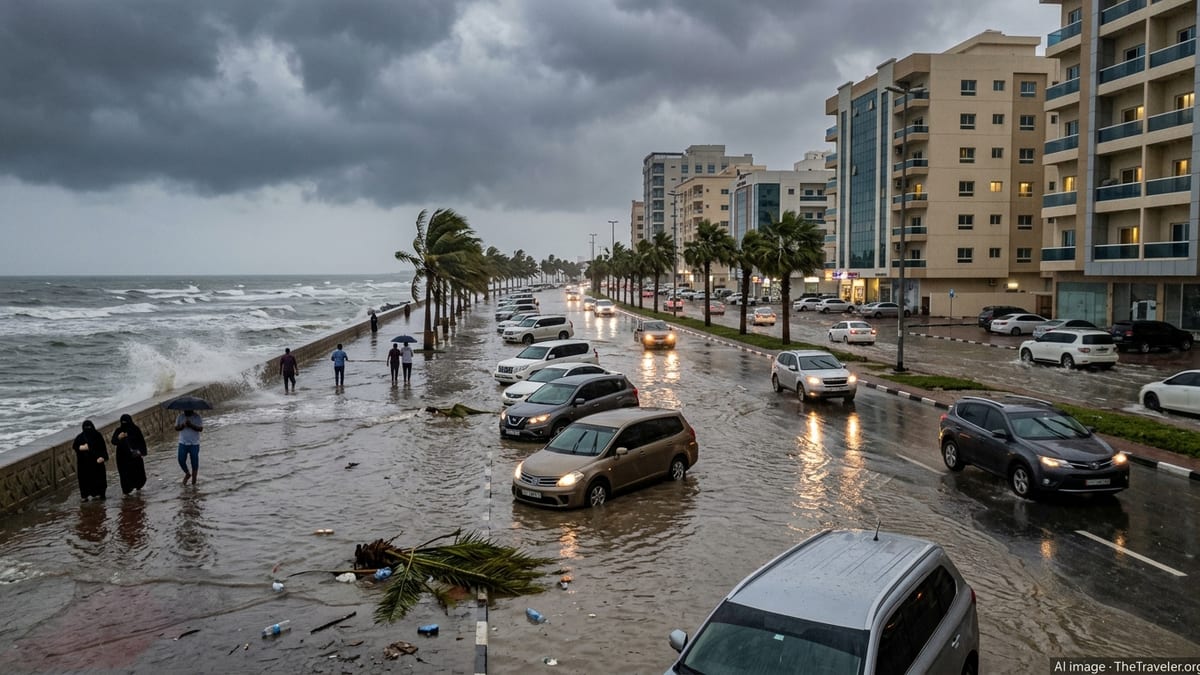
Heavy downpour submerges key corridors
Continuous rain since late Friday and into Saturday has overwhelmed stormwater drains in several parts of Mumbai, leading to extensive flooding at traditional low-lying hotspots as well as newer road corridors. Publicly available rainfall data indicates that several locations recorded upwards of 200 millimetres of rain in barely half a day, a volume that quickly pushed local infrastructure beyond capacity.
Reports from city-focused outlets describe deep water on arterial stretches including the Western Express Highway, SV Road and New Link Road, along with multiple underpasses in Andheri, Malad and Kurla. Images shared by commuters show vehicles crawling through brown, waist-deep water in some pockets, while other stretches have been completely closed to traffic as a precaution.
The inundation has not been limited to the island city. Neighbouring Navi Mumbai and Thane have also reported heavy rain and widespread waterlogging, particularly around Airoli, Koparkhairne and busy junctions feeding into the Mumbai Trans Harbour and Eastern Express corridors. In several of these areas, buses and private cars have been forced to divert to interior roads, lengthening already slow journeys.
According to published coverage, the India Meteorological Department has kept a red alert in place for Mumbai and adjoining districts for the weekend, warning of the likelihood of extremely heavy rain in isolated pockets and urging residents to brace for more disruption.
Flight operations strained at Mumbai airport
The intensity of the downpour and associated low visibility have rippled into air travel, with operations at Chhatrapati Shivaji Maharaj International Airport facing delays and diversions. Aviation-focused reports note that at least five Mumbai-bound flights were rerouted to nearby airports after pilots encountered unstable approaches amid strong rain bands and poor visibility on Saturday morning.
Airlines have issued public advisories cautioning passengers about potential delays and congestion at the airport, asking travellers to allow additional time for check-in and security. Passengers arriving in the city have also faced lengthy waits for taxis and app-based cabs, as flooding on the arterial roads connecting the airport to the suburbs has slowed vehicle movement and limited supply.
Local media coverage indicates that ground handling and baggage operations have remained functional, but periodic intensification of rain has forced temporary pauses in ramp activity for safety reasons. While there has been no formal closure of the runway, the combination of weather-related spacing between arrivals and departures and strong crosswinds has significantly reduced the number of movements the airport can safely handle per hour.
Travel industry observers note that the disruption comes at the start of a busy domestic holiday period, magnifying the impact on passengers trying to connect from Mumbai to hill stations and coastal getaways in Maharashtra and neighbouring states.
Road traffic crawls amid closures and diversions
Across the city’s road network, the heaviest impact has been felt on underpasses and low-lying junctions where water collects quickly once drains are overwhelmed. Traffic advisories circulated by the Mumbai Traffic Police and civic channels list closures and severe congestion at Andheri Subway, junctions in Malad, sections of Veera Desai Road, portions of the Jogeshwari Vikhroli Link Road, and several internal roads in the eastern suburbs.
Publicly available information shows long tailbacks on the Western and Eastern Express Highways as motorists navigate through pooled water and deal with lane closures. In some locations, barricades have been placed to prevent vehicles from entering deeper patches, forcing sudden diversions onto service roads and residential streets that are not designed to handle such volumes of through-traffic.
Bus services have been partially curtailed or rerouted on several corridors, particularly where depots and turning circles are waterlogged. Commuters have reported cancelled or delayed services on routes serving Andheri, Powai, Kurla and parts of the eastern suburbs. Where buses are running, journeys have slowed considerably, with drivers inching through sections where manhole covers are submerged and road edges are hard to distinguish.
For many residents, walking has become the only viable way to move short distances, even as photos from multiple neighbourhoods show knee-deep water on footpaths and internal lanes. Travel advisories circulating on social media and local message groups are urging people to avoid non-essential road travel and to stay off submerged stretches where open drains and uncovered manholes pose hidden risks.
Rail and metro services face knock-on delays
Mumbai’s suburban railways, which carry millions of passengers daily, have also been affected by the deluge. According to local news reports, waterlogging on and around tracks in low-lying sections has forced speed restrictions and intermittent halts on parts of the Central and Western Railway corridors, leading to cascading delays across the network.
Some trains have been terminated short of their intended destinations when water levels near critical track sections have approached safety thresholds. Viral images and short video clips shared online show trains moving slowly through waterlogged sections, with platforms crowded as commuters wait for overburdened services.
Metro services, often seen as a more dependable alternative during the monsoon, have generally continued to operate but not without challenges. Station access points and approach roads at several elevated stations have been affected by surrounding waterlogging, making it harder for passengers to reach the platforms. Feeder bus and auto-rickshaw services that link residential clusters to metro stations have also been compromised by localized flooding.
Transport analysts point out that the concentration of jobs in a few business districts means even moderate interruptions on any one corridor can cause citywide delays, as commuters attempt to switch between trains, metros, buses and cabs in search of workable routes.
Travel guidance for visitors and residents
With the red alert and monsoon peak likely to continue through the weekend, travel planners are advising both residents and visitors to reassess their movements over the next 24 to 48 hours. Non-essential trips within the city, particularly in the early morning and late evening when visibility is reduced and tides can worsen flooding, are being discouraged in widely shared advisories.
For air travellers, publicly available guidance recommends tracking flight status closely, arriving early at the airport to account for traffic delays, and keeping flexible ground-transport plans in case usual taxi or ride-hailing options are constrained. Passengers with connecting flights may need to allow longer layover windows or consider rebooking where possible.
Those moving by road are being encouraged to prioritize main corridors that are more likely to be actively monitored and cleared, while avoiding known bottlenecks such as low underpasses, narrow internal lanes and roads abutting major drains or creeks. Motorists have also been urged in public messaging not to attempt driving through water where the depth is unclear, to minimize both personal risk and the likelihood of stalled vehicles worsening congestion.
Travel specialists note that Mumbai remains accustomed to operating through heavy monsoon conditions each year, but emphasize that the current combination of intense rainfall, high tides and dense urban development is testing the city’s resilience and making real-time information crucial for anyone planning to move in, out or across the metropolis this weekend.