


Adjuntas is where Puerto Rico trades palm trees for pines and coastal humidity for cool mountain air. Perched in the Cordillera Central, this small town has become a favorite escape for locals and in-the-know visitors who want misty hillsides, coffee farms and quiet cabins instead of beach crowds. Choosing where to stay matters here: distances are short but roads are steep, and the difference between a downtown guesthouse and a remote coffee hacienda can completely change your experience.
Get the latest updates straight to your inbox!
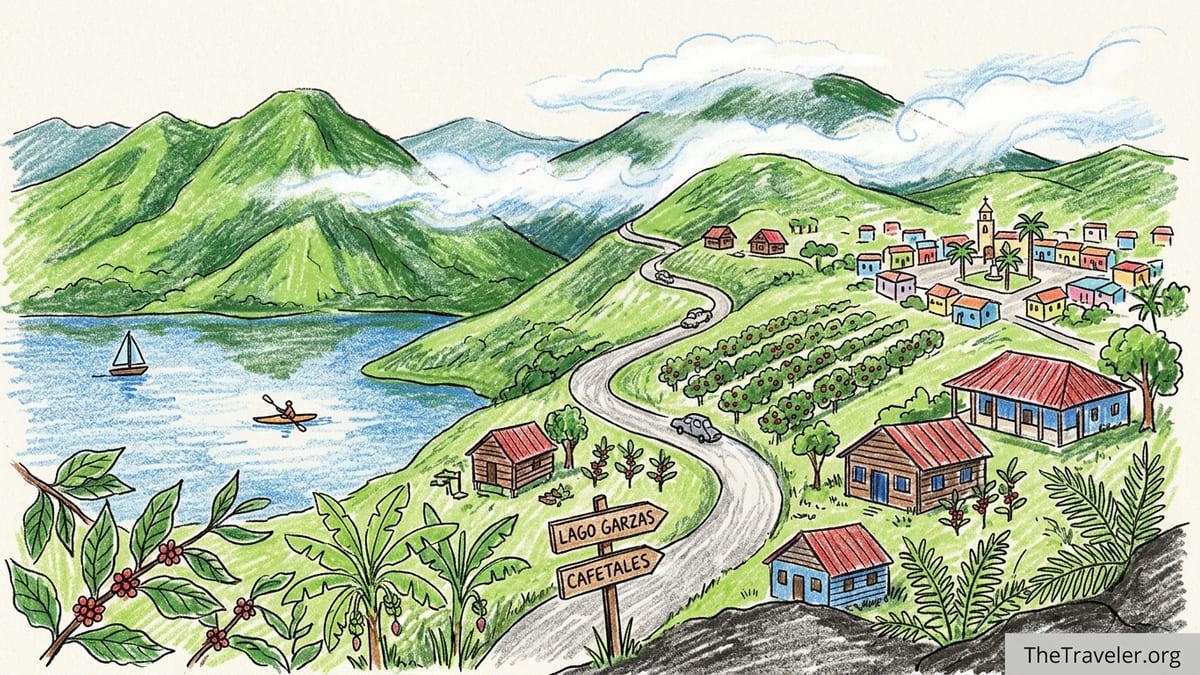
Why Adjuntas Is Puerto Rico’s Cool Mountain Escape
Adjuntas sits roughly an hour from Ponce and about two hours from San Juan, but it feels a world away from the island’s hot, humid coasts. Elevation in the municipality climbs to well over 2,000 feet, and evening temperatures are noticeably cooler than in San Juan or Rincón, especially from December through March. Travelers often remark that they reach for a light jacket at night and appreciate thick blankets in cabins that would feel stuffy at sea level.
The town’s appeal centers on its coffee-growing heritage and its small-scale nature tourism. Instead of big resorts, you will find hacienda-style hotels such as Hacienda Villa Sotomayor in Barrio Garzas, coffee-farm stays like Greenhaven at Sandra Farms, and countryside rentals overlooking Lago Garzas. In rural barrios such as Tanamá and Portillo, cabins and villas are tucked into steep hillsides among banana plants, citrus trees and shaded coffee groves.
Because many of these properties are independent or family-run, amenities and access vary widely. Some offer heated pools, hot tubs and full kitchens; others prioritize scenery and seclusion over conventional resort facilities. Understanding the geography around downtown Adjuntas, Garzas, Tanamá, Portillo and the more remote countryside will help you choose the right base for hiking, coffee tours or simply unwinding in cooler air.
Before booking, remember that Adjuntas is very much a mountain destination. Roads can be narrow and winding, cell signal is patchy in spots, and you may encounter fog or rain showers even when the coast is sunny. For many visitors that is exactly the charm, but it makes choosing the right location and amenities especially important.
Downtown Adjuntas: Convenient Base With Local Flavor
Downtown Adjuntas is compact and revolves around Plaza de Recreo and the historic city hall and church. Staying near the plaza puts you within a short walk or quick drive of bakeries, small bars, casual eateries, and Casa Pueblo’s cultural center. It is the best choice if you want to spend evenings people-watching in the square, have multiple dining options without long drives at night, and do day trips to Lago Garzas, Guilarte State Forest or coffee farms.
Accommodation in the town center leans toward modest guesthouses and apartments rather than resorts. Rates on major vacation-rental platforms for one-bedroom apartments or small homes within a 5 to 10 minute walk of the plaza often start around 120 to 170 US dollars per night for two guests in the current high season, sometimes less midweek. Properties typically include Wi-Fi, basic kitchen facilities and air conditioning in at least the bedroom, which can still be useful on warmer afternoons.
Compared with more rural barrios, downtown stays usually have easier access roads and better street lighting. This can matter if you arrive after dark or are not comfortable driving narrow mountain lanes. Parking is sometimes on-street or in small private lots, so check listings carefully if you are traveling with a rental car or a larger vehicle. Families who want to minimize time in the car often appreciate being close to supermarkets, pharmacies and simple kid-friendly restaurants around the square.
The trade-off is scenery and seclusion. You will not get the same sweeping valley views or total silence that you find in Tanamá or Garzas, and there are no on-site trails or coffee fields. Many travelers split their time by spending one night in town to explore the plaza and nearby eateries, then moving to a more remote hacienda or cabin for a deeper countryside experience.
Garzas & Lago Garzas: Countryside Stays and Hacienda Villa Sotomayor
West of town, Barrio Garzas stretches around Lago Garzas, a man-made lake popular for kayaking, fishing and forest hikes. The area is one of the most convenient countryside bases because it combines nature access with a relatively short drive, usually 15 to 25 minutes, back to downtown Adjuntas for restaurants and shops. The road network here includes Route 518 and 522, which are steep and curvy in segments but generally manageable for regular cars when driven cautiously.
The area’s best-known property is Hacienda Villa Sotomayor, previously marketed for years as Parador Villas Sotomayor. Older reviews, guidebooks and some camping references still use the former parador name, which can cause confusion when comparing feedback. Under its current branding, Hacienda Villa Sotomayor functions as a countryside hotel and family resort with multiple room types, restaurant facilities and outdoor recreation. Room rates listed by local booking partners and travel agencies in 2026 often fall in the range of roughly 160 to 230 US dollars per night for standard rooms, including taxes and fees, with higher pricing for suites or holiday dates.
Hacienda Villa Sotomayor’s appeal lies in its mix of amenities and setting. Guests have reported access to a pool area that can feel refreshingly cool rather than tropical; some seasons it operates with heated sections, which is a bonus in mountain evenings. On-site dining means you do not have to drive steep roads after dark for every meal, and parking is on the property. Wi-Fi is available in common areas and most rooms, making it a workable base for remote workers who can tolerate occasional drops in rural connectivity.
On the opposite end of the spectrum, Lago Garzas and the surrounding hillsides host independent villas and cabins with direct lake views, such as lakefront homes and suites marketed locally as Casa del Lago or similar names. Current listings through regional agencies and meta search sites often show one-bedroom lakeview suites with kitchenettes and Wi-Fi starting around 150 to 190 US dollars per night for two guests, while larger houses with multiple bedrooms and private terraces trend higher, generally from 200 to 300 US dollars per night depending on season and capacity. Because these are private rentals, policies on minimum stays, pets and quiet hours vary.
For travelers, the Garzas area balances practical considerations with the feeling of being truly in the mountains. Morning fog over the reservoir, birdsong and the chance to kayak or hike without long drives make it a favorite for active couples and families. The main drawbacks are the likelihood of narrow driveways, limited exterior lighting, and occasionally inaccurate last-mile GPS directions, especially if your navigation app suggests side roads rather than the main numbered routes. Printing or saving written directions from property hosts is strongly advised.
Tanamá & Portillo: Mountain Cabins and Coffee Landscapes
North of town, the barrios of Tanamá and Portillo spread across ridges and valleys known for coffee cultivation and dense greenery. These are among the best areas for classic mountain cabins and stays that immerse you directly in the coffee landscape. Here you are more likely to wake up to clouds drifting through the trees, roosters in the distance and the smell of wet earth after afternoon showers.
Hacienda Doña Minga, reached by a rural road within driving distance of Tanamá River and the Guilarte Forest area, exemplifies this style of stay. Recent rate examples from major booking platforms show one-bedroom accommodations for two adults starting from roughly 220 to 240 US dollars per night including taxes and fees in the upcoming high season. The property operates more like a boutique countryside inn, with breakfast options, on-site parking and comfortable rooms set amid lush grounds. It is a good choice for couples who want quiet and are willing to trade walkable restaurant options for immersion in nature.
Portillo and adjacent hillsides also hold several coffee-related stays, though some focus more on farm experiences than hotel-level service. For visitors, the key question is how close you want to be to coffee operations. Staying on or near a working coffee farm exposes you to daytime activity, machinery noise during harvest weeks and early-morning routines, but it also gives you immediate access to guided tours and tastings. In practical terms, travelers report nightly rates for standalone cabins and small houses in these barrios commonly ranging from about 150 to 260 US dollars for two to four guests, depending on amenities such as outdoor hot tubs, fire pits or panoramic decks.
Road conditions in Tanamá and Portillo are similar to other rural mountain areas: paved but narrow, with sharp switchbacks and occasional loose gravel on the shoulders. Standard rental sedans can usually handle these routes in dry conditions, but you will want to avoid aggressive GPS shortcuts that divert from signed numbered roads. If in doubt, ask your host which route to follow and aim to arrive before dark, when fog and lack of street lighting can make curves harder to judge.
Coffee Farm Stays: Greenhaven at Sandra Farms and Beyond
For travelers who care as much about what is in their mug as what is outside their window, Adjuntas’ coffee farms are a major draw. Sandra Farms, a respected producer of premium Arabica coffee, operates Greenhaven, an Airbnb-listed stay set in the surrounding cloud forest. Guests who book here typically combine their lodging with on-site coffee tours, gaining insight into cultivation, processing and roasting while sleeping steps from the trees that produced their morning brew.
Because Greenhaven is booked through short-term rental platforms rather than a hotel engine, exact nightly prices fluctuate, but recent public listings have placed it broadly in the mid to upper range for Adjuntas: often around the equivalent of 200 to 280 US dollars per night for two guests in high-demand periods, sometimes lower midweek. In exchange, you get a secluded setting, access to walking paths around the farm and the ability to schedule tastings directly with the hosts. Kitchen facilities and reliable hot water are standard here, while air conditioning is either minimal or entirely absent, which suits the naturally cool microclimate.
Elsewhere in the municipality, other coffee properties welcome overnight guests in various formats, from full farmhouses to small guest suites attached to family homes. Price examples from current rental aggregators for rural coffee-farm houses in the broader Garzas and Tanamá region often show nightly rates between roughly 180 and 350 US dollars for entire homes sleeping four to eight people, especially where there is a heated pool, large deck or dramatic valley view. Some list a two-night minimum or higher on weekends or holiday periods, so couples planning a single-night romantic escape may need to be flexible with dates.
When booking a coffee farm stay, pay close attention to how “off-grid” the property is. A number of farms in and around Adjuntas rely on solar power with battery backup and collect rainwater or spring water in cisterns. That often means power is more resilient than in urban areas during island-wide outages, but it can also require sensible use of appliances, cautious use of electric heaters and clear communication about hot water capacity. For many visitors, the trade-off is well worth it for mornings sipping coffee on a terrace above the clouds.
Remote Rural Retreats & Hacienda del Holandés
While some travelers want to stay close to town, others come to Adjuntas specifically for a feeling of remoteness. Scattered across the municipality are off-the-beaten-path rentals, small eco-farms and rustic camp-style properties where the main attraction is solitude. Among the better-known names is Hacienda del Holandés, sometimes listed in local camping guides as “Camping del Holandés,” which functions primarily as an eco-camping site rather than a conventional hotel. Recent local information lists camping prices around 25 US dollars per tent per night, with shared bathrooms and showers but no loud generators or music, appealing to low-impact campers.
In the broader countryside, vacation-rental platforms list an array of cabins, tiny homes and villas that cater to couples, families or groups of friends. Examples currently promoted in the Adjuntas area include container homes with hot tubs, luxury log cabins with panoramic terraces, and hilltop villas with heated pools and fireplaces. Publicly advertised nightly rates for these remote properties are typically higher than for basic town apartments, reflecting the combination of privacy and special features: many one- or two-bedroom units sit in the 180 to 260 US dollars per night range for two to four guests, while multi-bedroom villas with private pools can exceed 400 or even 600 US dollars per night, especially on weekends and holidays.
At this end of the spectrum, amenities vary widely. Some properties are fully equipped with modern kitchens, fast Wi-Fi and strong cell signal, attracting remote workers or digital nomads who want a long weekend of productivity with mountain views. Others emphasize analog relaxation, with hammocks, fire pits and bookshelves rather than televisions and workstations. Heating is more common than air conditioning in such high-elevation cabins; fireplaces, gas heaters or thick comforters play a bigger role in comfort than AC units that might barely be used.
Reaching these retreats almost always involves steep access roads, sometimes with concrete strips and sometimes paved only in the last stretch. Hosts commonly advise guests to avoid very low-clearance cars. While four-wheel drive is not always essential in dry weather, it can be reassuring during heavy rains when moss or wet leaves make surfaces slippery. As a rule, plan daytime arrivals, download an offline map of the area, and ignore GPS shortcuts that unexpectedly route you down unsigned side lanes instead of main numbered roads.
Mountain Climate, Amenities & Why AC Is Not Always the Priority
Travelers accustomed to coastal Puerto Rico often assume that air conditioning is the most important comfort feature in any accommodation. In Adjuntas, the priorities shift. Because of the elevation, nighttime temperatures tend to be significantly cooler than along the coasts, especially in winter and early spring. Windows left open under thick blankets and the sound of coquis and distant rivers are often more comfortable than sealed rooms with cold air from a wall unit.
As a result, many mountain cabins, coffee farms and eco-lodges in the Adjuntas area are built without full-house air conditioning. Some offer AC only in bedrooms, while living areas rely on cross-breezes, ceiling fans and shaded verandas. This is intentional: it reduces energy use, fits off-grid solar systems and takes advantage of the naturally cool climate. When reading listings, do not interpret “no air conditioning” as a sign of lower quality; instead, look for photographs of blankets and duvets, mention of fans, and reviews that describe nighttime comfort.
More critical in these mountain stays are reliable hot water, good insulation and thoughtful bedding. After a day of hiking in Guilarte Forest or kayaking on Lago Garzas, a hot shower is far more important than blasting cold air. Properties that advertise continuous hot water, insulated construction, or gas water heaters backed by solar power are well suited to the cooler environment. In addition, having a kitchen or kitchenette can significantly improve comfort, allowing you to make hot drinks or simple meals without driving steep roads at night.
Connectivity is another important amenity to consider. Wi-Fi is widely available at established hotels such as Hacienda Villa Sotomayor and increasingly common at vacation rentals and coffee farms, but speeds and reliability vary. If remote work is part of your plan, ask hosts for recent speed tests or confirmation of backup systems, especially in properties that rely solely on satellite or rural wireless providers. Parking details also matter: mountain driveways can be steep or tight; if you are not comfortable with challenging maneuvers, ask for photos or clarification before you book.
Cost Comparison: Two Nights for Couples and Families
Price levels in Adjuntas shift with demand, holidays and specific property features, but looking at current public examples helps set expectations. For a couple planning a two-night weekend in the cooler months, a reasonable mid-range scenario might include a standard room at Hacienda Villa Sotomayor at about 190 US dollars per night including taxes, for a lodging total of around 380 US dollars. Adding fuel for the drive from San Juan or Ponce, modest restaurant meals, and one guided coffee tour would realistically raise a two-night budget to somewhere in the 550 to 700 US dollar range, depending on dining choices.
A similar couple opting instead for a one-bedroom cabin or coffee-farm stay such as Greenhaven at Sandra Farms or a Tanamá hillside casita might pay closer to 220 to 260 US dollars per night in high season, for lodging totals between 440 and 520 US dollars for two nights. If the rental has a full kitchen and you plan to self-cater most meals, grocery costs could keep the overall budget in a similar range to the hotel example, especially if you prepare breakfasts and one main meal per day in the cabin.
For families, costs depend heavily on space and amenities. A family of four booking a two-bedroom or small three-bedroom house near Lago Garzas or in the hills above Garzas might currently see nightly rates from around 220 to 320 US dollars for entire homes, with two-night lodging totals between roughly 440 and 640 US dollars. Add in car rental, fuel, simple restaurant meals for four and at least one paid coffee or nature tour, and a realistic weekend budget can fall in the 800 to 1,200 US dollar range. Families who cook at their rental and picnic during the day can keep costs closer to the lower end.
By contrast, a group or extended family booking a large multi-bedroom villa with a private heated pool or luxury features in the Adjuntas area can quickly see lodging alone reach 800 to 1,200 US dollars for two nights or more. These properties often make the most sense when the cost is divided among several adults. In all cases, travelers should pay close attention to cleaning fees, service charges and taxes on online platforms, as these can add a significant percentage on top of the nightly base rate.
Choosing the Right Stay: Couples, Families, Photographers & Remote Workers
Different types of travelers gravitate to different parts of Adjuntas. Couples seeking a romantic weekend usually favor coffee-farm stays or remote cabins with terraces and valley views. Properties like Hacienda Doña Minga or farm-based rentals such as Greenhaven at Sandra Farms offer intimate atmospheres, breakfasts featuring local coffee, and quiet nights under starry skies. A wood-fired hot tub, outdoor shower or private balcony can easily justify paying more for a special-occasion trip.
Families often find the best fit in the Garzas and Lago Garzas area or in larger countryside homes near town. Hacienda Villa Sotomayor appeals to parents because of its pool, grounds and on-site dining, which reduce the need to load children into the car for every meal or activity. Lakefront or hillside homes with two or three bedrooms give kids space to spread out, and easy access to kayaking on Lago Garzas, hikes in Guilarte State Forest or day trips to nearby towns like Jayuya provides a full weekend of low-cost outdoor adventures.
Photographers and nature enthusiasts tend to seek altitude and varied viewpoints. The ridges around Tanamá, Portillo and certain remote properties above Garzas offer wide-open vistas for sunrise and sunset, along with close-up opportunities to capture coffee plants, ferns and waterfalls in neighboring rivers. For them, the best accommodation is often the one with an unobstructed deck, early-morning mist and minimal light pollution at night, even if the drive there is longer and the amenities fewer.
Remote workers and digital nomads should balance scenery with connectivity and access to services. Staying in or within a short drive of downtown Adjuntas, or at an established hacienda hotel, usually provides more reliable Wi-Fi and easier access to cafes or cowork-friendly spots. That said, a number of newer cabins and villas advertise strong internet and dedicated workspaces; for these, ask hosts for recent details and choose properties where power is supported by solar and battery backups to minimize disruption during island-wide outages.
FAQ
Q1. What is the best area to stay in Adjuntas for a first visit?
For a first visit, many travelers choose either downtown Adjuntas for convenience to restaurants and services or the Garzas and Lago Garzas area for a balance of nature and accessibility. Staying in town makes arrival and nighttime outings simpler, while Garzas offers quick access to hiking, kayaking and countryside views without being extremely remote.
Q2. Is Hacienda Villa Sotomayor the same place as Parador Villas Sotomayor?
Yes. The property long known as Parador Villas Sotomayor now operates under new administration and the name Hacienda Villa Sotomayor. Older reviews, guidebooks and camping references may still use the parador name, but they are describing the same location in Barrio Garzas, now updated and rebranded.
Q3. Do I really not need air conditioning in Adjuntas cabins?
In most higher-elevation parts of Adjuntas, especially around Garzas, Tanamá and Portillo, nights are cool enough that fans and open windows are more comfortable than strong air conditioning. Many cabins are designed without full-house AC for that reason. What matters more is good ventilation, ceiling or standing fans, warm blankets and dependable hot water for showers.
Q4. How much should a couple budget for a weekend in Adjuntas?
A couple staying two nights in a mid-range hotel or cabin, driving from the San Juan or Ponce area, eating at local restaurants and including one coffee tour can reasonably expect to spend somewhere around 550 to 700 US dollars in total. This estimate combines lodging, transportation, meals and at least one paid activity, though more luxurious cabins or special-occasion dinners will increase costs.
Q5. Are the mountain roads to Adjuntas dangerous?
The main highways to Adjuntas are paved and widely used, but secondary roads in barrios like Garzas, Tanamá and Portillo are narrow, steep and winding. They are safe when driven slowly and in daylight, yet can feel intimidating for drivers unfamiliar with mountain conditions. It is wise to avoid very low-clearance cars, arrive before dark when possible, and follow host directions rather than unverified GPS shortcuts.
Q6. Which stays are best for families with children?
Families often do well at Hacienda Villa Sotomayor in Garzas, which offers a pool, open grounds and on-site dining, or in multi-bedroom houses near Lago Garzas or on the hills close to town. These options provide space for children and easy access to outdoor activities like kayaking, forest walks and simple outings around the plaza without extremely long drives.
Q7. Where should photographers and nature lovers stay in Adjuntas?
Photographers and nature-focused travelers usually prefer high-elevation cabins or coffee-farm stays in Tanamá, Portillo or the hills above Garzas. These areas offer sweeping valley views, frequent morning mist and closer proximity to rivers, waterfalls and forest trails, making it easier to catch sunrise light and nighttime stars without long pre-dawn drives.
Q8. Can I work remotely from Adjuntas?
Yes, but choose your accommodation carefully. Hacienda-style hotels and town-center apartments generally offer more stable Wi-Fi and easier access to cafes or phone signal. Some modern cabins and villas advertise strong internet and workspaces, but you should always confirm details with hosts, ask about backup power and be prepared for occasional slowdowns during storms or island-wide outages.
Q9. Are coffee tours available close to where I stay?
Several coffee farms in and around Adjuntas, including Sandra Farms and other agro-tourism projects, offer tours, tastings or experiences that can often be combined with nearby lodging. If coffee is a priority, look for stays on or near a working farm, or choose accommodation in Garzas or Tanamá and plan a short drive to prebooked tours.
Q10. What is the takeaway when choosing where to stay in Adjuntas?
The key is to match location and amenities to your priorities. Downtown works for convenience and simple logistics, Garzas balances nature and access, Tanamá and Portillo immerse you in coffee landscapes, and remote cabins provide seclusion and romance. Focus on hot water, heating, views and access roads rather than assuming resort-style facilities everywhere, and you will find that Adjuntas delivers one of Puerto Rico’s most rewarding mountain escapes.