


On a recent swing through California and Arizona, I rented three cars in six weeks, booked through different sites and with different companies. At each checkout page, the same offer popped up: Allianz rental car insurance for just a bit more per day. After years of relying on a mix of my personal auto policy, credit cards and expensive rental counter waivers, I finally sat down to run the numbers and study the fine print. This review walks through what I found when I compared Allianz’s rental car coverage to other options in terms of cost, coverage gaps and real-world usability.
Get the latest updates straight to your inbox!
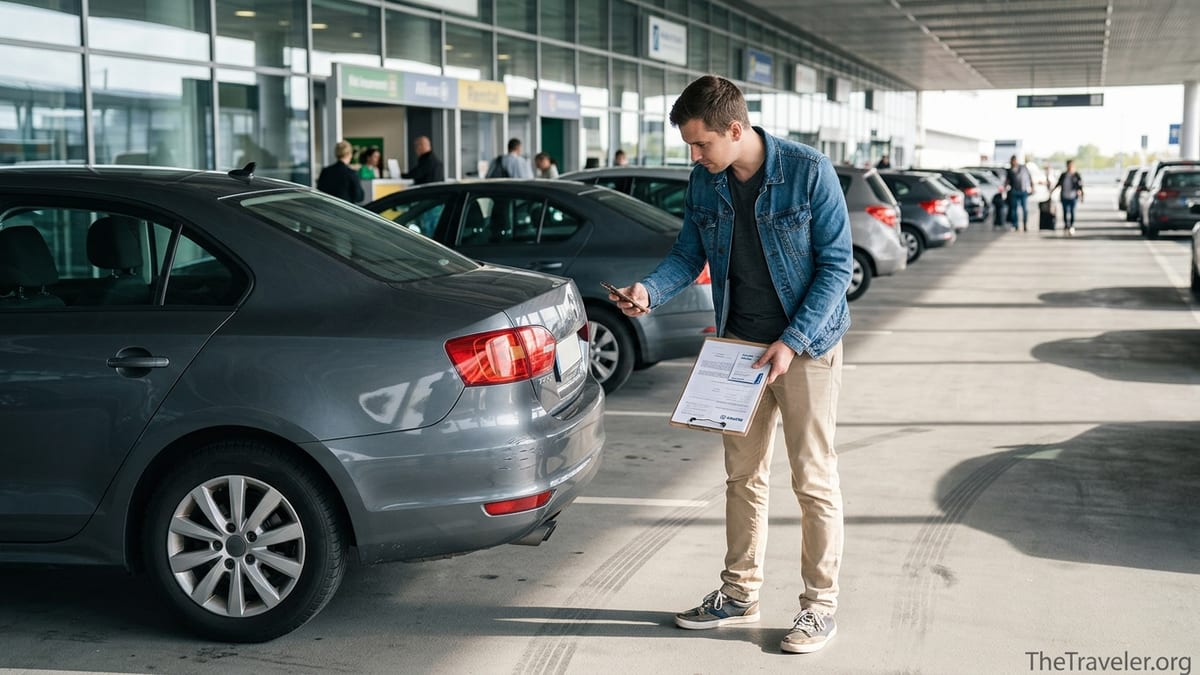
What Allianz Rental Car Insurance Actually Is (and Is Not)
Allianz sells dedicated rental car damage coverage as a stand-alone product and as part of some broader travel insurance plans. In the United States, the most common product travelers see at online checkout is a collision-style policy that protects the rental vehicle itself if it is damaged or stolen, up to a stated limit, typically around tens of thousands of dollars per rental with a zero deductible. It behaves more like a traditional insurance policy than the simple waiver the rental desk sells, but in practice it fills the same practical role: protecting you from a big repair bill if something happens to the car.
It is important to understand what Allianz rental coverage is not. It is not liability insurance for injuries or property damage you cause to other people; that exposure usually has to be covered by your personal auto policy in your home country or by buying supplemental liability from the rental company. Nor is it roadside assistance or mechanical breakdown coverage, although certain Allianz plans may package in limited assistance services like help arranging a tow or replacement vehicle. The core value is damage and theft protection for the car you are renting.
Where many travelers first see Allianz is on booking platforms. Reserve a compact in Phoenix through a major aggregator and you might see “Allianz rental car protection” offered for roughly the cost of a fast-food lunch per day, often described as primary coverage up to about 75,000 dollars for damage and theft, with zero deductible. That is the basic proposition: instead of paying the rental company for its collision damage waiver, you pay Allianz for a separate policy that steps in if something happens to the car.
This framing matters, because it shapes when Allianz makes sense. If you already have strong protection through your personal auto policy and a credit card, Allianz might be redundant. If you are a city dweller without a car, renting abroad, or trying to avoid a claim on your personal insurance, Allianz can become the main shield between you and a four-figure repair bill.
Coverage Details: What Allianz Typically Covers and Excludes
The marketing bullet points for Allianz rental car policies are fairly consistent: coverage for physical damage to the rental car from collision, theft, vandalism, fire, hail or similar events, up to a generous limit, with no deductible. In practical terms, that means if you back into a pole in a Las Vegas parking garage and the bumper needs 3,000 dollars in work, Allianz is designed to pick up that bill, not your personal auto policy or your credit card company. Some plans also state that they will cover reasonable fees the rental company may add, such as loss of use while the car is in the shop, as long as those charges are properly documented.
However, like every insurance product, the fine print is where the real boundaries appear. Allianz policies typically exclude certain vehicle types: exotic or high-value cars above a given manufacturer’s suggested retail price, motorcycles, trucks and vans above a certain weight, and vehicles used for commercial purposes like ride-hailing or delivery. If you are picturing a Porsche rental in Miami Beach or a heavy SUV on an off-road trail in Utah, Allianz may not be the right fit. The coverage is generally geared toward standard passenger cars and smaller SUVs driven on normal roads under a standard rental agreement.
There are also behavioral exclusions. Violating the rental contract can void coverage, so handing the keys to a friend who is not listed as an authorized driver, using the car for races or paid transport, or driving under the influence can all put you outside Allianz’s protection. That might sound obvious, but in real travel scenarios it is easy to slip. Imagine a couple road-tripping California’s Highway 1: one partner signs the rental contract in San Francisco, then passes the keys to the other to take the wheel around Big Sur without adding them as a driver. If an accident happens, both the rental company’s waiver and Allianz’s coverage could be in jeopardy because the wrong person was driving.
Geography and timing matter too. Allianz products sold to U.S. residents are usually designed for rentals within the United States or on international leisure trips, but specific countries or regions can be excluded. Coverage also has a maximum rental length, often around 45 days per contract. That is fine for a two-week Florida vacation, but not enough for someone planning a multi-month slow drive across Europe. Before assuming you are covered, it is worth checking that your destination and rental duration fit within the policy’s definition of a covered trip.
Cost Comparison: Allianz vs Rental Counter Waivers vs Credit Cards
Where Allianz starts to shine is on price. At major U.S. airport locations, rental companies often quote between roughly 15 and 30 dollars per day for a collision damage waiver and another 10 to 15 dollars per day for supplemental liability coverage. A traveler renting a mid-size car from a national company at Los Angeles International Airport for seven days might see 25 dollars per day for the waiver alone. That is 175 dollars in collision protection on top of the base rental rate, before taxes and fees.
By comparison, third-party collision-style products like Allianz are commonly priced in the low teens per day. Recent consumer examples show offers around 11 to 13 dollars daily for Allianz coverage up to about 75,000 dollars with no deductible. On that same week-long LAX rental, Allianz might cost in the 80 to 90 dollar range total instead of 175 dollars. Over the course of a two-week road trip in the Southwest where I cycled through three separate rentals, the difference between rental counter waivers and a third-party product like Allianz was easily more than 200 dollars.
The cheapest option in pure dollar terms is often a credit card with built-in rental car protection. Many mid-tier travel cards and some no-fee cards offer collision damage coverage when you use the card to pay for the rental and decline the rental company’s waiver. The cost is effectively zero beyond your card’s annual fee. A frequent traveler with a premium travel credit card that offers primary rental coverage might reasonably skip both the rental company’s waiver and Allianz altogether, knowing the card will step in for damage to the rental car.
However, credit card coverage is typically limited to damage and theft of the rental vehicle, with exclusions on some countries, vehicles and uses. It is often secondary to your personal auto insurance in the United States, meaning your own insurer gets involved first and your premiums can be affected. In contrast, Allianz is marketed as primary coverage in many scenarios, designed to pay before your personal auto policy and avoid a claim on your own record. When I priced my options for a ten-day rental in Arizona, I compared: paying nothing extra and relying on my credit card plus personal policy, spending about 13 dollars a day on Allianz, or spending roughly 30 dollars a day on the rental company’s waiver. Allianz landed in the middle: not free, but significantly cheaper than the counter product and more protective of my personal insurance record.
Real-World Scenarios Where Allianz Makes Sense
The most compelling use case for Allianz rental coverage is the traveler who does not own a car and therefore does not have a personal auto policy. Think of a New York City resident who rents a car twice a year to visit family upstate or drive to Cape Cod. Without an auto policy, their choices at the rental desk are typically to accept the expensive collision damage waiver, rely on limited credit card coverage if their card offers it, or buy a third-party policy like Allianz. In this scenario, Allianz can cut the cost of collision coverage roughly in half compared with buying it from the rental company, while still giving a clear policy that names the traveler as the insured.
Another scenario where Allianz is attractive is for international rentals where your personal auto policy does not follow you. A U.S. driver landing in Lisbon to tour Portugal by car might find that their home auto insurance does not apply overseas. Some credit cards exclude certain countries or require more hoops to jump through to confirm coverage. Allianz, bought at booking through a major platform, can be a straightforward way to secure damage protection in a foreign country, as long as Portugal is within the insurer’s covered destinations for that product.
Allianz can also be useful for travelers who are determined to keep any accidents off their personal claims history. In my own case, I had a recent not-at-fault claim on my record and was wary of another ding to my insurance. On a winter trip to Colorado, I faced icy conditions in mountain parking lots and crowded ski town streets. Rather than relying purely on my auto policy, I ran the numbers and paid for Allianz’s rental damage coverage on a ten-day SUV rental. I knew that if I slid into a snowbank and cracked a bumper, I could file with Allianz instead of triggering another claim with my regular insurer.
Finally, Allianz can be appealing when you rent through online travel agencies where the coverage is integrated into checkout. On a spring trip to Florida, I reserved a car through a major booking site that paired each vehicle option with an Allianz protection offer. Seeing the exact daily price upfront and knowing it was valid across several different rental brands made it easier to budget. Instead of wondering what the counter staff in Orlando would try to sell me, I arrived with a policy already in hand and declined the rental company’s waiver with more confidence.
Where Allianz Falls Short: Gaps, Hassles and Fine Print
As positive as some of Allianz’s features are, there are real limitations travelers should weigh. The biggest is the lack of liability coverage. If you cause an accident and injure someone in another car or damage a building, Allianz’s standard rental car damage product will not protect you from those third-party claims. In the United States, that responsibility usually falls to your personal auto policy or to supplemental liability sold by the rental company. This means that a traveler who buys only Allianz, with no personal policy and no rental company liability coverage, can walk away from damage to the rental car but still be dangerously exposed on the liability side.
There is also the usual paperwork burden when a claim happens. With a rental company’s own damage waiver, many incidents end at the handover of the keys; the company simply absorbs the cost according to its internal rules. With Allianz, you will need to gather documentation: the rental agreement, incident report, photos, repair estimates, and any invoices for fees like loss of use. Travelers sharing their experiences publicly describe both smooth claims that wrapped up in a few weeks and more frustrating ones where chasing down documentation from the rental company dragged on for months. A third-party insurer can be caught between a cautious rental agency and an anxious traveler, which can lengthen the process.
Another limitation is that Allianz’s benefits and pricing vary by state of residence and by the channel where you buy the policy. A traveler from California might see slightly different wording and limits than someone from New York when each clicks through from an airline checkout page. That variability makes it harder to rely on rough online summaries. Before a substantial rental, it is worth pulling the specific certificate of insurance linked to your purchase path and skimming the sections on coverage limits, exclusions and claims procedures so you are not surprised later.
Finally, Allianz does not solve every problem that comes with renting a car. It will not prevent long waits at the counter, unexpected fuel charges or disputes over tiny scratches. It does not cover every fee a rental company might try to impose, especially if those fees are not clearly supported by invoices or if they fall outside the policy’s definitions, such as certain “administrative” surcharges or inflated diminished value claims. In extreme cases, dispute resolution may require leaning on your credit card’s chargeback process in parallel with the Allianz claim, which adds another layer of effort.
How Allianz Compares to Relying Only on Credit Cards
For many travelers, the real decision is not Allianz versus rental counter waivers, but Allianz versus simply relying on a good credit card. Modern travel-focused cards from big issuers often include rental car protection that looks similar at a glance: coverage for damage or theft of the rental car, provided you pay with the card and decline the rental company’s waiver. In some cases this coverage is primary, meaning your personal auto insurer is not involved; in others it is secondary and only kicks in after your own policy has paid.
The advantage of credit card coverage is cost and simplicity. If you already carry a card that offers primary rental coverage and its country and vehicle restrictions line up with your trip, paying nothing extra for protection is very attractive. For example, a traveler flying to Denver for a week of hiking might rent a compact SUV for eight days at about 60 dollars per day, taxes and fees included. Instead of adding roughly 13 dollars a day for Allianz or 25 dollars a day for the rental company’s waiver, they could rely on their premium travel card’s primary rental coverage and keep that extra 100 to 200 dollars for gas, meals and park fees.
Allianz has three strengths compared with that approach. First, its products are designed to be primary coverage in many circumstances, which is reassuring if your credit card benefit is secondary or unclear. Second, Allianz policies are not tied to a single credit card; if your card is lost or compromised before the trip, your Allianz coverage is still there as long as you paid the premium. Third, Allianz’s documents can be easier to show to skeptical rental agents overseas than a printout of a credit card benefits guide, especially in countries where staff are more familiar with traditional insurance certificates.
On the other hand, a traveler who already owns a card with robust primary rental coverage and is comfortable reading benefit guides may find Allianz unnecessary. When I mapped out coverage for a summer driving loop through the Pacific Northwest, my premium travel card’s primary rental insurance covered standard vehicles for up to a month, excluded only a short list of countries I was not visiting, and required no extra payment. In that scenario, paying Allianz 10 or 12 dollars a day would have added cost without materially improving my protection. The calculus comes down to whether you want a dedicated, clearly named rental policy, or whether you are happy leaning on a credit card perk that is buried in the fine print of a plastic rectangle in your wallet.
The Takeaway
After comparing Allianz rental car insurance with rental counter waivers, credit card coverage and my own auto policy across several real trips, my conclusion is that Allianz fills an important but specific niche. It is rarely the absolute cheapest option, but it can be dramatically cheaper than buying collision damage waivers directly from rental companies, especially in high-cost markets and on longer rentals. It can also spare you from involving your personal auto insurer, which matters if you are concerned about deductibles or premium increases after a claim.
Allianz is particularly compelling if you do not own a car and lack a personal policy, if you are renting abroad in a country where your regular insurance does not reach, or if your favorite credit card does not include strong rental coverage. In those cases, being able to buy primary damage protection up to a high limit at around the price of a sandwich per day is a useful tool. When something goes wrong, there is a clear insurer to call, and you are not left haggling entirely on your own with the rental company.
Where Allianz is weaker is in its lack of liability coverage, its exclusions for certain vehicles and uses, and the administrative burden of claims. If you already carry a travel credit card with primary rental coverage that fits your itinerary, or if your personal auto policy extends comfortably to your rentals, Allianz may add more complexity than value. The key is to map out your existing protections before you click “buy” on any add-on, whether it is at a booking site, from the rental counter or from an insurer like Allianz.
In my own travel planning going forward, Allianz will remain a situational tool rather than a default purchase. For quick domestic rentals covered by my personal policy and a strong credit card, I will likely skip it. For longer trips abroad, winter driving in the mountains, or rentals booked for friends and family who lack their own auto policies, I am more inclined to pay for Allianz up front. Used thoughtfully and with eyes open to the fine print, Allianz rental car insurance can be a smart middle path between overpaying at the counter and leaving yourself dangerously underprotected.
FAQ
Q1. Does Allianz rental car insurance cover liability if I injure someone or damage another car?
Allianz’s standard rental car damage products focus on the rental vehicle itself and typically do not include liability coverage for injuries or property damage you cause to others. For liability, you usually need your personal auto policy or supplemental liability from the rental company.
Q2. Is Allianz rental car insurance primary or secondary coverage?
Many Allianz rental car products marketed to U.S. travelers are described as primary coverage for damage and theft of the rental vehicle, meaning they can respond before your personal auto insurer. Exact status can vary by policy, so it is important to confirm this in the certificate of insurance.
Q3. How much does Allianz rental car insurance usually cost per day?
Recent real-world offers often fall in the low teens per day, for example around 11 to 13 dollars, compared with roughly 15 to 30 dollars per day for rental company collision waivers at major U.S. airports. Prices vary by state, rental length and booking channel.
Q4. If I already have a credit card with rental coverage, do I still need Allianz?
If your credit card offers strong primary rental coverage that applies to your destination and vehicle type, Allianz may be redundant. However, Allianz can be useful if your card only provides secondary coverage, excludes your destination, or you want a stand-alone policy not tied to one card.
Q5. Does Allianz rental car insurance work for international rentals?
Allianz rental coverage can apply to international rentals on many policies, but specific countries may be excluded and rules can differ by product. Before relying on it overseas, check the policy document to confirm that your destination country and rental duration are covered.
Q6. What types of rental vehicles are not covered by Allianz?
Typical exclusions include high-value or exotic cars above a certain price, motorcycles, large trucks and some specialty or off-road vehicles. Allianz products are generally intended for standard passenger cars and smaller SUVs used under a normal rental agreement.
Q7. How do I file a claim with Allianz if my rental car is damaged?
If a loss occurs, you will need to contact Allianz promptly and provide documentation such as the rental agreement, incident or police report, repair estimates, photos and any invoices for fees like loss of use. The insurer then reviews the materials and, if approved, pays up to the policy limit.
Q8. Will using Allianz rental car insurance affect my personal auto insurance rates?
One advantage of Allianz’s primary-style coverage is that it can allow you to handle damage to the rental car without involving your personal auto insurer, which may help avoid a claim on your own policy. However, if an incident also involves liability or other factors, your auto insurer could still be notified.
Q9. Can I buy Allianz rental car insurance after I pick up the car?
Allianz coverage is usually sold at the time of booking or before the rental period starts. Once you have taken possession of the car, you generally cannot retroactively add Allianz coverage for that rental period, so it is best to decide before pickup.
Q10. Is Allianz rental car insurance worth it for short weekend rentals?
For a short weekend rental, the decision depends on your existing coverage. If your personal auto policy and a good credit card already protect you, paying extra for Allianz may not add much value. If you lack those protections, Allianz can provide affordable peace of mind even for a quick two- or three-day trip.