


Airport parking has quietly become one of the biggest line items in many trips. Between official airport lots, off-site garages, hotel park-and-fly deals and comparison platforms like Parkos, it is no longer obvious where you should leave your car or who you should trust with your keys. After using Parkos in Europe and comparing it with airport-operated parking and other intermediaries, I put together this detailed, experience-based review to help you decide whether Parkos is the right tool for your next trip.
Get the latest updates straight to your inbox!
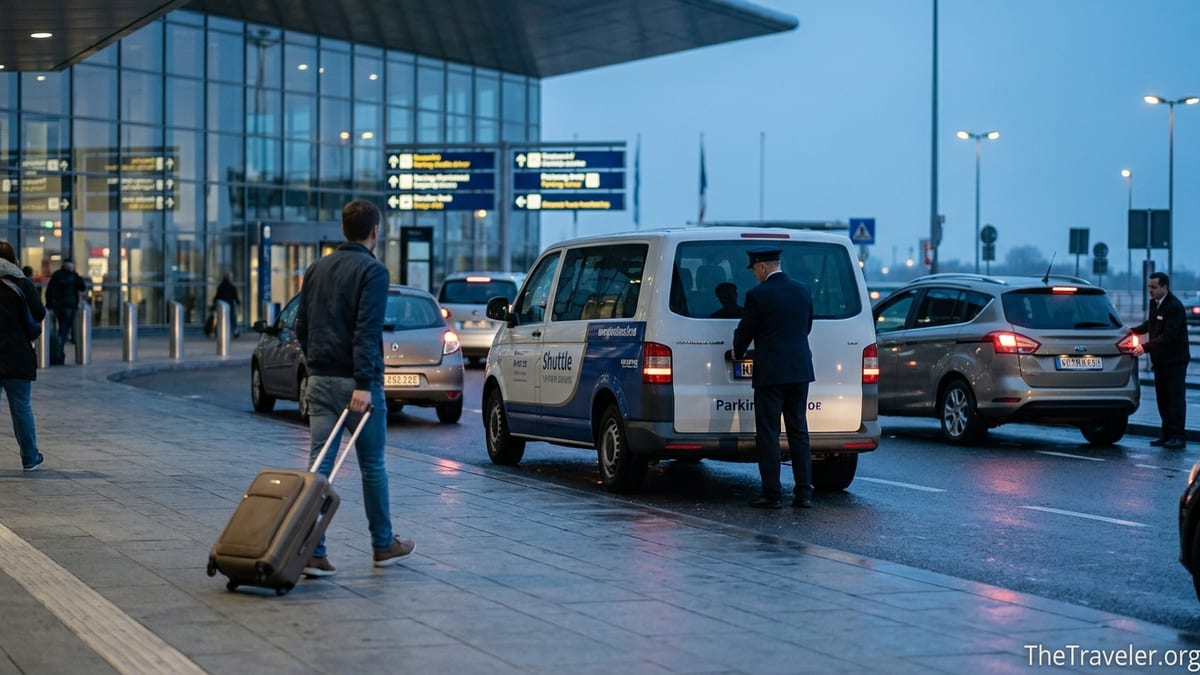
What Parkos Is (And What It Is Not)
Parkos is an online comparison and booking platform for airport parking, not a parking company itself. Think of it as a broker: it lists independent car parks around airports, shows you their prices, distances and services, and lets you book and pay online in advance. The actual parking, shuttle ride or valet handover is provided by a local partner near the airport, not by Parkos staff.
The platform is especially prominent around major European hubs. On its European site, Parkos lets you compare parking options at large airports such as Amsterdam, Paris Charles de Gaulle, Barcelona, Milan, and many regional airports across France, Spain, Italy and Scandinavia. You will often see options like open-air fenced lots a few kilometers from the terminal, covered garages on the edge of the airport zone, and valet services that meet you directly at the departures curb.
Parkos focuses on longer-stay and trip parking, rather than hour-by-hour short-stay. For example, if you are flying from Barcelona for a 7‑day holiday in August, Parkos will show a week-long rate at various lots, often positioning itself as cheaper than reserving directly via the airport’s own website or parking at the terminal without a booking.
Because Parkos only intermediates, your experience depends heavily on the specific parking operator you choose. This is where the detailed user reviews on Parkos and independent review platforms become essential, and where my own comparison between different services highlighted both strengths and vulnerabilities in Parkos’s model.
Pricing: How Much Can You Actually Save?
One of the main reasons travelers consider Parkos is price. Airport-operated parking is rarely cheap, especially at large hubs. While prices vary by airport, season and how far in advance you book, the pattern is fairly consistent: Parkos frequently surfaces off-site options that are noticeably lower than the official lots.
Take a common European scenario: a 7‑day trip from Paris Orly in the summer. When checking in June for dates in July, official airport long‑stay parking can easily reach a few hundred euros for a week, particularly if you want covered parking close to the terminals. On Parkos, I routinely found off-site lots for roughly half to around two‑thirds of that price for the same dates, with shuttle transfers of 10 to 15 minutes and early-morning departures included. In some Spanish airports such as Alicante or Barcelona, valet services booked through Parkos can undercut on-airport garages by a wide margin during peak holiday periods.
Another practical example is at regional airports in Italy, where Parkos partners near Milan or Rome advertise week-long open-air parking at prices that compete closely with public transport for a family of four. For a 10‑day summer trip, the difference between a Parkos-listed partner and the official long-stay lot can be enough to pay for a family dinner or a hotel night at your destination.
These savings are not guaranteed across all airports or dates. Sometimes, airport-run promotions narrow the gap or even beat some off-site offers. But in repeated checks, particularly at large European airports, Parkos consistently surfaced at least one significantly cheaper alternative to parking directly at the terminal. For travelers who drive to the airport a few times per year, those savings add up quickly.
Types of Parking You Can Book Through Parkos
Parkos aggregates several distinct parking formats, each with its own trade-offs. Understanding these categories is crucial before you compare providers or prices. The most common option is shuttle parking: you drive to a lot or garage near the airport, park your car, and a private shuttle takes you to the terminal. Distances are often 5 to 15 minutes by van, and shuttles may run on a schedule or on demand.
The second major format is valet or meet-and-greet parking. Here you drive directly to the departures terminal, meet a staff member who checks your booking and inspects your car, then hands you a form while they drive your vehicle to a remote lot. On your return, you call a number after collecting your luggage, and the valet brings the car back to the same meeting point. This option is popular at busy airports like Barcelona, Paris or Milan, especially among families with a lot of luggage or travelers on tight schedules.
Parkos also lists park-and-walk or on-foot options around some airports, especially smaller ones where independent garages or hotel lots are close enough that you can simply walk to the terminal in a few minutes. In practice, these are less common than shuttle or valet options at big hubs, but when available they offer a useful compromise between convenience and cost.
Most partners through Parkos indicate whether their lots are open-air or covered, fenced or indoors, and whether they have staff present 24/7. From a practical perspective, an uncovered but fenced lot 10 minutes away with a reliable shuttle can be a better choice than an indoor garage with poor staff coverage. The key is to look beyond the label and read recent reviews for real-world performance, particularly regarding shuttle frequency and communication.
My Experience Using Parkos Versus Airport and Other Brokers
To understand how Parkos performs in practice, I trialed it alongside two other ways of booking airport parking: directly via official airport websites and through competing intermediaries that offer similar brokered deals. Across several trips, a pattern emerged. When everything worked as described, Parkos delivered exactly what it promised: lower prices than on-airport parking, clear directions to the lot or meeting point, and shuttle rides that were comparable in comfort and timing to other off-site providers.
For instance, on a recent trip from a major French airport, I booked a Parkos shuttle lot about 12 minutes from the terminal. The booking confirmation arrived immediately, included coordinates and photos of the entrance, and the on-site process was fast: a quick check of the reservation, handing over the keys for staff parking, and a shuttle that departed within 10 minutes. On the return, after a short call from the arrivals curb, the shuttle picked up within about 15 minutes. The service was almost indistinguishable from another off-site provider I had used previously, except that the Parkos-listed lot was cheaper for the same dates.
However, because Parkos acts only as an intermediary, it also inherits the variability and occasional failures of its partners. Independent review platforms show a broad spread of experiences with Parkos-booked services. Many reviews praise smooth transfers and helpful staff, but there are also accounts of reserved lots that turned out to be closed, of travelers paying for 24/7 shuttles that did not operate early in the morning, and of phone numbers that went unanswered when flights were delayed or arrived outside typical hours.
During my comparisons, I also noted that resolving issues can be more complex with Parkos than when you book directly with an airport. If your car is damaged, a shuttle never shows up, or a lot is overbooked, you may find yourself caught between Parkos customer service and the local operator, each pointing to the other’s responsibilities. This is not unique to Parkos, but it is important to remember that a broker can introduce an extra layer into any dispute.
Strengths: Where Parkos Works Well
The biggest advantage of Parkos is choice. For many European airports, the platform brings together small independent lots, hotel park-and-fly offers and larger commercial garages into a single comparison page. That allows you to quickly see the price spread for your exact dates and filter by options like shuttle versus valet or covered versus open-air. In regions such as Spain, France, Italy and Scandinavia, user ratings for many partners are relatively strong, reflecting experiences where travelers report efficient shuttle transfers, friendly staff and easy check-in and check-out.
Another strength is transparency around service descriptions. Listings usually specify estimated shuttle times to the terminal, whether keys must be left, whether vehicles are kept indoors or outdoors, and which hours staff are on site. For example, at Barcelona or Milan you might see that one valet service operates 24 hours, while another only guarantees arrivals until midnight. For early flights or late returns, that information matters more than saving a few euros.
Parkos also makes it easy to book in advance and lock in a rate, which is useful at busy airports during holiday periods. Instead of gambling on space in an on-airport long-stay lot, you can arrive knowing that a spot has been reserved at a nearby partner. For longer trips, especially two weeks or more, the savings over drive-up airport rates can be significant enough to justify a bit of extra transfer time.
Finally, Parkos has a broad geographic footprint within Europe, which can be very helpful if you drive across borders. If you live near the French–Belgian border, for instance, you can quickly compare parking at several different departure airports, from Lille to Brussels, using a single interface and similar booking conditions.
Weaknesses: Service Gaps, Refunds and Inconsistent Partners
The most important limitation of Parkos is that its quality control relies heavily on the behavior of independent partners. While many reviews describe punctual shuttles and well-run lots, some detailed negative reports stand out. Travelers have written about arriving to find that a lot was temporarily closed for works or repairs, or that promised shuttles during early-morning hours were not operating, forcing them to pay for taxis to the airport at the last minute.
Refunds and after-the-fact support are another friction point. If your airline cancels a flight or you cut a trip short, you may not automatically receive a refund for unused parking days, especially if your booking was made on a non-flexible tariff. Several reviewers have described going back and forth with Parkos support when services booked through the platform did not match the description, or when local partners refused to acknowledge complaints about long shuttle delays, lost keys or small vehicle damages.
The broker model itself can make problem-solving slower. When you book direct with an airport’s official long-stay lot and something goes wrong, there is one entity to deal with. With Parkos, you may need to provide documentation to both the platform and the independent operator, and the resolution depends on the agreements they have in place, which are not visible to travelers.
Finally, coverage is strong in many European markets but uneven elsewhere. Parkos has built a particularly dense set of partners in countries like Spain, France, Italy and Sweden, but at some airports outside its core network you will find fewer options or none at all. For travelers in North America, local off-site operators and airport-run lots often remain more straightforward choices than booking through a Europe-focused broker.
How Parkos Compares With Other Parking Options
To decide whether Parkos is right for you, it helps to compare it with the main alternatives: official airport parking, local off-site lots booked directly, and competing comparison platforms. Airport-run lots typically offer the most straightforward experience. You book on the airport’s website, drive to a clearly signposted lot, and use shuttles operated under the same brand as the airport. If something goes wrong, customer service is usually centralized, and your car stays within the airport’s ecosystem.
The trade-off is cost and sometimes availability. At busy hubs during summer or holidays, on-airport long-stay parking can be expensive or sell out for popular dates. Advance deals occasionally narrow the gap with off-site services, but in many cities they remain the premium option. If your main priority is minimizing risk and maximizing simplicity, official parking may still be worth the extra expense, especially for very early departures or tight connections on your return.
Local off-site lots booked directly can sit somewhere between Parkos and official parking. In some North American cities, for example, there are large branded off-site operators near airports that you can book on their own websites without going through a broker. These can be competitively priced and still offer frequent shuttles and decent security. In Europe, certain independent garages and hotel park-and-fly offers operate the same way, and sometimes they also appear as partners on Parkos with slightly different terms or prices.
Other comparison platforms work much like Parkos, aggregating multiple small providers. The user experience is broadly similar: you search by airport and dates, filter by service type, and book via the platform. Where Parkos differentiates itself most clearly is in how many partners it has in specific European markets and how visible user ratings are on each listing. In practice, your choice between Parkos and another broker may come down to which one covers your departure airport more comprehensively and which shows clearer recent feedback from travelers.
Tips for Using Parkos Safely and Getting the Best Value
If you decide to try Parkos, there are some common-sense precautions that improve your chances of a smooth experience. First, pay close attention to recent reviews for the exact partner you are considering, not just the overall Parkos rating. Look for comments in the last few months that mention shuttle punctuality, communication, and how staff handled delayed or very early flights. A provider with hundreds of reviews and a consistently high score over time is generally a safer bet than a brand-new listing offering a very low price.
Second, double-check operating hours and conditions in the small print. If a lot advertises a 24/7 shuttle, confirm in the description whether that applies every day and whether there are any exceptions. This is especially important if your return flight arrives late at night or very early in the morning, when some smaller operators reduce staffing. If a listing says shuttles run “on request,” budget extra time before your flight and after landing.
Third, keep documentation organized. Take screenshots of your booking confirmation, the lot’s address and phone number, and any photos of your car before handing over the keys. If the provider performs a walk-around inspection when you arrive, keep a copy of any form that shows existing damage. This is the same advice I would give for any valet or off-site parking, whether booked through Parkos, another broker or directly with a local operator.
Finally, weigh the savings against the risk and hassle for each trip. For a short two-day city break with carry-on bags, a slightly cheaper off-site shuttle lot may not be worth the uncertainty compared to parking at the airport itself. For a two-week family holiday in summer, where savings can be significant, a well-reviewed Parkos partner can be a smart way to keep costs down without sacrificing too much convenience.
The Takeaway
Parkos fills a clear niche in the airport parking world: it gathers a wide range of off-site lots and valet services around major European airports and presents them in a unified, easy-to-compare interface. When partners deliver the services they advertise, the platform can significantly cut the cost of leaving your car at the airport, especially for longer trips and during peak travel seasons.
At the same time, Parkos is only as strong as the local operators it works with. Experiences reported by travelers show a broad spectrum, from genuinely excellent service at well-run lots to situations where shuttles failed to appear or communication broke down during delays and cancellations. The fact that Parkos is a broker, not a direct operator, can complicate refunds and complaints when things go wrong.
My overall verdict is that Parkos is a useful tool in your travel planning kit, particularly if you regularly fly out of European airports and are willing to spend a few minutes reading recent, detailed reviews for each provider. Use it where the price difference is large and the partner ratings are consistently strong. For high-stakes trips, extremely tight schedules or very early or late flights, it can still be worth paying more for official airport parking or a trusted off-site operator you know well.
In other words, Parkos is neither a magic bargain button nor a service to avoid outright. Treated thoughtfully and used with realistic expectations, it can help you cut your parking bill without turning the start or end of your journey into the most stressful part of the trip.
FAQ
Q1. Is Parkos itself a parking company or just a booking platform?
Parkos is a booking and comparison platform. It does not operate its own car parks but connects travelers with independent parking providers near airports.
Q2. How much cheaper is Parkos compared with official airport parking?
The savings vary by airport and dates, but for week-long trips in Europe it is common to see Parkos-listed options priced noticeably below on-airport long-stay lots, sometimes by a sizable margin.
Q3. Is it safe to leave my car with a Parkos partner?
Many partners operate fenced or indoor lots with staff on site, and most stays are uneventful, but safety depends on the individual operator. Always check recent reviews and photos before booking.
Q4. What happens if my flight is delayed and I return late?
This depends on the specific provider’s operating hours. Some lots and valet services run 24/7, while others limit service times, so you should confirm hours carefully and choose a partner that explicitly supports late or early arrivals.
Q5. Can I get a refund if my flight is canceled?
Refund policies vary. Flexible tariffs may allow changes or cancellations, while cheaper, non-flexible rates can be more restrictive. If your airline cancels your flight, you may need to contact both Parkos and the local operator with documentation to request a refund.
Q6. Do Parkos shuttle services run all night?
Some Parkos partners provide 24/7 shuttle transfers, but others do not. When booking, read the listing carefully to see if shuttle hours are limited, especially if you have early-morning departures or late-night returns.
Q7. Should I choose valet or shuttle parking through Parkos?
Valet services are more convenient because you meet at the terminal, but they involve handing over your keys and relying on staff to move your car. Shuttle lots are usually cheaper and may feel more straightforward if you prefer to see exactly where your vehicle is parked.
Q8. How do I know if a Parkos parking provider is reliable?
Look for a high volume of recent reviews with consistent scores, detailed comments about punctual shuttles and helpful staff, and clear information about security and operating hours. Avoid providers with vague descriptions or many recent complaints about communication.
Q9. Is Parkos available at airports outside Europe?
Parkos is strongest at European airports and has broad coverage there. At some airports outside Europe, coverage may be limited or unavailable, so local off-site operators or airport-run lots might still be more practical.
Q10. When is it better to skip Parkos and book airport parking directly?
If your trip involves very tight connections, high-value vehicles, or overnight hours when staffing can be thin, paying more for official airport parking or a trusted off-site operator with a direct relationship to you can be the more reassuring choice.