


More news on this day
A derailed freight locomotive blocked part of Amarillo Boulevard after rolling across a roadway where no active tracks remain, turning a routine rail movement into a baffling obstacle that has renewed attention on how aging or altered rail corridors intersect with busy city streets.
Get the latest news straight to your inbox!
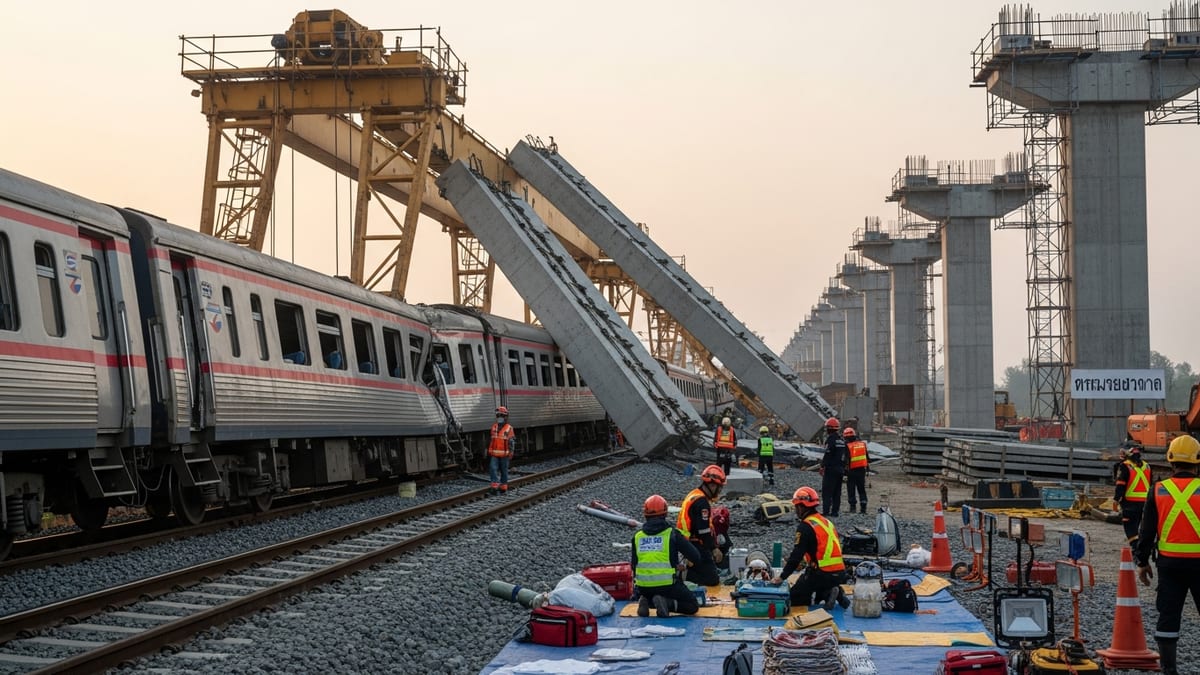
Unusual blockage on a key Amarillo thoroughfare
According to early local coverage and social media posts from drivers, the incident unfolded when a locomotive and at least one car derailed near an industrial spur that parallels Amarillo Boulevard. The consist continued to move far enough to nose across the roadway, effectively sealing off lanes even though travelers reported no visible mainline tracks cutting across the boulevard at that point.
Images circulated online show rail wheels buried in ballast and pavement, with the front of the locomotive skewed across the edge of the roadway while the remaining equipment sat at an angle in a gravel utility strip. The scene gave the impression of a train that had somehow crossed the road without an obvious rail crossing, leaving motorists to navigate a blocked corridor with little warning.
Publicly available mapping and property records indicate that several segments of track in the Amarillo industrial area have been removed or paved over in recent years, even as adjoining sidings and spurs remain in intermittent use. The apparent mismatch between what drivers can see on the ground and where rolling stock can still travel may have contributed to the surprise and confusion as the derailed train came to rest beside and partly across Amarillo Boulevard.
No injuries or hazardous-material releases were immediately reported in connection with the derailment, and there were no early indications of secondary crashes involving approaching vehicles. However, the blocked approach lanes caused backups on a corridor that functions as a major east west link across the north side of the city.
How a train can cross where tracks seem to be missing
Rail safety specialists note that it is possible for a locomotive or railcar to continue moving for a short distance after derailing, particularly at low speeds on relatively level ground. When wheels leave the railhead, the flanges can ride on ties, ballast and even compacted soil, effectively allowing the vehicle to plow forward until friction, damaged components or a change in grade brings it to a stop.
In built-up areas, industrial leads often run parallel to roads and then connect through lightly used crossings or paved-over alignments that are no longer obvious to casual observers. Even when a crossing has been removed from regular service or partially buried during roadworks, portions of the underlying rail or subgrade can remain in place. If a train derails just before or after such a location, its momentum can carry it across the edge of a street, leaving people on the ground to wonder how it reached a point where no clear rails are visible.
Engineering documents for the Amarillo district highlight a web of at-grade crossings and spur tracks that historically served grain elevators, warehouses and refineries across the region. Some of those alignments have been consolidated, while others have been shortened or taken out of regular use as freight patterns changed. When redevelopment or road reconfiguration moves faster than formal abandonment of a rail corridor, apparent anomalies can emerge in which a crossing seems to have vanished even though the underlying right of way technically remains active.
In this case, the visual disconnect between the derailed train and the absence of a conventional crossing on Amarillo Boulevard has focused attention on how incomplete removals or partially obscured track segments can appear to separate rail operations from the streets drivers use every day.
Traffic disruption and response on Amarillo Boulevard
Travelers described abrupt lane closures and slowdowns as public safety crews and railroad personnel converged on the scene. Barricades and cones were used to steer vehicles away from the blocked section of Amarillo Boulevard while inspectors assessed the condition of the derailed equipment and the roadway surface beneath it.
Railroads typically dispatch specialized rerailing crews equipped with hydraulic jacks, cranes and temporary track panels when a locomotive or car leaves the rails. That process can take several hours even when the derailment footprint is small, because teams must first verify that no fuel lines, air hoses or structural components pose a risk to nearby traffic or responders.
Local reports noted that the disruption compounded congestion already associated with construction and detours on neighboring corridors. Some drivers used residential streets and frontage roads to bypass the obstruction, raising concerns among residents about cut through traffic and heavier trucks being diverted onto routes not designed for sustained high volumes.
Once the train was stabilized and inspectors confirmed that the wheels and trucks could be safely lifted back onto undamaged sections of rail, the equipment was expected to be moved clear of the boulevard and relocated to a yard or siding for further examination. Cleanup crews then faced the task of sweeping ballast, metal fragments and other debris from the edge of the roadway before normal traffic patterns could resume.
Broader questions about rail safety and infrastructure mapping
The unusual nature of a derailment that appeared to send a train across a road without obvious tracks has prompted wider discussion about the state of industrial rail infrastructure in Amarillo and across Texas. Transportation advocates emphasize that drivers increasingly rely on digital maps and visual cues to anticipate rail crossings, which may not reflect obscure, low speed spurs that remain technically active.
Publicly accessible safety materials from state agencies stress that rail lines can occupy corridors that are not immediately apparent from behind the wheel, especially in industrial districts where tracks may be embedded in concrete, cross alleys or run through private yards before intersecting public streets. Even if signals or crossbucks are absent at a given location, the physical presence of overhead lines, utility easements or parallel sidings can indicate that trains may still move nearby.
Rail policy analysts point out that redevelopment often outpaces formal abandonment procedures, leaving communities with a patchwork of partly removed tracks, dormant sidings and legacy rights of way that can still host occasional freight movements. Without up to date mapping and clear signage, road users may underestimate the potential for trains to appear in seemingly unlikely places, particularly at lower speeds outside the mainline network.
As investigators review what happened along Amarillo Boulevard, the case is likely to feature in conversations about how municipalities document rail corridors, coordinate with freight operators on long term plans and communicate evolving infrastructure patterns to the traveling public. For residents and visitors alike, the sight of a derailed locomotive blocking lanes where few expected a crossing at all has underscored that rail movements can intersect with city streets in ways that are not always immediately visible.