


Nadi International Airport is the main gateway to Fiji and the first taste many travelers get of the islands. For first-time visitors, the warm bula welcome can be mixed with a little confusion about immigration forms, cash, transport and how to reach resort areas like Denarau or the Mamanuca Islands. This guide walks you step by step through arrivals at Nadi (NAN) and explains your options for taxis, hotel shuttles, Port Denarau transfers, SIM cards, money exchange, layovers and essential first-time Fiji tips.
Get the latest updates straight to your inbox!
Understanding Nadi International Airport on Arrival
Most international flights into Fiji land at Nadi International Airport on Viti Levu, often early morning or late evening. After disembarking, passengers walk through air‑conditioned corridors into the immigration hall. Before you reach the counter, you will need your passport, completed arrival card handed out on the plane, and, if applicable, your visa approval. Queues can be short on a quiet weekday afternoon but can stretch 30 to 45 minutes when several flights arrive together, particularly from Australia and New Zealand.
Once you clear immigration, you pass through the baggage carousel area. Trolleys are available and free to use. Oversized items like surfboards, golf bags and strollers are usually delivered to a separate oversized luggage point nearby. If your bag does not arrive, report it immediately at your airline’s baggage services desk while you are still in the hall so they can log a missing baggage file and arrange delivery to your accommodation later.
After collecting bags, all passengers must pass Fiji’s biosecurity screening. Officers may ask you to X‑ray your luggage and can inspect items like fresh food, plant material, hiking boots with soil, wooden carvings or straw products. If you are carrying hiking gear used recently in another country, it is wise to declare it; officers may clean the soles or ask a few questions, but honest declaration is usually straightforward and quick.
Once you exit biosecurity you step into the main arrivals concourse. This is where you will find money exchange counters, ATMs, mobile phone providers, car rental desks and transfer companies. You will also see resort representatives holding signs for guests with pre‑booked transfers to Nadi hotels, Denarau, Coral Coast and island boats. Before you walk outside into the warm Fiji air, it is worth sorting your cash, SIM card and transport here where everything is close together.
Money Exchange, ATMs and Paying for Things
The arrivals area at Nadi International Airport has several 24‑hour currency exchange booths as well as ATMs from major Fijian banks. Many travelers choose to withdraw local currency directly from an ATM because bank rates are often more competitive than over‑the‑counter exchange rates, though your home bank’s international fees still apply. If you are landing late at night and heading straight to a remote resort or island, it is sensible to take out enough Fijian dollars here for your first few days, as smaller towns and islands may have limited ATMs.
As an example, a couple planning to take a taxi to Denarau, buy basic groceries and pay for a small local tour might withdraw the equivalent of 300 to 400 US dollars in Fijian dollars on arrival. This typically covers an airport taxi, snacks, a supermarket run in Nadi or Denarau, some smaller restaurant bills and incidental cash-only expenses. While larger hotels and many tour companies accept major credit cards, you will find that village visits, roadside fruit stalls, small eateries and some transfers still prefer or require cash.
Currency exchange counters in arrivals quote rates for common currencies like US dollars, Australian dollars, New Zealand dollars and euros. Their rates tend to be slightly less favorable than those offered by banks in town, but the convenience on arrival outweighs the small difference for most first-time visitors. If you plan on changing a large amount of money, you might exchange only what you need immediately for taxi fares and small purchases, and then compare rates at a bank branch in Nadi town the next day.
Cards are widely accepted at Nadi’s larger hotels, many restaurants around Denarau and Port Denarau’s marina shops. However, card terminals occasionally go offline during power or connectivity interruptions, so it is wise to keep a small cushion of cash for backup. Tipping is not a strong custom in Fiji, but many travelers like to leave a small cash tip for exceptional service, porters or drivers, which is another reason to keep some lower denomination notes handy.
Getting a Local SIM Card and Staying Connected
Right in the arrivals hall at Nadi International Airport you will see counters for Vodafone Fiji and Digicel Fiji. Both providers sell prepaid SIM cards tailored to short-term visitors. Plans and inclusions change regularly, but as of 2026 tourist offers generally bundle local data, local calls and sometimes international call credit for a fixed number of days. Staff will register the SIM against your passport, insert it for you and usually help configure data on your phone before you leave the counter.
For example, a typical Vodafone tourist SIM might offer a package of local data suitable for navigation and messaging apps plus local calls for a stay of around two to four weeks. Digicel sells similar tourist bundles exclusively at the airport for arriving visitors. Packages are often priced in tiers so you can choose, for instance, a smaller data pack if you mainly plan to use Wi‑Fi at resorts, or a larger data pack if you will be using Google Maps, ride apps, video calls and social media frequently during island transfers.
Coverage differs slightly between providers. Travelers who plan to stay mostly in Nadi, Denarau and the main resort corridors generally find both networks adequate. Those heading to more remote islands or rural parts of Viti Levu sometimes report stronger coverage with one provider over the other, so if you have pre-booked accommodation it is worth asking your resort which network works better in their area. Either way, buying at the airport tends to be easier than hunting for a store in town, and prices are typically aligned with official retail pricing across Fiji.
If you prefer not to swap SIMs, limited eSIM options and international roaming plans may also work, but they can be more expensive and occasionally less reliable than a local SIM. Some travelers choose to keep their home SIM active for banking codes on one phone and use a second unlocked device for a local SIM. Others buy a low-cost local handset from a Vodafone or Digicel shop in Nadi town to share among the family, especially when kids want to stay in touch during resort activities.
Taxis, Hotel Shuttles and Private Transfers from Nadi Airport
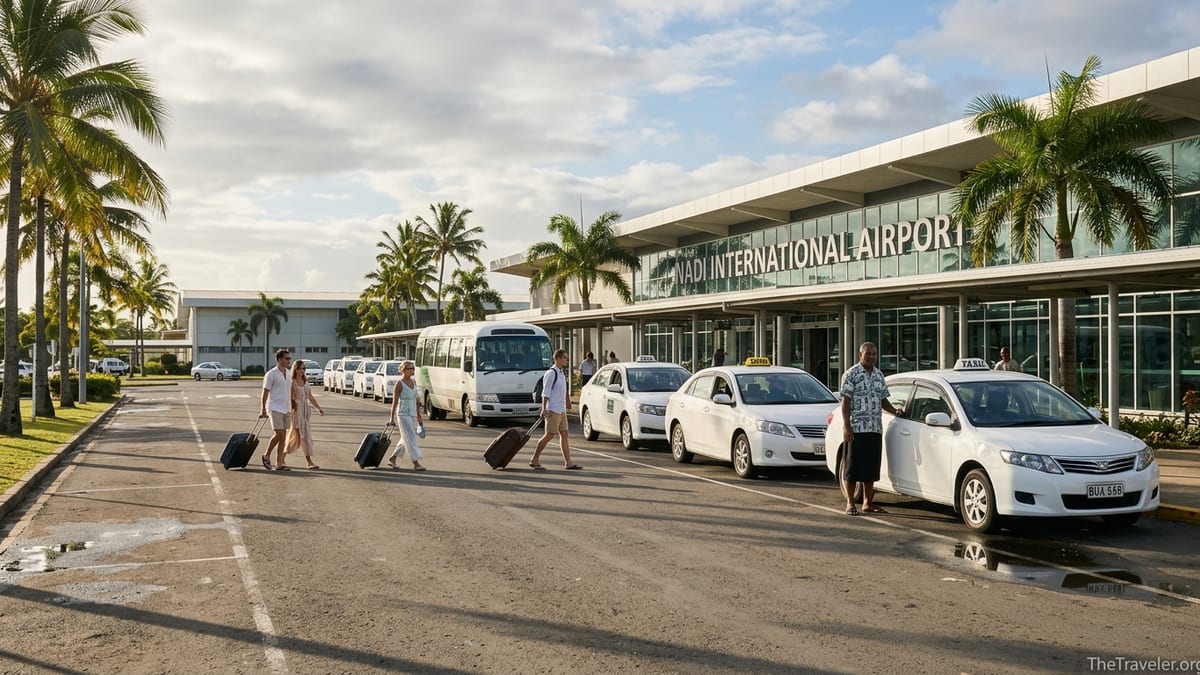
Immediately outside the arrivals exit you will find a rank of licensed airport taxis. Vehicles are typically standard sedans with air conditioning, and drivers are used to carrying luggage and families. Taxis are metered, and fares are regulated, but many first-time visitors prefer to agree on an approximate price before setting off to avoid misunderstandings. As a rough guide, a ride from Nadi Airport to Nadi town usually takes about 10 to 15 minutes, while the drive to Denarau Island often takes around 20 to 25 minutes depending on traffic.
Pricing fluctuates with fuel costs and regulations, but travelers commonly report that a standard taxi from the airport to Denarau falls in a moderate price bracket when converted to US or Australian dollars, especially if shared by a couple or family. You can pay in Fijian dollars, and while some taxis may accept cards via mobile terminals, it is safer to assume cash is required. If you are arriving very late at night, taxis still operate, but having at least one pre-arranged transfer or hotel shuttle confirmation printed or on your phone is reassuring.
Many of the larger hotels around Nadi and Denarau operate their own shuttles. Some, especially those targeting international package guests, offer complimentary airport pick-up, while others charge a per-person transfer fee. For example, a family staying at a mid-range Nadi hotel might book a shuttle in advance through their accommodation, be met by a representative in the arrivals hall holding a sign with their name, and then be taken directly to the hotel without waiting in the taxi queue. When comparing room rates, it is worth checking whether airport transfers are included or extra, as this can change the overall value of your stay.
If you prefer more space or are traveling with surfboards, dive gear or young children, private transfer companies offer pre-booked vehicles and sometimes baby seats on request. Touist-focused operators at Nadi Airport typically have desks in the arrivals concourse. Once you check in at their desk, you may be directed to a shared shuttle or a dedicated vehicle. Shared shuttles can be very cost‑effective for solo travelers heading to popular areas like Denarau or the Coral Coast, while private transfers make sense for small groups who want to go directly to a specific resort without multiple drop‑offs.
Reaching Port Denarau and Island Transfers
Port Denarau is the main departure point for fast ferries to the Mamanuca and Yasawa islands as well as for many day cruises and sailing trips. The port lies on Denarau Island, around 20 to 25 minutes’ drive from Nadi Airport in normal traffic. Most flights arriving in the early morning connect comfortably with mid-morning ferries, but if your flight lands later in the afternoon you may need to stay overnight in Nadi or Denarau before catching a boat the next day. When booking accommodation and ferry tickets, always check the latest boat departure times and build in a buffer for immigration and baggage collection.
To reach Port Denarau, you can take a taxi directly from the airport or pre-book a shuttle or dedicated port transfer. Some boat companies operate their own transfer services that collect passengers from the airport and take them straight to the marina in time for specific departures. For example, travelers heading to a Mamanuca resort often book a combined ticket that includes airport pick up, a transfer to Port Denarau and then the ferry to their island. This arrangement can reduce stress if you are unfamiliar with local logistics or traveling with children who are tired after long flights.
Once at Port Denarau, you will find check-in counters for ferry operators, luggage drop-off areas, cafes and small shops selling last-minute items like reef-safe sunscreen, hats and snacks. If you arrive early, you can relax at one of the waterfront cafes watching yachts and ferries coming and going. Keep your luggage tags and boat tickets handy, as staff will usually collect larger bags and load them separately onto the vessel while you board with cabin-sized carry-ons.
Travelers whose flights arrive too late for the day’s last boat often choose to stay at a hotel on Denarau Island so they can walk or take a short cab ride to the port the following morning. Others opt for a Nadi town guesthouse or budget hotel, then take a taxi or shuttle to Port Denarau in the morning. When planning your first day in Fiji, it is helpful to think of Nadi Airport, your overnight stay and Port Denarau as parts of one connected journey rather than separate steps.
Handling Layovers and Short Stays at Nadi
Nadi International Airport serves as a regional hub, so some travelers find themselves with daytime layovers of four to eight hours between flights, especially on routes connecting North America, Asia and the Pacific. The airport itself has a modest but growing range of shops, cafes and a small selection of lounges where you can rest, shower and enjoy Wi‑Fi. For a short layover of under four hours, many travelers simply stay airside, have a meal, stretch their legs and recharge devices while enjoying air conditioning.
For longer layovers, it is possible to exit the airport and see a bit of Nadi. Taxis outside arrivals can take you into Nadi town, where you can stroll the main street, visit local shops and markets or buy Fijian handicrafts and bula shirts. A visit to the colorful Sri Siva Subramaniya temple or a quick stop by a nearby beach club can make a long wait feel more like a mini-holiday. Just remember to allow plenty of time to return to the airport, clear security and reach your gate, particularly during peak evening departure periods.
Families with children often appreciate nearby day-room options. Several hotels within a short drive of the airport offer day-use rates that include access to a pool, showers and a restaurant. A common pattern is for a family arriving very early in the morning before a later domestic flight to a smaller island to book a day room, rest, let the kids swim and then return to the airport refreshed. If you are planning this, it is wise to reserve in advance rather than relying on walk-in availability, especially during school holiday periods from Australia and New Zealand.
Even if you choose to remain at the airport, understanding the layout helps. International departures are on the upper level, with check-in counters for major airlines, followed by outbound security and immigration. Domestic departures for flights to smaller islands and Fijian towns are located in a separate area, so if you have a connecting domestic ticket, follow the domestic transfer signs after clearing arrivals or check with your airline’s desk for instructions.
First-Time Fiji Tips: Culture, Safety and Practicalities
First-time visitors often notice how friendly Fijians are from the moment they arrive at Nadi. Airport staff, taxi drivers and hotel greeters will typically say “Bula” with a smile, and it is appreciated if you reply the same way. While English is widely spoken, especially in tourism, you may also hear Fijian or Hindi in everyday conversation. A relaxed, unhurried approach known locally as “Fiji time” is part of the culture, so building small time buffers into your travel plans can reduce stress if things move a little slower than you are used to.
In terms of safety, Nadi Airport and the main tourist corridors around Nadi and Denarau are generally considered safe, particularly during daylight hours. As in any busy travel hub, it is still wise to keep an eye on your belongings, avoid flashing large amounts of cash and use hotel safes for passports and valuables once you check in. Licensed airport taxis and reputable shuttle operators are the norm; if in doubt, ask at the information desk inside arrivals rather than accepting offers from unofficial drivers outside.
Dress codes in Fiji are relaxed, but modest clothing is appreciated in towns and villages away from the resort areas. At the airport and in Nadi town, comfortable summer clothes are fine, but if you plan on visiting a village or a temple during a layover, bring a T‑shirt or shirt that covers your shoulders and a longer skirt or shorts. Many boat transfers and small domestic aircraft have strict baggage limits, so pack with weight in mind. You can usually leave non‑essential items at a Nadi or Denarau hotel for a small fee while you head out to the islands.
Climate-wise, Nadi is warm and humid year-round, with a wetter season roughly from November to April. Air conditioning at the airport can feel cool after stepping off a tropical runway, so having a light layer in your carry-on can be surprisingly useful. Mosquitoes can be present, especially in the evening and during wetter months, so packing insect repellent in your checked luggage for use after you leave the airport is sensible. Drinking water at major resorts is commonly filtered, but many travelers prefer to buy bottled water or use refillable bottles with filters, which you can purchase at airport shops or supermarkets in Nadi.
The Takeaway
Nadi International Airport may feel compact compared to larger global hubs, but it efficiently handles the vast majority of visitors arriving in Fiji. With a little preparation, your first steps through immigration, baggage claim and biosecurity can be straightforward, and the services in arrivals give you everything you need to start your trip: local cash, a working phone and clear options for reaching Nadi, Denarau and beyond.
Thinking ahead about your onward journey makes a big difference. Knowing roughly how much cash to withdraw, understanding the pros and cons of local SIM cards, and pre-booking a transfer to Port Denarau or your first hotel can turn what might feel like a confusing first hour into a smooth and even enjoyable experience. Watching the sun set from Port Denarau on your first evening or waking up rested at a Nadi hotel before a morning boat becomes much more relaxing when the logistics are handled.
For first-time Fiji travelers, Nadi International Airport is not just a transit point but the beginning of your introduction to Fijian hospitality. From the bula greetings in the arrivals hall to the helpful advice from taxi drivers and transfer staff, this is where “Fiji time” starts to make sense. Arrive with realistic expectations, leave yourself some buffers, and you will likely find that your NAN experience becomes a pleasant prologue to your island adventure.
FAQ
Q1. How long does it usually take to get through Nadi Airport on arrival?
At quieter times you might clear immigration, baggage and biosecurity in 30 to 45 minutes, but when multiple flights land together it can take closer to an hour.
Q2. Should I get cash or use cards at Nadi International Airport?
It is best to withdraw or exchange enough Fijian dollars for taxis, small purchases and tips, then rely on cards for larger hotel and restaurant bills where they are accepted.
Q3. Is it worth buying a local SIM card at Nadi Airport?
Yes, most visitors find a Vodafone or Digicel prepaid SIM from the arrivals hall provides better value and more reliable local data than roaming on their home plan.
Q4. How do I get from Nadi Airport to Port Denarau?
You can take a licensed taxi from the airport taxi rank or use a pre-booked shuttle or transfer service, with travel time usually around 20 to 25 minutes in normal traffic.
Q5. What if my flight arrives after the last boat from Port Denarau?
In that case, plan to stay overnight in Nadi or on Denarau Island and catch the first ferry or transfer to your island resort the following morning.
Q6. Are taxis at Nadi Airport safe and metered?
Airport taxis are licensed and typically metered, but many travelers confirm an approximate fare before departure and ensure they have cash in Fijian dollars.
Q7. Can I leave the airport during a long layover?
Yes, for layovers of more than four or five hours you can take a taxi into Nadi town, visit local sights or relax at a nearby hotel, returning with plenty of time for your next flight.
Q8. Do hotels around Nadi and Denarau include airport transfers?
Some hotels offer complimentary shuttles, while others charge a fee per person, so it is important to check the details when booking your accommodation.
Q9. Is Nadi Airport suitable for families with children?
Yes, families regularly transit through Nadi; there are restrooms, basic shops and nearby hotels with pools, and many transfer companies can provide child seats on request if arranged in advance.
Q10. What should I wear and pack for my first hours in Fiji?
Light, comfortable clothing and sandals are fine for the airport; pack a light layer for air conditioning, keep essential medications in your carry-on and have sunscreen and insect repellent ready for use after arrival.