


Naguabo sits quietly on Puerto Rico’s southeast coast, just far enough from San Juan to feel like an escape but close enough for a well planned day trip. The question most visitors have is not whether Naguabo is beautiful. It is whether a one day visit, especially from San Juan or the Fajardo area, is worth the driving and logistics compared with easier options like Luquillo, Fajardo or the main El Yunque corridor. The answer depends a lot on where you are staying, what kind of traveler you are and how much you try to squeeze into one day.
Get the latest updates straight to your inbox!
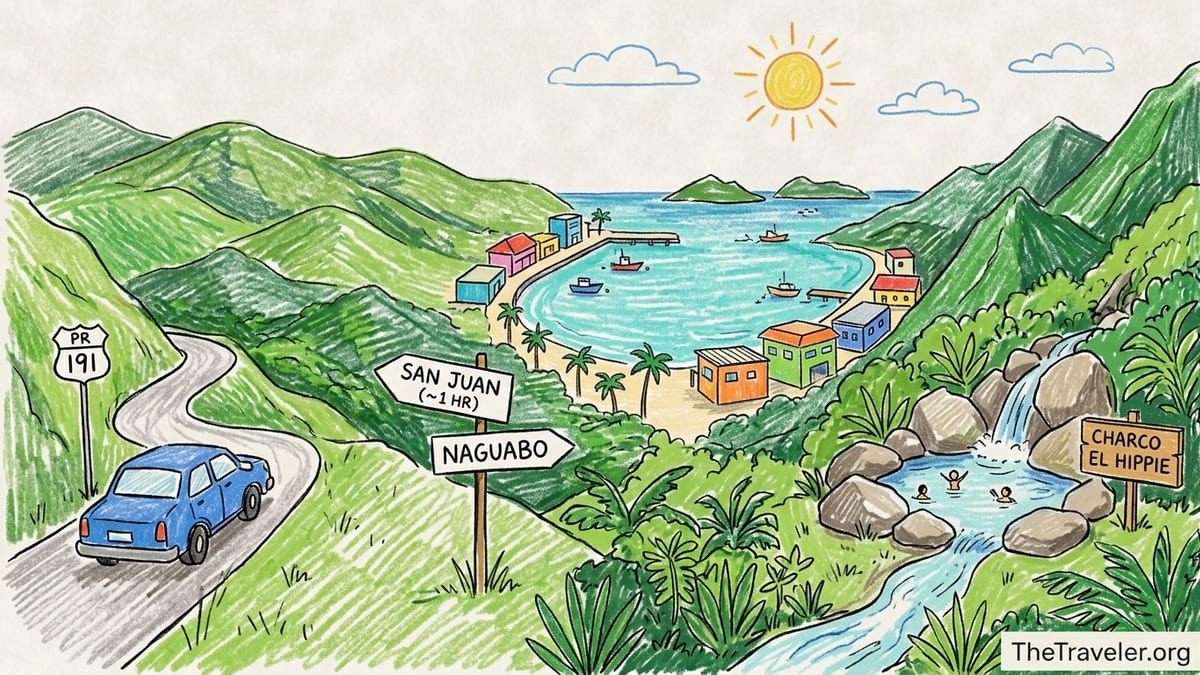
How Far Is Naguabo, Really, From San Juan and the East Coast?
Naguabo is often described in tourism materials as about an hour from San Juan’s airport and roughly 30 minutes from Ceiba on the east coast. That is broadly accurate in light traffic. Online drive time calculators put the trip from San Juan to Naguabo at around one hour and ten minutes by car, assuming you follow toll highways most of the way and do not hit heavy congestion. In real life that can mean anything from under an hour very early on a weekday to closer to an hour and a half if you leave San Juan mid morning on a busy winter or holiday weekend.
From the east coast resort areas, Naguabo is notably closer. The drive from the Ceiba ferry terminal, the jumping off point for Vieques and Culebra, to central Naguabo is around half an hour in regular traffic. That shorter hop means that visitors already based near Fajardo, Luquillo or Humacao can treat Naguabo as an easy side trip rather than a major cross island expedition. For many repeat visitors, this difference in drive time is what makes Naguabo feel like a realistic add on and not an exhausting detour.
It is important to remember that Naguabo municipality stretches from the Caribbean coast up into the mountains on the south side of El Yunque. Getting from the Malecón seaside strip in Playa Húcares to river spots higher in the hills adds more driving on narrow, curvy roads. A day trip plan that looks simple on a map can turn into nearly three hours of total driving once you add your starting point, local back roads and any wrong turns, so you will want to budget road time honestly when deciding what is realistic.
If you are coming from western Puerto Rico, such as Rincón or Aguadilla, Naguabo becomes a long haul. Crossing the island by car can easily take three hours or more one way. That kind of distance makes Naguabo a better fit as part of an overnight east coast stay rather than a hurried day trip. For first timers on a short visit based far from the east, the drive alone often tips the scales toward closer coastal towns.
What Makes Naguabo Special Enough For A Day Trip?
The appeal of Naguabo lies in its mix of classic Puerto Rican coastal flavor and access to less crowded rivers and foothills of El Yunque. On the waterfront, the Malecón at Playa Húcares lines the bay with casual seafood restaurants and open air bars. Places like El Makito, El Navegante, Pelikanos, El Coral and Super Benjy’s serve fried whole red snapper, grilled lobster, mofongo and cold beer with a view of fishing boats and the offshore islands. Many of these spots open around late morning and stay busy into the evening, especially on weekends, turning the Malecón into a lively local hangout rather than a polished resort strip.
A short drive inland, the municipality climbs into the hills fed by rivers such as the Río Blanco. Upper stretches of this river are home to waterfalls and natural pools, the most famous being Charco El Hippie, a wide pool beneath La Canoa Falls that has become one of the region’s best known swimming holes. Recent accounts describe a nominal parking fee charged by neighbors, around five dollars in cash, and a short but sometimes slippery walk down to the rocks and water. It is a favorite of both local families and adventurous visitors who are willing to go beyond the main El Yunque corridor.
Between the sea and the high mountains, the south side of El Yunque around Naguabo offers a different feel than the popular north side entrance near Río Grande. Rather than a formal visitor center and marked U.S. Forest Service trails, you find a patchwork of rural roads like PR 191 continuing up from Naguabo with access to small miradores, minor waterfalls and unmarked pullouts where locals slip down to the river. For travelers who have already walked the better known trails near La Mina or Mt Britton, this quieter flank of the forest can feel like discovering a hidden side of the rainforest without needing to drive far from an east coast base.
What ties all of this together is that Naguabo still feels primarily like a working coastal town with real weekend crowds from nearby communities, fishing activity and modest tourism infrastructure. That authenticity is exactly what food focused travelers and repeat Puerto Rico visitors often seek. It also means that infrastructure, signage and parking can be irregular, and a little patience and flexibility are part of the experience.
How Much Can You Realistically Do In One Naguabo Day?
The single biggest mistake travelers make with Naguabo is trying to “do the whole municipality” in one compressed day: Malecón, multiple rivers, a serious hike and perhaps even a ferry ride from Ceiba on the same date. Distances on a map can look small, but the combination of winding roads, heat, crowds and weather dependent rivers adds friction at every step. A more realistic and enjoyable approach is to build your day around two compatible anchor experiences and leave unhurried time around them.
One classic pairing is Malecón plus Charco El Hippie. In practice that might mean leaving an east coast hotel around 8:30 in the morning, reaching the Charco El Hippie area late morning, paying for parking and spending two to three relaxed hours around the river. That gives you time to swim, take photos, keep an eye on weather and water levels and hike out without feeling rushed. From there it is a reasonable drive back down to the coast for a late lunch or early dinner on the Malecón, enjoying seafood and a walk along the waterfront before driving back to your base before full dark.
Another gentle combination is Malecón plus a short south side rainforest or river stop that does not involve a long or technical hike. This might look like driving up PR 191 south from Naguabo after breakfast to visit a roadside waterfall or mirador, then returning to the Malecón by midafternoon when restaurants are in full swing. Because some of these smaller river accesses are unsigned and on narrow roads, it is wise not to stack too many stops. Choosing one well known place to swim or take photos keeps the plan simple and reduces the chance of spending half your day searching for a rumored “secret” spot.
For travelers who are deeply interested in rivers and waterfalls, a rivers plus coastal dinner plan can work well. You might spend most of the day at one or two river charcos in the hills, with a packed picnic and plenty of water, and then clean up and head down for an early evening meal on the water. This structure recognizes that river visits are often more tiring than expected, with scrambling over rocks and dealing with sun exposure, and builds in the reward of a comfortable sit down meal before the drive home.
The combinations that tend to backfire are those that chain a very early ferry from Ceiba to Vieques or Culebra, a full beach day on the islands and then an ambitious outing to Naguabo rivers or the Malecón on the same date. Current official schedules show that the Ceiba to Culebra and Ceiba to Vieques ferries can take roughly an hour and a half each way, and travelers need to check in early and deal with occasional delays or sold out sailings. When you add the half hour each way between Ceiba and Naguabo and the heat of a Caribbean beach day, tacking on a major Naguabo adventure is more likely to feel stressful than rewarding.
Timing Your Day: Departures, Daylight And Weekend Crowds
Naguabo is at its best when you work with daylight and local rhythms rather than against them. Sunrise in Puerto Rico stays fairly consistent across the year, generally between around 6 in the morning and a bit after 7, with sunset roughly between 6 and 7 in the evening depending on the season. If you are driving curvy mountain or rural roads to river spots like Charco El Hippie, it is strongly preferable to arrive and depart in full daylight. Road shoulders can be narrow, lighting is limited and heavy rains can cause localized washouts or debris.
From San Juan, a comfortable departure for a Naguabo rivers and Malecón day is usually between 7 and 8 in the morning. That timing helps you avoid the worst of metropolitan traffic, gives you enough slack for coffee and a gas stop, and lets you reach the mountainside before late morning heat and crowds. If you are staying around Fajardo, Luquillo or Humacao, you can often leave closer to 8:30 or even 9 and still be at a river spot by late morning, thanks to the shorter drive. In either case it is wise to plan your last river swim no later than midafternoon to leave time for drying off, navigating back down and enjoying the coast before sunset.
Weekends, especially Sundays and holiday periods, transform the Malecón. Local families drive in for seafood lunches, live music and drinks, and the strip can feel like a lively block party. This atmosphere can be wonderful if you want a social scene and people watching with your fried fish. It does mean that finding parking along Playa Húcares becomes more challenging and that service can be slower at popular restaurants. If your priority is a quiet waterfront meal, a weekday late lunch or an early afternoon weekend seating often works better than arriving at peak Sunday dinner hours.
For river visits, timing revolves around both crowds and weather. Locations such as Charco El Hippie can become quite busy by midday on Saturdays and Sundays, with music, coolers and cliff jumping. Travelers who imagine a peaceful natural pool for reflection might be happier planning a weekday or very early morning visit. More importantly, you need to build your day around current rain conditions. Local residents and recent visitors emphasize that heavy rain upstream can cause sudden surges in water level and current. Checking localized weather forecasts for the Naguabo and El Yunque foothills area and being willing to cancel a river segment if rain is active is a key part of responsible planning.
River Safety, Weather Checks And When To Skip Charco El Hippie
Charco El Hippie’s beauty and relative accessibility have made it one of the most talked about river spots on Puerto Rico travel forums. Official and nonprofit reports note that the site poses challenges related to flash flooding, access, and unofficial parking, even as its scenic rock formations and wide pool attract many visitors. Recent first hand accounts describe a short and manageable walk from informal parking areas, with some steep and slippery rocks near the water where proper footwear helps. A small parking fee collected by nearby landowners is common and supports basic maintenance, though this is not a formal park entrance with lifeguards or facilities.
The single most important planning step is to respect the river as a dynamic environment. Travelers and locals have documented sudden “golpe de agua” events at Charco El Hippie and other mountain rivers, where water levels rise quickly due to upstream rainfall. Early warning signs include water turning muddy or brown, an increase in floating leaves and debris and visibly strengthening current. If you see these signs, you should immediately move away from the water’s edge and to higher ground and be prepared to leave the area. Even on clear days at the coast, it may be raining hard higher up in the watershed.
Before leaving your base, check not just a generic island forecast but specific weather information for Naguabo and the southern slopes of El Yunque. If the area has received significant rain over the previous day or thunderstorms are forecast, it is wise to either postpone your river visit or choose a different activity. Many families opt instead for a relaxed Malecón meal and perhaps a short coastal walk when river conditions are questionable. In practical terms this means being ready with a flexible Plan B rather than forcing a waterfall outing because it was the centerpiece of your original itinerary.
Once on site, plan as though there are no services available even if you have read about small food stands or vendors. Bring water, snacks, reef safe sunscreen, a basic first aid kit and garbage bags to carry out all trash. Wear sturdy water shoes or sandals with grip for walking on wet rocks. Avoid alcohol before swimming or climbing. Most importantly, set conservative limits for yourself and your group. If rock jumps or rope swings are set up by others, recognize that these are informal and not maintained or inspected. Many serious incidents at natural pools happen late in the day when visitors are tired or have had drinks. Leaving the river early to reach the coast before sunset and enjoy a meal is an excellent way to cap the day without pushing your luck.
Who Is Naguabo Best For, And Who Should Skip It?
Naguabo shines for travelers who care as much about local food and atmosphere as they do about ticking off major attractions. Food focused visitors, especially those who have already tried well known spots in Condado, Old San Juan and Luquillo’s kiosks, will find the Malecón’s cluster of seafood restaurants a compelling reason to make the trip. Sharing a whole fried snapper or grilled lobster for two at a place like El Navegante or enjoying a mofongo with fresh catch at a family run spot overlooking the bay delivers a sense of coastal Puerto Rico that many packaged tours miss.
Repeat visitors to Puerto Rico who are based on the east coast or willing to rent a car are another ideal audience. If you have already walked the popular trails in the main El Yunque corridor, taken a bioluminescent bay tour in Fajardo and spent time on Luquillo Beach, Naguabo offers something that feels new without requiring a long drive. Combining a quieter south side taste of El Yunque in the morning with an afternoon on the Malecón creates a fresh chapter in an island you may feel you already know.
River and waterfall enthusiasts who understand the risks and are willing to plan around weather will also appreciate Naguabo. The Río Blanco and its charcos reward visitors who prefer cool freshwater swims over crowded resort pools. For this group, a day that involves an early arrival at Charco El Hippie, long hours listening to the river and an unhurried seafood dinner afterwards is often more appealing than a fast paced checklist of sights. They do, however, need to be realistic about fitness, footwear and the possibility of turning back if conditions are not safe.
On the other hand, many first time visitors with only three or four days in Puerto Rico may be better served focusing on Luquillo, Fajardo and the main El Yunque entrance, especially if they are staying in San Juan without a car. Guided tours frequently depart the metro area for those destinations, reducing the stress of driving, navigation and parking. These closer spots also offer a wider range of beginner friendly options like lifeguarded beaches, structured rainforest walks and highly organized activities. If your priority on a first short trip is to see headline sights with minimal logistics, adding a Naguabo day may stretch your bandwidth too thin.
Why Combining Ceiba Ferries And A Full Naguabo Day Can Be Too Much
At first glance, combining an island ferry from Ceiba with a Naguabo outing seems efficient. After all, Ceiba and Naguabo sit relatively close on the island’s east coast. In practice, though, the ferries to Vieques and Culebra add layers of uncertainty and time that can easily overwhelm a one day plan. Official route information from the current operator shows crossings that take around an hour and a half each way, and passengers are expected to arrive early for check in and boarding. On busy days and weekends, travelers report lines, sold out sailings, schedule changes and the need to secure tickets in advance.
When you stack this on top of driving from San Juan to Ceiba, parking, boarding, enjoying a full day on the islands and then returning, the time commitment quickly reaches ten or more hours. Trying to also fit in a serious river visit in Naguabo or a leisurely seafood dinner on the Malecón often means racing the sunset or driving mountain roads in darkness while fatigued. Delays on the return ferry, common during peak seasons, can also erase the time you thought you had reserved for Naguabo.
A more sustainable strategy is to treat Ceiba ferries and Naguabo as anchors for different days. You might schedule one full day devoted to Vieques or Culebra, with your only additional goals being a simple dinner near your hotel and rest. Then, on another day, plan a Naguabo focused outing where your schedule is under your control and not subject to maritime conditions or ticket availability. This separation keeps each experience enjoyable and greatly reduces stress.
If you are determined to combine the two in some way, consider modest expectations. A traveler who takes an early morning ferry to Vieques might reasonably aim to be back on the east coast by late afternoon, then enjoy a short scenic drive through Naguabo with a quick coffee or sunset photo stop along the Malecón. That is very different from attempting both a comprehensive island beach day and a long river hike in the hills on the same date.
The Takeaway
So, is a Naguabo day trip from San Juan or the Fajardo area worth it? For the right traveler, planned around two compatible experiences rather than an overstuffed checklist, the answer is yes. Food lovers, repeat visitors, and river enthusiasts already exploring Puerto Rico’s east coast will find that a day built around a Malecón seafood meal and time by the Río Blanco offers something both authentic and memorable. Leaving early, respecting the realities of weather and mountain driving, and staying flexible with your plans turn Naguabo from a vague map dot into a highlight.
If you are on a first, short trip based in San Juan without a car, or your priority is to see the most famous beaches and the main El Yunque trails with minimal logistics, you may be happier focusing on Luquillo, Fajardo and organized rainforest excursions. Naguabo rewards those willing to drive themselves, accept a bit of unpredictability and trade polish for personality. The key is not to try to conquer the entire municipality in a single rushed day but to savor two well chosen slices of it.
Viewed that way, an early river swim followed by a long seafood lunch with views of the bay, or a quiet morning on the south side of El Yunque followed by a sunset stroll on the Malecón, can be exactly the kind of day that keeps travelers returning to Puerto Rico’s east coast. With thoughtful planning and respect for local conditions, Naguabo can fit naturally into an east side itinerary and leave you feeling satisfied rather than exhausted.
FAQ
Q1. How long does it really take to drive from San Juan to Naguabo?
In light traffic using toll roads, expect around one hour to one hour and fifteen minutes each way between the San Juan metro area and central Naguabo. At peak times or on busy holiday weekends it can stretch closer to an hour and a half, especially if you encounter congestion leaving the city.
Q2. Is Naguabo a good idea for a first short trip to Puerto Rico?
Naguabo can be rewarding on a first trip if you rent a car and already plan to spend time on the east coast. However, if you only have three or four days based in San Juan and prefer guided tours, you will generally get more value focusing on Luquillo, Fajardo and the main El Yunque corridor, which have easier logistics and more tour options.
Q3. What is a realistic one day itinerary in Naguabo?
A practical plan from the east coast might be an early drive to Charco El Hippie for a few relaxed hours by the river, then a late lunch or early dinner on the Malecón at Playa Húcares before driving back before dark. Another option is a short morning drive up the south side of El Yunque for photos and a brief river stop, followed by an unhurried afternoon seafood meal on the waterfront.
Q4. Is it safe to visit Charco El Hippie with children?
Families do visit Charco El Hippie, but safety depends greatly on water levels, recent rain and how closely adults supervise children. There are slippery rocks, uneven footing and no lifeguards. It is essential to avoid visiting after significant rain, watch for signs of rising water and stay conservative about where kids are allowed to swim or climb.
Q5. Can I combine a Vieques or Culebra ferry from Ceiba with a full Naguabo day?
Technically it is possible, but it is rarely enjoyable. Ferries between Ceiba and the island municipalities can take around an hour and a half each way, and you must arrive early to check in. When you add driving and the possibility of delays or sold out sailings, trying to also fit a serious Naguabo river hike or extended Malecón visit into the same day often becomes stressful and rushed.
Q6. Do I need a rental car to enjoy Naguabo?
In practice, yes. Public transportation and ride share coverage in Naguabo and its mountain areas are limited. To reach river spots like Charco El Hippie and to move comfortably between the Malecón and inland areas, having your own vehicle or a private driver is highly recommended.
Q7. When is the best day of the week to visit the Malecón in Naguabo?
If you want a lively scene with more locals, music and a bustling atmosphere, weekends, especially Sunday afternoon, are appealing. If you prefer a quieter waterfront meal with easier parking and potentially faster service, weekdays or early weekend lunch times work better.
Q8. How should I check weather and river conditions before heading out?
Look at detailed forecasts specifically for Naguabo and the El Yunque foothills rather than only San Juan. Pay attention to recent and same day rainfall. If rain or thunderstorms are active or predicted in the mountains, it is safest to skip river swimming that day and focus on coastal activities.
Q9. What should I bring for a Naguabo river and Malecón day?
Bring sturdy water shoes or sandals, drinking water, snacks, reef safe sunscreen, insect repellent, a small first aid kit, cash for parking and tips, and a change of clothes for your Malecón meal. Packing garbage bags to carry out all trash helps keep natural areas clean.
Q10. Is Naguabo worth it if I am staying in western Puerto Rico?
From western towns like Rincón or Aguadilla, Naguabo is a long cross island drive of several hours each way. In that scenario it usually makes more sense to plan Naguabo as part of an overnight east coast stay or to focus instead on closer west side attractions and rivers rather than forcing a very long day trip.