


More news on this day
Cebu Pacific’s inaugural Narita to Bohol–Panglao International Airport charter on 2 May 2026 is reshaping the Central Visayas tourism landscape, anchoring Bohol’s push for more direct international air links and higher‑spending visitors from Asia and beyond.
Get the latest news straight to your inbox!
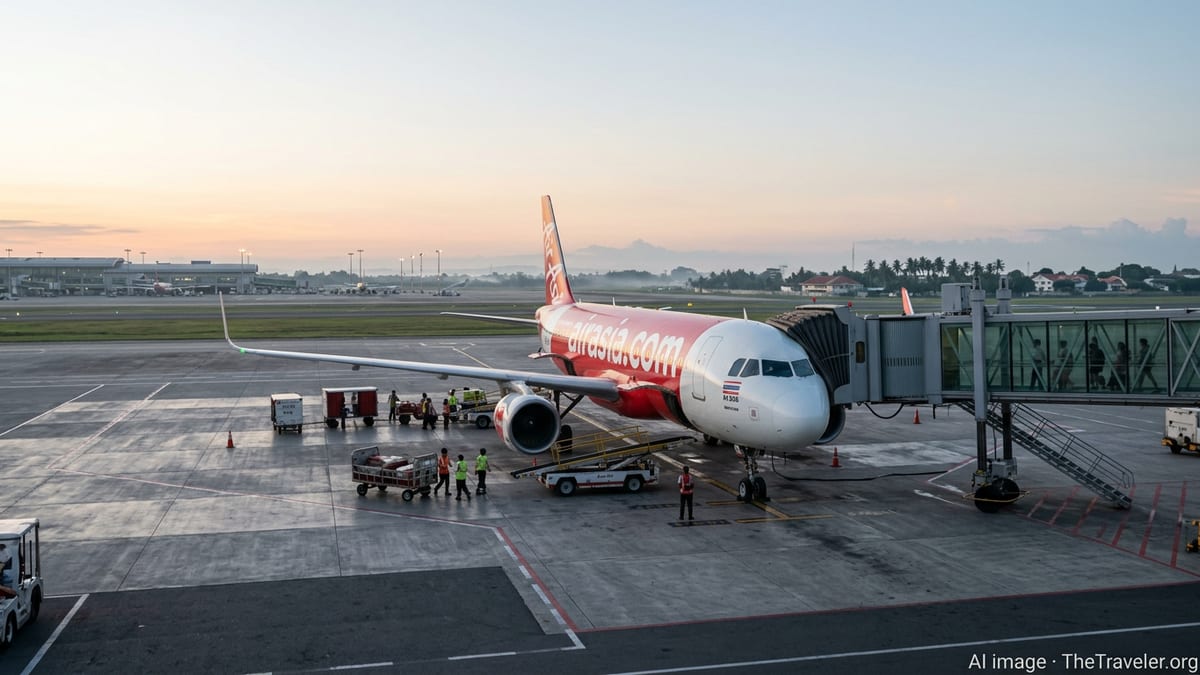
First Narita–Bohol Charter Marks New Phase For Panglao Airport
The maiden Narita–Panglao charter, operated as Cebu Pacific flight 5J 8811, brought more than 160 Japanese travelers directly into Bohol’s eco‑airport, bypassing traditional hubs such as Manila and Cebu. Aviation and tourism reports describe it as the first direct charter from Japan to Bohol–Panglao International Airport, highlighting the facility’s growing role as a true international gateway for the island province.
Publicly available flight information indicates that the service arrived in the afternoon of 2 May, following months of coordination between local tourism stakeholders, Japanese travel partners and Cebu Pacific’s charter unit. The operation underscores the carrier’s strategy of using targeted, seasonal charters to test new markets and gauge demand before considering scheduled routes.
Industry commentators note that the charter aligns closely with Bohol’s broader tourism trajectory. Official provincial data show that Bohol welcomed around 1.4 million visitors in 2025, with foreign arrivals growing at a faster clip than domestic travel and Japan emerging as a priority growth market on top of already strong demand from South Korea, China and the United States.
For the airport itself, the Japan charter is seen as a proof‑of‑concept milestone. Since opening in late 2018 with Japanese development support, Bohol–Panglao International Airport has handled a mix of domestic flights, Korean services and Chinese charters; the Narita operation now demonstrates that the facility can also attract Japan‑origin leisure traffic in meaningful volumes.
Japan Link Complements Surging Korean, Chinese and US Demand
The new Japan charter comes as Bohol consolidates its position among the Philippines’ best‑performing destinations for foreign tourism. Provincial tourism reports for 2025 attribute a 4 percent year‑on‑year rise in total arrivals to strong inflows from South Korea, China and the United States, alongside Taiwan and France. While South Korea has long been Bohol’s single largest foreign market, analysts note that renewed air links and packaged‑tour promotions are driving diversification.
National border statistics for 2024 and 2025 show South Korea and the United States at or near the top of the Philippines’ international source markets, with China regaining ground after earlier disruptions. Bohol’s own numbers broadly mirror these trends, with Korean and American visitors leading long‑haul spending and Chinese group travel underpinning volume‑driven beach and sightseeing packages.
Japan’s re‑entry via the Narita–Panglao charter is expected to add a more premium layer to the mix. Travel industry coverage points out that Japanese leisure travelers to the Philippines tend to gravitate toward diving, island‑hopping and cultural excursions, all of which are core strengths for Bohol. Tour operators are reportedly monitoring booking patterns from the inaugural flight, with an eye toward repeat charters later in 2026 and potential winter‑season programs in 2027.
United States and Indian travelers, meanwhile, are feeding into Bohol primarily via connecting flights through Manila, Cebu, and other regional hubs. Forecasts from international tourism bodies suggest steady growth in outbound travel from both markets over the next several years, supporting expectations that direct or one‑stop options into Panglao will remain attractive to airlines.
Carriers Size Up New Routes As Connectivity Race Intensifies
With Bohol’s visitor arrivals setting new records, airlines are increasingly evaluating the island as a standalone destination rather than a side trip from Cebu. Cebu Pacific, already a dominant player in the domestic market, has demonstrated with the Narita charter that there is viable demand for point‑to‑point services from Northeast Asia directly into Panglao.
Attention is now turning to how full‑service and hybrid carriers might respond. Philippine Airlines has been expanding and fine‑tuning its regional network, and industry observers view Bohol as a logical candidate for future international routes once aircraft and slot availability align. While no specific new PAL services to Panglao have been formally launched, network‑planning discussions reported in aviation circles frequently cite Bohol alongside Cebu, Caticlan and Clark as priority provincial gateways.
Other operators are also in the frame. Korean and Chinese airlines already serve several secondary Philippine islands and are accustomed to deploying narrow‑body aircraft on seasonal or charter‑style runs. Market watchers suggest that Bohol’s strong South Korean base, together with recovering Chinese demand, makes additional flights from Seoul, Busan, Shanghai or Guangzhou increasingly plausible over the medium term, especially if load factors on existing services to the Philippines remain high.
Regional competitors are moving quickly, with Thailand, Vietnam and Indonesia all rolling out new flights to tap resurgent demand from Korea, China, India and the United States. Bohol’s challenge and opportunity lie in convincing carriers that Panglao can consistently fill aircraft outside of peak holiday weeks, something the Narita charter is now helping to test in the Japanese market.
Infrastructure, Hotels And Experiences Prepare For Higher‑Value Visitors
Beyond air seats, Bohol’s ability to capture more long‑haul and high‑spend travelers will depend on the island’s infrastructure and tourism product. Recent provincial statistics highlight not only growth in visitor numbers but also a shift toward longer stays and higher nightly rates, particularly in Panglao’s resort corridor and boutique properties near heritage attractions.
Bohol–Panglao International Airport was designed with environmental features and room for expansion, which aviation analysts say positions it well to handle more international operations without the congestion seen at older regional facilities. Terminal layouts and runway capacity are viewed as adequate for additional Airbus A320 and Boeing 737 services from Northeast and Southeast Asia, especially during daytime off‑peak windows.
Hotel developers and investors have taken note. Industry monitoring by tourism and real estate consultancies points to a pipeline of new mid‑scale and upscale resorts, along with smaller lifestyle hotels targeting divers, digital nomads and family travelers. This supply is expected to absorb additional Korean, Japanese, Chinese, Indian and US demand while maintaining the island’s relatively intimate feel.
On the ground, local tour providers are packaging experiences that appeal to increasingly diverse markets: marine conservation‑focused diving, river cruises, countryside heritage loops, and farm‑to‑table gastronomy. These offerings are tailored to travelers who are willing to spend more per trip, a trend that aligns with national and provincial strategies to prioritize value over sheer volume.
Bohol Bets On Sustainable Growth In A Competitive Region
As Southeast Asia’s tourism race accelerates, Bohol is positioning itself as a sustainable, high‑quality alternative to more crowded beach destinations. The province’s UNESCO Global Geopark designation and ongoing conservation initiatives are being leveraged in marketing campaigns aimed at discerning visitors from Japan, South Korea, China, India and the United States.
Analysts note that direct international flights are a critical component of this positioning. The Narita to Panglao charter reduces travel time for Japanese visitors by cutting out domestic connections, making short breaks more feasible and strengthening Bohol’s appeal relative to better‑known islands in Thailand or Indonesia. Similar time savings would result from any future nonstop links from other North Asian or long‑haul markets.
At the same time, Bohol faces pressures familiar across the region, from managing coastal development and overtourism risks to ensuring that local communities benefit from rising visitor numbers. Policy documents from provincial planners emphasize environmental safeguards and community‑based tourism, suggesting that capacity limits and zoning rules will continue to shape how new airline capacity is deployed.
For now, Cebu Pacific’s Narita charter has given Bohol a timely boost in visibility across the Japanese market and a tangible example to present to other airlines considering direct flights. As carriers such as Philippine Airlines and regional competitors review their next wave of route launches, the combination of solid visitor statistics, a modern airport and strong demand from South Korea, China, India, Japan and the United States is placing Bohol firmly on the radar.