


More news on this day
A Turkish Airlines Airbus A330 operating a flight from Istanbul to Kathmandu made an emergency stop at Tribhuvan International Airport on Monday after smoke and flames were reported from its landing gear, prompting an immediate evacuation of passengers and a temporary shutdown of Nepal’s main international gateway.
Get the latest news straight to your inbox!
Minor Landing Gear Fire Triggers Major Airport Response
According to publicly available information from international and Nepali media, the widebody jet completed its scheduled arrival in Kathmandu on the morning of May 11 before smoke and fire were observed around the right-side landing gear while the aircraft was on the runway or taxiway. Airport fire and rescue teams responded and quickly brought the situation under control.
Reports indicate that the incident prompted an emergency evacuation using the aircraft’s slides. All 277 passengers and 11 crew members on board were taken off the Airbus A330, with no injuries reported. The aircraft involved had been operating a routine Turkish Airlines service linking Istanbul with the Nepali capital, one of the carrier’s key South Asian destinations.
The fire, described in several outlets as originating in or around one of the landing gear tyres, led airport operators to suspend operations temporarily as emergency crews inspected the runway and surrounding area. The closure reportedly lasted for around an hour before flights gradually resumed, causing knock-on delays to both inbound and outbound services.
While the technical cause of the fire has not been fully detailed in initial coverage, Turkish Airlines has stated in public comments cited by international media that smoke was detected in the landing gear during taxiing and that technical inspections of the aircraft were initiated following the evacuation.
Passengers Safely Evacuated Amid Runway Closure
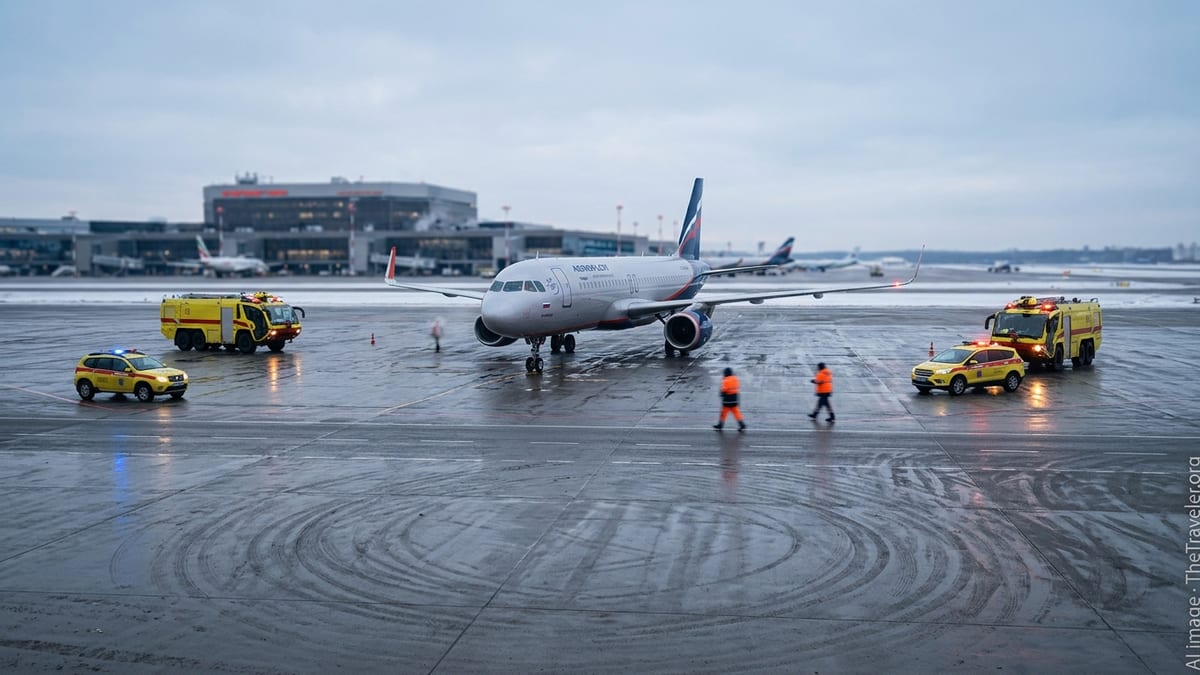
Images and video circulating on social media and in regional news coverage show the Turkish Airlines A330 stationary on the ground at Tribhuvan International Airport with emergency vehicles positioned nearby and evacuation slides deployed from multiple exits. Passengers can be seen moving away from the aircraft across the tarmac, overseen by airport personnel.
Reports from Kathmandu indicate that all passengers and crew were safely escorted to the terminal area after leaving the aircraft. There were no immediate accounts of serious medical issues related to smoke inhalation, fire, or the evacuation process, a notable outcome given the potential risks associated with high-speed evacuations on slides.
The temporary closure of Tribhuvan’s single international runway during the response created significant disruption for other flights. Aircraft bound for Kathmandu were reported to have entered holding patterns or diverted to alternate airports while the runway was inspected and debris checks were carried out. Departures were also held on the ground until authorities confirmed that the surface was clear and safe for operations.
Publicly available flight-tracking data and regional aviation reporting suggest that the outage was relatively brief in duration, limiting the knock-on impact compared with past disruptions at the landlocked country’s primary international airport.
Spotlight on Safety at Nepal’s Challenging Main Airport
The incident has once again drawn attention to the operational challenges at Tribhuvan International Airport, which sits in a narrow valley surrounded by mountains and is subject to rapidly changing weather patterns. Aviation analysts frequently describe Kathmandu as one of the more demanding airports in the region from a pilot’s perspective.
Nepal has experienced a number of serious aviation accidents over the past decades, particularly involving smaller domestic carriers flying into short, high-altitude airstrips in mountainous terrain. While Monday’s event on the Turkish Airlines widebody jet did not result in casualties, it underscores the importance of robust emergency preparedness and fast incident response at the nation’s busiest international hub.
Observers note that the airport has limited redundancy, with a single primary runway handling almost all international jet traffic. Any aircraft becoming disabled on the pavement, even for a relatively minor technical problem, can bring operations to a standstill, disrupting tourism, business travel, and cargo flows that are vital to Nepal’s economy.
In recent years, Nepal’s civil aviation authorities have worked with international partners to enhance safety oversight, modernize navigation equipment, and upgrade emergency response capabilities. Monday’s swift containment of the landing gear fire and the safe evacuation of hundreds of passengers are being cited in regional coverage as indicators of improved preparedness, even as investigations continue into the technical specifics of the event.
Echoes of Past Turkish Airlines A330 Incident in Kathmandu
The latest event also inevitably revives memories of an earlier Turkish Airlines Airbus A330 incident in Kathmandu. In March 2015, a Turkish Airlines A330 arriving in dense fog overran the runway at Tribhuvan International Airport, coming to rest with its nose gear collapsed off the paved surface. That occurrence forced the airport to close for several days and eventually led to the damaged aircraft being converted into an aviation museum in the city.
Aviation historians and local commentators point out that while the new incident similarly involves a Turkish Airlines A330 at the same airport, the nature and severity of the events differ considerably. In the current case, early reports characterize the fire as limited to the landing gear area and brought under control within a short time, with no structural collapse and no injuries recorded.
Comparisons between the 2015 runway excursion and the 2026 landing gear fire highlight how incremental safety improvements, changes in procedures, and enhanced training can influence the outcome of aviation incidents. The rapid deployment of firefighting assets, the orderly evacuation of passengers, and the relatively short runway closure all distinguish the new event from the prolonged disruption caused more than a decade earlier.
The recurrence of a high-profile Turkish Airlines incident at Kathmandu, however, may prompt renewed scrutiny of approach procedures, ground handling practices, and coordination between airline operators and airport authorities at Tribhuvan International Airport.
Next Steps: Technical Inspections and Travel Impact
Following standard aviation practice, the Turkish Airlines A330 involved in the landing gear fire is expected to undergo detailed technical examinations before any return to service. Public statements relayed in international coverage indicate that Turkish Airlines has initiated inspections focused on the affected landing gear assembly, tyres, and associated braking systems.
Regulators in Nepal and the airline’s home jurisdiction in Turkey typically review the findings of such inspections to determine whether additional safety recommendations or fleet-wide checks are warranted. At this early stage, there are no public indications of broader issues affecting other A330 aircraft or Turkish Airlines operations beyond the specific Kathmandu flight.
For travelers, the immediate impact has been confined largely to those booked on the affected flight and on services scheduled to arrive or depart Kathmandu during the temporary runway closure. Airlines operating into the Nepali capital often have limited flexibility to re-route or quickly add capacity, which can result in short-term crowding and delays when unexpected disruptions occur.
Travel industry observers suggest that passengers flying to and from Kathmandu in the coming days may wish to monitor airline notifications and airport updates for any residual scheduling adjustments. Nevertheless, as operations normalize and the technical inquiry progresses, the Turkish Airlines landing gear fire is currently being viewed by many aviation analysts as a serious but contained incident that tested, and largely validated, the emergency systems in place at one of the region’s most challenging international airports.