


More news on this day
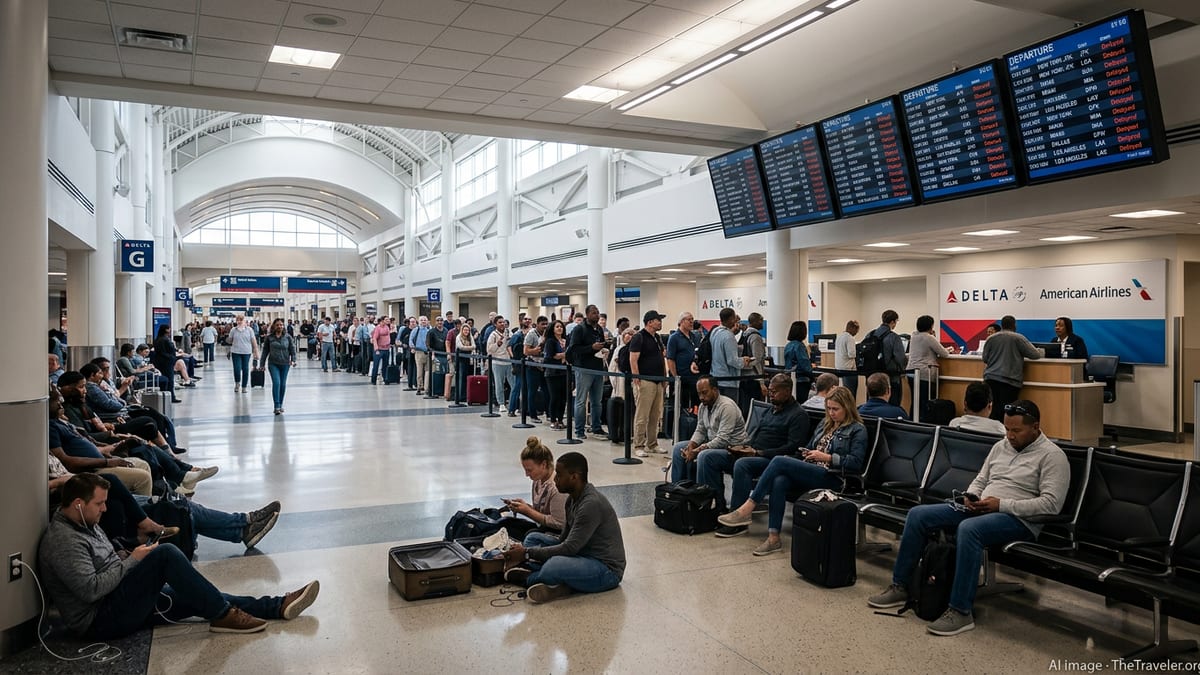
Travelers at Nashville International Airport faced mounting frustration on June 10 as publicly available tracking data showed 176 delayed flights and 15 cancellations, disrupting journeys on SkyWest Airlines, Endeavor Air, PSA Airlines, American Airlines and several other carriers serving major U.S. and international destinations.
Get the latest news straight to your inbox!
Widespread Disruptions Hit Regional and Major Carriers
Operational data compiled from real time flight tracking platforms and airport status boards indicates that Nashville International Airport experienced an unusually high volume of disruptions, with 176 flights delayed and 15 canceled across the day. The disruptions affected both arrivals and departures, complicating travel plans for passengers at Tennessee’s busiest airport.
Regional operators SkyWest Airlines, Endeavor Air and PSA Airlines were among the most affected carriers, alongside mainline partner American Airlines and other large U.S. airlines. These regional carriers operate a significant share of feeder services into major hubs under the banners of larger brands, meaning knock-on effects were quickly felt on connecting itineraries throughout the domestic network.
Publicly accessible airline performance records from the U.S. Department of Transportation show that carriers such as SkyWest, Endeavor and PSA historically handle high volumes of short-haul segments that are particularly vulnerable to weather, air traffic control programs and congestion. When schedules tighten, these flights are often at greater risk of delay or cancellation compared with longer-haul routes.
Combined with strong summer travel demand, the spike in delays at Nashville created crowded gate areas, extended time onboard aircraft awaiting departure slots and long queues at rebooking counters as passengers tried to salvage same-day connections.
Key Routes Affected: Chicago, New York, Washington and Philadelphia
The disruption at Nashville did not remain a local issue. Tracking boards for the day show multiple delayed and canceled flights on high-traffic corridors to major hubs including Chicago, New York, Washington and Philadelphia, affecting both business and leisure travelers at the height of the midweek travel rush.
Chicago-bound services, particularly those heading to O’Hare, form a critical part of the connecting web for American and United networks. Delays on these routes can cascade across the Midwest, with missed connections leading to further roll-on disruptions in cities such as Minneapolis, Detroit and St. Louis as aircraft and crews fail to arrive on time for subsequent departures.
New York and Washington routes, many operated by regional affiliates such as Endeavor or PSA on behalf of larger brands, also faced knockbacks. These flights are typically scheduled at high frequency and operate into congested East Coast airspace, where even modest weather or traffic management initiatives can quickly force ground delays or longer in-flight holding patterns.
Flights between Nashville and Philadelphia similarly entered delay status in significant numbers, according to flight board snapshots. For travelers relying on Philadelphia as a connecting point to New England, the Mid-Atlantic or transatlantic services, this created further uncertainty about same-day onward travel.
International Connections to Cancun and Montreal Disrupted
The impact extended beyond domestic routes. Publicly available flight data show that services linking Nashville with international leisure destinations such as Cancun and Montreal were also affected, either directly through late departures and arrivals or indirectly as passengers misconnected from delayed feeder flights.
Cancun-bound flights from Nashville are typically popular with holidaymakers and families, especially as schools break for summer. Delays on these departures can translate into missed resort check-ins, lost vacation time and challenges rebooking tightly packed peak-season itineraries, when spare seats on alternate flights are limited.
Montreal connections, often routed via major hubs such as Chicago or New York, were vulnerable when regional feeders from Nashville arrived late or not at all. Passengers connecting to Canada faced the added complication of international documentation checks and customs processing windows, making it more difficult to recover from missed connections even when later flights were available.
As the disruptions accumulated, travelers reported longer lines at customer service counters and heavier congestion at security and immigration points in downstream airports, as clusters of late-arriving flights converged at similar times.
Weather, Network Strain and Structural Vulnerabilities
While full causation remained diffuse, publicly available information from aviation agencies and recent coverage of U.S. air travel patterns suggests a familiar combination of factors behind the Nashville disruptions. Seasonal thunderstorms across key hub regions, constrained air traffic control capacity and already stretched airline staffing levels have all contributed to a fragile operating environment in the 2026 travel season.
Federal data on airline performance show that regional carriers, including SkyWest, Endeavor and PSA, historically post higher rates of cancellations and late arrivals than some mainline operators, reflecting their exposure to connecting hub operations and tighter scheduling. When a major hub initiates ground delay or flow control programs, regional spokes are often the first to see flights pushed back or removed from the schedule.
Industry analysts tracking U.S. operations in recent months have also noted that high aircraft utilization, post-pandemic fleet adjustments and persistent pilot and maintenance shortages leave airlines with limited spare capacity. Once a set of flights falls significantly behind schedule, it can be difficult to reposition crews and aircraft quickly enough to restore normal operations by the end of the day.
These structural vulnerabilities help explain why a localized spike in delays at one mid-continent airport can rapidly evolve into a multi-airport disruption that touches passengers on both domestic and international journeys.
What Travelers Can Expect and How to Respond
Published guidance from transportation authorities and consumer advocates emphasizes that passengers affected by delays and cancellations should closely monitor flight status through official airline channels and airport boards, rather than relying solely on third-party apps or screenshots captured earlier in the day. Flight statuses can change repeatedly as airlines adjust networks in response to shifting conditions.
Travel experts routinely recommend that passengers traveling through disruption-prone hubs build in longer connection times, especially on itineraries that rely on regional carriers feeding into major airports such as Chicago, New York or Washington. Early-morning departures are often less vulnerable to compounding delays than afternoon and evening flights, which are more exposed to the day’s earlier disruptions.
For those whose journeys from Nashville to destinations such as Cancun or Montreal are essential, same-day flexibility can be limited once large numbers of flights go off schedule. Travelers may find better outcomes by considering alternate routings through less congested hubs, splitting itineraries across carriers, or, where practical, shifting dates entirely to avoid the highest-risk days.
With the peak summer season approaching and demand remaining strong, the disruption at Nashville International Airport serves as another reminder that U.S. air travel continues to operate with little margin for error. Passengers flying through the country’s regional and major hubs may need to plan for potential delays as a routine part of their trip.