


More news on this day
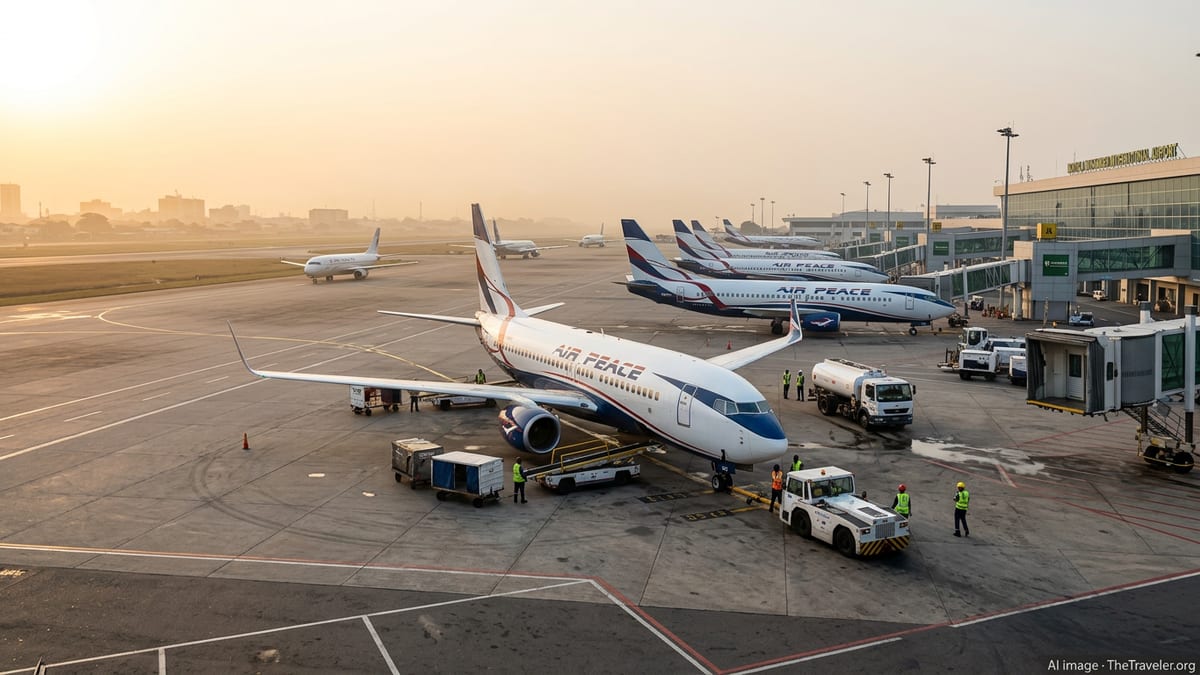
Nigeria’s Civil Aviation Authority has ordered Air Peace to compensate passengers affected by a disrupted Lagos–Enugu flight on Monday, after a notification mix-up and lengthy delays left travelers stranded and triggered a public outcry.
Get the latest news straight to your inbox!
Complaint Over Missed Lagos–Enugu Flight Triggers Regulatory Action
According to multiple Nigerian news outlets, the incident involved an Air Peace service scheduled from Lagos to Enugu on Monday, 21 September 2026. Passengers reported receiving messages that suggested the flight had been rescheduled, only to later discover that a revised service eventually departed without many of them on board.
Published accounts indicate that one of the affected travelers, human rights lawyer Inibehe Effiong, publicly detailed how the disruption caused him to miss a court appearance in Enugu. His posts, widely shared on social media, described arriving at Murtala Muhammed Airport in Lagos to find confusion over the actual departure time and a lack of clear guidance on alternative arrangements.
Subsequent reporting by Nigerian outlets states that Air Peace eventually operated a later Lagos–Enugu service on the same day. However, several passengers said they were not properly informed of the changes and were left at the airport for hours, prompting formal complaints to the Nigeria Civil Aviation Authority, known as NCAA.
The Lagos–Enugu route is one of Nigeria’s key domestic corridors, linking the country’s commercial hub with the southeast. Disruptions on such routes can quickly draw attention from both travelers and regulators because of the high volume of business and personal travel.
Regulator Cites Wrong Notification and Orders Compensation Package
Publicly available information from business and general news outlets in Nigeria indicates that the NCAA opened an investigation soon after receiving the complaints. Preliminary findings, as reported in coverage by several national platforms, suggest that Air Peace sent out an incorrect notification about the flight’s status, contributing to the confusion over when and whether the aircraft would depart.
Reports state that the regulator’s initial review focused on communication lapses rather than technical or safety issues. The NCAA has powers under Nigeria’s Civil Aviation Regulations to sanction airlines for consumer protection breaches, including failures in timely communication about delays and schedule changes.
Following its preliminary assessment, the authority directed Air Peace to prepare a compensation package for all passengers affected by the disruption. Nigerian press coverage indicates that the directive was communicated through the NCAA’s public affairs and consumer protection department, which has in recent years taken a more visible role in enforcing passenger rights.
As of the latest reports, specific compensation amounts and timelines had not been made public. Travelers are expected to be informed through the airline’s regular customer service channels once Air Peace agrees on the details with the regulator.
Passenger Rights and NCAA Consumer Protection Rules
The case has renewed attention on Nigeria’s passenger rights framework, particularly Part 19 of the Nigeria Civil Aviation Regulations, which sets out obligations for airlines in cases of delays, cancellations, and denied boarding. Publicly accessible guidance from the NCAA explains that when a domestic flight is significantly delayed or rescheduled, carriers are required to provide affected travelers with information, assistance, and, in some circumstances, reimbursement or compensation.
For domestic services such as Lagos–Enugu, the regulations call for airlines to inform passengers of the reasons for a delay within a short time of the scheduled departure, and to offer refreshments, communication options, and, when delays stretch late into the night, hotel accommodation and transport between the airport and hotel. Where a disruption makes the original journey impossible or meaningless, passengers may be entitled to a refund or a rebooking on another service.
Consumer advocates in Nigeria have repeatedly highlighted the importance of clear, prompt communication, arguing that uncertainty often frustrates travelers more than the delay itself. The Lagos–Enugu incident has been framed in local commentary as a test of how seriously airlines and regulators are willing to apply the existing rules, particularly in busy domestic markets.
The NCAA, in earlier public statements unrelated to this specific case, has emphasized that recent enforcement actions against several Nigerian carriers were linked to consumer protection failings rather than safety concerns. Those remarks have been cited in current coverage to underline that sanctions and directives such as the one involving Air Peace are designed to improve service standards and transparency for passengers.
Spotlight on Air Peace and Domestic Travel Reliability
Air Peace, founded in 2014 and based in Lagos, has grown into Nigeria’s largest carrier by fleet and route network, operating domestic, regional, and long-haul flights. Its rapid expansion, including international services to destinations such as London, has elevated its profile among Nigerian travelers looking for local alternatives on key routes.
At the same time, domestic passengers in Nigeria frequently voice concerns about delays, last-minute schedule changes, and limited information at airports. Commentaries published in Nigerian media and on social platforms often cite Lagos–Enugu, Lagos–Abuja, and other trunk routes as particularly vulnerable to disruption because of high demand and tight aircraft utilization.
Analysts quoted in recent coverage of the NCAA’s action suggest that the latest directive may encourage airlines to invest more in communication tools and contingency planning. Measures such as buffer aircraft, improved passenger notification systems, and clearer escalation procedures when flights are disrupted have been highlighted as ways to reduce knock-on effects across busy daily schedules.
For travelers, the Air Peace case serves as a reminder to monitor flight status updates closely, keep records of notifications received, and submit formal complaints to the NCAA when they believe their rights have been breached. The regulator operates consumer protection desks at major Nigerian airports and provides online channels for passengers seeking redress.
What the Case Means for Future Nigerian Flight Disruptions
Industry observers note that the NCAA’s instruction to compensate passengers in this case fits into a broader pattern of more assertive regulatory oversight in Nigeria’s aviation sector. In the past two years, the authority has publicized enforcement actions against several carriers over issues including delayed refunds and poor handling of disrupted flights.
By moving quickly in response to the Lagos–Enugu complaints, the regulator has signaled that lapses in communication can carry tangible consequences. Travel commentators writing on Nigerian platforms have argued that visible outcomes, such as compensation orders, may gradually shift airline behavior and encourage greater compliance with consumer protection rules.
For domestic air travelers planning journeys in and out of Lagos, the development underscores the benefits and risks of relying on tight same-day connections, particularly for time-sensitive engagements such as court appearances or business meetings. While air travel remains the fastest way to move between major Nigerian cities, the Lagos–Enugu disruption illustrates how schedule changes can still derail carefully planned itineraries.
Further details on the specific compensation package for the affected Air Peace passengers are expected to emerge as the airline and the NCAA finalize implementation. Until then, the case is likely to remain a reference point in discussions about reliability, accountability, and passenger experience across Nigeria’s busy domestic skies.