


More news on this day
Travelers flying in and out of the Washington, DC region could see fewer delays in coming months, as a new artificial intelligence system begins a closely watched trial at the area’s three major airports.
Get the latest news straight to your inbox!
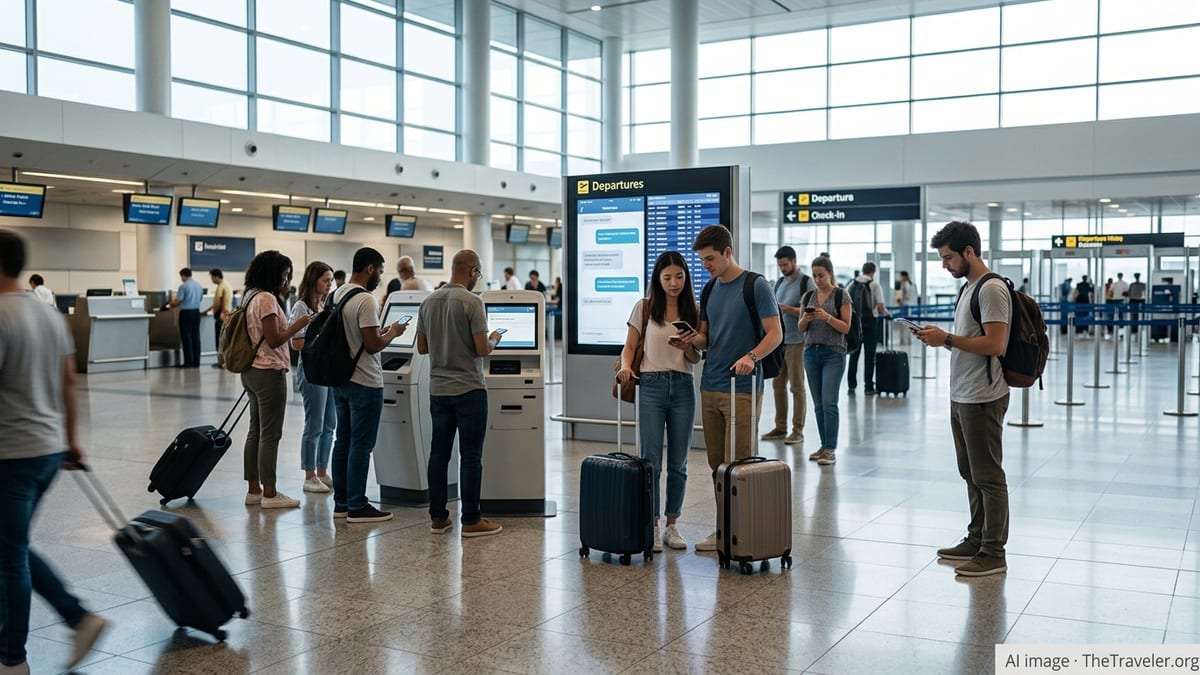
AI-Powered SMART Tool Debuts in Busy Capital Airspace
According to recent coverage from national outlets, the Federal Aviation Administration has launched an AI-enabled traffic management tool, known as SMART, in the Washington region, marking its first live deployment in one of the nation’s most complex air corridors. Public information indicates that the initial rollout began on Monday, September 21, 2026, targeting Ronald Reagan Washington National, Washington Dulles International, and Baltimore/Washington International Thurgood Marshall airports.
The Washington area offers a challenging proving ground. Reagan National sits just across the Potomac River from downtown Washington, while Dulles, about 25 miles to the west, serves as a major long-haul and international hub. BWI, roughly 30 miles northeast of the city, is a key base for large domestic carriers. Together, these three airports handle tens of millions of passengers each year and are highly sensitive to thunderstorms, East Coast congestion and federal ground-stop programs.
Reports on the new system describe SMART as a planning and flow-management aid located at the national command level rather than in the airport control towers. It is designed to give air traffic managers a more precise view of how traffic will evolve across the region, with the goal of preventing gridlock from building up in the first place.
Publicly available information on the program indicates that the SMART rollout in the capital region is intended as a pilot phase before a possible expansion to other congested corridors around the United States.
How the SMART System Is Expected to Reduce Delays
FAA research documents and recent news coverage describe SMART as a system that ingests airline schedules, planned routes, airport runway capacity, active airspace restrictions and detailed weather data. Using AI and machine-learning techniques, it generates predictions of traffic flows and flags where demand is likely to exceed capacity hours in advance.
Instead of waiting for lines of aircraft to form on taxiways or for holding patterns to stack up in the skies above Washington, the system is intended to suggest earlier interventions. Those can include modest schedule adjustments, rerouting flights around storms or shifting some traffic to less congested time periods or nearby airports, all with the goal of keeping more of the day’s operations running on time.
The FAA’s broader research plans describe AI-enabled flow tools as a way to cut the length and frequency of traditional ground-delay programs, in which flights are held at their departure airports for extended periods. By seeing bottlenecks sooner and across a wider region, the agency hopes to reduce knock-on disruptions that can ripple across the East Coast and into the Midwest when Washington’s airspace gets constrained.
For passengers, the promised benefits are straightforward: fewer last-minute gate holds, shorter waits on the tarmac and more predictable arrival times, especially during summer thunderstorm seasons and busy holiday travel periods when the Washington region often experiences some of its worst congestion.
DC-Area Travelers: What to Expect During the Trial
For now, the AI system functions as a behind-the-scenes advisory tool for human air traffic managers, according to published descriptions of the program. It does not replace controllers in the towers at Reagan National, Dulles or BWI, and it does not independently issue instructions to pilots. Instead, it feeds recommendations to the FAA’s existing traffic flow management centers, where specialists decide whether and how to act on them.
Because the tool is focused on high-level planning, most travelers passing through the DC region in the coming weeks may not notice any obvious change in airport procedures. Check-in, security screening and boarding processes at the three airports continue to be handled by airlines, the Transportation Security Administration and airport operators under existing rules.
Over time, however, passengers might see differences in how delays are communicated and managed. For example, airlines could receive earlier notice that a particular hour is expected to be constrained at Reagan National, prompting them to adjust schedules or swap aircraft before passengers even arrive at the airport. Flights that once sat for long stretches awaiting takeoff clearance might push back closer to their actual departure time if traffic has been smoothed out earlier in the day.
Travelers with tight connections in Washington or onward flights along the East Coast may benefit the most if the system succeeds in reducing cascading delays. However, public material on the trial also makes clear that severe weather, runway closures and other disruptions will still cause significant impacts that no forecasting tool can fully eliminate.
Industry Reactions and Concerns About AI in the Skies
Coverage in national newspapers and aviation-focused outlets indicates that airlines and aviation workers have expressed mixed views on the SMART rollout. Some industry voices have welcomed the promise of more accurate forecasts and better coordination during storms and peak travel periods, arguing that even incremental improvements in predictability can save carriers substantial fuel, crew and recovery costs.
Other commentary reflects skepticism about how much difference the new system can make in the short term, and how its recommendations will interact with airlines’ competitive interests. Airline planners are often reluctant to give up valuable peak-time slots at congested airports, and questions have been raised in public reporting about whether AI-driven proposals to shift flights away from popular departure times will be accepted when they conflict with commercial strategies.
There has also been public discussion about the scope of the trial after concerns from carriers that abrupt, AI-triggered schedule changes could create confusion for passengers. According to recent reporting, the FAA has signaled that the tool will be deployed in a more limited, advisory capacity at first, with a focus on learning how its predictions perform in live operations before expanding its influence on the daily schedule.
Aviation worker forums and public discussions show additional questions about training, transparency and accountability. Some commentators have emphasized the importance of clearly explaining to controllers and dispatchers how SMART reaches its recommendations, so that human experts can judge when to trust or override them, especially in fast-changing weather situations.
How SMART Fits Into a Larger Shift Toward AI in Air Travel
The Washington-area trial is part of a broader, multi-year effort by U.S. aviation regulators and research agencies to incorporate advanced automation into air traffic management. NASA’s air traffic research projects, for example, have already demonstrated AI-assisted tools that help reroute aircraft more efficiently around storms and balance traffic loads across busy corridors.
In official planning documents, the FAA has outlined a strategy for using AI and machine learning to enhance traffic flow management, improve demand-and-capacity balancing and support earlier decision-making during major weather events. SMART is among the first of these tools to move from research and testing into daily operations at major commercial airports.
For the Washington region, the pilot underscores how central the capital’s airspace is to national modernization efforts. The Air Traffic Control System Command Center, which oversees nationwide flow programs, is already based in the Washington area, and public material from the Metropolitan Washington Airports Authority highlights the region’s role as a key hub for domestic and international air service.
If the SMART trial delivers measurable reductions in delay minutes and more stable operations at Reagan National, Dulles and BWI, observers expect the system to be extended to other congested metro areas. For travelers, that would mean that an experiment starting in the nation’s capital could eventually influence how flights are managed across much of the U.S. airline network.