


More news on this day
Europe’s new Entry/Exit System for non-EU travellers is causing lengthy queues at some major hubs, with one airport chief warning that passport control times have tripled as border officers grapple with the biometric checks now required at the external Schengen frontier.
Get the latest news straight to your inbox!
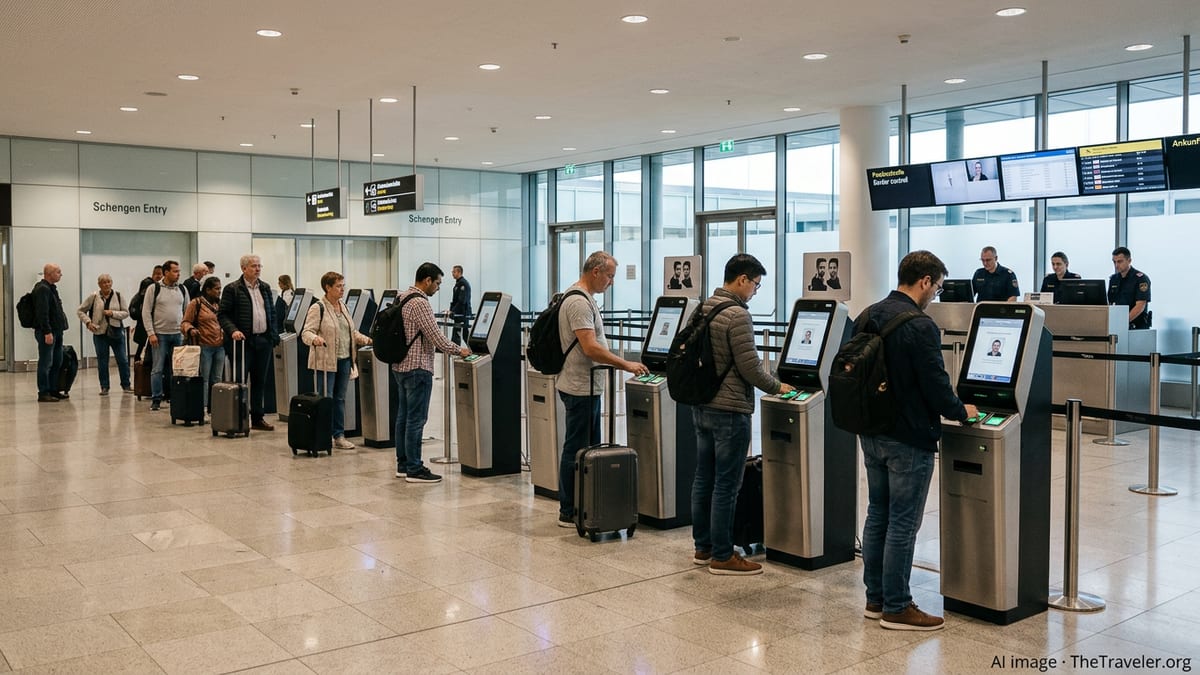
Biometric border shift reshapes travel into the Schengen area
The European Union’s Entry/Exit System, known as EES, replaces manual passport stamping for most non-EU visitors with a digital register of each crossing at the bloc’s external borders. Publicly available information explains that travellers now have their passport scanned while facial images and, in many cases, fingerprints are captured and stored in a central database for future visits.
The system applies at airports, seaports and many land crossings into the Schengen zone and is intended to strengthen border security and automate the tracking of short stays. Officials have promoted the long-term goal of faster, more reliable checks once initial enrolment is complete and infrastructure is fully in place.
For now, however, the shift has added a new layer to the familiar passport check for millions of visitors from countries such as the United Kingdom, the United States and other non-EU states. Instead of a quick stamp, first-time registration under EES can take several minutes per traveller, creating a bottleneck wherever staffing, equipment or queuing space is already stretched.
Travel industry briefings highlight that the changes affect anyone who is not a citizen of an EU or Schengen member country, with only limited exemptions. Carriers and tour operators have been warning customers that they may face longer-than-usual border processing as the system beds in.
Airport boss warns of passport control times “tripling”
Concerns intensified after coverage of a leading airport executive describing how EES has dramatically slowed passport control at one busy European hub. According to recent reports, the airport’s boss said average processing times at border booths had roughly tripled since the digital system went live, even after weeks of preparations and staff training.
The airport’s experience mirrors anecdotal accounts from passengers at other gateways, where first-time EES registration has led to long waits at peak times. At Brussels Airport, for example, local aviation coverage described queues of up to four hours for some non-EU arrivals and lengthy lines for departing passengers as the new controls were phased in.
Operational managers have pointed to several pressure points: extra time needed to capture biometric data, travellers unfamiliar with the new process, and technical glitches as systems are integrated with existing border infrastructure. Some airports are reported to be opening additional lanes and redeploying staff to help guide passengers through the new checks, but capacity constraints remain.
Industry voices argue that while the system may streamline repeat journeys in the future, its early weeks and months coincide with a busy travel period and risk undermining confidence in European hubs already under scrutiny for congestion.
Warnings of a bumpy transition and possible two-year adjustment
European travel and aviation bodies have been flagging concerns about the pace and timing of the rollout for more than a year. Trade associations have noted that the combination of new technology, infrastructure upgrades and the need to coordinate between national border agencies creates a complex operational challenge at each entry point.
Some commentary cited by European media suggests that the period of disruption could last well beyond the initial summer season. One senior figure involved in the roll-out has been quoted in coverage predicting that it may take up to two years before the system “stabilises” and processing times fall back toward pre-EES levels, once the majority of frequent travellers have been fully registered and staff are fully accustomed to the new workflow.
Government guidance in several non-EU countries has urged travellers to factor in the risk of delays when planning journeys to the continent. Public information campaigns have highlighted that queues may be particularly long at busy ferry ports and land crossings where passenger volumes are high and physical space for additional kiosks is limited.
Despite these warnings, early reports from some airports and border points indicate an uneven picture. While certain hubs have experienced hours-long lines, others appear to have integrated the new procedures with comparatively modest disruption, underscoring how local planning, investment and staffing levels shape the passenger experience.
What travellers can expect at the new EU border checks
Published guidance explains that non-EU travellers will typically undergo a one-off EES enrolment the first time they cross into the Schengen area after the system’s introduction. This involves scanning a passport, providing a facial image and, in many cases, fingerprint verification at a manned booth or automated kiosk, followed by the normal immigration questions about the purpose and length of stay.
On subsequent trips, border guards can retrieve the stored biometric record, which should reduce the time needed at the counter. However, industry advisers note that early adopters have still seen slower processing while equipment is calibrated and travellers learn to use the kiosks correctly, particularly at airports handling large tour groups or family parties.
Travellers arriving at major European airports are being advised by airlines and travel operators to allow extra time for border formalities, especially during school holidays and other peak periods. Some carriers are recommending that passengers sit closer to the front of the aircraft or minimise hand luggage to move more quickly once disembarked, though such measures can only partially offset structural delays.
Transport ministries and airport operators have been promoting practical tips, such as having passports ready, removing hats and glasses when instructed, and staying with accompanying children to speed up family processing. The overall message to visitors is to anticipate a slower arrival or departure experience until EES becomes embedded in routine operations.
Industry calls for investment and clearer communication
The aviation and tourism sectors are pressing for sustained investment and clearer coordination to prevent the new border regime from denting Europe’s appeal as a destination. Airports argue that they need sufficient funding and lead time to expand biometric infrastructure, redesign queuing areas and recruit staff capable of handling seasonal surges in passenger traffic.
Tourism groups warn that repeated stories of missed connections and multi-hour queues could encourage travellers to look at alternative destinations, particularly for short breaks and weekend trips where every hour counts. Some operators have already revised itineraries and transfer times to account for slower border processing when routing passengers through the busiest Schengen gateways.
At the same time, many in the industry stress that, if properly resourced, EES could ultimately support smoother flows by reducing manual paperwork and giving border authorities a clearer picture of who is entering and leaving the bloc. They point to earlier experiences with automated passport gates, which initially produced confusion but are now a routine part of travel through many major hubs.
For now, the immediate reality for non-EU travellers is a more time-consuming arrival and departure process at many European border points. With some airports already reporting passport control times that have tripled under the new regime, the coming peak travel seasons will test whether Europe’s bet on digital borders can deliver on its promise of security and efficiency without sacrificing passenger convenience.