


Landing at Keflavik International Airport after a long flight, most travelers just want a straightforward way to reach central Reykjavik. For many, the Flybus service between Keflavik (KEF) and BSÍ Bus Terminal is the most convenient solution. This guide explains exactly how the Flybus works in 2026, from ticket options and hotel drop-offs to what happens if your flight is late.
Get the latest updates straight to your inbox!
What Exactly Is the Flybus and How Does It Work?
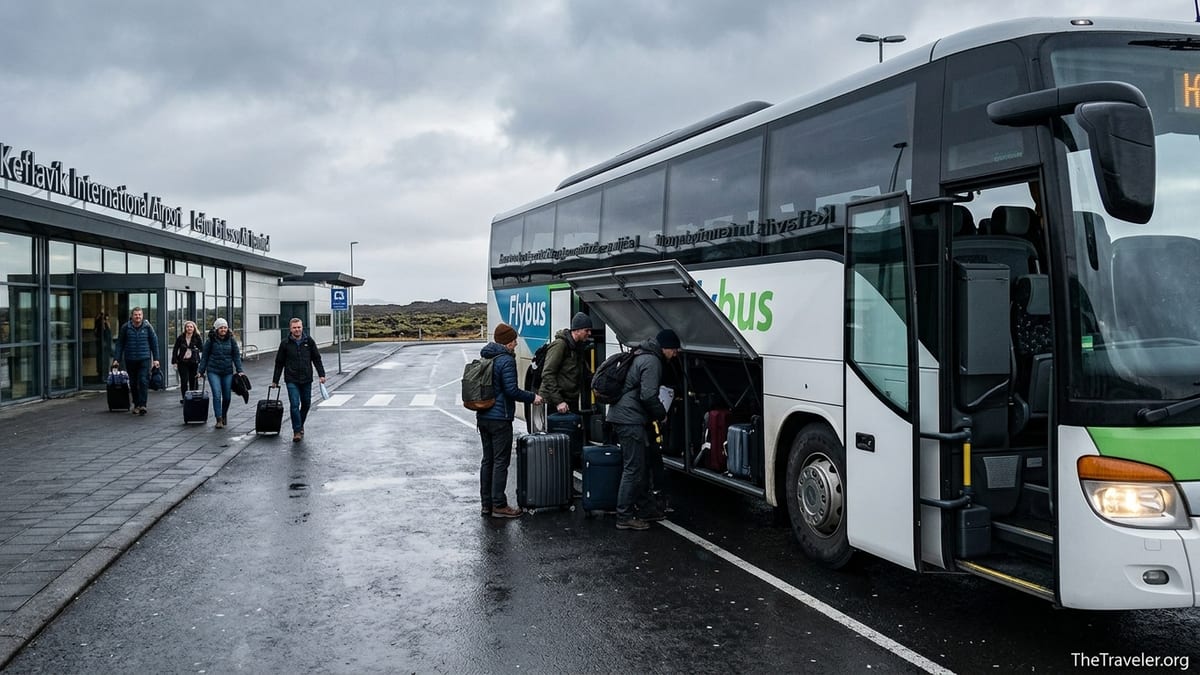
The Flybus is a dedicated airport shuttle service operating between Keflavik International Airport and BSÍ Bus Terminal in Reykjavik, about 50 kilometers away. Run by Reykjavik Excursions under the Icelandia brand, it is designed to connect with arriving and departing flights rather than follow a simple fixed bus timetable. For most visitors, especially on late-night or early-morning arrivals, it is the most straightforward way to reach the city center without renting a car or puzzling over local public bus timetables.
On arrival at Keflavik, Flybus departures are timed roughly 30 to 45 minutes after each scheduled flight arrival, with extra buses added during busy periods. Official airport information notes that departures to the capital area are scheduled about 40 minutes after flight arrival and operate in accordance with the airport’s flight timetable. In practice, you clear passport control and baggage claim, walk into the arrivals hall, buy or validate your Flybus ticket at the service desk or self-service machines, then exit directly to the bus bays outside.
The trip from Keflavik to BSÍ typically takes around 45 minutes, depending on weather and traffic. That means a traveler landing at 6:30 in the morning is often checking into a central Reykjavik hotel or guesthouse by around 8:15, assuming a hotel drop-off connection. There is no rail link between Keflavik and Reykjavik, so every visitor must choose some form of road transport, and the Flybus has become the default choice for both budget-minded and mid-range travelers.
Unlike a traditional city bus, Flybus vehicles have large luggage holds for suitcases and outdoor gear, and staff are used to dealing with bleary-eyed passengers off transatlantic flights. The service runs year-round, including holidays, and is set up around the needs and rhythms of international flights rather than local commuters.
BSÍ Bus Terminal: Your Main Reykjavik Hub
All Flybus services between Keflavik and Reykjavik revolve around BSÍ Bus Terminal, located just south of the city center. BSÍ functions as the main long-distance bus station for Reykjavik Excursions and related services, and nearly all airport transfers either start or end here. From BSÍ, additional smaller shuttle buses fan out toward city hotels and designated bus stops in central neighborhoods.
Arriving passengers from Keflavik are first dropped at BSÍ. If you have a standard Flybus ticket, this is where your journey ends. From here you can walk or take a taxi to your accommodation, or transfer to local city buses. Many sightseeing tours, including Golden Circle and South Coast excursions, also depart from BSÍ, which makes Flybus a convenient choice if you are booked on an early-morning tour the day after arrival.
If you have booked a hotel drop-off ticket (previously branded as Flybus+), you will change at BSÍ to a smaller shuttle bus that handles drop-offs in the city. These mini-coaches do a loop around central Reykjavik and surrounding districts, stopping at a mix of official tourist bus stops and hotels that are accessible to larger vehicles. Travellers who arrived on a late flight, for example landing at 23:30, may find themselves at BSÍ just after midnight and then stepping off the smaller shuttle right outside their hotel around 00:20.
BSÍ itself has basic facilities including restrooms, seating areas and ticket counters. Cafés and food options may be limited late at night, so do not rely on BSÍ for a full meal after an evening arrival. However, it is a safe, lit transport hub where staff are accustomed to travelers arriving at all hours with questions about transfers, hotel shuttles and tour departures.
Ticket Types, Prices and Where to Buy
Flybus tickets are available in a few main forms: one-way Keflavik to BSÍ, one-way BSÍ to Keflavik, and return tickets. Each can be purchased either with or without the hotel-area pickup/drop-off option in Reykjavik. The hotel option used to be marketed separately as Flybus+, but in 2026 it is simply sold as a ticket with pickup/drop-off included. This upgrade adds a relatively modest amount to the base fare.
Exact prices change periodically with exchange rates and operating costs, but as a general example in 2026 a one-way adult ticket from Keflavik Airport to BSÍ is commonly priced around the mid-3,000 to low-4,000 Icelandic krona range, which is roughly equivalent to 25 to 30 US dollars. Adding hotel drop-off typically increases the price by around 1,000 to 1,200 krona, or roughly 7 to 9 dollars. Return tickets with hotel pickup and drop-off are usually better value per journey than buying two separate one-way tickets.
You can buy tickets in several ways. Many travelers purchase online in advance directly from the operator, storing a digital ticket on their phone. Others buy on the spot at Keflavik Airport from the Flybus desk in the arrivals hall or from staffed counters near the bus bays. Self-service kiosks are also available at both Keflavik and BSÍ. Because Flybus guarantees a seat on the next departure for ticket holders, you do not need to choose an exact arrival time when buying a Keflavik to Reykjavik ticket.
If your accommodation is in the city center, consider comparing the price of a Flybus ticket with hotel drop-off to the cost of a standard ticket plus a short taxi ride from BSÍ. For example, a couple staying near Hallgrímskirkja might find that two hotel-drop-off upgrades cost slightly more than two standard Flybus fares plus a 5 to 10 minute taxi ride from BSÍ. On the other hand, solo travelers staying at hotels directly served by the shuttle, such as properties near popular bus stops in the 101 and 105 postcodes, often find the hotel option the most comfortable and cost-effective combination.
Hotel Drop-Offs, Pickups and Bus Stops Explained
Reykjavik’s narrow streets and residential zones are subject to traffic and parking restrictions, which limit where large buses can stop. To manage this, Flybus uses a network of official tourist bus stops and accessible hotels around central Reykjavik. When you buy a ticket with hotel pickup/drop-off, you select either your hotel by name or the nearest designated bus stop in the booking system.
Upon arrival in Reykjavik, passengers with hotel drop-off step off the main coach at BSÍ and are directed to a smaller shuttle bus corresponding to their area. The driver or staff will usually call out hotel names and stop numbers. For example, guests staying near the downtown Laugavegur shopping street might be assigned to a shuttle serving Bus Stop 10 or Bus Stop 14, while those near the harbor area could be directed toward Bus Stop 4 or a nearby hotel. The shuttle runs a loop, so travel time from BSÍ can range from 5 to 25 minutes depending on where your stop falls in the sequence.
On the return journey to Keflavik, hotel pickups work in reverse. Instead of all buses starting their journey at BSÍ, smaller vans or mini-coaches collect passengers from hotels and bus stops 30 minutes or so before the main Flybus departure time, then deliver everyone to BSÍ to board the large airport coach. Travelers staying in popular hotel clusters like Hlemmur or the old harbor area will see these shuttles arriving early in the morning, often around 5:00 or 6:00, as they sweep through neighborhoods picking up passengers for early flights.
It is important to understand that hotel pickup and drop-off are not automatically included in a basic Flybus ticket. Official information from Reykjavik Excursions notes that pick-up and drop-off services come with specific ticket types and must be reserved in advance, often at least two hours before departure. Guests who arrive expecting a door-to-door service on a standard ticket may be surprised to find that their journey ends at BSÍ. When booking, always check whether your ticket includes the hotel component and which bus stop corresponds to your accommodation.
In practical terms, if your hotel is a 10 to 15 minute walk from BSÍ and you are traveling light, a standard ticket may suffice. If you are arriving late at night, in winter weather, or with heavy luggage, paying extra for hotel drop-off can be well worth the relatively small additional cost. Many visitors arriving on evening flights in January or February choose hotel drop-off simply to avoid walking icy sidewalks in the dark with suitcases.
Timing After Arrival and How Late Flights Are Handled
One of the main advantages of the Flybus is that it is scheduled in connection with flights rather than running only at fixed departure times. Both the operator and Keflavik Airport highlight that buses depart approximately 30 to 45 minutes after each scheduled arriving flight and that the service is synchronized with every arriving flight, including late-night and early-morning landings. This setup gives travelers confidence that they will not be stranded if a flight lands late.
In practice, this means that if your flight from North America is scheduled to land at 06:00 but is delayed to 07:15, there will still be a Flybus departure after your plane lands. Extra buses are added during peak periods, and seats are “always guaranteed” in the sense that ticket holders are accommodated on the next available departure rather than turned away. Travelers who have experienced delays of several hours report still finding Flybus staff at the arrivals hall and buses waiting outside, even well past midnight.
From touchdown to hotel room, a typical timeline goes like this: 10 to 20 minutes to taxi and disembark, 10 to 30 minutes for passport control and baggage claim depending on queues, then 10 to 15 minutes to buy or validate your ticket and walk to the bus. With a 45-minute journey into town and a possible short connection at BSÍ for hotel drop-off, most passengers reach their accommodation 1.5 to 2.5 hours after landing. For example, a traveler landing from London at 22:00 might realistically expect to be checking into a central Reykjavik hotel between 23:30 and midnight.
If your arrival is extremely late or you are concerned about making a tight connection to a pre-booked tour, it is wise to allow an additional buffer. Tour operators often schedule morning pickups from central Reykjavik hotels from about 8:00 onward, and some travelers landing around 05:30 successfully reach their hotel, sleep for a short period and still make an 08:30 tour pickup. However, this works best with carry-on luggage only and smooth airport processing. When in doubt, contact your tour company and mention your arrival time and Flybus plan.
Should You Book Flybus Tickets in Advance?
Because Flybus departures are aligned with flights and the operator guarantees seats on the next bus, you technically do not need to book a Keflavik to Reykjavik ticket far in advance. It is entirely possible to land at Keflavik, walk to the Flybus desk in the arrivals hall, and buy a one-way ticket on the spot. This is common among travelers who prefer flexible plans or are worried about flight disruptions.
That said, there are several advantages to booking ahead online. Pre-purchased tickets often come with slightly better prices or promotional offers, especially for return journeys. Buying in advance also lets you clearly choose between a BSÍ-only ticket and a ticket that includes hotel pickup or drop-off, and gives you time to look up which bus stop is closest to your accommodation. Travelers who buy tickets online before arrival can head straight to the bus area with their QR code, saving a few minutes at the airport.
For the return trip from Reykjavik to Keflavik, advance booking is more important. Here, you do need to choose a departure time, particularly if you are using hotel pickup. Timetables show departures from BSÍ from about 04:00 until late evening in line with outgoing flights, normally about every hour and sometimes every 30 minutes at busy times. Booking ahead secures your preferred departure and ensures your hotel pickup is linked to that specific bus.
A practical rule of thumb used by many local travel planners is to book a Flybus departure that reaches Keflavik around two and a half to three hours before your flight’s scheduled departure time. For example, if your flight to North America leaves at 10:00, you might choose a Flybus departure from BSÍ at 06:30 or 07:00, arriving at KEF around 07:15 or 07:30. This allows time for check-in, baggage drop and security screening even when the airport is busy. If you book hotel pickup, your shuttle may arrive at your bus stop 30 minutes before the BSÍ departure time.
Flybus vs Other Keflavik–Reykjavik Transport Options
While Flybus is one of the most popular options, it is not the only way to travel between Keflavik and Reykjavik. Other private airport shuttle services operate similar routes between the airport, BSÍ and key city bus stops, occasionally offering hotel-specific transfers or smaller vehicles. Some visitors prefer these alternatives if their accommodation is better served by a competing operator’s route or pickup point.
The main public alternative is the Strætó route 55 bus connecting Keflavik Airport with Reykjavik via Reykjanesbær. This regular city bus is significantly cheaper than the Flybus, with one-way fares often under 1,000 krona for adults. However, it involves a longer journey with multiple local stops, may require a short walk to the bus stop near the car rental area at Keflavik, and is less convenient for travelers with large luggage or limited mobility. Its schedule is also not tailored to every flight, so it is best for budget-conscious travelers arriving during the day with time to spare and light bags.
Taxis and private transfers are the most flexible but also the most expensive option. A taxi from Keflavik Airport to central Reykjavik typically costs several times the price of a single Flybus ticket, which can make sense for groups of four or more or those arriving with young children and extensive luggage. Some hotels and guesthouses can arrange private transfers or share-ride shuttles on request; Hotel Keflavik, for example, advises guests that arrival transfers from KEF are not included in room rates but can assist in ordering taxis or providing information on bus services.
When comparing options, think about your arrival time, luggage, budget and tolerance for complexity. For a solo traveler landing at 23:30, the guaranteed Flybus departure to BSÍ followed by a hotel drop-off shuttle is often the best balance of cost, comfort and reliability. A group of five adult friends arriving at midday might compare the per-person cost of Flybus tickets with that of a large taxi and decide based on their priority for door-to-door service.
The Takeaway
For most visitors to Iceland in 2026, the Flybus remains a reliable, well-organized link between Keflavik International Airport and central Reykjavik. Its key strengths are synchronization with flight arrivals, a generous operating window that covers early-morning and late-night flights, and flexible ticket options that let you choose between a BSÍ-only ticket or a hotel-area drop-off.
If you are arriving in the dark, during winter or after a long-haul flight, paying a modest supplement for hotel drop-off or pickup often makes the arrival and departure experience much smoother. Advance booking is not strictly necessary for the airport-to-city leg, but it is highly recommended for the return journey to ensure you reach the airport in good time for check-in and security.
Whether you step off the plane into a bright summer evening or a snowy January night, understanding how the Flybus system works means one less thing to worry about. Once your ticket is sorted and your pickup or drop-off arranged, you can focus instead on the lava fields rolling past your window and the promise of Reykjavik’s cafés, hot pools and northern skies waiting at the end of the road.
FAQ
Q1. Do I need to reserve a specific Flybus departure when landing at Keflavik?
For the Keflavik to Reykjavik direction, you usually do not choose a specific departure. Your ticket is valid for the next available Flybus after your flight lands, and buses are scheduled about 30 to 45 minutes after arrivals.
Q2. How late does the Flybus run from Keflavik to Reykjavik?
Flybus departures are coordinated with flight arrivals and operate around the clock, including late-night and early-morning flights. Even if your flight is delayed, a bus will normally run after you land.
Q3. How long does the Flybus trip from Keflavik to BSÍ take?
The journey typically takes about 45 minutes in normal conditions. In bad weather or heavy traffic it can take a little longer, so allow extra time if you have tight onward connections.
Q4. What is the difference between a standard Flybus ticket and one with hotel drop-off?
A standard ticket takes you between Keflavik Airport and BSÍ Bus Terminal only. A ticket with hotel pickup/drop-off includes a transfer on smaller shuttle buses between BSÍ and selected hotels or official tourist bus stops in Reykjavik.
Q5. Do I have to book hotel pickup or drop-off in advance?
Yes. Hotel pickup and drop-off must be booked in advance and linked to a specific departure time. Booking at least a few hours before you travel helps ensure your hotel or bus stop is included on the shuttle route.
Q6. How early should I leave Reykjavik for my flight from Keflavik?
Many travelers aim to arrive at Keflavik two and a half to three hours before departure. That often means choosing a Flybus that leaves BSÍ around three to three and a half hours before your flight, depending on time of day and season.
Q7. Can I change my Flybus departure time for the return journey?
Policies vary by ticket type, but in general you can change your return departure time if there is space on the bus, especially if you contact the operator in advance. Discounted return tickets may have more restrictions, so always check the terms when you book.
Q8. Is Flybus cheaper than taking a taxi from Keflavik to Reykjavik?
Yes, in most cases Flybus is significantly cheaper per person than a taxi. Taxis become more competitive for groups of four or more, but a shared Flybus transfer remains better value for most solo travelers and couples.
Q9. Can I use the local Strætó bus instead of the Flybus?
Yes, route 55 connects Keflavik with Reykjavik at a lower fare, but it involves a longer journey, less luggage space and a schedule that is not tailored to every flight. It suits budget travelers with light bags and flexible timing.
Q10. What happens if I lose my Flybus return ticket?
If you purchased a paper return ticket and misplace it, you may need to buy a new one. Digital tickets stored in an app or email are easier to retrieve, so keep a screenshot or offline copy handy before you travel.