


More news on this day
British holidaymakers heading to Europe this week are being urged to build in extra time at ports and airports, as new EU biometric border checks continue to cause longer queues and intermittent disruption on some of the busiest routes from the UK.
Get the latest news straight to your inbox!
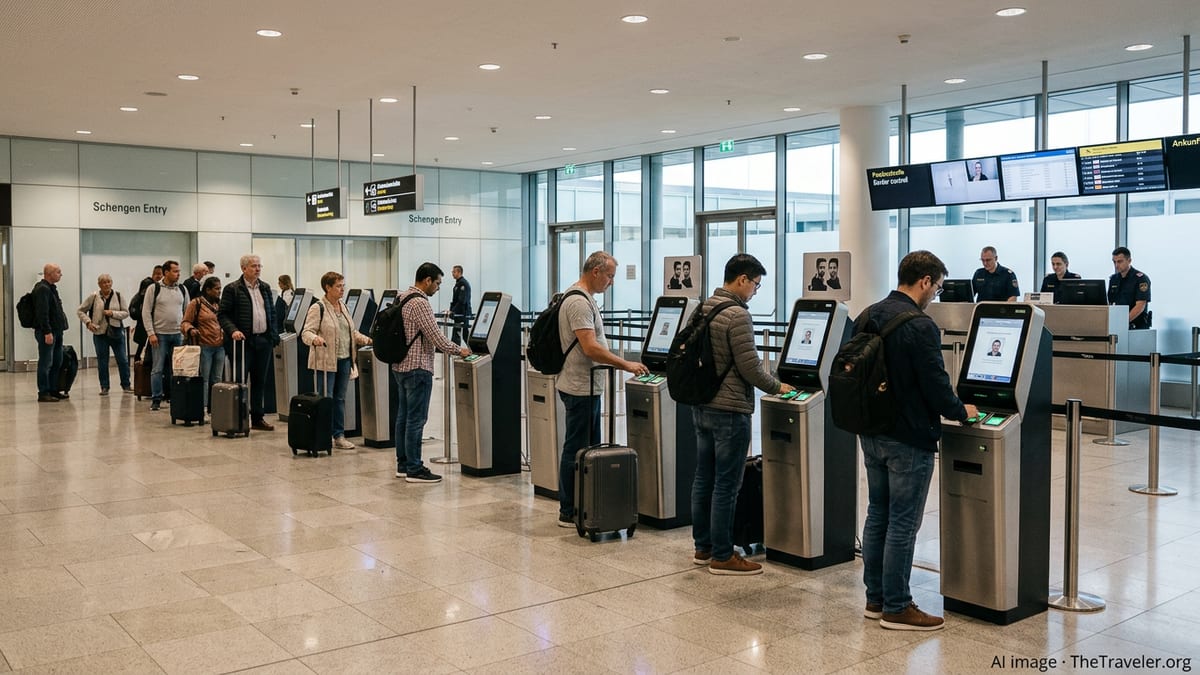
What is changing at EU borders for British travellers
The European Union’s Entry/Exit System (EES) has now moved from pilot stages to full-scale use at external Schengen borders, replacing routine passport stamping for most non-EU visitors with a digital record of crossings. The system registers a traveller’s personal details, travel document, facial image and, in many cases, fingerprints every time they enter or leave the Schengen area, creating an automated log of time spent in the bloc.
According to publicly available information from EU institutions, EES became operational across Schengen border checkpoints in 2026 following a phased launch that began in October 2025. The aim is to tighten security, identify overstayers more easily and streamline future crossings once a traveller’s biometric profile is on file. However, first-time registration under the new rules takes longer than a simple passport stamp, particularly when large numbers of passengers arrive simultaneously.
UK government guidance notes that the change affects British citizens travelling short term to 29 European countries that use the system, including most popular holiday destinations such as Spain, France, Greece and Italy. Each entry and exit is now logged automatically, with the 90‑days‑in‑180 rule enforced through the shared database rather than manual checks on stamped passports.
The new technology is designed to work alongside existing border processes rather than replace human checks entirely. In practice, that means travellers are still being funnelled through staffed booths, kiosks or e‑gates where border officers can intervene, resolve mismatches and manage flows during busy peaks.
Why there is a specific warning for trips this week
This week falls at the heart of the late-summer getaway period, with UK schools still on holiday and pent-up demand pushing capacity on flights, ferries and trains towards seasonal highs. Reports from transport operators and local media across Europe indicate that the combination of peak volumes and first-time EES registration continues to stretch border facilities at several airports and seaports.
Recent coverage of operations at English Channel crossings has highlighted particular pressure at locations where French border checks take place on UK soil under so-called juxtaposed controls, including the Port of Dover and Eurotunnel’s Folkestone terminal. Parliamentary material in London has drawn attention to the risk that even small increases in processing time per passenger can quickly translate into long tailbacks when car and coach traffic is heavy.
There have already been instances this summer where EES-related checks were reduced or temporarily suspended at some ferry ports after queues built beyond planned capacity. At the same time, separate reports from Mediterranean gateways suggest that processing times can vary significantly between airports and even from day to day, depending on staffing levels, the mix of nationalities and how many travellers need to have their biometrics captured for the first time.
Against this backdrop, travel advisories issued ahead of recent holiday peaks have urged British nationals to treat this week much like other high-demand periods, arriving earlier than usual for flights or sailings, keeping onward connections flexible where possible and monitoring operator updates closely in the 24 hours before travel.
Where and how delays are most likely to occur
Publicly available guidance from both the EU and UK points to the first EES registration as the critical pinch point. Travellers who have not yet had their photograph and (where required) fingerprints recorded under the system can expect to spend more time at border control desks or kiosks, particularly if they are travelling in family groups or with children who need assistance.
The impact is most visible at busy external border crossings that handle significant numbers of non-EU passengers. Channel ports and terminals serving France, such as Dover and Folkestone, are high on that list because car passengers must often leave their vehicles or wind down windows in confined spaces to complete biometric steps, which slows traffic even when technology functions smoothly.
European airports that have historically processed large numbers of British holidaymakers, including hubs in Spain, Greece and other Mediterranean destinations, have also featured in recent media reports describing longer-than-usual passport queues at peak times. While some airports have deployed additional staff and self-service kiosks, the effectiveness of these measures appears uneven, with anecdotal accounts ranging from near-normal processing to waits of two hours or more when several flights arrive together.
There are also operational differences from one country to another. Some states are using the flexibility built into the progressive rollout to limit full biometric collection at the busiest moments or to prioritise EU and Schengen nationals during acute surges, while others are pushing to capture as much data as possible in a short period. This patchwork approach makes it difficult for travellers to predict exactly what they will experience at a given border crossing on a particular day.
Practical advice for UK holidaymakers heading to the EU
Transport operators and official guidance are broadly aligned on one central message: British travellers should plan for extra time at the border while EES beds in. For those flying to the EU this week, that typically means arriving earlier at the airport than pre‑EES habits, particularly for early morning departures and popular leisure routes where multiple UK flights may be scheduled close together.
At ferry ports and the Channel Tunnel terminal, motorists are being encouraged to follow operator instructions carefully and to ensure that everyone in the vehicle is ready for border formalities well before reaching the booths. That can include having passports open at the photo page, removing hats and sunglasses ahead of facial imaging and making sure children are awake and presentable for any required biometric capture.
Travellers with tight onward connections, such as separately booked low-cost flights or time-sensitive rail tickets, are being advised by consumer groups and commentators to build in greater buffers than usual or to consider more flexible options. Those who travel frequently to the Schengen area may find that once their EES record is created, subsequent trips become quicker, but expectations this summer and into early autumn remain focused on a “learn-in” period marked by uneven performance and occasional bottlenecks.
Above all, publicly available information stresses the importance of checking the latest guidance from airlines, train operators, ferry companies and official travel advice pages before departure. As the EU’s new border regime evolves week by week, the most reliable picture of likely disruption on a specific route is emerging from recent operator updates and on-the-ground reports rather than generic assumptions about how long border control “should” take.
What comes next: ETIAS and further digital checks
The new border regime is not the final stage of Europe’s post‑Brexit travel changes. Alongside EES, the EU is preparing to introduce the European Travel Information and Authorisation System (ETIAS), an online pre‑travel clearance that will be required for visa‑exempt visitors, including most British nationals, once operational. Parliamentary briefings and EU communications describe ETIAS as similar in concept to systems already used by countries such as the United States and Canada.
While ETIAS is a separate scheme, it is designed to work in tandem with EES, using its data to help identify higher‑risk travellers before they reach the border. For most tourists and business visitors, the authorisation is expected to be straightforward, with a small fee and an online form completed in advance. Nonetheless, travel industry groups have warned that the cumulative effect of multiple new checks, both at the border and before departure, could influence last‑minute booking patterns and demand for certain destinations.
For now, the immediate focus for British travellers is on navigating this week’s journeys with as little stress as possible while the EES infrastructure settles into routine use. Over the coming months, operational experience gathered at ports, airports and land crossings is likely to inform further adjustments to staffing, kiosk placement and passenger flows, with the shared goal of reducing queues without diluting the system’s security objectives.
Until that balance is reached across the network, UK visitors heading for late-summer breaks in Europe are being encouraged to factor the new reality of slower first-time checks into their travel plans and to treat any warnings of fresh disruption at EU border points as a practical signal to allow more time, rather than a reason to stay away entirely.
UK government guidance on the EU Entry/Exit System
Council of the EU: How the Entry/Exit System works