


More news on this day
Travelers moving through Saudi Arabia are facing a new wave of disruption as at least nine additional flights linking the kingdom with major hubs such as Mumbai, Paris, Amsterdam, Riyadh and Jeddah are reported canceled or suspended, compounding weeks of volatility across regional and long haul networks.
Get the latest news straight to your inbox!
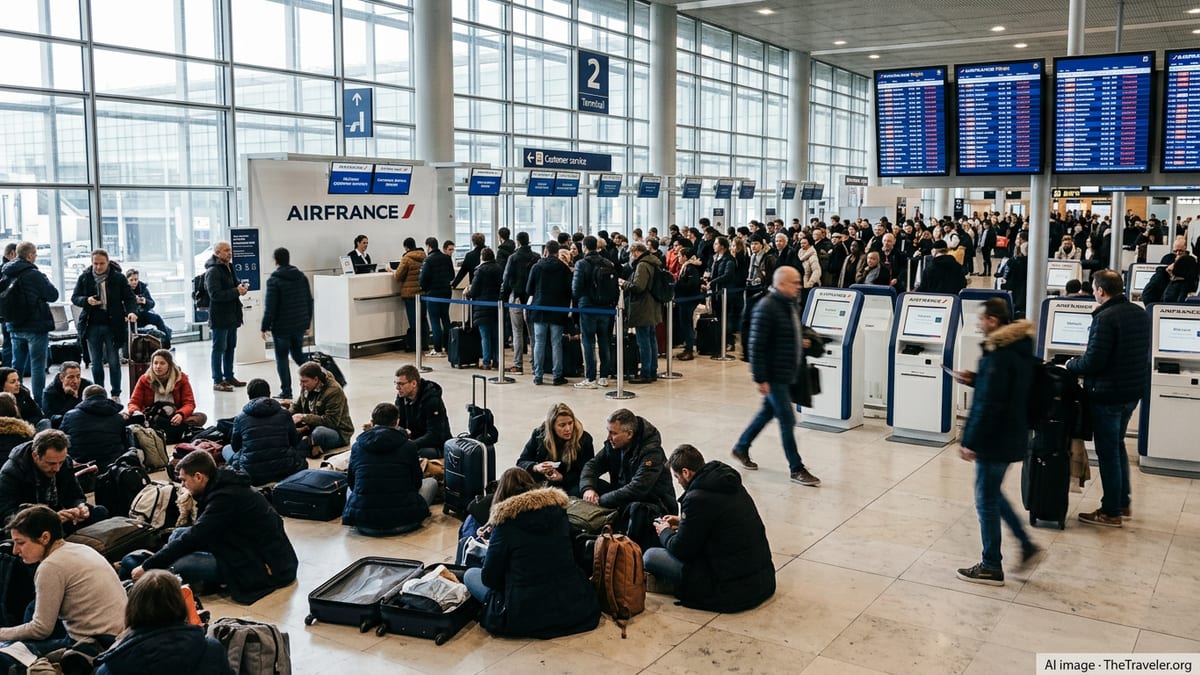
Fresh Cancellations Deepen Ongoing Saudi Travel Turmoil
Recent schedule data and passenger-facing updates indicate that a new round of at least nine flight cancellations and suspensions is affecting routes that connect Saudi Arabia with India and Europe, including services involving Saudia, Air India and Air France–KLM partner operations. These latest cuts build on earlier disruptions triggered by regional tensions and changing airspace conditions, and they are hitting some of the busiest corridors in and out of the kingdom.
Publicly available tracking information shows multiple Saudia services within Saudi Arabia and to nearby Gulf points being marked as canceled this week, including flights on domestic sectors such as Riyadh to Dammam and Madinah to Jeddah. At the same time, airlines that feed into the Saudi market from Europe have extended or widened suspensions, leaving passengers with fewer options via traditional hubs such as Amsterdam and Paris.
These developments come on top of earlier mass cancellations in March that saw more than 70 flights scrubbed in a single day at Riyadh and Jeddah, according to regional aviation coverage. The newest wave is more targeted in scale but highly disruptive for travelers counting on specific connections through Saudi Arabia, India and Western Europe.
Saudi Arabian Airlines Cuts Add Pressure on Riyadh and Jeddah
Saudia, the national carrier, remains at the center of the disruption picture. Consumer compensation and tracking platforms list several Saudia-operated flights on 13 May as canceled, including a Madinah to Jeddah service and a Riyadh to Dammam flight, highlighting how domestic connectivity inside the kingdom is being squeezed at the same time as long haul demand remains elevated.
Earlier in the season, regional reports described how more than 70 flights linked to Riyadh and Jeddah were grounded in a single day when Saudi airspace restrictions tightened, affecting departures to cities including Mumbai, Paris and Amsterdam. That episode left thousands of passengers across terminals in Riyadh and Jeddah facing missed connections and overnight delays, and it has been followed by rolling adjustments as airlines reassess risk and routing.
For Saudia, the challenge is especially acute because Riyadh and Jeddah function as primary transfer points between Asia, Europe and Africa. Any cancellation on a short domestic leg, such as Riyadh to Dammam or Madinah to Jeddah, can cascade quickly into missed long haul departures from those hubs, forcing passengers into rebooking queues and stretching airport resources.
European Networks Hit as KLM and Air France Adjust Middle East Operations
On the European side, the Air France–KLM group and its partners continue to trim links into Saudi Arabia, which in turn affects itineraries to and from cities like Paris and Amsterdam. Travel alerts from KLM show that flights to Riyadh and Dammam are now suspended through at least mid June, extending an earlier pause and constraining one of the main northbound connections out of the kingdom.
These suspensions directly impact passengers who rely on Amsterdam as a gateway between Saudi Arabia and North America or northern Europe. With Riyadh and Dammam removed from the KLM schedule for several more weeks, travelers are being funneled onto fewer remaining options via Jeddah, Dubai, Doha and Istanbul, or rerouted onto partner services where seats are available.
Codeshare arrangements also complicate the picture. Certain Saudia flights between Paris and Riyadh are marketed under Saudia flight numbers but operated by Air France, meaning that any adjustment on the European carrier’s side can ripple across both brands at once. Recent schedule updates show seasonal services planned between Paris Charles de Gaulle and Riyadh under this partnership, but the surrounding uncertainty has already prompted some passengers to seek alternative routings away from the Franco–Saudi corridor.
Air India Tightens Capacity on Mumbai and Jeddah Links
India–Saudi Arabia traffic is also being caught in the disruption. Air India has recently announced temporary suspensions and reductions on several international routes from June through August, citing airspace restrictions and elevated fuel costs. While the carrier is prioritizing core markets, any cut to its Middle East flying pattern increases pressure on remaining services between Mumbai and Saudi hubs.
Separate operational summaries from Air India for March indicate a patchwork of scheduled and ad hoc operations into Saudi Arabia, with Jeddah and Riyadh featuring as key stations for flights from Delhi and Mumbai. The shifting mix of regular and special services has made it harder for passengers to predict which days and times will see stable operations, particularly for workers and pilgrims who depend on affordable, direct connections.
At the same time, Saudia’s own nonstop routes between Jeddah and Mumbai continue to operate on selective days, according to schedule databases, but even a small number of cancellations or frequency reductions can strand travelers because these flights do not run daily. With limited redundancy on the city pair, the loss of a single rotation can translate into multi day delays for economy passengers unable to secure premium rebooking options on other carriers.
Passengers Face Crowded Alternatives and Opaque Rebooking Options
Across the Saudi, Indian and European markets, travelers affected by the latest cancellations are encountering a patchwork of policies on refunds, vouchers and rebooking. Airline advisories state that passengers whose flights are canceled can typically move their travel to later dates or request credit notes, but the surge in demand on a narrower set of operating routes means that convenient alternatives may be scarce.
Middle Eastern and Gulf competitors such as carriers based in Doha, Dubai and Istanbul are absorbing some of the displaced traffic, according to booking and schedule trends. However, with KLM’s Riyadh and Dammam suspensions running into mid June and Air India trimming parts of its international program through the northern summer, peak dates are already showing signs of crowding, especially on routes touching Mumbai, Jeddah and other key migrant worker gateways.
For now, publicly available information suggests that disruptions will remain a feature of travel to and from Saudi Arabia over the coming weeks rather than a brief anomaly. Industry observers recommend that passengers with near term itineraries involving Riyadh, Jeddah, Mumbai, Paris or Amsterdam monitor their bookings closely through airline apps and consider building in additional buffer time for connections, as the network continues to adjust to ongoing operational and regional uncertainties.