


More news on this day
London Heathrow remains one of the world’s busiest international gateways, yet a shifting web of routes from West Asia, India, Southeast Asia and now New Zealand is quietly curbing its growth, exposing how fast global traffic is pivoting away from the UK’s constrained hub.
Get the latest news straight to your inbox!
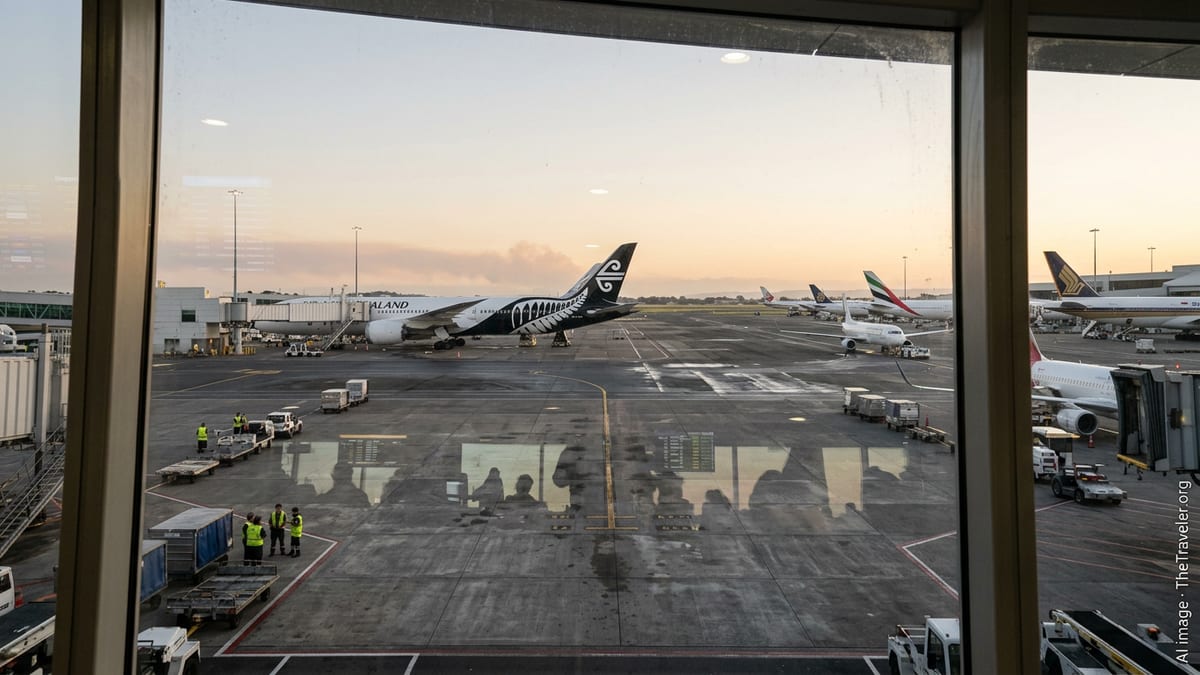
Record Traffic Masks Slowing Growth at the UK’s Flagship Hub
Recent passenger data shows Heathrow handling more than 84 million travelers over the latest full year, a new record for the airport and a modest increase on 2024. Publicly available figures from the UK Civil Aviation Authority indicate overall traffic at the hub rose by around 0.7 percent year on year, securing Heathrow’s place near the top of global rankings for total and international passengers.
Beneath those headline numbers, however, growth momentum has clearly softened. Industry analysis notes that Heathrow’s passenger expansion is now lagging the wider European average, even as other major hubs on the continent capture a larger share of the post‑pandemic rebound. This relative underperformance suggests capacity constraints around London’s main hub are increasingly biting just as long haul demand returns in strength.
Heathrow’s operator has pointed to a combination of factors limiting faster expansion, including a full runway system, tight slots, and the lingering impact of a one‑day shutdown in March 2025 after a substation fire. While the closure was temporary, the incident underscored how close to the limits the UK hub is operating, leaving little slack to absorb disruption or add significant new services.
The result is that even a small percentage shift in global long haul flows, particularly toward fast‑growing hubs in West Asia and the Asia‑Pacific region, can translate into a noticeable drag on Heathrow’s potential passenger growth. In contrast with global demand rising by more than 5 percent, the UK’s primary gateway is edging forward at only a fraction of that pace.
West Asian Gateways Accelerate Capacity and Connectivity
The most visible competitive pressure is coming from West Asian aviation centers. Gulf and wider West Asian hubs in the United Arab Emirates, Qatar and Oman, as well as rapidly expanding airports in India and Thailand, have added capacity on Europe‑Asia and Europe‑Australasia corridors at a rate that exceeds Heathrow’s ability to respond. Market data compiled by international airline and airport associations shows these hubs collectively growing traffic in the mid‑single to high‑single digit range, outpacing the UK gateway by several percentage points.
Carriers based in Dubai, Abu Dhabi and Doha continue to deploy widebody fleets aggressively across Asia, Africa, Europe and Australasia, creating dense one‑stop networks that attract passengers from secondary cities previously reliant on London. Similar strategies are evident in Oman and Qatar, where expanded schedules to Indian and Southeast Asian destinations funnel travelers through regional hubs instead of traditional European gateways.
India’s booming aviation market further reinforces the trend. Domestic demand in the country has been expanding at double‑digit rates, and international connectivity from major Indian metros to Gulf and Southeast Asian hubs has scaled up accordingly. As Indian travelers increasingly connect east and west through regional hubs, fewer of those long haul itineraries need to route via London, trimming a share of traffic that once flowed almost automatically through Heathrow.
In Southeast Asia, Thailand and Vietnam have pursued tourism and airline growth strategies that lean heavily on partnerships with Gulf and regional carriers. Added frequencies between Bangkok, Ho Chi Minh City, Hanoi and West Asian hubs give leisure and business travelers multiple alternatives to itineraries that would historically have transited London, amplifying the cumulative pull away from the UK.
New Zealand’s Long Haul Links Add to Competitive Pressures
New Zealand’s role in this shift is less about volume and more about symbolism and network logic. The country’s long haul connections have traditionally depended on a handful of key gateways, including London, to reach Europe. Over the past several years, however, publicly available schedules and airline announcements show a steady pivot toward routing Europe‑bound and North Atlantic travelers through Asian and Gulf hubs instead.
Services linking New Zealand to Dubai, Doha, Singapore and other Asian waypoints now act as primary bridges to Europe, reducing the need for ultra‑long itineraries touching the UK. As these connections mature, a greater proportion of New Zealand’s Europe‑bound traffic is effectively bypassing Heathrow in favor of one‑stop routings via West Asia and Asia‑Pacific megahubs.
From a network perspective, each incremental long haul frequency that feeds into a Gulf or Southeast Asian hub increases that airport’s attractiveness relative to London. New Zealand’s integration into these patterns strengthens alternative “south and east” flows, which pull travelers away from traditional “via London” routings. Even if the absolute numbers remain modest compared with Heathrow’s millions of annual passengers, the impact on marginal growth and future route planning is significant.
This pattern also reflects a broader strategic recalibration by airlines seeking to maximize aircraft utilization and match capacity with emerging demand centers in Asia and the Pacific. In that context, London risks becoming a spoke on some itineraries where it once functioned as the default hub, with New Zealand’s long haul travelers serving as one of the clearer case studies.
Global Demand Rises While UK Capacity Stalls
Recent analysis from international aviation bodies highlights that global passenger traffic grew by more than 5 percent in 2025, with Asia‑Pacific markets and inter‑regional routes involving India, Vietnam and other emerging economies among the strongest performers. By contrast, the UK’s primary hub recorded growth of less than 1 percent across the same period, indicating a widening gap between worldwide demand and the capacity available at Heathrow.
Middle East and West Asian hubs have been key beneficiaries of this mismatch. Their ability to add aircraft, gates and runway slots, often backed by long term infrastructure strategies, has enabled them to capture flows that might once have defaulted to London. Capacity that cannot be accommodated in the UK finds a home in Dubai, Doha, Muscat, Abu Dhabi or expanding Indian metros, further reinforcing their status as preferred transit points.
The dynamic raises questions about the UK’s future positioning in long haul aviation. As West Asian and Asia‑Pacific airports continue to post growth rates several percentage points higher than Heathrow’s, the risk is less of an abrupt collapse and more of a gradual erosion in market share. Over time, even a sustained difference of around five percentage points in annual growth can meaningfully reshape the global route map.
Heathrow remains a powerful draw for transatlantic traffic and point‑to‑point journeys to London, and recent US government data still ranks it among the top foreign airports serving the American market. Yet the slowdown in growth relative to global peers signals that without new capacity and competitive connectivity into Asia and the Pacific, the UK hub may find itself increasingly sidelined on some of the fastest‑growing corridors.
Strategic Crossroads for UK Aviation Policy
The pressure from West Asian and Asia‑Pacific competitors is unfolding just as the UK debates long term aviation policy. Government plans around a possible third runway at Heathrow are progressing slowly, with planning milestones not expected for several years. Industry commentary argues that this timeline risks locking in capacity constraints while rival hubs upgrade and expand.
Heathrow’s management has outlined multi‑billion‑pound investments in existing terminals and stands to squeeze more throughput from current infrastructure, targeting up to 100 million passengers annually in the longer term. However, these upgrades will need to be balanced against environmental commitments, local planning restrictions and changing passenger preferences, all of which could limit how much new capacity can be delivered in practice.
Meanwhile, airlines and travelers are already making choices based on today’s route maps rather than future promises. Additional frequencies from West Asian hubs to secondary European cities, plus deepening partnerships across India, Thailand, Vietnam and New Zealand, suggest that the competitive landscape will continue to tilt toward more flexible airports in the near term.
For UK travel, the emerging picture is not one of collapse but of relative stagnation as other regions race ahead. Unless London can unlock new capacity and reinforce its role in connecting Asia‑Pacific and West Asia to Europe, Heathrow’s record volumes risk becoming a high‑water mark in a world where passengers and airlines are increasingly spoilt for choice elsewhere.