


More news on this day
Travel through Türkiye’s key hubs is facing renewed disruption as a cluster of airlines, including Pegasus, easyJet, Royal Jordanian and Kuwait Airways, scrubs nine newly scheduled flights on high-demand routes connecting Istanbul and Antalya with London, Moscow, Copenhagen, Amman, Kuwait City and other major business centers.
Get the latest news straight to your inbox!
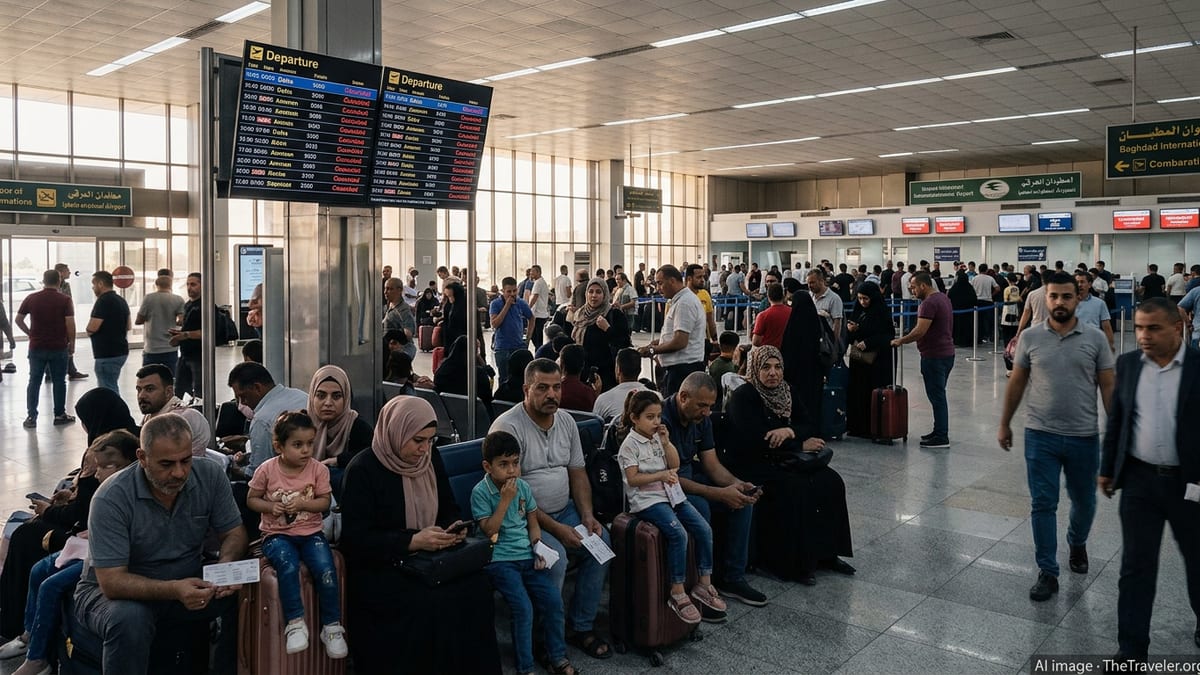
Fresh Wave of Cancellations Across Multiple Carriers
Recent days have brought a new round of flight cancellations affecting services to and from Türkiye, compounding uncertainty for travelers who rely on the country’s airports as regional transfer points. Publicly available operational updates and flight-tracking data indicate that at least nine relatively new or recently added services operated by Pegasus Airlines, easyJet, Royal Jordanian, Kuwait Airways and other carriers have been removed from schedules or marked as cancelled.
The affected routes include links from Türkiye to London, Moscow, Copenhagen, Amman and Kuwait City, as well as return sectors back into Istanbul and Antalya. Several of these flights had been promoted as part of broader efforts to deepen connectivity between Europe, the Middle East and Eurasia, positioning Türkiye as a convenient bridge for both business and leisure itineraries.
Industry observers note that the cancellations are arriving on top of an already fragile operating environment shaped by regional tensions, changing airspace access and elevated fuel and insurance costs. While core trunk routes continue to operate, the loss of newer frequencies and niche city pairs is narrowing options for passengers who previously depended on competitive fares and dense schedules to build multi-leg trips through Istanbul and Antalya.
In many cases, the cancellations appear as isolated sectors on booking engines and tracking platforms, rather than as wholesale suspension of entire routes. This pattern complicates advance planning for travelers, who may find an outbound leg operating as normal while a return flight several days later is suddenly withdrawn or re-timed.
Strategic Links to London, Copenhagen and Moscow Affected
Connections between Türkiye and key European business centers are among the most visible casualties. Low-cost and hybrid carriers serving London and Copenhagen from Istanbul and Antalya have trimmed certain departures, reducing choice on corridors that support both corporate travel and fast-growing city-break traffic.
London routes, in particular, have long functioned as vital feeders into wider global networks for passengers originating in Türkiye and neighboring countries. When individual frequencies are cancelled on short notice, travelers may still be able to reach the United Kingdom but often at higher cost or via longer routings through alternative hubs, adding hours to journey times and complicating same-day meeting plans.
Services involving Copenhagen and other Scandinavian points have also seen disruption, affecting itineraries that rely on smooth transfers between Nordic capitals, Istanbul and onward destinations in the Middle East and North Africa. Some of the recently cancelled flights had been introduced to tap growing demand for two-way tourism and business cooperation, and their withdrawal reduces redundancy on already concentrated schedules.
Russia-facing routes present a different set of challenges. Carriers that continue to operate between Türkiye and Moscow must navigate a complex regulatory and insurance environment that can shift rapidly. According to route and schedule information, select frequencies have been removed even where headline routes remain on airline maps, leaving travelers with fewer timing options on what remain sensitive and politically charged corridors.
Middle East Corridors to Amman and Kuwait City Under Pressure
Beyond Europe, links between Türkiye and neighboring Middle Eastern hubs have come under sustained strain. Data compiled from airline notices and independent monitoring shows repeat cancellations on flights connecting Istanbul with Amman and Kuwait City, often on days when demand from both migrant workers and business travelers would typically be strong.
Cancellations involving Amman affect a route that serves not only point-to-point travelers between Türkiye and Jordan, but also passengers connecting onwards to the Levant and Gulf. With some European and Gulf carriers already limiting or suspending services to Jordan due to security considerations and shifting risk assessments, the loss of even a handful of Istanbul–Amman frequencies can ripple across multiple markets.
For Kuwait City, recent disruptions at Kuwait Airways have triggered cancellations on services linking the Kuwaiti capital with Istanbul and a number of European cities. When these withdrawals coincide with adjustments by other carriers serving Kuwait from Türkiye, travelers may confront a sudden shortage of seats during peak travel days, particularly on routes used by medical travelers, expatriate workers and small-business owners shuttling between the Gulf and Europe.
Travel analysis focusing on Kuwait City notes that when a carrier cancels rotations on short-haul regional links and long-haul services in the same time frame, the result can be a cascading effect throughout the network. Aircraft and crew displaced from one city pair are not always easily redeployed, and attempts to stabilize the operation can involve selectively cutting recently launched or lower-frequency flights first, which often include new links into Türkiye.
Knock-On Impact on Business Travel and Regional Connectivity
The timing and pattern of the nine newly cancelled flights are particularly disruptive for business travelers, who often depend on early-morning and late-evening departures that allow for same-day meetings in financial and political centers such as London, Copenhagen, Moscow and Amman. When those specific frequencies disappear, remaining alternatives may not align with corporate schedules, forcing overnight stays or virtual participation instead of in-person engagement.
Corporate travel managers report that itineraries built around Türkiye as a central hub are becoming harder to guarantee months in advance. While published timetables still market extensive connectivity through Istanbul’s airports, real-time adjustments can erode confidence among firms that require predictable links for project launches, legal negotiations or time-sensitive inspections across Europe, the Middle East and Central Asia.
Regional tourism and small-scale trade are also feeling the strain. Entrepreneurs who shuttle between markets using low-cost point-to-point flights are finding that some of the most price-sensitive routes are also the first to be trimmed when airlines seek to conserve capacity. For travelers, that can translate into higher fares on remaining services and a greater reliance on indirect routings via Gulf mega-hubs or continental European gateways.
Analysts point out that Türkiye’s role as a connector remains intact, but the latest cancellations illustrate how quickly marginal capacity can be withdrawn when external shocks or operational challenges arise. The result is a network that still appears extensive on paper yet offers fewer practical options for time-critical or budget-conscious passengers.
What Travelers Can Do as Schedules Keep Shifting
With schedules in flux, passenger advocates and travel experts are emphasizing the importance of close monitoring and flexible planning for anyone transiting through Türkiye in the coming weeks. Publicly available guidance suggests checking flight status repeatedly in the days before departure and again on the morning of travel, using both airline channels and independent tracking services where possible.
Travelers holding complex itineraries that rely on tight connections in Istanbul or Antalya are advised to consider longer layovers or to build in backup options via alternative hubs, particularly when flying to markets currently experiencing repeated cancellations such as Amman and Kuwait City. Flexible tickets or arrangements that allow same-day rebooking without substantial penalties may offer additional protection, even if upfront fares are higher.
Some industry commentary highlights the growing value of travel insurance products that specifically cover schedule disruption and missed connections, although coverage terms vary widely and may exclude events classed as extraordinary circumstances. Passengers are encouraged to review policy language carefully and to keep records of any cancellations or delays, in case compensation or reimbursement options exist under local or regional consumer protection rules.
For now, the pattern of targeted cancellations rather than complete route closures suggests airlines are still seeking to preserve core links while trimming newer or less-established flights. For travelers moving through Türkiye’s airports, however, the practical effect is the same: a period of heightened uncertainty on crucial corridors linking Istanbul and Antalya with London, Moscow, Copenhagen, Amman, Kuwait City and other major business destinations.