


More news on this day
British holidaymakers heading abroad this summer are being urged to review official travel advice, insurance cover and disruption plans after a fresh wave of warnings highlighted rising security, climate and operational risks across popular destinations.
Get the latest news straight to your inbox!
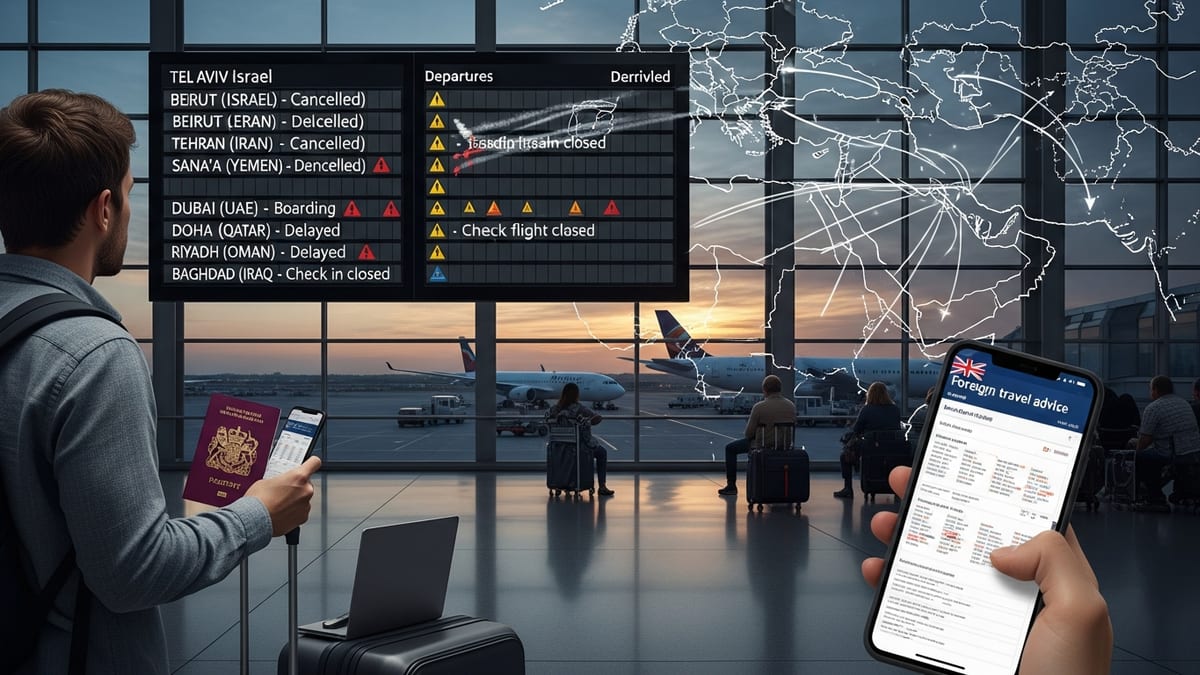
Foreign Office tightens advice as global risks shift
Updated travel advice from the UK Foreign, Commonwealth and Development Office for summer 2026 points to a growing list of destinations where trips are considered unsafe or strongly discouraged. Recent coverage notes that the government now advises against all or all but essential travel to dozens of countries, including parts of the Middle East, North and West Africa, Eastern Europe and the Caribbean, due to conflict, terrorism, political instability and strained local services.
New guidance for Cuba issued on 1 July 2026 illustrates how quickly conditions can change. The FCDO now advises against all but essential travel to the island, citing a combination of economic pressures and the potential for disruption on the ground. Travellers with package holidays or independently booked trips to the country in the coming weeks are being told to check terms with airlines, tour operators and insurers.
Analyses of the 2026 advisory landscape suggest that at least two dozen countries sit in the highest risk category, where the UK government considers the danger to British nationals to have risen to an unacceptable level. While many of the affected destinations were not traditional mass-market hotspots, the coverage underlines that some long-haul favourites and emerging city-break locations are now affected.
Consumer organisations and travel bodies stress that ignoring these warnings can have serious financial implications. In many cases, policies will not pay out if travellers choose to visit a country where official advice is to avoid all but essential travel, leaving holidaymakers exposed to the full cost of medical care, repatriation or cancelled plans.
Heightened terrorism threat and security concerns
The fresh summer alert comes at a time when the wider security backdrop for British travellers has deteriorated. In May 2026, the UK national terrorism threat level was raised from “substantial” to “severe,” meaning an attack is considered highly likely. Publicly available information attributes the move to both recent incidents on UK soil and a broader pattern of plots and extremist activity linked to a range of ideologies.
Foreign travel advisories reflect these concerns, particularly in regions already grappling with political tension or spillover from conflicts. Coverage of the latest FCDO updates points to countries such as Tunisia, where advice has recently shifted to warning against all but essential travel due to what is described as a highly likely risk of terrorist attack. Some tour operators have already suspended package holidays and outbound flights to higher-risk destinations for the peak season.
Security analysts note that the raised domestic threat level does not in itself restrict travel abroad, but it does feed into how the UK government assesses the exposure of its citizens overseas. Crowded tourist areas, transport hubs and major events are repeatedly highlighted in open-source advisories as potential targets, and travellers are being encouraged to stay alert, follow local guidance and register contact details with tour companies.
Industry briefings also underscore the need for travellers to understand how terrorism exclusions work in their policies. Some cheaper insurance products offer only limited cover for disruption linked to security incidents, while more comprehensive policies may include dedicated terrorism cover or explicit provisions for evacuation and curtailment.
Heatwaves, wildfires and climate-linked disruption
Alongside security concerns, climate and weather risks are emerging as a major theme in summer 2026 travel guidance. An amber extreme heat warning from the UK Met Office in June signalled the start of another period of potentially dangerous temperatures across parts of Europe and the Mediterranean, raising fears of a repeat of last year’s holiday-season heatwaves and wildfires.
Public forecasts for the coming weeks indicate that popular coastal and island destinations could see prolonged spells of very high temperatures, with elevated risks of wildfires, power cuts and water restrictions. Some European governments are preparing restrictions on access to high-risk forests and hiking trails, while local authorities in resort areas are drawing up contingency plans for evacuations and temporary closures.
Travel risk maps for 2026 produced by international insurance and assistance providers highlight natural hazards as a growing factor for British tourists, particularly during peak summer months. Wildfire-prone regions in southern Europe, parts of North America and Australia show an increased likelihood of disruption, both to local infrastructure and to air travel.
Experts advise that travellers review how their holiday plans might be affected by climate extremes. This includes checking whether accommodation has adequate cooling, understanding cancellation rights if a resort is rendered unusable by wildfire or heat, and paying attention to local safety guidance about outdoor activities, especially for children, older travellers and those with medical conditions.
Government and industry move to limit flight chaos
Separate to the security and climate picture, the UK government has announced measures aimed at reducing the risk of large-scale flight disruption during the school holiday period. New rules governing airport take off and landing slots are intended to give airlines more flexibility to cancel or consolidate services early when they face severe operational pressures, such as jet fuel shortages linked to geopolitical tensions.
According to published government statements, these changes are designed to prevent a recurrence of the last-minute mass cancellations that stranded thousands of passengers in previous summers. Airlines that act early to trim schedules in response to capacity or fuel constraints will not necessarily lose valuable slots, which officials hope will encourage more realistic timetables.
Consumer groups, however, stress that the new framework does not remove existing passenger rights. Under long-standing rules, carriers must still offer refunds or alternative travel when flights are cancelled, and must provide care such as meals and accommodation in many circumstances. Travellers are being advised to keep records of communications with airlines and to understand the difference between cancellations under exceptional circumstances and routine operational changes.
Industry observers also highlight the importance of building extra time into itineraries that involve connections, cruises or onward domestic travel. With air traffic control issues, staffing shortages and weather-related disruptions all cited in recent summers, even relatively minor schedule changes can have a knock-on effect for complex trips.
What British travellers are urged to do now
The combined effect of shifting security assessments, climate pressures and operational challenges has led to a new round of warnings aimed squarely at British travellers planning holidays abroad this summer. Publicly available guidance consistently emphasises the need to check the latest FCDO advice for any country before booking or departing, and to monitor it regularly, as classifications can change at short notice.
Travel advisers recommend taking out comprehensive insurance at the point of booking, ensuring that policies provide sufficient medical, cancellation and disruption cover, and confirming whether travelling against official advice would invalidate claims. Holidaymakers are also being encouraged to pay closer attention to airline and tour operator communications in the days before departure so they can respond quickly to any schedule changes.
Experts in travel risk management suggest that flexibility will be crucial in the 2026 summer season. Travellers who are able to adjust dates, switch destinations or accept alternative routing may find it easier to navigate sudden advisories, heat-related closures or capacity issues at busy hubs. Those with fixed plans are being urged to put contingency arrangements in place, such as keeping reserve funds for emergencies and saving copies of key documents offline.
While millions of Britons are still expected to head overseas during the peak holiday months, the latest round of warnings underscores that international travel now demands more preparation than in the past. The core message from official and industry guidance is that informed, well insured and flexible travellers are likely to be best placed to enjoy their trips despite a more volatile global backdrop.