


More news on this day
Commuter rail passengers faced significant disruption this morning after an emergency incident blocked a key stretch of track, forcing trains to halt and triggering a cascade of delays across the wider network.
Get the latest news straight to your inbox!
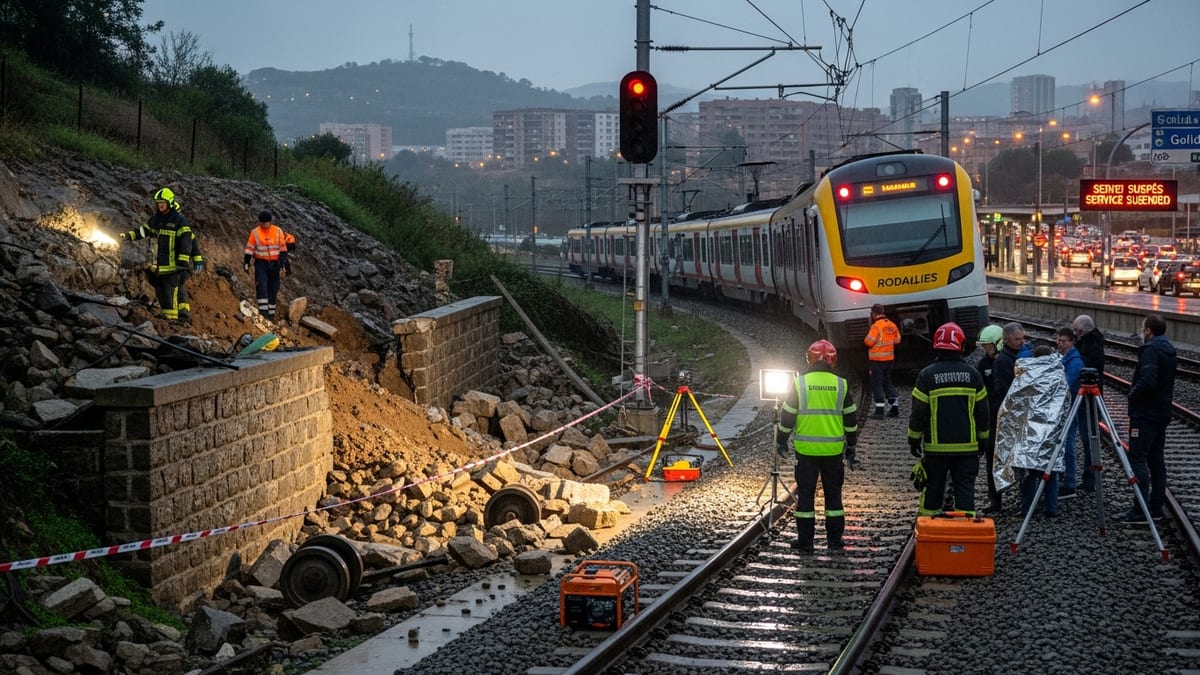
Early-morning incident halts services in both directions
According to publicly available live travel feeds and early-morning operational updates, the incident occurred shortly after the start of the morning peak, when a train line was reported blocked in both directions. Rail operators indicated that emergency services were requested to attend the scene, and train movements through the affected area were immediately suspended.
Initial reports describe the disruption as an emergency incident on or near the tracks, though the exact circumstances have not yet been fully detailed. Operators classified the line as blocked while responders worked in the area, a designation that prevents any trains from passing until the site is declared safe.
As the blockage took effect, trains already en route were forced to stop short of the affected section or divert to alternative routes where possible. Passengers on board some services reported extended standstills and slow onward movements as control teams attempted to keep other parts of the network running.
Rail operators have warned that even after the line reopens, residual disruption is likely to persist for some time as out-of-position trains and staff are brought back into their planned locations.
Extensive delays, cancellations and diversions reported
Publicly available journey planners and live departure boards showed widespread knock-on effects following the initial blockage. A number of peak-hour trains were cancelled outright, while others were either started from intermediate stations or diverted away from the affected stretch of track.
Some services were reported running with significantly extended journey times as they were rerouted over slower lines or held at signals to manage congestion. On busy commuter corridors, the impact was particularly visible, with reduced frequencies and longer gaps between trains at key stations.
Passengers attempting to travel during the height of the disruption were advised through rail operator channels to check live information before setting out and to allow extra time for their journeys. In several cases, rail replacement buses or ticket acceptance on alternative routes were arranged to provide at least limited options for stranded travelers.
Published disruption summaries indicate that crowding levels increased at hubs where services were still operating, as commuters adjusted their plans and tried to board any available train heading in the right direction.
What a ‘blocked line’ means for rail operations
A blocked line is one of the most disruptive classifications that can be applied to a rail corridor. Operational guidance documents for several major rail operators show that this status is used when there is a confirmed obstruction, incident, or safety concern on or near the tracks that prevents trains from passing safely in either direction.
When a line is blocked, rail control centers must rapidly redesign service patterns. Trains may be held at prior stations, turned back short of their normal destinations, or diverted onto alternative routes if the layout of the network allows. Freight trains can also be affected, adding to congestion and complicating recovery efforts once the immediate emergency is resolved.
Industry planning documents indicate that recovery times from a blocked-line event can vary widely, from under an hour for minor infrastructure or signalling problems to several hours when emergency responders need extended access to the railway. Even after the initial issue is cleared, trains and staff may be out of position, which prolongs delays and can lead to short-notice cancellations.
Transport analysts note that urban and commuter networks are especially vulnerable to these kinds of incidents during peak periods, when there is little spare capacity to reroute trains and platforms are already busy.
Advice issued to affected passengers
Rail operators have urged passengers to check journey planners, station departure boards and official social media feeds for the latest updates on the evolving situation. Publicly available information stresses that timetables printed in advance or saved offline are unlikely to reflect the real-time changes being made in response to the incident.
Travel guidance shared through rail disruption channels recommends that passengers consider delaying non-essential journeys, working remotely where possible, or using alternative modes of transport such as local buses or light rail services if these are available. For those who must travel, extra time for connections and onward journeys is strongly advised.
Under standard passenger rights frameworks, travelers whose trains are cancelled or severely delayed are typically entitled to alternative travel or refunds, and in some cases compensation based on delay length. Passengers are being encouraged to retain tickets and any relevant receipts so they can make claims once the full scale of delays becomes clear.
Customer-facing information also reminds passengers that crowding may be heavier on the first trains to run once the line reopens, and that services can remain disrupted for several hours after an incident is formally closed.
Ongoing investigation and network recovery
At this stage, detailed information about the cause of the emergency incident remains limited. Rail safety bodies and transport authorities generally review such events to determine what happened, assess whether any infrastructure or procedural issues were involved, and identify improvements that could reduce the likelihood or impact of similar disruptions in the future.
Once emergency responders hand the site back to rail engineers, the focus typically shifts to inspecting the track, signalling equipment and power supplies before normal speed operations are allowed to resume. Any damage discovered can extend disruption as repairs are completed and tested.
Operational bulletins indicate that control centers are working to restore services in phases, prioritising the busiest commuter flows and key interchange routes. Additional staff are often deployed at major stations during such events to assist with crowd management and passenger information.
With full details still emerging throughout the day, passengers are being advised to monitor official updates before evening travel, as residual delays and altered train formations are likely to persist beyond the morning peak while the network recovers.