


More news on this day
A new nonstop flight between Wuhan in central China and Vientiane, the capital of Laos, is set to reshape travel flows across the Mekong region in 2026, tightening tourism, trade and transport links along one of Southeast Asia’s fastest-developing corridors.
Get the latest news straight to your inbox!
Details of the New Central China–Laos Air Link
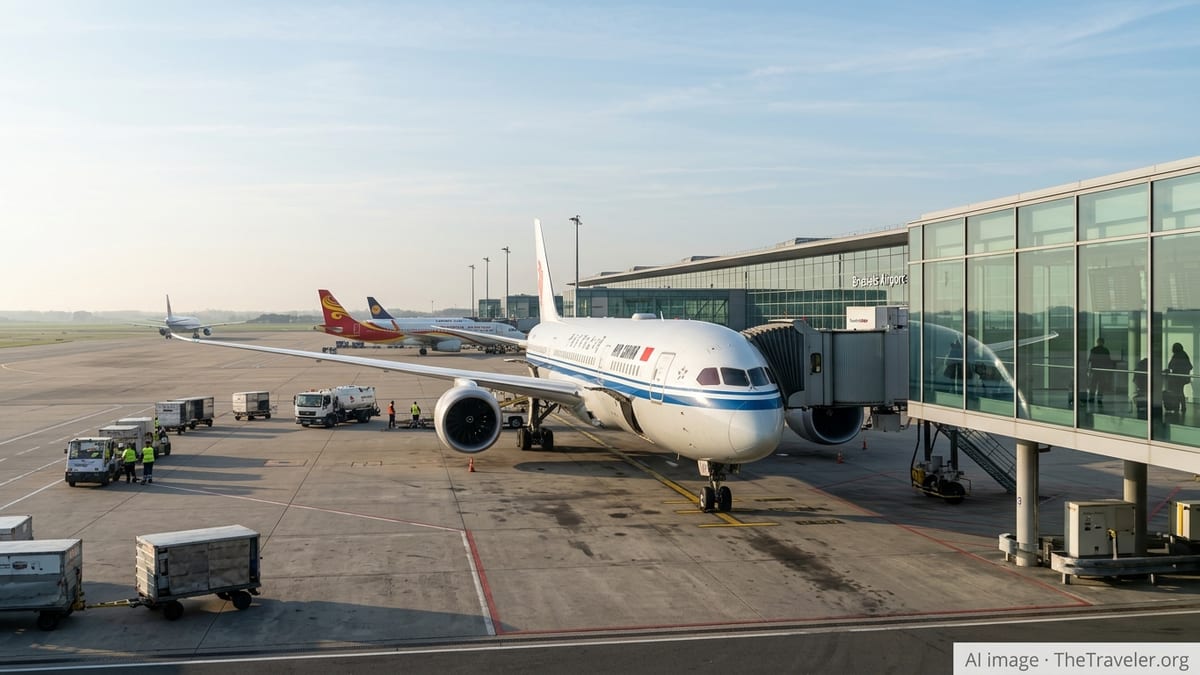
Publicly available information shows that China Eastern Airlines has launched a direct service between Wuhan Tianhe International Airport and Vientiane’s Wattay International Airport in April 2026. Reports indicate that the inaugural flight departed Wuhan late at night and arrived in the Lao capital in the early hours of the following morning, marking the first nonstop passenger route linking Hubei Province with Vientiane.
The new route is currently scheduled as a weekly operation, with an outbound departure from Wuhan on Friday night and a return leg from Vientiane in the early hours of Saturday, according to route data compiled by aviation schedule trackers and regional media coverage. The block time is around three hours, significantly cutting point to point journey times compared with traditional routings that required at least one transfer through hubs such as Kunming or Guangzhou.
Industry reports suggest that the flight is operated by a narrowbody aircraft configured for regional international services, with capacity for more than 140 passengers. For Wuhan Tianhe International Airport, which has been steadily rebuilding and expanding its Southeast Asia network, the link to Laos sits alongside recent new routes to regional destinations and strengthens the city’s position as a central China gateway to the Mekong subregion.
According to published coverage, the route is framed by Chinese and Lao stakeholders as part of broader efforts to deepen connectivity between Hubei and the Association of Southeast Asian Nations, complementing existing land and rail corridors that already tie the two countries more closely together.
How the Route Will Revolutionize Travel Between Wuhan and Laos
Before this launch, travel between Wuhan and Vientiane typically involved at least one stop, with itineraries often stretching to most of a day once transfers and layovers were factored in. By offering a nonstop service of roughly three hours, the new route is expected to transform the experience of reaching Laos from central China, especially for first time leisure travelers and organized tour groups.
Reports from the inaugural service describe large group bookings from Wuhan, including middle aged and older travelers drawn to Laos’ slower pace, temples and river landscapes. Faster, more predictable flight times make it easier for tour operators to design short break itineraries of four to six days that were previously harder to sell due to time lost in transit.
The new flight also offers a convenient option for independent travelers in both directions. For Chinese visitors, Vientiane can now serve as a starting point for overland exploration of Laos, from the UNESCO listed town of Luang Prabang to emerging ecotourism areas in the country’s south. For Lao residents, streamlined access to Wuhan opens up a large Chinese city known for its Yangtze River scenery, lake parks, food culture and expanding shopping and education options.
Travel analysts note that the timing of the service, with a late night departure and early morning arrival, enables travelers to maximize daytime hours at their destination while also connecting with domestic flights and rail in both countries. This is expected to be particularly attractive for business passengers and cross border traders who value efficiency.
Boosting Tourism on Both Sides of the Mekong
The new Wuhan–Vientiane route comes as China outbound tourism to Southeast Asia continues to recover and diversify, with more travelers looking beyond traditional coastal destinations to inland cultural and nature based experiences. Laos tourism authorities and regional travel trade publications highlight renewed promotional campaigns in the Chinese market, with an emphasis on river cruises, heritage towns and community based tourism.
For Wuhan and wider Hubei, direct access to Laos supports local tour operators seeking fresh itineraries in mainland Southeast Asia. Packages combining Vientiane with Luang Prabang, Vang Vieng or cross border extensions into neighboring Thailand and Vietnam can now be sold more easily from central China, reducing dependence on gateway cities further east.
In the opposite direction, easier travel from Laos to Wuhan is expected to support a modest but growing stream of Lao visitors, including students, medical travelers and business delegates. Universities and hospitals in Wuhan have been expanding their international outreach, and the new flight gives them a more direct channel to prospective partners and clients in Laos.
Regional tourism observers note that air links often act as catalysts for marketing cooperation. The Wuhan–Vientiane connection could pave the way for joint campaigns between tourism boards, city governments and the airline, promoting two center trips that combine the Mekong region with central China’s river heartland.
Strengthening the China–Laos Economic Corridor
The launch of the route aligns with broader infrastructure and trade initiatives between China and Laos, including the China–Laos Railway and associated energy and logistics projects. Public analysis of the corridor describes a network increasingly built on multiple modes of transport, with rail carrying bulk goods and longer haul passengers, and aviation serving time sensitive business travel and higher value cargo.
By connecting Wuhan directly to Vientiane, the new flight provides a faster link between central China’s industrial and logistics base and Laos’ developing role as a land linked hub between China and mainland Southeast Asia. Cargo capacity on passenger flights, even at modest volumes, can be important for samples, high value products and express shipments that underpin early stage trade relationships.
Economic commentators in regional media suggest that improved connectivity can also accelerate investment flows. Shorter and more predictable journeys lower the barrier for Wuhan based companies to evaluate projects in Laos, from hydropower and mining supply chains to hospitality and services, while Lao businesses gain easier access to Chinese partners, financiers and suppliers.
The route further reinforces 2026 as a symbolic year in bilateral relations, coinciding with the 65th anniversary of diplomatic ties and what has been designated the Year of China–Laos Friendship. Observers view the flight as one of several practical measures that give real world substance to high level commitments around economic cooperation and people to people exchange.
Looking Ahead: Capacity, Connectivity and Regional Competition
Aviation analysts expect that if load factors remain healthy, the Wuhan–Vientiane service could move from weekly to higher frequency over time, particularly during peak holiday seasons. Any future upgauging or additional weekly rotations would further entrench the route’s role in regional networks and provide more flexibility for travelers.
The flight also enters an increasingly competitive Southeast Asia market, as airlines across China expand links to secondary cities in the region. However, Wuhan’s position in central China and Vientiane’s status as both national capital and railway hub give this particular pairing a distinct strategic logic that may help it sustain demand beyond initial novelty.
Connectivity gains will likely extend beyond the two endpoints. In Wuhan, domestic air and high speed rail connections can funnel travelers from across central and western China onto the Laos service, effectively enlarging the catchment area. In Vientiane, onward land and air links spread the benefits across Laos and into neighboring countries along the Mekong basin.
For travelers, the practical impact in 2026 is clear: a journey that once required backtracking through coastal hubs or complex multi stop tickets can now be completed in a single overnight hop. For both China and Laos, that simple change in the timetable is poised to have outsized effects on tourism growth, business engagement and the evolving map of regional connectivity.