


Ask a North Carolinian whether the state is better for mountains or coast and you will probably get a long pause and a conflicted smile. From the misty Blue Ridge peaks around Boone and Asheville to the windswept dunes of the Outer Banks and the lively beaches near Wilmington, North Carolina is a state where you can watch the sunrise over the Atlantic and the sunset over a sea of ridgelines in the same weekend. Deciding which side deserves your precious vacation days is not easy. This guide breaks down the real-world tradeoffs between the mountains and the coast so you can match the destination to the trip you actually want to have.
Get the latest updates straight to your inbox!
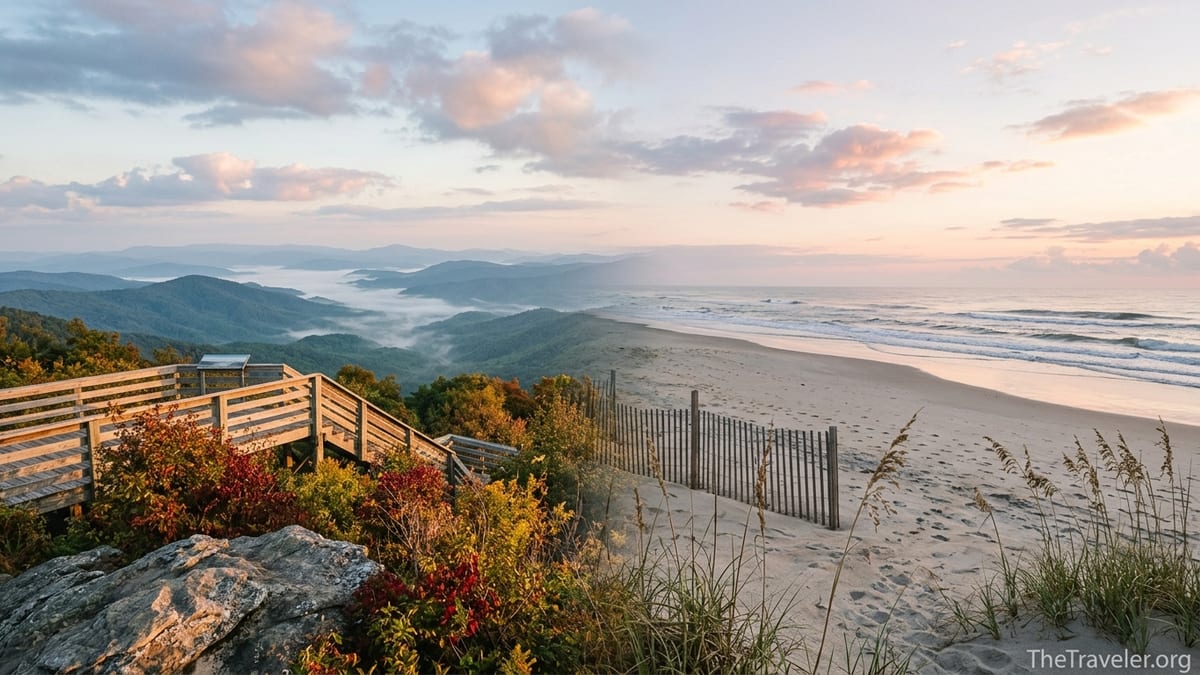
Mountains vs Coast: What Kind of North Carolina Are You After?
Before you pull up booking sites, it helps to decide what kind of trip you want from North Carolina. The western half of the state rises into the Blue Ridge Mountains, anchored by hubs like Asheville, Boone and Blowing Rock. This is the side known for long-range views, waterfalls, craft breweries and cool summer nights. Many visitors come for the Blue Ridge Parkway, the scenic road that twists along the high ridges from near Cherokee past Asheville and on toward Boone, with overlooks like Thunder Hill and Linn Cove Viaduct drawing photographers in every season.
The coast is an entirely different mood. To the north, the Outer Banks stretch for more than 100 miles of barrier islands, dotted with towns like Corolla, Nags Head and Hatteras that specialize in rental beach houses and wild, windswept dunes. Farther south, the Wilmington area offers a trio of classic beaches at Wrightsville, Carolina and Kure, where surf shops and seafood shacks sit a short drive from a historic riverfront downtown. On this side of the state, days revolve around tide charts, sea breezes and seafood rather than trail maps and elevation gain.
Both regions are large enough to hold multiple trips inside them. The question is not so much which is objectively better, but whether you picture yourself pulling on hiking boots or sliding into flip-flops when you imagine your perfect North Carolina escape. The good news: whichever direction you choose, you are unlikely to feel shortchanged on scenery.
Scenery and Outdoor Adventure: Trails or Tides?
If you measure a destination by how far you can get from pavement, the mountains have a natural edge. Around the High Country near Boone and Blowing Rock, you can spend a week moving between iconic viewpoints without repeating a hike. Grandfather Mountain’s mile-high swinging bridge and steep ladder trails offer a true mountain challenge, while nearby state parks and preserves around the Blue Ridge Parkway are filled with shorter, family-friendly trails to waterfalls and balds. Farther south, Pisgah National Forest and the Smoky Mountains near Asheville add hundreds more miles of trail, from the easy stroll to Looking Glass Falls to all-day slogs to remote summits.
Outdoor adventure in the mountains also shifts with the seasons. In winter, areas around Boone are home to several ski resorts, including Appalachian Ski Mountain, which draws families to its modest slopes and terrain parks. Spring and summer bring whitewater rafting on rivers near Bryson City and paddleboarding on mountain lakes near places like Lake Lure and Brevard. Fall is arguably peak season, when ridgelines above towns like Blowing Rock and Banner Elk are painted in red and gold, and people plan entire trips around the changing leaves rather than a particular attraction.
On the coast, the adventures are aquatic rather than alpine. The Outer Banks lure kiteboarders, surfers and anglers who want a sense of edge-of-the-map isolation. You might spend a day driving the Outer Banks Scenic Byway, taking ferries between Hatteras and Ocracoke, climbing the Cape Hatteras or Bodie Island lighthouses, and watching pelicans glide over the breakers. Around Wilmington, Wrightsville Beach markets itself as the birthplace of surfing in North Carolina, and you will see early-morning lineups of locals catching waves before work, while travelers rent boards or sign up for a first lesson.
For slower-paced days, the coast offers long beach walks, shell hunting, dolphin cruises and kayak trips through salt marshes. A visitor based in Carolina Beach can rent bikes to cruise the boardwalk, then head down to Fort Fisher for a quieter stretch of sand and an aquarium visit. Yet for all the water-based fun, coastal hiking is limited mostly to short nature trails through maritime forests and dunes. If you crave long, varied hikes, the mountains will keep you busier.
Weather, Seasons and When Each Region Really Shines
North Carolina’s climate can swing from muggy to frosty, and choosing the right region for the time of year can make the difference between a dreamy trip and a sticky slog. In summer, the mountains typically run 10 to 15 degrees cooler than the Piedmont and coast, especially at elevations above 3,000 feet. Places like Blowing Rock sit around 4,000 feet and are known for their cool mountain breezes, which is why you see second homes and inns packed during July and August. Even when Asheville hits the low 80s Fahrenheit in the afternoon, evenings can still feel fresh enough for a light jacket.
The coast in mid-summer is hotter and more humid, with typical daytime highs in the upper 80s to low 90s and a heat index that can climb higher when the air is still. That said, many travelers actually prefer the coast in shoulder seasons. May and early June often bring comfortable temperatures and smaller crowds, as do September and early October when ocean water is still warm but families have gone home. If you are sensitive to heat, the Outer Banks and southeastern beaches might be at their best for you outside the peak school-holiday months.
In fall, the mountains arguably give the coast a run for its money. Leaf season in Western North Carolina is a moving target, but many years see the best color around Asheville and the High Country between early October and early November, depending on elevation. Scenic drives along the Blue Ridge Parkway become bucket-list experiences, and even short roadside walks at overlooks near Linn Cove Viaduct or Julian Price Memorial Park can feel special. By contrast, the coast in fall leans into a quieter, locals’ vibe, with mild days and cooler nights ideal for long beach walks and off-season rates on large vacation homes.
Winter is where the choice becomes stark. Mountain towns like Boone can see snow and ice, and some stretches of the Parkway close seasonally, but ski resorts and cozy cabins give this part of the state a true winter getaway feel. Coastal areas around Wilmington and the Outer Banks stay much milder, with occasional chilly days but also stretches of 50s and 60s Fahrenheit. A February trip to a beach town can be a peaceful, budget-friendly escape if you are content with layering up and trading swims for lighthouse climbs and seafood dinners.
Trip Costs, Lodging Styles and How Far Your Budget Goes
Costs in North Carolina vary widely by specific town and date, but there are some patterns. In the mountains, lodging choices cluster around a mix of independently owned motels, small boutique hotels, cabins and vacation rentals. In peak fall foliage or high summer around Asheville and Boone, nightly rates at mid-range hotels can rise well into the few-hundred-dollar range, especially on weekends. Cabins near popular hiking areas or with hot tubs and views command premiums, but travelers who are flexible on location can still find simpler motels or chain hotels at more moderate prices in nearby communities.
On the coast, especially in the Outer Banks, the dominant lodging style is the multi-bedroom beach house rented by the week. A family or group might pay a significant total price for a five-bedroom home with a pool near Nags Head or Corolla in July, but when split among several people it can feel reasonable per person. Smaller groups can look to older motels, mom-and-pop inns, or condos in areas like Kill Devil Hills or Avon to keep costs down. Around Wilmington’s beaches, you will see a blend: oceanfront high-rise hotels in Wrightsville Beach, more modest motels in Carolina Beach, and traditional cottages tucked along side streets.
Daily spending also differs by region. Mountain towns such as Asheville are known for their breweries and restaurant scenes; it is easy to build itineraries around farm-to-table dinners and craft beer flights, which can add up. Many mountain attractions, however, are free or low-cost. Driving scenic stretches of the Blue Ridge Parkway, visiting roadside overlooks, or hiking in national forests costs little beyond gas and perhaps a parking fee. Meanwhile, coastal trips can involve more paid experiences such as boat tours, fishing charters or ferry rides if you want to explore beyond your immediate stretch of sand.
Travel logistics matter too. Most mountain hubs are reached by a combination of interstate and winding two-lane roads, with drive times of two to three hours from major airports in Charlotte or Greenville. The Outer Banks require longer drives across bridges and causeways, and traffic can be heavy on turn-over weekends in summer. Southeastern beaches like Wrightsville, Carolina and Kure sit within about a 20- to 30-minute drive of Wilmington’s airport and downtown, making them appealing for short trips and fly-in visits where you want to maximize time out of the car.
Culture, Food and Overall Vibe
The character of a North Carolina trip is not just in the scenery but also in the conversations you overhear and the types of places you eat and drink. In the mountains, Asheville has leaned into its reputation as a creative small city, mixing historic architecture with street murals, galleries, music venues and an almost improbable number of breweries for its size. Visitors often pair a morning hike on the Parkway with afternoon brewery hopping or a tour of the Biltmore Estate, then finish with live music in a venue downtown. Smaller towns like Brevard and Black Mountain offer quieter but still artsy spins on mountain culture.
The High Country around Boone and Blowing Rock feels more small-town and collegiate. Boone is anchored by a university and has a casual, youthful energy along King Street, with used bookstores, pizza joints and outdoor outfitters. Just a few miles away, Blowing Rock leans upscale, with a walkable main street lined with galleries, inns and restaurants that serve everything from trout to locally sourced Southern dishes. Many visitors like to stay in Blowing Rock for its polished feel and quick access to the Blue Ridge Parkway, then drive over to Boone for a livelier evening.
On the coast, beach culture takes over. In the Outer Banks, there is a strong sense of place shaped by fishing villages, shifting sands and stories of shipwrecks and pirates. Small towns like Ocracoke and Hatteras mix modern vacation rentals with working harbors, and you might finish a day of lighthouse climbs with a casual seafood dinner at a place where many of the patrons wear flip-flops. In peak summer these towns can feel festive and busy, but step away from the main drags and you can still find quiet dunes and undeveloped stretches of shore.
Around Wilmington and its beaches, the vibe blends university town energy, historic port city charm and relaxed coastal living. You can spend a day wandering brick-lined streets along the riverfront, touring a retired battleship, then cross the bridge to grab shrimp tacos at a casual place near Wrightsville Beach. Nightlife here is more varied than in the Outer Banks, with rooftop bars, music venues and events drawing both locals and visitors. If you want a beach trip that can easily pivot into city dining and culture, this corner of the coast makes a strong case for itself.
Who Should Choose Mountains and Who Should Choose Coast?
If you are still torn, it can help to match traveler types to each region. The mountains tend to be the better fit for people who value active days and cooler air. Hikers, road trippers and waterfall chasers will find an almost endless menu of options within a few hours’ drive. Couples often choose mountain cabins with decks facing the ridgeline, using days to explore galleries in Asheville or Blowing Rock and evenings for fireside wine. Families with teens who enjoy outdoor challenges might appreciate zip line courses, ski slopes or steep hikes like those on Grandfather Mountain more than another day of sitting under a beach umbrella.
The coast, by contrast, usually wins for travelers who picture a slower rhythm or who are traveling with small children or extended family groups. A classic Outer Banks trip might involve renting a house with a pool and hot tub, spending long mornings at the beach, then rotating between family-style seafood dinners and casual nights on the deck watching the stars. Parents of young kids often like that the main activity is simple: sand, waves, naps and repeat. Around Wilmington’s beaches, you can add in short excursions to the aquarium at Fort Fisher or a stroll through the city’s Riverwalk, which keeps kids entertained without requiring serious car time.
There are also lifestyle factors to consider. If you love craft beer, live music and a more urban feel, a base in Asheville or Wilmington might tip the scales, even if your heart is undecided between mountains and coast. If you are a photographer chasing drama, mountain weather and fog rolling through valleys can deliver striking images, especially at sunrise from overlooks along the Blue Ridge Parkway. If you prefer minimalist horizons and pastel sunsets, evening light over the Atlantic along the Outer Banks or Topsail Island can be just as satisfying.
Accessibility plays a role as well. Travelers who are not comfortable driving mountain switchbacks or who are prone to carsickness might prefer the flatter coastal routes, even though peak-weekend congestion can test anyone’s patience. Conversely, people who do not enjoy sand and heat may find their ideal version of North Carolina sitting on a porch in a shaded mountain town, listening to cicadas and distant train whistles instead of waves.
The Takeaway
So, is North Carolina better for mountains or coast? In practice, it is better at both than it has any right to be, and that is the real dilemma. The western Blue Ridge delivers four distinct seasons of outdoor adventure, small-town charm and a growing food and arts scene that can satisfy travelers who like their nature with a side of culture. The coast stretches from remote-feeling barrier islands in the Outer Banks to easy-to-reach beaches near Wilmington, offering classic sand-and-sea vacations and the kind of long, lazy days that families remember years later.
If you have one trip and need to choose, start with the season and your energy level. For a high-summer escape from heat, or a leaf-peeping road trip built around scenic drives and hikes, the mountains come out ahead. For spring and fall weeks defined by salt air, seafood and long, warm evenings, the coast may feel closer to the North Carolina you are dreaming about. Your budget, travel companions and tolerance for either winding roads or beach traffic will do the rest of the deciding.
Many repeat visitors eventually stop trying to answer the question at all and simply alternate: a beach house in the Outer Banks this year, a cabin near Boone or Asheville next year. If you are lucky enough to return often, North Carolina rewards that rhythm, offering a fresh version of itself each time, whether it greets you with crashing surf or the quiet rustle of wind in the high spruce and fir.
FAQ
Q1. Is North Carolina cheaper to visit in the mountains or on the coast?
The answer depends on how you travel. Weekly beach houses on the Outer Banks can be costly in total but reasonable when shared by a group. Mountain towns like Asheville and Boone can have higher nightly hotel rates during fall color or peak summer, yet many hikes and scenic drives are free, so daily activity costs can be lower.
Q2. When is the best time of year to visit the North Carolina mountains?
For comfortable hiking and scenic drives, late spring and early fall are ideal, typically May to early June and late September through October. Summer brings cooler temperatures than the lowlands, especially in higher-elevation towns like Blowing Rock, while winter appeals to visitors interested in skiing and cozy cabin stays.
Q3. When is the best time to visit the North Carolina coast?
Beachgoers often target June through August for the warmest ocean water, but many locals prefer late spring and early fall for smaller crowds and milder heat. September and early October often deliver warm water, pleasant air temperatures and more availability in popular areas like the Outer Banks and Wilmington’s beaches.
Q4. Which is better for families with young children, mountains or coast?
Both can work well, but the coast usually wins for simplicity. A beach house near the water lets families build days around sand play, short swims and naps. Mountain trips can be great if parents enjoy driving scenic roads and choosing shorter, well-marked trails, but they tend to demand more planning and car time.
Q5. Do I need a car to enjoy North Carolina’s mountains or coast?
In almost all cases, yes. Attractions in the mountains are spread out, with hikes and overlooks often a drive away from towns like Asheville or Boone. On the coast, especially in the Outer Banks, you will want a vehicle to reach lighthouses, ferries and quieter stretches of beach. Ride-hailing services are limited outside larger cities.
Q6. Are the North Carolina mountains a good summer alternative to the beach?
For travelers who dislike intense heat and humidity, the mountains are an excellent summer option. Higher elevations routinely run cooler than the coast, and evenings can feel refreshing. You trade ocean swimming for river tubing, waterfalls and mountain lakes, but you gain more comfortable daytime temperatures for hiking and exploring.
Q7. How many days do I need for a first visit to either region?
A long weekend of three to four days can give you a good introduction to either the mountains or the coast. In that time, you can sample a few key hikes and overlooks near Asheville or Boone, or enjoy a mix of beach time, lighthouse visits and local dining in the Outer Banks or Wilmington area. A full week lets you slow down and explore more deeply.
Q8. Which region is better for food and nightlife?
For variety, Asheville and Wilmington stand out. Asheville pairs mountain access with a robust restaurant and brewery scene, while Wilmington offers coastal seafood plus a lively downtown of bars and music venues. Smaller mountain and beach towns still have good local spots, but evenings there tend to be quieter and more low-key.
Q9. Is it realistic to visit both the mountains and coast in one North Carolina trip?
It is possible, but you should factor in the drive. Reaching from Asheville to the Outer Banks can take most of a day by car. Many travelers choose either mountains or coast for a shorter trip, then plan a separate visit for the other region. If you have 10 days or more and enjoy road trips, combining both can be rewarding.
Q10. How do I choose if I am still undecided between mountains and coast?
Ask yourself whether your ideal vacation day starts with lacing up hiking boots or walking barefoot into the surf. If you picture long hikes, changing leaves and cool evenings on a porch, start with the mountains. If you imagine sunrises over the ocean, sand between your toes and seafood dinners by the water, the coast is likely your better first choice.