


More news on this day
North Korea is quietly accelerating plans to turn itself into a niche tourism player in Northeast Asia, deepening links with Russia and cautiously reconnecting with China while keeping most foreign travelers at arm’s length. The evolving patchwork of flights, trains and tightly managed tour zones is beginning to reshape how and where visitors can move across the region, with significant implications for global travelers eyeing one of the world’s most controlled destinations.
Get the latest news straight to your inbox!
Russia Becomes North Korea’s Primary Tourism Lifeline
Publicly available data shows that since early 2024, North Korea has relied heavily on Russian visitors as the main test case for reopening its tourism sector after nearly five years of pandemic isolation. Reports from Russian regional authorities and tour industry bodies describe a sharp increase in demand for North Korea trips originating from the Russian Far East, particularly via Vladivostok. Flights on North Korean carrier Air Koryo between Vladivostok and Pyongyang have become the primary air bridge for these tours.
The relationship deepened further in 2025 with the launch of direct commercial flights between Moscow and Pyongyang operated by Russian airline Nordwind. Coverage by international and Russian outlets notes that the long-haul route runs roughly monthly, linking the Russian capital directly to North Korea’s showcase projects and allowing tour operators to market Pyongyang, Rason and coastal areas to a wider Russian clientele. Industry commentary frames this as part of a broader political and economic rapprochement, with tourism positioned as a relatively low-cost way to generate foreign currency and signal closer ties.
On the ground, Russian tourists have featured prominently in the carefully choreographed reopening of specific sites. Reporting on the phased debut of the vast Wonsan Kalma coastal resort, a centerpiece of North Korea’s tourism strategy, highlights early groups of Russian visitors testing facilities before broader foreign access is considered. For now, itineraries remain highly structured and are channelled through a small number of state-linked Russian tour operators accredited in North Korea, underscoring that the apparent boom is still tightly managed.
China Slowly Reconnects, but Group Tourism Lags
Before the pandemic, travelers from China made up the overwhelming majority of foreign visitors to North Korea, with border cities and short package tours sustaining a steady flow of traffic. That pattern broke sharply in 2020 when Pyongyang imposed one of the world’s strictest border closures, halting nearly all cross-border movement. Even as North Korea began permitting Russian tourists back from 2024, Chinese leisure travel remained largely frozen, a striking shift given Beijing’s role as Pyongyang’s key economic partner.
In recent weeks and months, however, China has begun restoring key transport links. Chinese railway authorities have announced the resumption of passenger trains between Beijing and Pyongyang, along with daily services on the traditional Dandong to Pyongyang route. State media in China has framed the restart of rail traffic as a step toward renewed “people-to-people exchanges,” but there is little sign yet of a full-scale return of the pre‑pandemic mass tourism market.
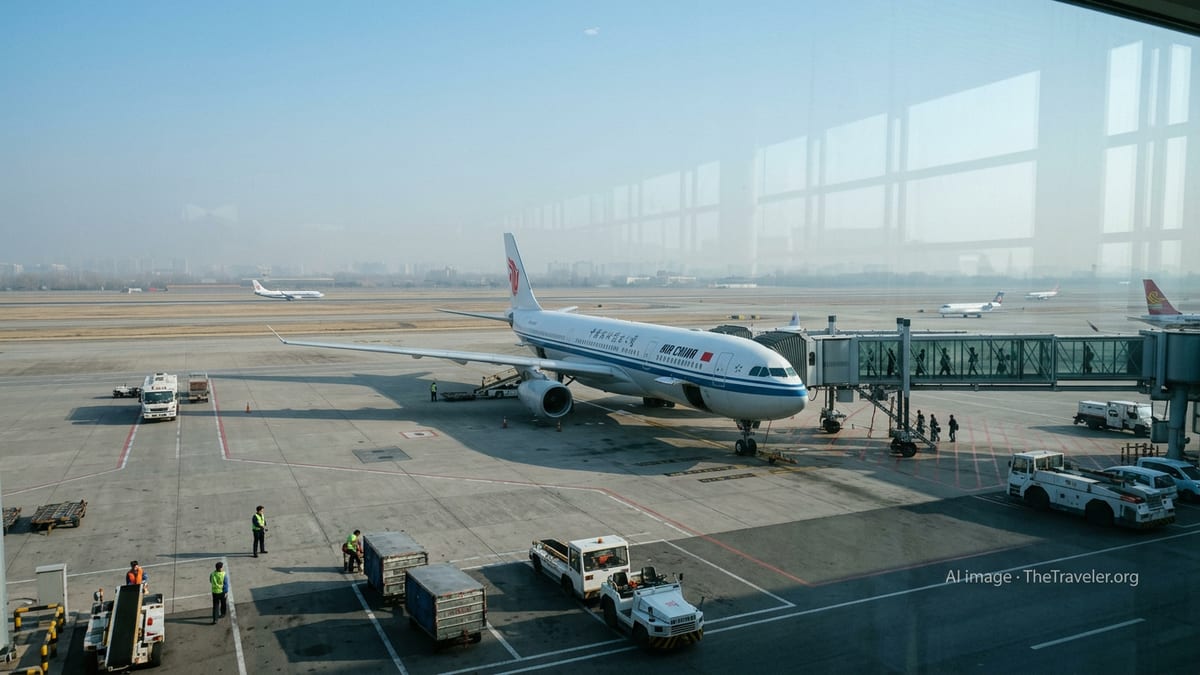
Air connections are also being rebuilt in stages. Air China has resumed direct flights to Pyongyang after a gap of several years, complementing limited services operated by North Korea’s Air Koryo. For now, ticketing remains constrained and geared primarily toward essential travel, diplomats and controlled tour movements, rather than wide-open sales to casual tourists. Analysts tracking the sector note that while the physical corridors between China and North Korea are reappearing, the political decision to reintroduce large numbers of Chinese group tourists has been noticeably cautious.
This asymmetry, with Russia favored as an early tourism partner and China moving more slowly, is reshaping regional visitor flows. It also introduces new uncertainty for would‑be travelers who previously relied on established Chinese-based tour agencies and overland routes.
Selective Openings, Sudden Closures and a Patchwork Map
North Korea’s post‑pandemic tourism strategy has not followed a straightforward reopening timetable. Instead, publicly reported decisions point to a pattern of tightly controlled experiments. In early 2025, for instance, tour operators and specialized media chronicled the reopening of the special economic zone and border city of Rason to foreign visitors, including small groups of Western travelers entering from China. Within weeks, travel agencies reported that access had been abruptly suspended again, illustrating how quickly permissions can be granted and withdrawn.
Other destinations have moved in the opposite direction. The Wonsan Kalma coastal tourist area, a vast resort complex on the east coast, has been under development for years and is now gradually receiving domestic and selected foreign guests. North Korean and foreign coverage of infrastructure additions such as a coastal tram line and upgraded facilities support the picture of Wonsan as a flagship hub in Pyongyang’s tourism ambitions, even as much of the country remains inaccessible.
Transport links mirror this piecemeal approach. Passenger rail connections between Russia and North Korea have been restored on a limited basis, and new infrastructure projects such as a road bridge across the border river are promoted as future conduits for tourism and trade. At the same time, earlier attempts to reopen certain zones, such as the Rason region, have stalled or reversed, underscoring the fragility of routes that many foreign travelers might otherwise see as stable.
For global visitors, this means that the map of accessible North Korean destinations is more fragmented than headline announcements may suggest. Even where visas and transport are available on paper, actual access can depend on short‑notice policy changes, local interpretations of regulations and political developments far beyond the control of tour companies or travelers.
What Global Travelers Need to Watch Now
For travelers considering North Korea indirectly, via itineraries that connect through Russia or China, the changing pattern of corridors and restrictions carries several practical implications. Travel advisories from multiple governments continue to warn against all tourist travel to North Korea, citing risks related to arbitrary implementation of local laws, limited consular support and broader geopolitical tensions. These warnings have not eased in tandem with the restoration of flights and trains.
Travel industry reports highlight that, in the current phase, most foreign access is limited to highly regulated group tours with fixed schedules, mandatory guides and carefully vetted routes. Independent travel is not permitted, and even within organized groups, photography, communication and movement remain closely supervised. Travelers booking through Russian operators may face additional complications related to sanctions, payment processing and onward travel restrictions to other countries.
Another factor to monitor is the interplay between transportation links and domestic political calendars in the region. According to published coverage, the resumption of China–North Korea rail and air services, as well as Russia–North Korea flights, has often coincided with high‑level summits, military cooperation agreements or anniversaries. That pattern suggests that tourism access may continue to be deployed as a diplomatic tool, expanding or contracting in line with political priorities rather than purely public health or economic considerations.
Given these dynamics, specialists who track North Korea travel stress the importance of scrutinizing tour conditions at the moment of booking, not months in advance. This includes confirming whether routes transit Russia, which may have consequences for travelers from some countries, and whether itineraries rely on corridors such as Rason or new bridge crossings that have a history of rapid policy shifts. For most global travelers, the reopening of Russian and Chinese corridors currently signals a change in regional connectivity more than a clear, stable invitation to visit one of the world’s most closed states.
Regional Tourism Patterns Shift as Corridors Realign
The reconfiguration of access to North Korea is already influencing broader tourism flows in Northeast Asia. While traveler numbers into North Korea remain small by global standards, the prominence of Russian visitors and the gradual reactivation of Chinese routes create new niche circuits that combine frontier tourism in Russia’s Far East with highly controlled excursions across the border.
Neighboring destinations are responding in different ways. Some regional hubs are marketing themselves as alternative cultural and historical gateways to the Korean Peninsula, emphasizing open access and established safety standards in contrast to North Korea’s opaque system. Others, particularly in the Russian Far East, are positioning themselves as staging points for specialized tours that package North Korea alongside Arctic or Trans‑Siberian experiences for a subset of adventurous travelers.
For the wider travel industry, North Korea’s selective reopening offers both a reminder of the lingering impact of pandemic-era border closures and a preview of how geopolitics can redefine niche tourism markets. As Moscow and Beijing expand their transport links with Pyongyang, and as North Korea showcases new coastal resorts and infrastructure, the country is edging toward a more visible, if still highly restricted, role on the regional tourism map. For global travelers and tour planners alike, the most important task is to separate symbolic reopenings from genuinely reliable, safe and predictable access.