


More news on this day
Spain’s national rail operator Renfe has begun testing renewable hydrotreated vegetable oil, or HVO, as a substitute for conventional diesel on selected services, positioning the fuel as a near-term tool to cut emissions on non-electrified routes.
Get the latest news straight to your inbox!
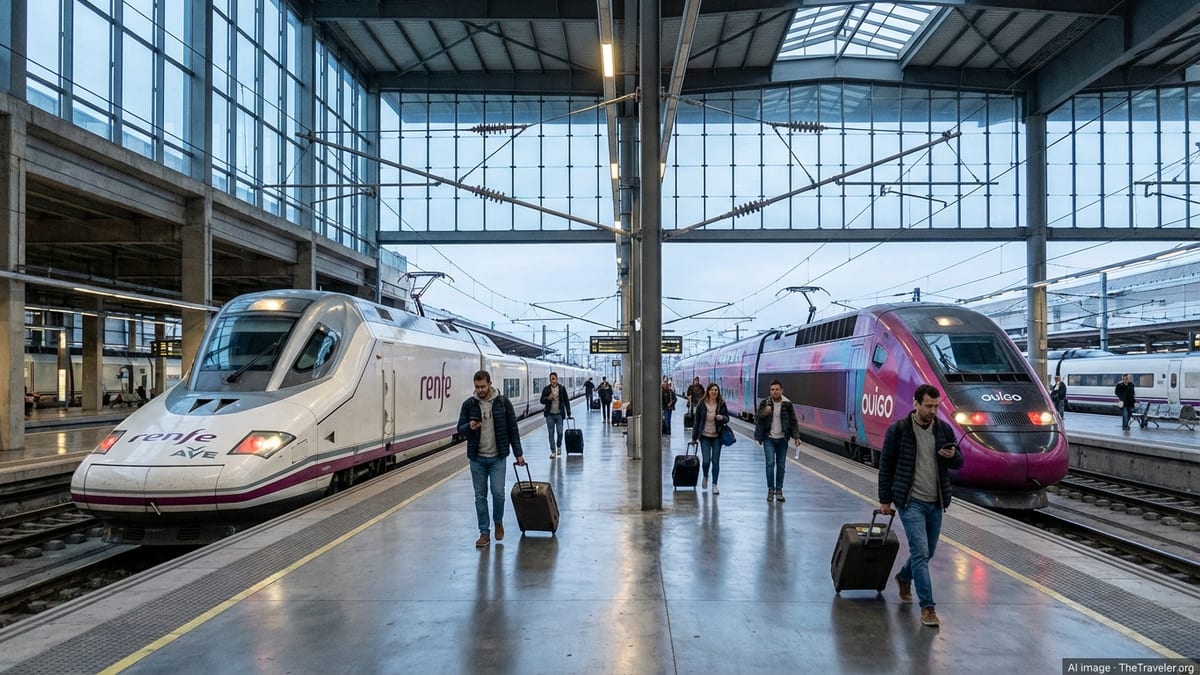
Renewable diesel trials expand beyond freight services
Publicly available information from Renfe and industry outlets indicates that the company is extending its use of renewable fuels from freight operations to passenger services. Earlier pilot projects focused on freight locomotives running with HVO blends on non-electrified corridors in southern Spain, including services between ports and inland logistics hubs. Those trials reportedly involved more than one hundred train movements and over one hundred tonnes of renewable diesel, and were described as technically successful in local business coverage.
The new round of testing concentrates on passenger rolling stock, including tourist and regional trains that still depend on diesel traction. Recent reports highlight the use of HVO in the locomotive powering the Costa Verde Express, a well-known tourist train that operates on non-electrified tracks in northern Spain. By shifting such services to renewable diesel, Renfe is exploring options to decarbonise parts of its network where overhead electrification is not yet available or is not planned in the short term.
Renfe’s corporate sustainability documentation for 2024 and 2025 places strong emphasis on reducing greenhouse gas emissions per passenger and per tonne-kilometre. The decision to test HVO is presented in that material as one element in a broader decarbonisation strategy that also includes increased electrification, more efficient rolling stock and trials of hydrogen and battery technologies.
How HVO renewable fuel works in existing diesel fleets
Hydrotreated vegetable oil is a paraffinic fuel produced from renewable feedstocks such as used cooking oils and other organic residues. Unlike conventional biodiesel based on fatty acid methyl esters, HVO is refined through hydrotreatment into a fuel that more closely resembles standard diesel in its chemical structure. Technical papers and manufacturer data describe it as a “drop in” replacement that can be used in many modern diesel engines without significant hardware modifications.
Engine suppliers and fuel producers state that using 100 percent HVO can reduce lifecycle carbon dioxide emissions by up to 80 to 90 percent compared with fossil diesel, depending on feedstock and production pathway. Because the fuel is derived from biomass, the carbon released during combustion is broadly aligned with the carbon absorbed during the growth of the original feedstock, although overall climate benefits also depend on agricultural, processing and transport emissions.
For operators such as Renfe, HVO’s main attraction lies in its compatibility with existing rolling stock. Technical literature from major engine manufacturers for rail applications in Europe notes that a wide range of diesel engines have already been approved for EN 15940-compliant renewable diesel, including HVO. This allows operators to switch fuels relatively quickly, avoiding the long lead times associated with ordering new trains or electrifying entire corridors.
Part of a wider European shift away from fossil diesel
Renfe’s tests follow similar initiatives in other European rail systems. In recent years, rail operators in France, Germany, Ireland and the United Kingdom have all launched pilot projects using HVO or comparable renewable diesels on regional or commuter routes that lack electrification. Publicly reported trials include regional trains in Burgundy Franche Comté, test locomotives in Germany and commuter fleets in Ireland, all aimed at cutting emissions without waiting for new infrastructure.
Industry analysis from European alternative fuels observatories suggests that renewable diesel may play a transitional role where full electrification is technically difficult or not yet financed. In these settings, HVO is being evaluated alongside hybrid, battery and hydrogen solutions. Some national strategies highlight the potential for renewable fuels to deliver immediate emissions reductions in existing fleets, while next-generation zero-emission technologies scale up.
Spain’s own rail decarbonisation pathway combines ongoing electrification, procurement of dual-mode and hybrid trains, and research projects involving hydrogen fuel cells and batteries. Within that mix, HVO testing offers a relatively low-barrier intervention, especially on tourist and regional routes that are unlikely to see rapid infrastructure upgrades but remain important for regional mobility and tourism.
Climate impact and supply chain questions
Independent studies and technical assessments underline that the climate benefits of HVO depend heavily on how feedstocks are sourced. Renewable diesel produced from waste oils and residual fats is generally associated with lower lifecycle emissions, while fuels linked to dedicated energy crops can raise concerns about land use change, biodiversity and competition with food production. Environmental groups in Europe have therefore called for strict safeguards around feedstock origin.
Available information about the Spanish rail pilots points to a focus on HVO derived predominantly from waste and residue streams, in line with broader European Union guidelines that favour advanced biofuels. Fuel suppliers involved in earlier Renfe-related freight trials described their products as being manufactured from certified sustainable feedstocks, in keeping with European renewable energy regulations.
Analysts note, however, that large-scale adoption of renewable diesel for rail would require reliable long-term supply and careful integration with other sectors that are also seeking access to low-carbon fuels, such as road freight and aviation. As a result, many experts view HVO in rail as a targeted solution for specific lines and services, rather than a universal replacement for electrification or emerging zero-emission technologies.
Next steps for Renfe’s non-electrified network
Renfe has not publicly outlined a final decision on permanent deployment of HVO across its diesel fleet, according to currently available information. The present testing phase appears focused on validating engine performance, fuel consumption, maintenance implications and operational reliability under real-world conditions. Outcomes from the Costa Verde Express and other pilot services are expected to inform any future expansion of renewable fuel use.
Spain continues to invest heavily in high speed electrified corridors, which already carry the majority of long-distance passenger traffic. Nevertheless, sizeable stretches of the country’s secondary and regional network remain without overhead wires, particularly in rural and mountainous regions. Those lines are likely to remain a priority for interim decarbonisation measures, including renewable fuels, until long-term infrastructure decisions are made.
For passengers, any shift to HVO-powered trains is expected to be largely invisible in day-to-day travel, since the fuel is designed to meet the same performance and comfort standards as conventional diesel. For Renfe and Spain’s wider rail sector, however, the trials mark another step in the search for practical ways to cut emissions from the last segments of the network that still rely on fossil fuel traction.