


More news on this day
Airlines from Iran to Europe and the Gulf are paring back once-ambitious summer 2026 schedules as a jet fuel price shock, war-related airspace closures and a loss of booking momentum combine to produce one of the rare global slowdowns in air travel since the pandemic era.
Get the latest news straight to your inbox!
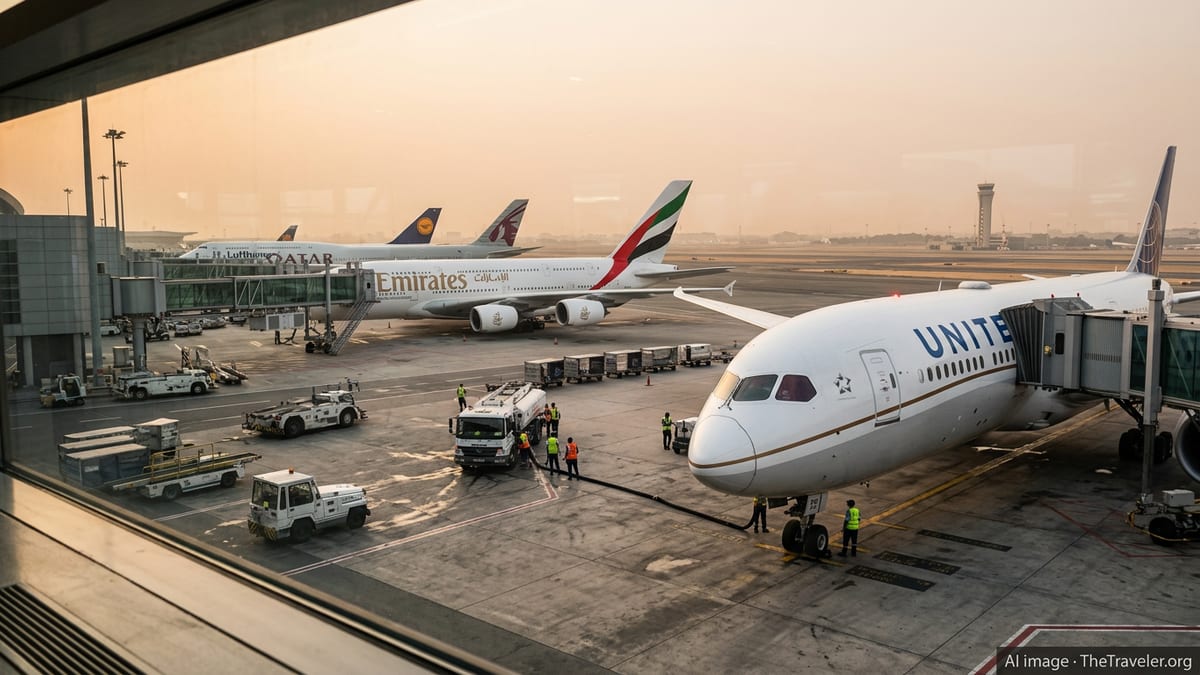
A rare pause in a booming post-pandemic recovery
For most of the past three years, global aviation has been defined by rapid growth, capacity constraints and crowded airports. That narrative is now shifting. Fresh data from the International Air Transport Association for April 2026 shows a clear softening in passenger demand compared with earlier in the year, with analysts linking the change to the conflict centred on Iran, elevated jet fuel prices and rising ticket costs.
Industry commentary indicates that while overall passenger traffic is still above 2025 levels, the pace of growth has cooled noticeably on routes most exposed to war disruption and fuel-intensive detours. Forward schedules compiled by aviation data providers show carriers trimming planned seats for the peak months of June to August, suggesting that airlines are adjusting to an environment where costs are rising faster than demand.
Consultancy forecasts published in recent months had anticipated continued expansion in 2026, but warned that any major supply shock in oil markets or fresh geopolitical crisis could quickly erode margins. Those scenarios have now materialised, and the response from airlines in the Middle East, Europe and parts of Asia points to a coordinated, if reluctant, recalibration of summer travel plans.
The result is a rare global aviation slowdown that spans very different markets, from long-haul Gulf hubs and European flag carriers to Iran’s struggling domestic sector. For travellers, the impact is likely to be felt through fewer flight options, higher prices on remaining services and more complex routings around conflict zones.
Middle East conflict and costly detours reshape networks
The escalation of conflict involving Iran has had an outsized impact on aviation because it intersects directly with key air corridors and energy supply lines. Publicly available information from airspace monitoring reports shows that large portions of Iranian airspace have been subject to severe restrictions since late February, forcing airlines to reroute traffic between Europe, the Gulf and Asia.
Studies of flight paths released this spring describe long detours either north via Turkey and the Caspian region or south over Egypt and the Red Sea, adding up to several hours of additional flying time on some routes. Each extra hour in the air increases fuel burn and operating costs, undermining the economics of marginal services that were viable when routings were shorter and fuel was cheaper.
At the same time, energy market analysis linked to the Iran conflict points to a dramatic tightening in jet fuel supply. Industry fuel monitors report that refinery prices for jet fuel more than doubled at the height of the Strait of Hormuz disruption, outpacing gains in crude oil and pushing aviation fuel to its highest levels in more than two decades. Even with partial reopening efforts, trade press coverage suggests that the fuel market is expected to remain tight for months.
For Gulf carriers in Saudi Arabia, the United Arab Emirates and Qatar, this combination of detours and fuel costs is particularly acute. These airlines rely on sixth-freedom traffic that connects Europe, Asia and Africa via their hubs, precisely the flows most exposed to Middle East airspace disruption. Capacity data cited in recent route analyses shows that summer 2026 schedules from the region have been scaled back from plans filed earlier in the year, with a focus on protecting core trunk routes while reducing frequencies on thinner city pairs.
Iran’s aviation sector squeezed by war and domestic fuel strain
Iran’s own airlines face an even harsher operating environment. The country has contended with a structural fuel and energy imbalance in recent years, and the current conflict has intensified pressure on domestic supply chains. Background reports on Iran’s energy system highlight high levels of local fuel consumption and infrastructure constraints that pre-date the latest crisis, leaving limited buffer when sanctions, war damage and export restrictions disrupt flows.
Against this backdrop, domestic aviation is being hit twice: by higher input costs and by weaker demand as household budgets come under strain. Regional media and industry briefings describe capacity reductions on secondary routes, a greater reliance on older, less fuel-efficient aircraft still in service, and ongoing challenges in sourcing spare parts due to sanctions. Together, these factors make it difficult for Iranian carriers to maintain previous levels of frequency or to participate in the broader trend of post-pandemic international expansion.
International connections to and from Iran have also been curtailed. Several foreign airlines had already reduced exposure to Iranian airports prior to the current conflict, and airspace risk assessments encourage many carriers to avoid overflights entirely. The resulting isolation contributes to the global aviation slowdown by removing a chunk of regional traffic that once flowed through neighbouring hubs and onward to Europe and Asia.
The Iranian example underscores how aviation is entwined with broader energy and geopolitical dynamics. Even if a ceasefire holds, aviation economists caution that rebuilding confidence, restoring airspace access and normalising fuel supply will take time, delaying any meaningful rebound in traffic.
Europe’s big carriers rethink summer strategy
Europe offers a different but related picture of retrenchment. German, French and UK airlines had entered 2026 expecting another busy summer, supported by resilient consumer demand and the return of corporate travel. Instead, a mixture of higher fuel bills, wage inflation and war-related uncertainty is compelling them to pare back capacity and fine-tune their networks.
In Germany, announcements from Lufthansa Group in April detailed plans to cancel around 20,000 short-haul flights through October 2026, equivalent to roughly 1 percent of its scheduled summer capacity. Trade press reports state that the cuts are concentrated on intra-European routes feeding its Frankfurt and Munich hubs, a move designed to save tens of thousands of tonnes of fuel while maintaining most long-haul connectivity.
Similar themes are emerging in France and the UK. Research published by a major European insurer in late April notes that airlines in markets with strong rail competition and dense low-cost carrier presence, such as France and Germany, face particularly thin margins when fuel prices spike. To protect profitability, carriers are reportedly pulling back on overlapping frequencies, consolidating flights at primary airports and prioritising routes with strong premium demand.
British-based airlines are also adjusting. Industry roundups compiled in May highlight a pattern of selective capacity cuts, with some carriers trimming transatlantic and leisure routes where booking curves have softened, even as they add seats on resilient city pairs. Across Europe, the message to investors is that summer 2026 will still be busy, but less exuberant than previously forecast, with airlines more focused on yield than on headline growth.
Weakening demand and price-sensitive travelers cap growth
High fuel prices alone do not guarantee a downturn in flying, but they interact with softer demand to limit airlines’ ability to pass on costs. Consumer-facing analyses from travel search engines and tourism economists show that airfares have risen steadily since the Iran conflict began, particularly on long-haul routes that require substantial detours. At the same time, households in many markets are dealing with higher living costs, dampening appetite for discretionary trips.
Evidence of weakening demand is emerging across several regions. Booking data cited in recent air travel outlooks indicates that growth in forward reservations for the third quarter has slowed compared with 2025, especially for price-sensitive leisure segments. Some major carriers in North America and Europe have responded by removing lower-yield flights, such as midweek red-eye services, and by trimming overall capacity by a few percentage points relative to earlier plans.
Analysts describe this as a shift from the capacity-constrained environment of 2022–2024 to one where “demand destruction” becomes a factor. As higher fares collide with household budget pressures, some travellers choose closer destinations, alternative modes such as rail or coach, or simply stay home. That behaviour feeds back into airline planning, reinforcing the case for cautious schedules rather than aggressive expansion.
While the slowdown does not resemble the collapse seen during the pandemic, it highlights how quickly global aviation can pivot when fuel markets and geopolitical risk change. From Iran’s strained domestic airlines to Europe’s flagship carriers and Gulf superconnectors, the industry is entering the peak northern summer with a shared priority: preserving financial resilience, even if it means flying less.