


More news on this day
Thousands of Oceania travellers are facing unexpected stopovers and missed connections after a fresh wave of 433 flight delays and 51 cancellations hit major Australian and New Zealand hubs including Melbourne, Sydney, Wellington and Rotorua.
Get the latest news straight to your inbox!
Disruptions Sweep Key Trans-Tasman Gateways
The latest disruption has rippled across the core trans-Tasman network, with Jetstar, Qantas, Virgin Australia, Air New Zealand, Sounds Air and several smaller regional carriers all affected. Aggregated aviation data for early June indicates that the combined total of 433 delays and 51 cancellations has built up over a compressed operating window, concentrating stress on already busy corridors linking Australia and New Zealand.
Melbourne and Sydney have borne the brunt of the Australian side of the disruption, with banks of services to and from New Zealand’s main centres running behind schedule. On the New Zealand side, Wellington and Rotorua have emerged as pinch points, with regional links feeding into long haul itineraries particularly vulnerable when schedules begin to slip.
Travel industry monitoring shows that similar patterns of mass delay and selective cancellations have appeared repeatedly across May and early June, suggesting systemic pressure rather than a one-off operational problem. Recent tallies for earlier disruption days in May recorded hundreds of delayed services and several dozen cancellations across comparable airline and airport combinations, underscoring how quickly network reliability can deteriorate when conditions turn adverse.
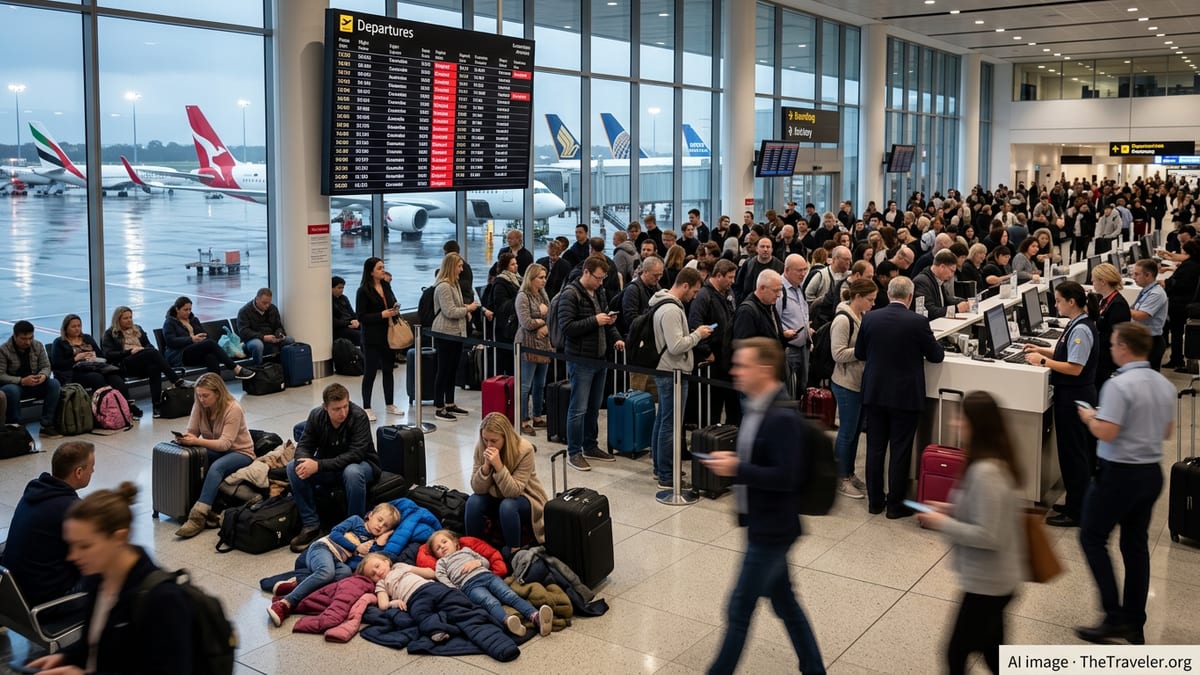
For passengers, the headline statistics translate into queues at check in, congested security lines and long waits at departure gates as boarding times are repeatedly revised. With many routes operating near capacity at the start of the Southern Hemisphere winter, alternative seats are limited once a wave of cancellations begins.
Weather, Congestion and Crewing Issues Collide
Publicly available aviation performance reports for both Australia and New Zealand point to a mix of causes behind the latest disruption. Volatile winter weather patterns in the Tasman region, including low cloud, heavy rain and strong winds, frequently force ground holds, diversions or tighter separation between aircraft, reducing runway throughput at time-critical hubs such as Sydney and Wellington.
In parallel, regulators and transport agencies have documented a post pandemic slump in on time performance for several major carriers. Monitoring in late 2024 and 2025 across Australian domestic routes highlighted a decline in punctuality and a rise in cancellations linked to weather, aircraft maintenance, crew shortages and air traffic control staffing. The latest wave of delays appears to follow that broader trend, with multiple airlines simultaneously battling similar constraints.
New Zealand focused travel coverage in recent weeks has also drawn attention to how quickly operations can unravel when adverse weather hits notoriously challenging airports such as Wellington. Strong crosswinds or low visibility can force repeated go arounds, diversions or returns to departure airports, which then cascade through the day’s rotations and leave aircraft and crew out of position for subsequent sectors.
Industry analyses note that smaller regional carriers, including Sounds Air and other local operators, are particularly exposed when conditions deteriorate. With leaner fleets and fewer spare aircraft, any technical issue or weather related diversion can rapidly reduce available capacity, triggering cancellations on low frequency routes that serve as vital connectors for provincial centres.
Impact on Travellers Across Oceania
The human impact of these statistics is now visible across departure lounges from Melbourne’s Tullamarine to Rotorua’s regional terminal. Passengers on both domestic and international itineraries have reported missed onward connections, unplanned overnight stays and disrupted business and leisure trips as delays stretch into hours and cancellations remove entire options from the schedule.
Trans Tasman travellers are particularly exposed when short haul links feed into long haul departures to Asia, North America and Europe. A delayed shuttle from Rotorua or Wellington into Auckland, or from regional Australian centres into Sydney or Melbourne, can easily break carefully timed interline connections, leaving travellers to rebook at higher last minute fares or wait for the next available departure on heavily booked routes.
Travel insurance specialists and consumer advocates routinely advise passengers caught in such disruption to keep detailed records of boarding passes, delay notifications and receipts for accommodation and meals. Published guidance from travel law resources stresses that written confirmation of delays and cancellations can be critical when filing claims for missed tours, pre paid accommodation or lost holiday days.
For travellers without comprehensive insurance, the cost of last minute hotel stays near airports, airport transfers and reissued tickets can quickly mount. Social media posts and community forum discussions from recent disruption days describe families sleeping in terminal seating, solo travellers scrambling for scarce budget rooms and long lines at service desks as airline staff attempt to reroute affected customers.
Airlines Under Scrutiny Over Reliability
The recurring nature of large scale disruption events in the Oceania market is drawing increased scrutiny of airline reliability. Official punctuality reports from both Australian and New Zealand authorities have highlighted fluctuating on time performance for Qantas, Virgin Australia, Jetstar and Air New Zealand across key domestic and trans Tasman routes. While some months show improvement, others reveal cancellation rates still above pre pandemic norms on certain city pairs.
Advocacy groups representing travel agents and corporate travel buyers have submitted detailed analyses to public inquiries in Australia, arguing that high cancellation rates and frequent rolling delays are eroding consumer confidence and imposing hidden costs on businesses. These submissions cite a mix of structural factors, including tight staffing, constrained maintenance capacity and reliance on complex hub and spoke networks that are highly sensitive to single point failures.
At the same time, regional carriers such as Sounds Air are facing their own reliability challenges as they attempt to maintain thin routes that connect smaller communities into national networks. Any reduction in frequency or reliability on these services can have outsized effects for residents in provincial areas who rely on air links for medical appointments, education, and business travel.
Public debate within frequent flyer communities has become more pointed as well, with online forums documenting individual experiences of repeated cancellations, overnight delays and abrupt schedule changes across multiple airlines. While some contributors note that all carriers face similar operational pressures, others argue that sustained underperformance on certain routes indicates deeper structural issues within specific airline operations.
What Travellers Can Do Right Now
For those currently caught in the disruption, travel planners and consumer information services recommend a series of practical steps to regain control of itineraries. Checking flight status through official airline channels and airport departure boards remains essential, as schedules can shift multiple times in a single day while operations recalibrate.
Specialist travel advisories suggest that passengers with critical connections or time sensitive commitments build additional buffers into their itineraries when flying through Melbourne, Sydney, Wellington or Rotorua during the winter period. Routing via larger hubs earlier in the day, when aircraft and crew are still in position, may reduce the risk of being caught by late evening cancellations triggered by earlier delays.
Experts in travel risk management also encourage passengers to familiarise themselves with airline conditions of carriage and national consumer protections before departure. These documents set out the circumstances under which travellers may be entitled to rebooking, refunds or assistance with accommodation and meals, and can help passengers advocate effectively at airport service desks when disruption occurs.
With no immediate sign that weather volatility, staffing constraints and airspace congestion will ease across the Tasman region, observers expect further days of heavy disruption in the months ahead. For now, thousands of stranded Oceania travellers are navigating the practical realities of 433 delays and 51 cancellations, turning what should have been routine journeys into drawn out logistical challenges.