


More news on this day
The fragile calm in global transport and energy markets has fractured again as renewed fighting between the United States and Iran disrupts oil flows, commercial shipping and aviation routes from the Persian Gulf to Europe and Asia.
Get the latest news straight to your inbox!
Strait of Hormuz Again at the Center of a Global Shock
The latest escalation in the U.S.-Iran conflict has re-focused attention on the Strait of Hormuz, the narrow waterway that carries roughly a fifth of the world’s traded oil and liquefied natural gas in peacetime. Published coverage in recent days describes a pattern of missile, drone and naval attacks around the chokepoint, alongside competing U.S. and Iranian efforts to assert control over shipping lanes.
Reports indicate that Iran has at various points since late February sharply restricted or effectively closed the strait to commercial traffic, while U.S. forces have responded with air and naval operations aimed at protecting tankers and degrading Iran’s ability to strike shipping. A recently reimposed U.S. blockade on Iranian ports has added another layer of disruption, halting most crude exports from Iran itself and intensifying the scramble to secure alternative supplies.
International organizations and maritime agencies have issued repeated alerts as the confrontation has reignited after a short-lived ceasefire. Publicly available information shows that renewed attacks on tankers this month have further unsettled energy markets, reviving fears that a prolonged conflict could move from a regional security crisis to a systemic shock for the global economy.
Oil Prices Spike as Flows Are Rerouted
Benchmark oil prices have swung sharply higher in response to the renewed violence. Data cited by financial news outlets show Brent crude jumping close to double-digit percentages in single sessions following weekend strikes and competing claims from Washington and Tehran over who controls the strait. Analysts describe a market that is once again pricing not only current supply losses but the risk of a longer blockade.
War risk insurance premiums for tankers operating anywhere near the Persian Gulf have surged, according to industry assessments, and many shipowners have suspended transits through Hormuz altogether. This has pushed more Gulf producers to rely on pipelines and alternative export terminals that bypass the strait, from the Red Sea to the Arabian Sea, though capacity on these routes remains limited compared with pre-war flows through Hormuz.
Energy-focused research suggests that if disruptions persist, the world could face oil market conditions without close historical precedent given the volume that typically moves through the waterway. For now, strategic reserves in major consuming countries and some spare production capacity elsewhere are helping temper the immediate impact, but traders describe a market highly sensitive to each new report of an attack or blockade measure.
Container Shipping and Trade Lanes Under Strain
The shock is not confined to energy cargoes. Container ships and bulk carriers have also been caught up in the turmoil, with operators rerouting vessels away from the Gulf and related high-risk corridors. Publicly available shipping data and policy briefings describe traffic being diverted from traditional routes that connect Asia, the Middle East and Europe, extending voyage times and raising freight rates.
Some carriers are steering ships away from both the Strait of Hormuz and the Red Sea, favoring much longer routes around the Cape of Good Hope to avoid potential spillover attacks in adjacent waters. Industry analyses note that this adds significant fuel costs and days or even weeks to certain journeys, tightening capacity in the global fleet and feeding into higher prices for transported goods.
Port infrastructure around the region has also come under pressure. Coverage of recent missile and drone strikes points to damage or temporary shutdowns at energy and logistics hubs in Gulf states hosting U.S. forces. Even where facilities remain intact, heightened security protocols, inspections and congestion are slowing operations, with ripple effects on supply chains that rely on just-in-time deliveries.
Airlines Face Rising Fuel Costs and Rerouted Flights
Aviation is feeling the impact from two directions: higher fuel prices and more complex routing. The surge in oil prices is feeding directly into jet fuel costs, historically one of the largest expenses for airlines. According to congressional and industry analyses released since the war began, carriers have responded by raising fares, trimming capacity and adjusting schedules to protect margins in the face of volatile fuel bills.
At the same time, heightened military activity and missile threats around parts of the Middle East have led to periodic airspace closures and diversions. Publicly available flight-tracking data and airline statements show carriers adding extra flying time to avoid conflict zones, which further increases fuel burn and operational costs. In some cases, Gulf-based airlines have temporarily halted or consolidated services while they reassess risk.
Budget carriers and financially weaker airlines appear especially vulnerable. Research into the economic fallout from the conflict notes that low-cost operators with thin balance sheets and limited hedging have struggled to absorb the shock from sustained high fuel prices, with at least one U.S. discount airline already pushed into collapse earlier in the war after its difficulties were amplified by the energy spike.
Travelers and Consumers Confront a New Wave of Volatility
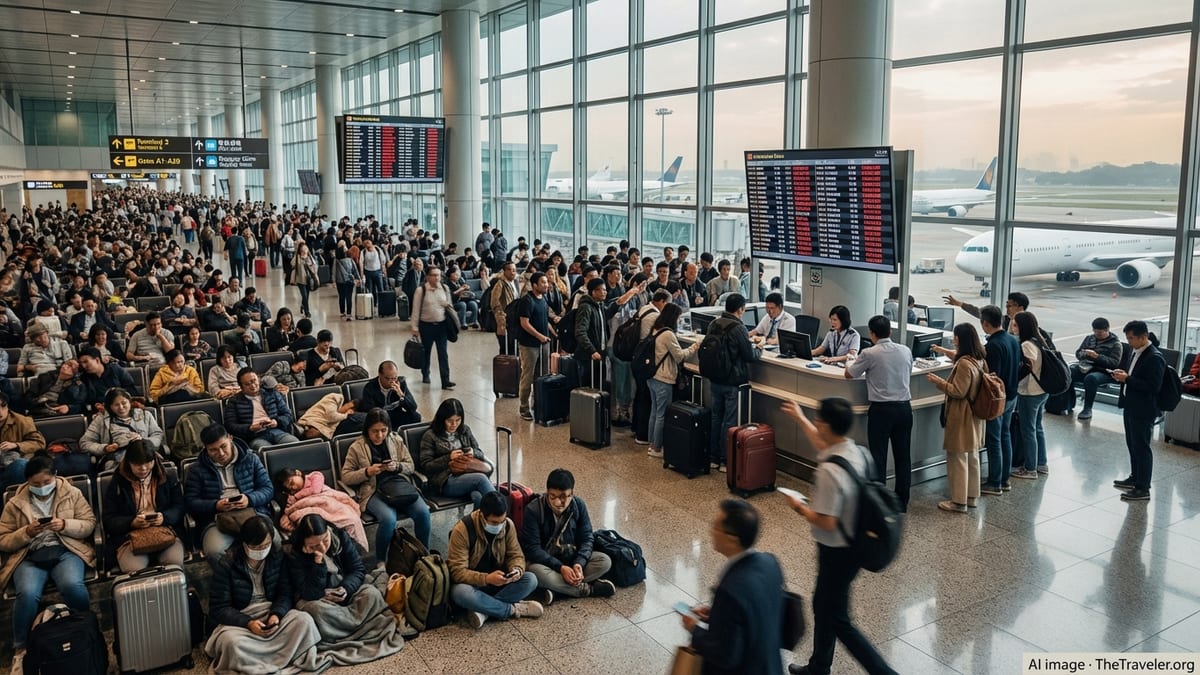
For travelers, the renewed disruption is translating into higher ticket prices, fewer route options and a fresh sense of uncertainty. Travel industry monitoring shows long-haul itineraries between North America, Europe and Asia that once used Gulf hubs are increasingly being rerouted through alternative connecting points, often with longer total journey times. Some routes into conflict-adjacent countries are operating at reduced frequencies or have been suspended altogether.
Beyond air travel, consumers worldwide are likely to feel the impact through rising costs for fuel, shipping and goods. Economic research on the 2026 Iran conflict highlights the risk that a sustained interruption to Hormuz traffic could feed broader inflationary pressures, particularly in emerging markets that are more exposed to energy price swings and currency volatility.
For now, governments and international bodies are relying on strategic stockpiles, diplomatic efforts and limited military escorts to contain the fallout. But as clashes around the Strait of Hormuz intensify again, the prospect of a drawn-out disruption to oil, shipping and flights is once more reshaping travel plans and trade flows far beyond the Gulf.