


More news on this day
Prediction market operator Kalshi is moving to expand its offerings tied to air travel delays, seeking regulatory clearance for broader airport disruption contracts even as it retreats from a contentious product that allowed users to bet directly on individual flight cancellations.
Get the latest news straight to your inbox!
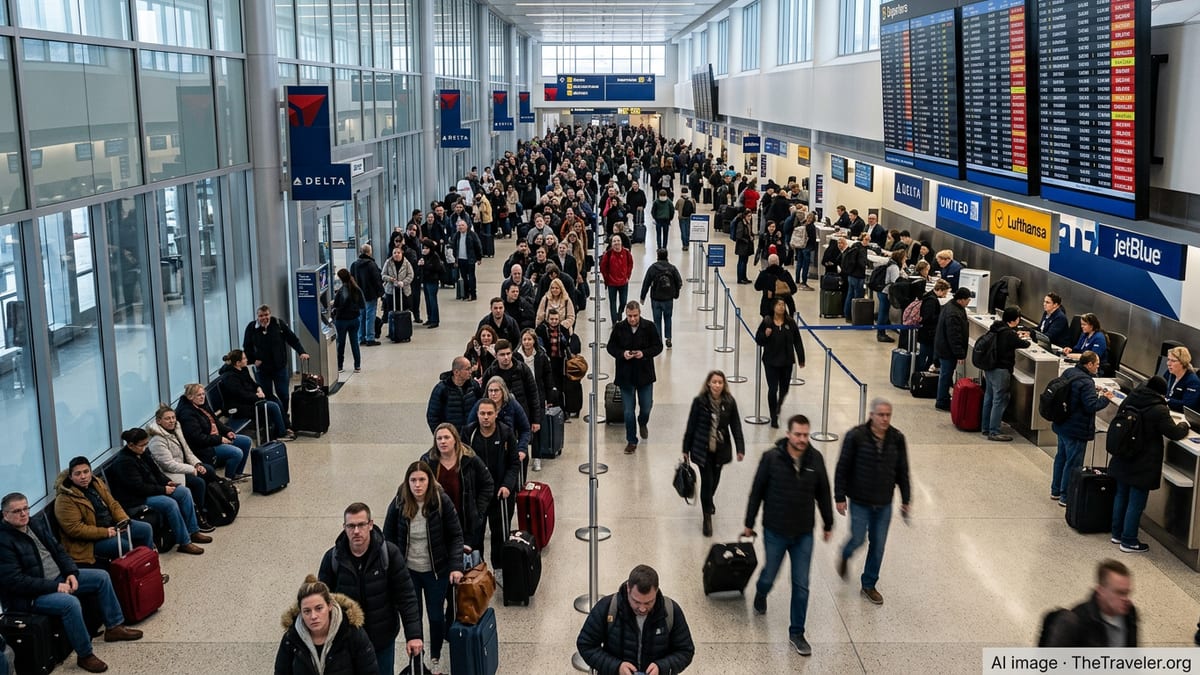
From Flight Cancellations to Airport Delays
Kalshi has attracted attention in recent days after rolling out, and then withdrawing, contracts that paid out when specific commercial flights were canceled. According to recent coverage, the company ended trading in those products following criticism that such contracts could create incentives for bad actors to interfere with air operations and amid questions over its access to reliable data feeds for settlement.
In parallel with that retrenchment, Kalshi is now pushing ahead with a separate class of markets that focus on airport-level delays rather than the fate of individual flights. Publicly available filings and industry reporting indicate the firm has submitted a contract known as AIRPORTDELAY that would allow traders to take positions on whether delays at major hubs cross defined thresholds over a given period.
The shift from flight-specific to airport-wide metrics appears designed to preserve demand from frequent travelers and speculators who want to hedge or trade on disruptions in the air travel system, while addressing concerns that markets tied to a single flight might be more easily manipulated or perceived as too closely linked to operational decisions inside an airline.
Kalshi’s latest efforts come against the backdrop of persistent congestion at key U.S. airports, where extreme weather, staffing constraints and air traffic control bottlenecks have made delays a recurring feature of peak travel seasons. That environment has created interest in financial products that could either offset the cost of disruption for travelers or provide new ways for traders to express views on transportation reliability.
How the Proposed Airport Delay Contracts Work
Based on descriptions circulating in industry-focused coverage, the AIRPORTDELAY contracts would be structured as binary event contracts, a format Kalshi already uses across macroeconomic, weather and transportation themes. Each contract typically settles at either 0 or 1 dollar depending on whether the specified condition is met, with prices between those points reflecting the market’s implied probability of the event.
For airport delay products, the underlying event would be framed around aggregated performance at a specific airport, such as whether delays exceed a certain percentage of departures, or whether total minutes of delay surpass a pre-set figure during a defined time window. Rather than tracking the status of each individual flight, the contract would reference standardized operational data for the airport as a whole.
Settlement would likely rely on publicly available statistics from government or industry data providers that report on on-time arrival and departure performance. By tying payouts to aggregated metrics, Kalshi aims to create contracts that are less directly connected to the decisions of any single airline, dispatcher or gate agent, and therefore less vulnerable to the perception that they could be influenced by a small group of insiders.
Such a design aligns with earlier transportation-related contracts on the platform, including products based on passenger volumes and congestion measures, which have been framed as tools for investors and businesses to manage exposure to travel-related risks while staying within existing regulatory guidance on event contracts.
Regulatory Backdrop and CFTC Oversight
Any expansion of air travel delay markets must fit within the regulatory framework overseen by the U.S. Commodity Futures Trading Commission. Kalshi operates as a designated contract market, meaning its products are subject to detailed rules on market integrity, manipulation, reporting and the types of events that may serve as underlyings for tradable contracts.
In recent years, the CFTC has scrutinized event contracts across several domains, including political outcomes and certain entertainment and sports-related markets. Advisory statements and enforcement actions have emphasized the need to guard against misuse of nonpublic information and to ensure that markets are not structured around prohibited activities such as gaming or unlawful conduct.
Transportation-related contracts occupy a more conventional corner of the event-contract landscape, sitting closer to economic and weather derivatives that have long been part of regulated futures markets. Nevertheless, regulators have signaled that even seemingly benign contracts must be assessed for susceptibility to manipulation, particularly where the underlying data could be influenced by a limited set of actors.
Against that backdrop, contracts based on aggregated airport delay metrics are likely to draw attention to how robustly they are designed and how transparently they rely on external data. Market observers expect that any approval process will examine whether the chosen benchmarks are resilient, whether there are adequate safeguards against interference with reporting, and how clearly the contract rules specify contingencies in the event of data outages or disputes.
Industry Debate Over Incentives and Market Integrity
The brief life of Kalshi’s individual flight cancellation contracts has already intensified debate over where to draw the line between useful hedging tools and products that raise uncomfortable questions about incentives. Critics argued that markets paying out on the failure of specific flights could, at least in theory, reward disruptive behavior at a time when airlines and regulators are focused on improving operational reliability and passenger safety.
While there is no indication that such misconduct actually occurred, the controversy highlighted how quickly public sentiment can turn against financial instruments that appear misaligned with broader policy goals. Social media posts and commentary from industry watchers pointed to the risk that even hypothetical scenarios of manipulation could erode confidence in both the contracts and the institutions overseeing them.
Supporters of prediction markets counter that contracts tied to transportation performance can improve price discovery around operational risks and help airlines, travel companies and sophisticated travelers manage financial exposure to disruptions. They contend that focusing on airport-level aggregates, rather than single flights, strikes a more appropriate balance by diffusing the link between any one operational decision and the outcome of a contract.
The episode has reinforced the importance for platforms like Kalshi to anticipate how new products will be perceived not only by regulators and professional traders but also by the traveling public, whose experience at the airport can be directly affected by the events underlying these markets.
What Expanded Delay Markets Could Mean for Travelers
If Kalshi’s proposed airport delay contracts gain regulatory clearance and achieve meaningful liquidity, they could add a new dimension to how travelers and businesses manage the financial impact of disruptions. In theory, a frequent flyer or corporate travel department could use such markets to offset costs when severe delays at a chosen hub become more likely during peak seasons or forecast storms.
Unlike traditional travel insurance, which typically focuses on reimbursement for specific losses, event contracts offer a more flexible but also more speculative tool, paying out based on whether a defined condition is met rather than on proof of individual inconvenience. That structure may appeal to sophisticated users comfortable with probability-based pricing, but it could also limit mainstream adoption among casual travelers.
For airlines and airport operators, the emergence of widely watched markets on delay metrics could provide another public signal of expectations about operational performance. Sharp movements in prices tied to a particular airport’s delays might be interpreted as an early indicator of stress in the system, complementing weather forecasts and air traffic control advisories that already guide decisions on scheduling and resource allocation.
At the same time, expanded trading in delay-related contracts would add to the growing intersection between financial markets and everyday experiences in transport, politics and entertainment. As platforms like Kalshi broaden their product suites, regulators and market participants will continue to grapple with how to harness the informational value of event contracts while containing reputational and ethical risks when those events touch the lives of millions of travelers.